

KOLKATA — On a sweltering July afternoon, amidst the humid bustle of South Kolkata’s iconic Lake Market, two of India’s most influential bartenders were not behind a mahogany counter, but deep in the trenches of raw produce. Manoj Kumar and Krishna Kumar, the creative forces behind Bengaluru’s award-winning cocktail bar Soka, were seen navigating through mounds of jackfruit and baskets of indigenous herbs.
This was not a casual shopping trip, nor was it a standard preparation for a guest shift. It was a sensory immersion—a "culinary reconnaissance" mission designed to strip away the pre-planned artifice of the modern cocktail industry and replace it with raw, localized inspiration.
The collaboration, titled "The Joker Shift," represents a paradigm shift in how the Indian hospitality industry views "guest shifts." Rather than importing a pre-fixed menu from one city to another, Nutcase Etc. challenged the visiting mixologists to arrive empty-handed and build a menu from the ground up using the "vocabulary" of Kolkata’s pantry.
I. The Core Concept: The "Empty-Handed" Philosophy
In the contemporary bar scene, guest shifts are often highly orchestrated affairs. Celebrated bartenders usually travel with pre-batched syrups, specific bitters, and a rigid list of ingredients to ensure their signature drinks taste identical regardless of geography.

Nutcase Etc., an intimate cocktail parlour in Kolkata known for its aggressive focus on regional ingredients, sought to disrupt this trend. Founded by chef Rituparna Banerjee and head bartender Rahul Banerjee, the establishment introduced "The Joker Shift" as a bi-annual format. The goal: to force a "collision" between a visiting bartender’s technique and the host city’s terroir.
"Usually, bars collaborate by making the drinks they’re already known for," explains Rituparna Banerjee. "We wanted MK and KK to discover Kolkata through their own eyes, but filtered through the lens of their Bengaluru sensibilities."
By arriving without recipes or supplies, Manoj and Krishna (affectionately known as MK and KK) were forced to rely on their palates and the spontaneity of the local market. This approach emphasizes the "improvisational jazz" of mixology over the "classical recital" of standard recipes.
II. Chronology of a Collaboration: From Mystery Box to Shaker
Day 1: The "Googly" Mystery Box
The journey began 36 hours before the first drink was poured. Upon landing in Kolkata, the Soka team was presented with a plain cardboard box. Inside was a curated "map of Bengal" in the form of eight distinct ingredients:

- Smoked Bandel Cheese: A salty, pungent, ash-coated cheese with Portuguese origins.
- Patali Gur: Solidified date palm jaggery.
- Sundarban Honey: Wild-harvested honey from the world’s largest mangrove forest.
- Badshah Bhog Rice: An aromatic, short-grain rice known for its buttery scent.
- Panch Phoron: The classic Bengali five-spice mix (cumin, mustard, fenugreek, nigella, and fennel).
- Jamun: Java plum, known for its astringent and sweet profile.
- Hog Plum (Amra): A tart, fibrous fruit used in local chutneys.
- Karamcha: Bengal currants, characterized by a glossy pink exterior and a sharp, acidic bite.
"When they landed, we asked them what they thought would be inside. They guessed the usual suspects like gondhoraj (lime) and kasundi (mustard). But we wanted to throw them a googly," says Priyadarshini Chitrangada, manager of brand and community at Nutcase Etc.
Day 2: The Lake Market Expedition
The following afternoon was spent at Lake Market. This phase was critical for establishing what Rahul Banerjee calls "the shared dialect of the Indian pantry."
While exploring the dry goods section, the bartenders noticed the similarities between Karnataka’s jaggery traditions and Bengal’s patali gur. Despite different names and slight variations in processing, the underlying "language" of the ingredients remained constant.
KK’s attention was particularly drawn to the jackfruit—a fruit ubiquitous in both South India and Bengal but utilized differently in each region. This observation eventually became the cornerstone of one of the evening’s most complex cocktails.

Day 2 Evening: The Lab Phase
With less than six hours until the doors opened, the team returned to Nutcase Etc. to begin the extraction and infusion process. This involved studying the karamcha—an ingredient neither MK nor KK had ever tasted. They analyzed its "taut skin" and the "sharp burst of acidity followed by a slow, lingering sweetness," eventually deciding to pair its high-toned tartness with the earthy notes of Reposado tequila.
III. Supporting Data: The Pedigree of the Players
The significance of this collaboration is highlighted by the industry rankings of both establishments. The Indian cocktail scene has seen a meteoric rise in global prestige over the last three years, and these two bars are at the forefront of that movement.
- Soka (Bengaluru): Founded by chef Sombir Choudhary and Avinash Kapoli, Soka has rapidly ascended the ranks. It currently holds the #2 spot on the 30 Best Bars India 2025 list and is ranked #28 on Asia’s 50 Best Bars 2025. Soka is celebrated for its minimalist aesthetic and its ability to elevate humble ingredients through high-tech laboratory techniques.
- Nutcase Etc. (Kolkata): Despite being open for less than two years, Nutcase has become a beacon for the "ingredient-first" movement in East India. It was recognized as #15 on 30 Best Bars India 2026 (projections) and was featured in Condé Nast Traveller India’s Hottest New Openings of 2025.
The meeting of these two entities represents a "North-South" (or rather, "South-East") exchange that is rare in the Indian hospitality sector, which has traditionally been dominated by the Delhi-Mumbai axis.
IV. The Outcome: A Menu of "Liquid Sociology"
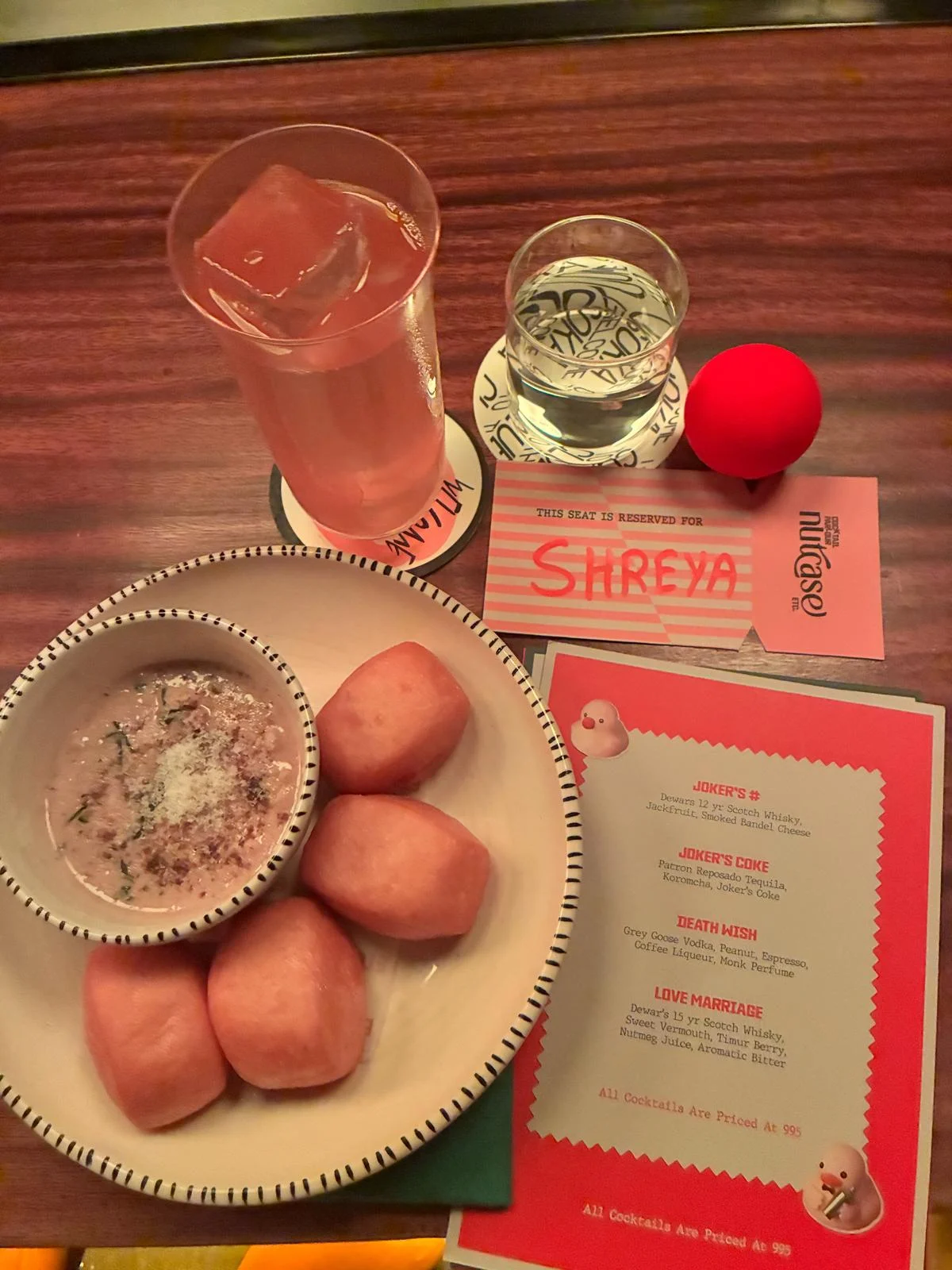
The final menu for The Joker Shift consisted of four primary creations, each reflecting a specific intersection of Kolkata’s produce and Soka’s technique.

1. Joker’s # (The Jackfruit Experiment)
This drink featured Dewar’s 12-Year Scotch, jackfruit, and the smoked Bandel cheese. The choice of Bandel cheese—a hyper-regional ingredient with a saline, smoky profile—acted as a bridge between the peat of the Scotch and the tropical sweetness of the jackfruit. It was a study in umami and smoke.
2. Joker’s Coke (The Karamcha Revelation)
Utilizing the karamcha (Bengal currants) that the Bengaluru team had discovered only hours prior, this cocktail used Patrón Reposado tequila. The karamcha provided a natural, vibrant acidity that mimicked the "bite" of a traditional cola but with a sophisticated, berry-forward finish.
3. Love Marriage
A more classic-leaning profile, this drink blended Dewar’s 15-Year Scotch with sweet vermouth. However, it was localized with the addition of Timur berry (Szechuan pepper’s cousin), fresh nutmeg juice, and aromatic bitters. The name "Love Marriage" playfully referenced the successful union of diverse regional flavors.
4. Death Wish
A bold, dessert-style cocktail using Grey Goose vodka, peanut, espresso, and coffee liqueur. The secret ingredient was "monk perfume," a complex aromatic blend that added a spiritual, incense-like depth to the drink, evoking the atmospheric temples of old Kolkata.

V. Official Responses and Industry Implications
The success of The Joker Shift has sparked a conversation within the Indian mixology community regarding the sustainability and authenticity of guest collaborations.
Rahul Banerjee, head bartender at Nutcase, noted that the revelation of the project was the realization that "Indian pantries often speak the same dialect." He argued that by stripping away the marketing jargon, bartenders can find a "universal thread" in Indian produce.
Manoj Kumar of Soka reflected on the educational aspect: "There were these lovely moments when we realized the same ingredient exists across states; only the names change. It changes how you look at a city. We weren’t just making drinks; we were learning a new way to describe flavor."
Implications for the Future of Mixology:
- Hyper-Localism as the New Standard: The shift away from imported syrups toward "foraged" or market-bought local produce is no longer a niche trend but a requirement for top-tier bars.
- Kolkata as a Rising Hub: Historically known for its heritage bars and "Park Street" culture, Kolkata is rebranding itself as a center for experimental mixology, rivaling Bengaluru and Mumbai.
- The "Live Performance" Model: By moving toward "mystery box" formats, bars are turning guest shifts into spectator sports where the audience witnesses the creative process in real-time, rather than just consuming a finished product.
VI. Conclusion
"The Joker Shift" was never about the cocktails as a final product; it was about the 36 hours of "tasting, questioning, and discovering" that preceded them. By forcing world-class bartenders to engage with the "knobbled green skin" of a jackfruit or the "sharp burst" of a karamcha berry, Nutcase Etc. and Soka have provided a blueprint for the future of culinary tourism.

In an era of globalized tastes, where a cocktail in London often tastes the same as one in Tokyo, the collaboration between Bengaluru and Kolkata serves as a reminder that the most exciting flavors are often found in the humid aisles of a local market, waiting to be translated into the glass.
