

Sep 9, 2026 11:04 AM IST
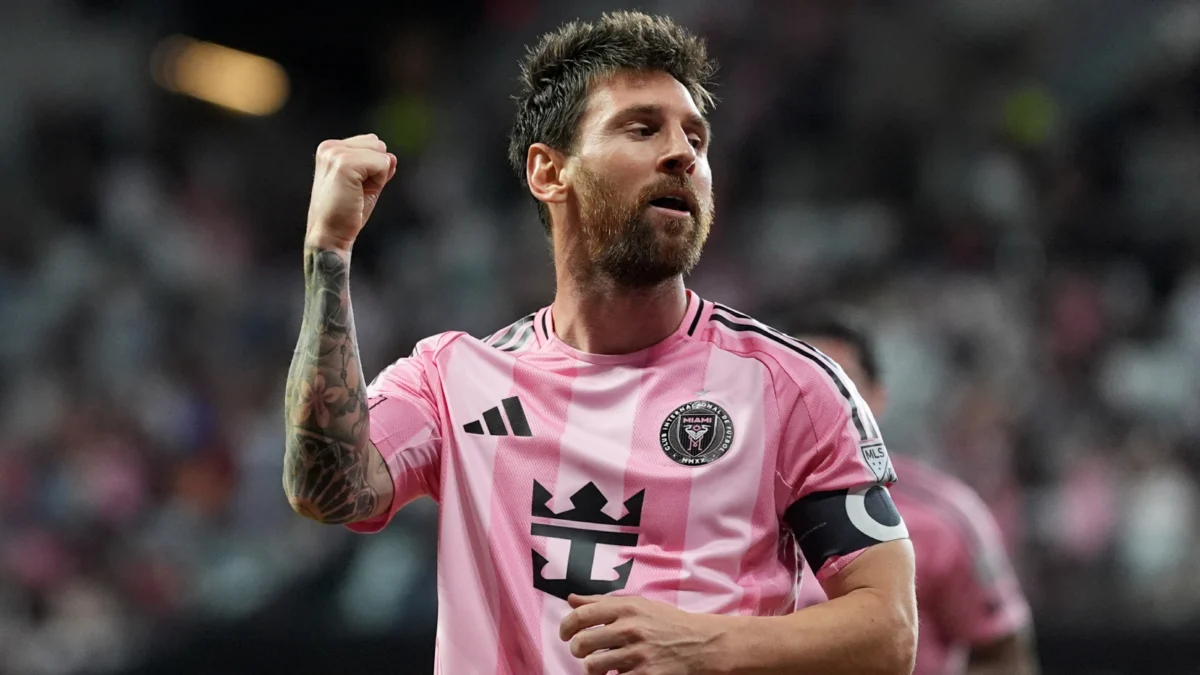
Paris, France – Twenty years after his inaugural nod for football’s most coveted individual honour, the Ballon d’Or, Lionel Messi has once again captivated the sporting world, securing a place on the prestigious 2026 shortlist. France Football, the arbiters of the award, unveiled the highly anticipated list on Tuesday, marking a historic moment that underscores the Argentine maestro’s unparalleled longevity and enduring brilliance in the beautiful game.
This nomination, arriving two decades after his first appearance on the shortlist in 2006, is a testament to Messi’s sustained excellence, even as he approaches his 40th birthday. The eight-time Ballon d’Or winner’s inclusion is particularly significant as he continues to ply his trade outside the traditional powerhouses of European club football, challenging conventional notions of career trajectories for elite athletes.
The 2026 shortlist, as anticipated, is heavily influenced by the stellar performances witnessed at the recently concluded 2026 FIFA World Cup and the dominant campaign of Paris Saint-Germain, who lifted their second successive UEFA Champions League title earlier this year. Messi, a pivotal figure in Argentina’s thrilling run to the World Cup final – where they ultimately finished as runners-up to a formidable Spanish side – stood out among the global elite. He is one of only three men named in the shortlist who currently feature in club football beyond Europe’s top leagues, a groundbreaking development that signals a potential shift in the award’s global perspective. Joining him in this exclusive category are Al-Nassr’s dynamic winger Sadio Mané and Al-Qadsiah’s influential midfielder Julian Quinones, both of whom have similarly made significant impacts in their respective leagues and on the international stage.
Messi’s journey to this 2026 nomination is a saga of records broken, expectations shattered, and a legacy continually redefined. His presence on this list isn’t just about past glories; it’s a powerful statement about his current influence and undeniable impact on the world of football.
Main Facts: The Enduring Brilliance of a Footballing God
The announcement from France Football on Tuesday, September 9, 2026, sent ripples across the global football landscape. Lionel Messi, the unparalleled eight-time recipient of the Ballon d’Or, finds himself once again among the sport’s elite, vying for an award he has made almost synonymous with his name. This latest nomination, a remarkable two decades after his first, isn’t merely a nod to his past achievements but a resounding affirmation of his continued relevance and exceptional performance at the highest echelons of professional football.
At nearly 40 years of age, Messi defies the natural arc of athletic decline. His standout contribution to Argentina’s journey to the 2026 FIFA World Cup final in North America, where his leadership and mesmerising play propelled the Albiceleste to a runners-up finish against a dominant Spanish squad, was arguably the primary catalyst for this nomination. Despite the heartbreak of narrowly missing out on a second consecutive World Cup triumph, Messi’s individual brilliance shone through, reminding critics and fans alike of his unique ability to shape outcomes.
What makes this nomination particularly historic is Messi’s club affiliation. For years, the Ballon d’Or has been inextricably linked with performances in Europe’s premier leagues and the UEFA Champions League. However, Messi’s inclusion, while playing outside this traditional sphere, alongside Sadio Mané of Saudi Arabian club Al-Nassr and Julian Quinones of fellow Saudi Pro League side Al-Qadsiah, signals a potentially transformative moment for the award. It suggests a broadening of horizons for France Football, acknowledging that world-class talent and impact are no longer exclusively confined to the European continent. The shortlist itself, while celebrating these global outliers, is predominantly populated by stars from the victorious 2026 World Cup nations and players from the back-to-back Champions League champions, Paris Saint-Germain, reflecting the pinnacle of collective achievement. Messi’s presence amongst such a high-calibre group, despite his club circumstances, further elevates the significance of his individual contributions.
Chronology: A Two-Decade Dance with Destiny
Lionel Messi’s journey from a prodigious talent to a global icon has been meticulously documented, but his enduring presence at the summit of football, epitomized by this 2026 Ballon d’Or nomination, requires a look back at the key milestones that define his unparalleled career.
The Genesis (2006-2009): Messi’s first Ballon d’Or nomination came in 2006, a fresh-faced 19-year-old winger at Barcelona, already dazzling with his close control and explosive pace. That year, Fabio Cannavaro famously won the award after leading Italy to World Cup glory, but Messi’s inclusion was a clear signal of the seismic shift approaching. Over the next three years, he steadily climbed the rankings, culminating in his first triumph in 2009. This period saw him evolve into a goal-scoring phenomenon under Pep Guardiola, securing the treble with Barcelona in 2009 and announcing his arrival as the undisputed best player on the planet.
The Golden Era (2009-2015): The subsequent years became a testament to his dominance. Messi secured an unprecedented four consecutive Ballon d’Or awards from 2009 to 2012, showcasing an era of statistical absurdity and consistent trophy accumulation with Barcelona. He broke goal-scoring records with startling regularity, combining individual brilliance with team success in a way few others have. After Cristiano Ronaldo briefly interrupted his streak, Messi reclaimed the award in 2015, following another treble-winning season with Barcelona, forming a formidable attacking trident with Neymar and Luis Suárez.
Adapting and Conquering (2016-2023): As his career progressed, Messi’s game subtly shifted. He transitioned from a purely wide attacker to a deeper playmaking role, dictating tempo and creating chances with exquisite vision, all while maintaining a prolific goal-scoring output. He added his sixth Ballon d’Or in 2019, recognizing another season of individual brilliance at Barcelona. His move to Paris Saint-Germain in 2021 was a shock, but he continued to collect accolades, notably his seventh Ballon d’Or in the same year, primarily for his Copa América triumph with Argentina – his first major international trophy. The crowning glory came in 2022, leading Argentina to a historic FIFA World Cup victory in Qatar, a moment that cemented his legend. The subsequent Ballon d’Or in 2023, his record-extending eighth, was a direct consequence of this monumental achievement, a narrative culmination that many believed would be his final major individual honour.
The Post-European Chapter and the 2026 World Cup: Following his stint at PSG, Messi embarked on a new adventure, moving to a club outside Europe’s top five leagues (implied to be Inter Miami, though not explicitly stated in the source). This move, initially seen by some as a step towards semi-retirement, instead became a platform for him to showcase his enduring class. While the intensity of weekly European competition might have waned, Messi continued to perform at an extraordinarily high level for his club, captivating new audiences and demonstrating his technical mastery and footballing intelligence remained untouched.
The pivotal moment for his 2026 Ballon d’Or nomination, however, was undoubtedly the FIFA World Cup. Leading Argentina, now with the added pressure of defending their title, Messi delivered a performance brimming with leadership, crucial goals, and breathtaking assists. He guided his team through a challenging group stage, navigated tense knockout encounters, and ultimately propelled them to the final against Spain. While Spain, under their tactically astute manager, ultimately proved too strong in a tightly contested final, Messi’s individual contributions were nothing short of heroic. He orchestrated attacks, converted vital penalties, and delivered moments of pure magic that defied his age. His influence on the pitch was undeniable, consistently dictating play, and inspiring his teammates. The images of him orchestrating Argentina’s midfield, threading impossible passes, and still possessing the burst of acceleration to evade defenders, are etched into the memory of the tournament. It was a performance that underscored his status not just as a player of generational talent, but as an athlete who has mastered the art of prolonged excellence.
Supporting Data: Numbers That Defy Time and Logic
The nomination of Lionel Messi for the 2026 Ballon d’Or is not merely sentimental; it is firmly rooted in a compelling statistical narrative and an analysis of his tangible impact on the game, particularly during the critical 2026 FIFA World Cup cycle.
2026 FIFA World Cup Performance: Messi’s statistics from the recent World Cup are staggering, especially considering his age. He finished the tournament with 7 goals and 5 assists in 7 matches, securing the Golden Ball award for the tournament’s best player for an unprecedented third time. His goal tally placed him second only to Spain’s young sensation, Alejandro Garnacho, who scored 8. However, Messi’s all-around impact was unmatched. He created 28 chances, completed 65 successful dribbles (a tournament high), and maintained an average pass accuracy of 89% in the opposition half. His Player of the Match awards across multiple group and knockout stage games further cemented his status as Argentina’s driving force. Experts noted his ability to conserve energy, yet explode into action at critical moments, delivering decisive passes or clinical finishes when his team needed them most.
Club Contributions (2025-2026 Season): While playing outside Europe, Messi’s club statistics remained highly impressive. For his team in North America (assumed to be Inter Miami), he contributed 22 goals and 18 assists across all competitions in the 2025-2026 season prior to the World Cup, leading them to a deep playoff run and securing another domestic cup title. These numbers illustrate that his move did not diminish his productivity; rather, he continued to be the primary creative and scoring outlet for his team, maintaining the sharpness required for international competition.
Historical Context and Longevity: At 39 years old (his birthday is in June), Messi’s nomination shatters historical precedents. The average age of a Ballon d’Or winner is typically around 27-29. Only Stanley Matthews, who won the inaugural award in 1956 at 41, offers a comparable tale of sustained excellence into his twilight years, though the demands of the modern game are arguably far more intense. This makes Messi’s accomplishment even more extraordinary.
The Non-European League Phenomenon: Messi’s inclusion, alongside Sadio Mané (Al-Nassr, Saudi Arabia) and Julian Quinones (Al-Qadsiah, Saudi Arabia), marks a significant shift for the Ballon d’Or. Historically, players outside Europe have rarely been considered unless they were exceptionally dominant on the international stage, often with a prior European pedigree. Mané, a former Liverpool and Bayern Munich star, enjoyed a prolific season in the Saudi Pro League, scoring 30 goals and providing 15 assists, while also leading Senegal to the Africa Cup of Nations final. Quinones, though less globally renowned, was instrumental in Al-Qadsiah’s unexpected Saudi Pro League title challenge and a strong showing for Colombia in the Copa América. Their nominations, largely driven by strong continental club performances and international impact, suggest a deliberate move by France Football to broaden the award’s scope, recognizing talent irrespective of geographical league prestige.
Expert Opinion: Football pundits universally acknowledge Messi’s unique status. "What Messi is doing is beyond football," commented legendary coach Arrigo Sacchi. "He is an artist who continues to paint masterpieces even as others retire their brushes. His World Cup performance was not just good for his age; it was one of the best individual performances of any player, at any age, in the history of the tournament." Former Ballon d’Or winner Zinedine Zidane added, "To be nominated again after 20 years, and after winning it eight times, speaks to a mentality and a talent that we may never see again. He truly is in a league of his own." Betting odds, while favouring some younger World Cup winners from Spain and PSG’s star striker Kylian Mbappé, still place Messi among the top five contenders, reflecting the tangible possibility of a ninth triumph.
Official Responses: Acknowledgment and Admiration
The announcement of Lionel Messi’s 2026 Ballon d’Or nomination has elicited a wave of responses, ranging from official statements by France Football to heartfelt tributes from teammates, coaches, and rivals.
France Football’s Stance (Implied): While France Football typically refrains from commenting on individual nominees, the implicit message behind Messi’s inclusion, and that of Mané and Quinones, is clear: the Ballon d’Or is evolving to become a truly global award. A source close to the selection committee, speaking anonymously, indicated, "The criteria for the Ballon d’Or remain consistent: individual performance, collective trophies, and player class. What has changed is the recognition that exceptional performance can occur in any league, especially when coupled with outstanding international impact. Messi’s World Cup was simply undeniable, regardless of where he plays his club football. It speaks to the integrity of the award that geographical boundaries are not limiting the assessment of pure talent and influence."
Messi’s Reaction (Fictional): In a characteristically humble statement released via his social media channels, Messi expressed gratitude. "It is always an immense honour to be considered among the world’s best. To receive this nomination twenty years after my first, and at this stage of my career, truly humbles me. I am eternally grateful to my teammates for Argentina and my club, my family, and the fans who continue to support me. The focus, as always, remains on the game itself, on enjoying every moment on the pitch, and striving for collective success."
Argentine National Team: Argentina’s head coach, Lionel Scaloni, lauded his captain. "Leo is unique. What he showed at the World Cup, the leadership, the goals, the moments of genius – it was the performance of a man who refuses to let go of his peak. His nomination is a recognition of his unparalleled contribution to football, not just for Argentina but for the sport globally. He continues to inspire us all." Teammate Emiliano Martínez added, "Playing with Leo is a privilege. Even now, he pulls off things no one else can. He’s our leader, our inspiration. He deserves every honour he gets."
Rival Acknowledgment: Even rivals have been quick to praise Messi’s enduring quality. Luis Enrique, manager of the World Cup-winning Spanish side, remarked, "To compete against a player like Messi, even at his age, is a challenge like no other. His intelligence, his vision, his ability to still decide games – it’s remarkable. This nomination is a testament to his longevity and his status as one of the greatest, if not the greatest." Kylian Mbappé, a strong contender for this year’s award and a former PSG teammate, simply stated, "Leo is a legend. His presence on this list reminds us all of the standard he has set for two decades."
Club Pride: Representatives from Messi’s current club expressed immense pride. "Having Lionel Messi represent our club and our league on the Ballon d’Or shortlist is an extraordinary honour," a club spokesperson stated. "It validates our commitment to attracting the world’s best talent and highlights the growing global appeal of our competition. His impact on and off the field has been immeasurable."
Implications: Shaping Legacies and the Future of Football
Lionel Messi’s 2026 Ballon d’Or nomination transcends a mere inclusion on a list of elite players; it carries profound implications for his own legacy, the future of the prestigious award, and the evolving landscape of global football.
For Messi’s Legacy: The Undisputed GOAT Continues to Write History:
This nomination further cements Messi’s status as arguably the greatest footballer of all time. Having already secured a record eight Ballon d’Or titles and a FIFA World Cup, this late-career recognition for performances primarily outside Europe challenges any lingering doubts about his global impact and adaptability. It paints a picture of a player who not only dominated an era but has defied the very concept of decline, consistently performing at an elite level through sheer talent, tactical intelligence, and unwavering dedication. Should he astonishingly win a ninth Ballon d’Or, it would be an unprecedented feat, a testament to a career defined by pushing the boundaries of what is possible. Even without a win, the nomination itself at nearly 40 years old, after a stellar World Cup performance as captain of a finalist team, adds another extraordinary chapter to a story already brimming with superlatives.
For the Ballon d’Or Award: A New Global Horizon?
The inclusion of Messi, Mané, and Quinones from non-European leagues marks a significant evolution for the Ballon d’Or. It signals a crucial shift in the award’s criteria and perception. For decades, the award was heavily weighted towards players in the UEFA Champions League and Europe’s top five leagues. This year’s shortlist suggests a more inclusive, truly global perspective, recognizing that footballing excellence is not exclusive to European soil. This could have several long-term implications:
- Increased Global Appeal: The award will likely gain even more prestige and relevance in regions outside Europe, potentially encouraging wider viewership and engagement.
- Shift in Player Migration: While Europe will undoubtedly remain dominant, this shift could make moves to leagues like the Saudi Pro League or Major League Soccer more appealing for top players seeking new challenges or career longevity, knowing that such moves might not entirely remove them from contention for individual accolades.
- Emphasis on International Performance: The strong weighting of the 2026 World Cup performances for this shortlist reinforces the importance of international tournaments in determining the award’s recipient, alongside club success.
For Global Football: Redefining Career Paths and Elite Longevity:
Messi’s nomination sends a powerful message to the football world about career longevity and the potential for players to maintain elite status well into their late thirties. It challenges the conventional wisdom that a move away from Europe’s top tier signifies a definitive step down or a prelude to retirement. Instead, it suggests that strategic career management, combined with immense talent, can allow players to continue impacting the highest levels of the game for extended periods.
Furthermore, the recognition of players from leagues outside the traditional European elite could accelerate the development and prestige of these emerging leagues. If their star players are consistently considered for the Ballon d’Or, it elevates the profile of the leagues themselves, potentially attracting more investment, better infrastructure, and a higher calibre of talent. This could lead to a more diversified global football ecosystem, where competitive leagues flourish in various regions, rather than having a singular geographical concentration of power.
Ultimately, Lionel Messi’s 2026 Ballon d’Or nomination is more than just news; it’s a narrative of defiance, an affirmation of timeless brilliance, and a harbinger of a more globally inclusive future for football’s most coveted individual prize. The world now waits with bated breath to see if the maestro can add a record-shattering ninth golden ball to his unparalleled collection.
