

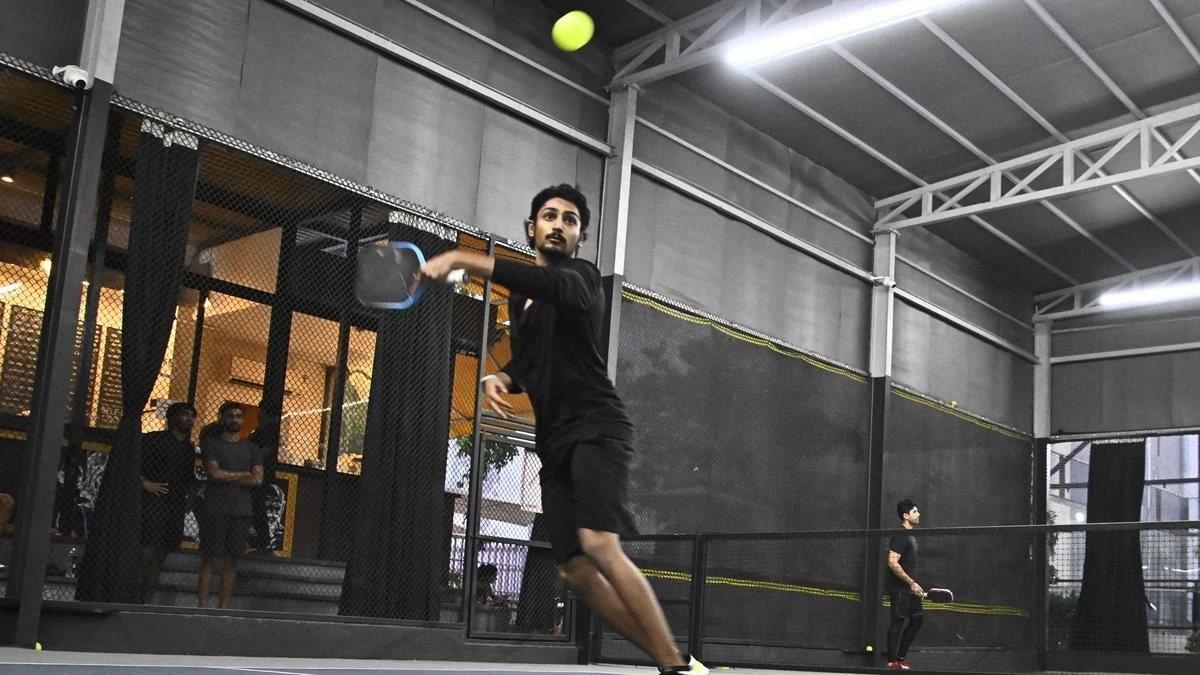
Hyderabad is experiencing a significant surge in the popularity of pickleball, a sport that has rapidly evolved from a niche social activity to a widely embraced recreational and competitive pursuit. Weekday evenings at dedicated venues across the city now thrum with the distinctive "snap" of plastic balls and the rhythmic cadence of paddles, signaling the growing allure of this unique paddle sport. What was once a sparsely populated activity with a handful of courts has blossomed into a city-wide phenomenon, attracting a diverse demographic of players and necessitating the expansion of dedicated facilities.
The Rise of Pickleball: A City Embraces a New Passion
The transformation of Hyderabad’s sporting landscape is vividly illustrated by the burgeoning pickleball scene. Once a rarity, pickleball courts are now a common sight in various localities, a testament to the sport’s infectious appeal. "Earlier there were only 8 to 10 courts in the city. Now you can find courts in different localities," observes Dorlodhu Pradeep, a part-time coach at Hyderabad Paddle Park. This dramatic increase in accessibility has been a critical factor in the sport’s widespread adoption.
The city’s geography now boasts several prominent hubs for pickleball enthusiasts. Jubilee Hills has emerged as a focal point, with Hyderabad Paddle Park and The Kitchen drawing consistent evening crowds. These venues offer a vibrant atmosphere where players, both seasoned and novice, converge to enjoy the game. In Madhapur, the Ayyappa Society’s Pickle Yard has become a particular favorite among the city’s burgeoning IT professional community, offering a convenient and dynamic space for after-work recreation. Further afield, Gandipet’s Cross Court Sports provides a more expansive sports campus environment, catering to a broader range of athletic interests while still featuring dedicated pickleball facilities. Beyond these prominent locations, other frequently visited spaces such as Dink N Dash and the Pullela Gopichand Academy further underscore the sport’s pervasive presence across Hyderabad.
A notable trend within the burgeoning pickleball infrastructure is the shift towards indoor, air-conditioned courts. This adaptation is a pragmatic response to Hyderabad’s often-intense climate, ensuring comfortable playing conditions year-round. However, this move towards premium indoor facilities has also contributed to pickleball occupying a more premium bracket in terms of cost, reflecting the investment in specialized infrastructure and enhanced player experience.
Understanding the Appeal: What Exactly is Pickleball?
At its core, pickleball is an ingenious hybrid sport, artfully blending elements from tennis, badminton, and table tennis. It is played on a court that mirrors the dimensions of a badminton doubles court, making it significantly more compact than a traditional tennis court. This smaller playing area contributes to the game’s accessibility and faster-paced rallies. Instead of stringed rackets, players wield solid paddles, which offer a distinct feel and control over the ball. The ball itself is a perforated plastic sphere, designed to move unpredictably after bouncing, adding an element of strategic nuance to the game.
A fundamental rule that distinguishes pickleball is the "no-volley zone," or "kitchen," a seven-foot area on either side of the net where players are prohibited from hitting the ball out of the air. This rule encourages strategic groundstrokes and volleys, preventing players from simply smashing the ball over the net. In most formats, the ball must bounce once before it can be volleyed, a crucial aspect that new players often find challenging to master. Points are typically scored only by the serving side, emphasizing the importance of consistent serving and strategic play.

The most prevalent format of play in Hyderabad is doubles, where four players share a court. This collaborative setup fosters a strong social element, making pickleball an ideal activity for group outings, corporate events, and casual gatherings. The game’s relatively simple structure, at least on the surface, allows for quick learning curves and immediate engagement, contributing significantly to its widespread appeal.
The origin of the sport’s name, "pickleball," is subject to various charming, albeit unconfirmed, anecdotes. One popular theory suggests a connection to a dog named Pickles, who was fond of retrieving stray balls. Another widely circulated explanation traces the name to the "pickle boat" in rowing, a term used for a crew assembled from leftover members of other teams, symbolizing the amalgamation of different sports into this unique game. Both narratives contribute to the sport’s quirky and approachable persona, resonating with players in online discussions and community forums.
How Hyderabad Fell in Love with Pickleball
The rapid ascent of pickleball in Hyderabad can be largely attributed to its viral presence on social media platforms. Short-form videos showcasing the sport’s dynamic rallies and engaging gameplay have served as potent catalysts, introducing the game to a vast audience. Corporate groups, in their continuous search for innovative team-building activities and employee engagement programs, have also been quick to embrace pickleball, finding it to be an effective way to foster camaraderie and encourage healthy competition.
Many players, upon their initial exposure, express a similar sentiment: the game appears deceptively simple. Darla Jyotirmayi, a finance professional from Nanakramguda who regularly travels to Jubilee Hills to play, recalls her first impression. "We kept seeing it online and finally decided to try it. Though it seemed simple at first, we discovered it wasn’t." This initial perception of ease often belies the sport’s underlying strategic depth and the nuanced skills required for consistent play.
This sentiment is echoed by Garikapati Madhavi, an engineer from Kukatpally, who experienced the sport for the first time. "Online videos never show how hard it is to judge the bounce. You think you know where it will go, and then you miss it completely," she describes. This disconnect between the perceived simplicity and the actual challenge has, paradoxically, fueled the sport’s growth. Players, intrigued by the unexpected complexities, are motivated to return to the courts, driven by the desire to improve their game and conquer the nuances of pickleball.
A Diverse Demographic: Who is Playing Pickleball?
A casual observation of any Hyderabad pickleball court on a typical evening reveals a striking diversity in its player base. The courts are a melting pot of individuals from various walks of life, united by their shared enthusiasm for the sport. Corporate teams, often participating for the first time, are a common sight, their members learning the ropes together. IT professionals, their workdays concluded, arrive directly from their offices, eager to unwind and engage in a spirited game. Even teenagers with strong backgrounds in tennis are increasingly drawn to pickleball, approaching the game with a competitive focus and a desire to hone their skills in this new arena.

Gaurav Jha, a digital marketer from Ayyappa Society, Madhapur, stumbled upon pickleball during a corporate outing. "My boss explained the rules and I just joined," he recounts. Like many beginners, he initially struggled to connect with the game, admitting, "I struggled to connect with it." It took him several matches, approximately five to six, to develop a comfortable grasp of the game’s mechanics and rhythm.
Chandravela Yash, a competitive tennis player from KPHB, makes a dedicated commute of 30 to 50 minutes to The Kitchen in Jubilee Hills to play. While his tennis background provided him with a head start in adapting to the sport, he remains pragmatic about the challenges. "Tennis helped me adjust," he states, "But the dink is the hardest shot and consistency matters." The "dink" shot, a delicate, softly hit ball that lands in the opponent’s kitchen, is a critical element of pickleball strategy and a common hurdle for new players to master.
At the more committed end of the spectrum is Kannur Gopi from Begumpet. A regular at The Kitchen, Gopi has transitioned from casual play to participating in competitive tournaments in less than a year. His dedication comes with a financial commitment, as he estimates spending up to ₹40,000 annually on court bookings, equipment, and shared costs. His carbon fiber paddles, priced at around ₹6,000, require replacement every three to four months due to the intensity of his play. "Most other sports are cheaper," he acknowledges, "But once you start, it is hard to stop." This sentiment highlights the addictive nature of pickleball and the strong sense of community it fosters among its dedicated players.
The Financial Investment: Understanding the Costs of Pickleball
The burgeoning popularity of pickleball has also influenced its cost structure. Court rental prices vary significantly depending on the venue and the time of day. Smaller, more basic facilities might charge around ₹700 per hour for court access. However, premium indoor venues, with their climate-controlled environments and specialized amenities, command higher rates. At Hyderabad Paddle Park, court time can range up to approximately ₹1,500 per hour, while The Kitchen charges around ₹1,600 per hour for similar access.
Beyond court fees, equipment represents another significant investment. Entry-level paddles typically start at ₹1,500 to ₹2,000, offering a functional introduction to the sport. For those seeking enhanced performance and durability, advanced carbon fiber paddles can cost considerably more. The common practice of playing doubles means that a standard session is usually split among four players. While this arrangement effectively reduces the individual cost per player, it necessitates coordination among participants or a willingness to join rotating groups to fill available court time. This economic consideration, while present, has not deterred the growing influx of players, suggesting that the perceived value and enjoyment derived from the sport outweigh the financial outlay for many.
The Learning Curve: Mastering the Nuances of Pickleball
While pickleball’s accessibility is a key draw, mastering its intricacies presents a distinct learning curve for newcomers. Experienced players often differentiate between indoor and outdoor balls, noting that indoor balls tend to be slower and lighter, while outdoor balls are faster and heavier, both behaving in ways that can be counter-intuitive to beginners.

Wrist control is another initial hurdle that players must overcome. Unlike sports where raw power is paramount, pickleball demands precision and finesse. Small technical errors, particularly in wrist movement, can have a more significant impact on consistency than brute force. This emphasis on control and technique differentiates it from sports that rely heavily on power.
For safety and optimal performance, court shoes are strongly recommended. The constant lateral movements and quick directional changes inherent in pickleball can put significant strain on the ankles if players are wearing standard running shoes. Dedicated court shoes provide the necessary support and grip to prevent injuries and enhance agility.
Dorlodhu Pradeep, the coach at Hyderabad Paddle Park, emphasizes a universal truth applicable to any sport or fitness regimen: "Most injuries happen when players skip warm-ups. People only take it seriously after they get hurt." He further highlights the transformative impact of correcting wrist movement alone, stating that it can significantly elevate a beginner’s game.
For newcomers with prior racket sport experience, achieving comfort with the game typically takes two to three sessions. Those without such a background may require longer to acclimate to the unique mechanics of pickleball. A deeper understanding of the game’s strategy, shot selection, and court positioning develops over weeks and months of consistent play.
Ultimately, pickleball sessions in Hyderabad have evolved beyond mere sporting contests. They have transformed into vibrant community activities, fostering social connections and a shared passion for a sport that continues to capture the city’s imagination. The rhythmic bounce of the plastic ball and the camaraderie forged on the court are now integral elements of Hyderabad’s evolving urban culture.
