

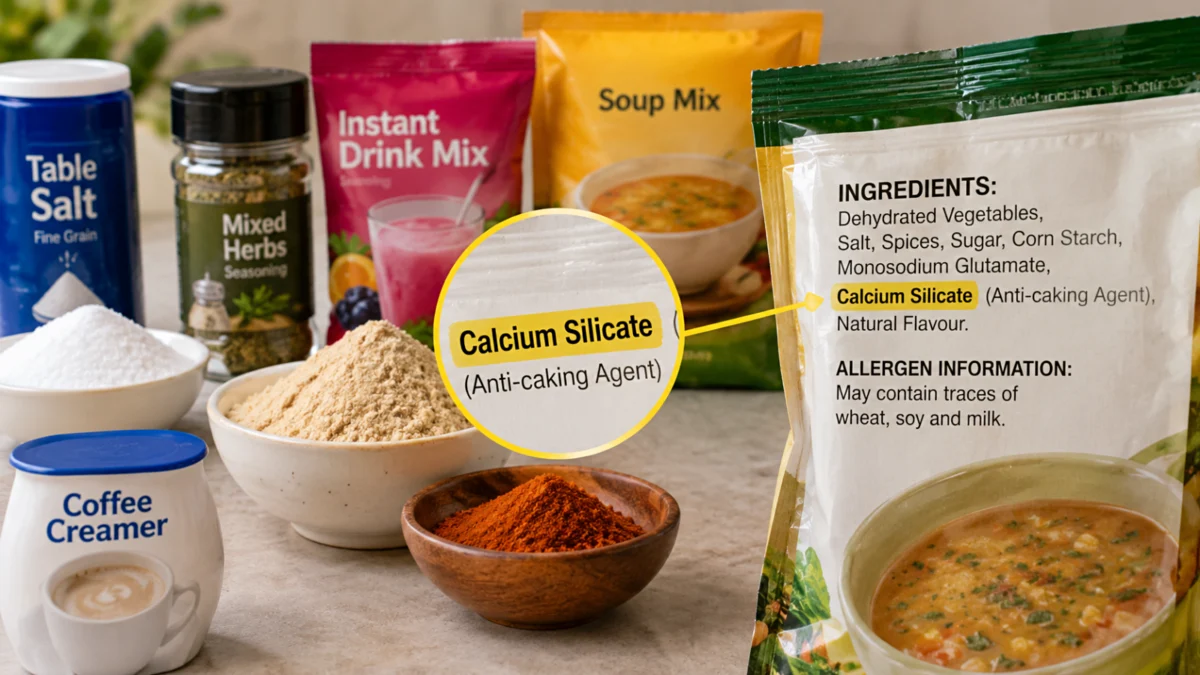
New Delhi – September 9, 2026 – For the discerning consumer who scrutinizes ingredient lists on everything from their morning salt shaker to their evening spice blends, a common, yet often perplexing, additive frequently appears: calcium silicate. While its name might suggest a direct link to the essential mineral calcium, its primary role in our food supply is far more utilitarian, serving as a silent guardian against clumping in powdered and granular products. This article delves into the multifaceted nature of calcium silicate, exploring its purpose, safety, and implications for our dietary intake, drawing insights from expert opinions and regulatory perspectives.
The Functional Role of Calcium Silicate in Food
Calcium silicate, scientifically identified by its INS number 552, is primarily employed in the food industry as an anti-caking agent. Its molecular structure allows it to absorb moisture and create a physical barrier between particles of dry food products, preventing them from adhering to one another. This functional attribute is crucial for maintaining the free-flowing nature and consistent texture of a wide array of food items.
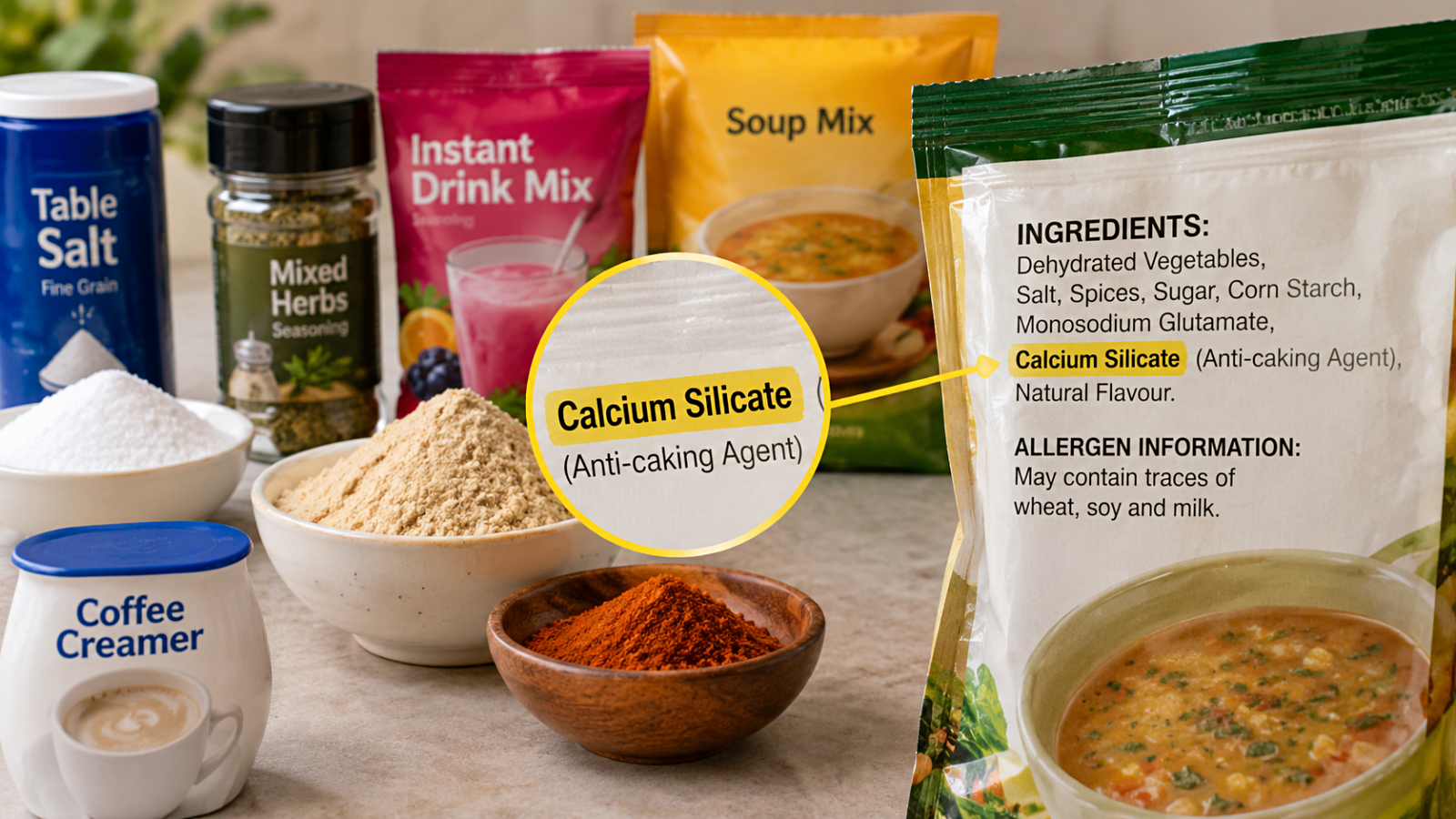
"Its role is primarily functional – it improves texture, handling, and shelf life without adding nutritional value," explains Himanshi Sharma, Chief Clinical Nutritionist at ISIC Multispeciality Hospital. Sharma elaborates that consumers are most likely to encounter calcium silicate in products where moisture ingress can lead to undesirable clumping. This includes, but is not limited to, certain types of table salt, diverse spice and seasoning powders, powdered drink mixes, dehydrated soup mixes, non-dairy coffee creamers, and other dry food preparations. The presence of calcium silicate is not ubiquitous in these categories; therefore, vigilant consumers are encouraged to consult the ingredient list, searching for either "calcium silicate" or "INS 552."
While the name might evoke thoughts of dietary calcium, Sharma is unequivocal: "Despite its name, calcium silicate should not be considered a meaningful source of dietary calcium." This distinction is vital for public understanding, as it clarifies that the substance’s inclusion is for textural and preservation purposes, not for nutritional fortification.
Regulatory Landscape and Safety Assessments
The use of calcium silicate in food is subject to regulation by food safety authorities worldwide. In India, it is permitted as an anticaking agent, a designation that aligns with its authorized uses in other international regulatory systems. However, regulatory approval does not equate to unlimited consumption.
The European Food Safety Authority (EFSA), a prominent body in food additive assessment, has highlighted that the long-term safety data available for calcium silicate are limited. This observation underscores the ongoing need for research and regulatory review to ensure the continued safe use of such additives. "European Food Safety Authority (EFSA) has noted that the available long-term safety data for calcium silicate are limited, so research and regulatory review remain important," Sharma reiterates.
This cautious approach from regulatory bodies suggests that while current evidence does not point to immediate widespread harm at typical consumption levels, a comprehensive understanding of potential chronic effects is still evolving. The absence of definitive long-term data necessitates a prudent approach from both regulators and consumers.
Understanding the Body’s Interaction with Calcium Silicate
A key question for consumers revolves around what happens to calcium silicate once it enters the digestive system. Sharma sheds light on this aspect, referencing scientific evidence: "According to the available evidence reviewed by EFSA, silicates dissociate only to a limited extent in the gastrointestinal tract, and absorption of the silicate component is considered very low."
This means that the majority of ingested calcium silicate is unlikely to be absorbed into the bloodstream. Instead, it largely passes through the digestive tract, similar to dietary fiber. "Much of the material therefore passes through the digestive system rather than entering the bloodstream in significant amounts," Sharma explains.
While trace amounts may be absorbed and processed by the body, it’s crucial to reiterate that calcium silicate is not a significant source of either calcium or silicon for nutritional purposes. The body’s natural mechanisms are efficient in handling these low levels of absorption, minimizing the potential for systemic impact.
Potential Health Implications: Navigating the Unknowns
The concern for many consumers lies in the potential for adverse health effects arising from excessive or prolonged consumption of calcium silicate. Currently, the scientific community acknowledges limitations in defining the precise impacts of very high or chronic dietary exposure in humans.
Sharma elaborates on the findings: "EFSA reported very low absorption and no indication of genotoxicity or developmental toxicity in the available studies, but also highlighted gaps in long-term toxicity data." While studies have not indicated genotoxic (damaging to DNA) or developmental toxicity, the lack of extensive long-term studies means that definitive conclusions about the effects of sustained, high-level intake cannot be drawn.
It is worth noting that some animal studies, conducted at very high doses significantly exceeding typical human dietary intake, have reported the accumulation of silicon in organs like the liver and kidneys. Sharma clarifies, "This does not mean that the amounts present in ordinary foods cause the same effects, but consumers should not assume that unlimited exposure is harmless." This observation serves as a reminder that while current evidence suggests safety at normal levels, prudence regarding excessive intake is warranted.
For individuals who experience persistent digestive issues or harbor concerns about their regular exposure to food additives, Sharma advises, "If someone experiences persistent digestive symptoms or has concerns about repeated exposure, discussing the diet with a healthcare professional is sensible." Consulting with a qualified healthcare provider can offer personalized advice and address individual health concerns.
The Consumer’s Choice: To Avoid or Not to Avoid?
The question of whether to actively avoid foods containing calcium silicate is a common one. Sharma offers reassurance: "Consumers do not generally need to avoid a product simply because it contains calcium silicate." The current regulatory framework and available scientific evidence suggest that its use as an anticaking agent at permitted levels is considered safe for the general population.
However, this does not negate the broader principle of mindful eating. Sharma advises a holistic approach: "It is always sensible to look at the overall ingredient list and choose a balanced diet with fewer highly processed foods." This recommendation aligns with general nutritional guidance that emphasizes whole, minimally processed foods.
For individuals with specific medical conditions, such as sensitivities to additives or a history of digestive disorders, or for those who are particularly concerned about additive exposure, seeking professional guidance is paramount. "If you have a specific medical condition or concerns about frequent exposure to additives, discuss your diet with a qualified nutritionist or doctor," Sharma concludes. This personalized approach ensures that dietary choices are made with informed consideration of individual health needs and sensitivities.
In conclusion, calcium silicate plays a subtle yet significant role in the modern food system, primarily as an enabler of texture and shelf-life in powdered foods. While its name might spark curiosity about its calcium content, its primary function is purely technical. Regulatory bodies have deemed it safe for use within specified limits, and available evidence indicates very low absorption and minimal risk of immediate toxicity. Nevertheless, the ongoing scientific exploration into long-term effects, coupled with the general wisdom of maintaining a balanced diet, encourages consumers to remain informed and engage in mindful food choices, consulting with healthcare professionals when necessary.
