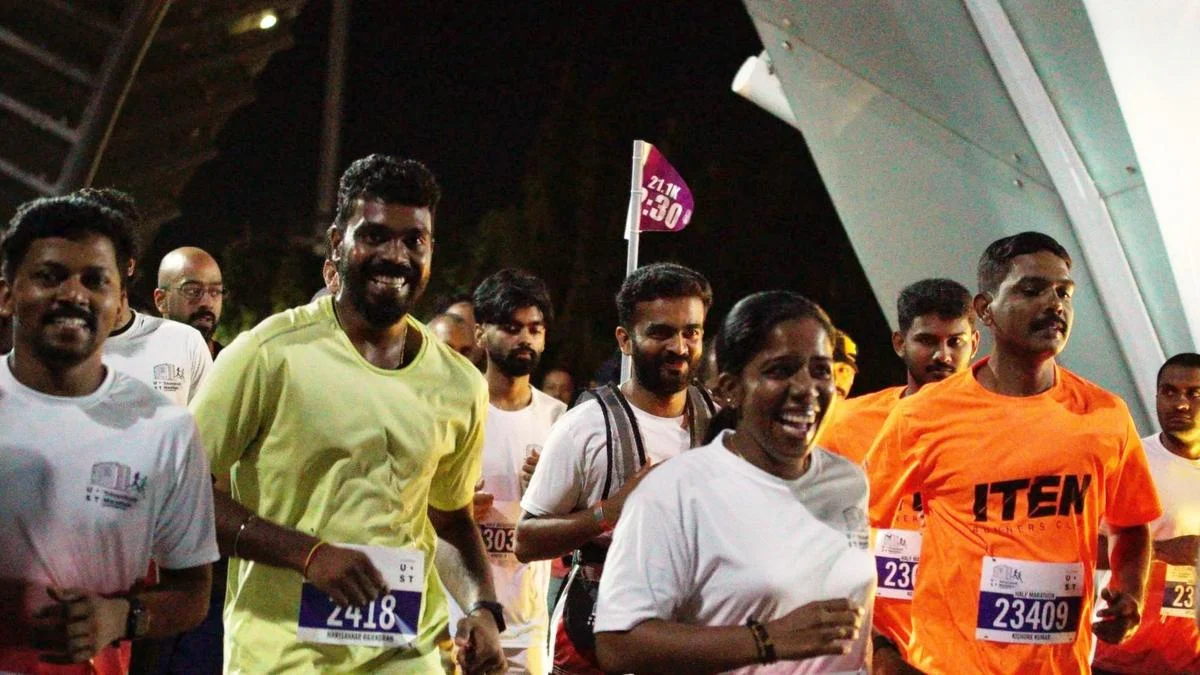
Leh, Ladakh – The stark, breathtaking beauty of Ladakh, often referred to as the "Roof of the World," is set to once again host a spectacle of human endurance and self-discovery. The Ladakh Marathon, heralded as the "World’s Highest Marathon," is gearing up for its 13th edition, a four-day extravaganza of running scheduled from September 10th to 13th. This iconic event, organized by the High Altitude Sports Foundation, promises to push the boundaries of athletic achievement while offering participants an unparalleled opportunity to connect with the rugged terrain and rich culture of the region.
Chewang Motup Goba, the visionary Chairperson of the High Altitude Sports Foundation, encapsulates the profound impact of the marathon. "What stays with me the most is seeing a first-time runner at the start, unsure of what lies ahead, and then seeing that same person cross the finish line," he shares. "Somewhere along the way, they discover what they are capable of, and they also discover Ladakh." This sentiment underscores the event’s dual purpose: fostering athletic prowess and igniting a deeper appreciation for the unique landscape and spirit of Ladakh.
The 13th edition promises to be the most expansive yet, featuring six major races catering to a wide spectrum of running abilities. From the extreme challenge of the 122-km Silk Route Ultra and the formidable 72-km Khardung La Challenge, to the more traditional full and half marathons, and shorter 11.2 km and 5 km runs, there is a race for every ambition. The event is anticipated to draw over 10,000 visitors from all 28 Indian States and 6 Union Territories, alongside a significant contingent of international runners. The substantial prize pool of ₹1 crore further elevates the stakes and attracts elite athletes. "After 13 editions, seeing runners from 28 countries and six continents, and from almost every part of India, is something we can be proud of," Goba remarks, highlighting the marathon’s growing global recognition.
This year’s edition is particularly noteworthy as it continues to break barriers and inspire individuals from all walks of life. We delve into the preparations and motivations of five participants, each at a different stage of their running journeys, to understand the unique challenges and rewards of competing in the "World’s Highest Marathon."

The Transformative Power of the Ladakh Marathon: Insights from Participants
Sparsh Jain: From Cricketer to Ultra-Runner, Embracing Humility at Altitude
For Sparsh Jain, a business owner from New Delhi, running was initially a byproduct of his cricketing days. "Earlier, it just used to be a 10-12 km run for fitness; I never worried about pace or time," he recalls. His perspective shifted dramatically in 2023 after completing his first half-marathon, igniting a passion for organized running events.
His inaugural visit to Ladakh in 2023 for a half-marathon proved to be a pivotal experience. Standing at the finish line of the grueling 72-km Khardung La Challenge, one of the most demanding races in the Ladakh Marathon, sparked a profound realization. This encounter with ultra-racing – any footrace exceeding the traditional marathon distance of 42 km – was life-changing. "I knew I had to feel it myself once," Jain states, referring to the allure of ultra-distances.
His dedication to ultra-running has seen him conquer two formidable Ladakh races: the Khardung La Challenge in 2024, completing it in an impressive 10 hours, 33 minutes, and 24 seconds, followed by the Silk Route Ultra in 2025, finishing in 20 hours, 48 minutes, and 43 seconds. Now, he is preparing to tackle the Khardung La Challenge once more.
Jain’s preparation is meticulous. He works closely with a running coach, engages in elevation training on Delhi’s flyovers, and makes regular trips to Rishikesh for hill training. His regimen also includes participation in events like the Lake to Lake Ultra in Chandigarh and Tuffman Mashobra, integrating strength, conditioning, and mobility work, with a balanced schedule of three running days interspersed with three strength training sessions.

The Ladakh Marathon has instilled a profound sense of humility in Jain. "There are times when you feel like you’ve done a lot and can do anything. But when you come back here, you realize that, no, there is still a lot to do," he reflects. This continuous pursuit of improvement, coupled with the respect for the mountain’s challenges, defines his approach to the sport.
Oliver Jones: A Bengaluru-Based Entrepreneur’s Journey to "Greater India"
Oliver Jones, a Welsh entrepreneur now based in Bengaluru, discovered running in 2020, inspired by his wife’s passion for the sport. "I wanted to spend more time with her, so I said that I loved it too," he admits with a smile. Their initial runs in city parks soon evolved into participating in races, a journey that has allowed them to explore India in a unique way. "Once we started racing, we found that we were able to travel India a lot more, and had more excuses to see every city. And running a marathon in every city forced us to understand it on its own terms," Jones explains.
He views ultra-races as gateways to experiencing "greater India," venturing beyond the metropolitan hubs into the heartland. Oliver and his partner have previously experienced the Ladakh Marathon, successfully completing a full marathon in 2025 in 3 hours, 46 minutes, and 4 seconds.
This year, they are setting their sights higher, registering for the formidable 72-km Khardung La Challenge, which he describes as "the longest run we have ever raced." Their rigorous training includes incorporating hill running, with weekend expeditions up and down Nandi Hills near Bengaluru. To simulate the hypoxic conditions of Ladakh, they also engage in "hypoxic training in swimming pools, to get used to exerting yourself with less oxygen." Their routine is further bolstered by three days of home gym workouts, focusing on lower body strength, and consultations with physiotherapists who assist in race preparation by working on strength, flexibility, and identifying weaknesses.

For Jones, the Khardung La race represents the pinnacle of his running aspirations in India. "It is one of the highest ones, seems like the most daunting, challenging one and you really have to overcome your fears to complete it," he asserts.
Namghyal Lhamo: A Local Champion’s Ascent to the Silk Route Ultra
Namghyal Lhamo, hailing from the village of Domkhar Gongma in Ladakh, possesses a natural advantage due to her lifelong acclimatization to the region’s thin air. "We, too, struggle with breathing a little bit, but it is not as bad as for people from outside Ladakh," she notes, acknowledging the inherent challenges even for locals.
Her running journey began in school, where she consistently won contests. Her first official marathon was in Ladakh in 2014, a milestone that paved the way for numerous other marathons. In 2022, she transitioned to ultra-distances, securing victory in the Khardong La Challenge an impressive four consecutive times, with her personal best standing at 8 hours, 12 minutes, and 42 seconds, achieved in 2023.
This year, Namghyal is embarking on her most ambitious challenge yet: the 122-km Silk Route Ultra, a race reserved for seasoned participants of the Khardong La Challenge. Her training regimen includes one long run per week, supplemented by two stadium sessions and home-based strength building, as her demanding job as an SPO with the Ladakh Police force limits her gym access. Her diet comprises predominantly home-cooked meals, with a conscious avoidance of junk food. Despite admitting to some pre-race nerves, she radiates quiet confidence: "I have practised well for it and hope that I will finish the race and be on the podium. Let us see."

Sufiya Sufi: A World Record Holder’s Deep Affection for the Ladakh Landscape
Sufiya Sufi, a celebrated endurance athlete with multiple Guinness World Records, is still recovering from her recent extraordinary feat: a 5000-km run from Kanyakumari to the Karakonam pass, completed in a remarkable 86 days and 2 hours earlier this year. Despite not being fully recovered, the 122-km Silk Route run holds a special place in her heart, having completed it three times previously.
Having participated in the Ladakh Marathon for over five years, Sufiya is intimately familiar with the unique demands of mountain running. "You have to be there for long and train there as much as possible," she emphasizes, having arrived in Ladakh on August 27th for dedicated training. Her recent Kanyakumari-Karakonam journey also involved 15-20 days of running in the Ladakh region, further aiding her body’s adaptation. "My body has adapted a lot," says the former aviation sector professional, who took up running in 2017 after her health began to suffer due to night shifts. "I started running three kilometers for fitness, and then it became my passion."
When training for specific events like the Ladakh Marathon, Sufiya prioritizes rehabilitation, functional exercises, and meditation over sheer mileage. "Though I include a weekly long run, which could be 40, 50, 60 or 70 kms, depending on what the next challenge is," she explains. Sufiya, the previous year’s Silk Route run winner with a time of 19 hours and 12 minutes, declares, "Ladakh is my favourite place to run, actually. I just love it, because it is not only a marathon but a festival for everyone."
Dr. Lakshmi Roopesh: A Dentist’s Journey from 100 Meters to the Khardung La Challenge
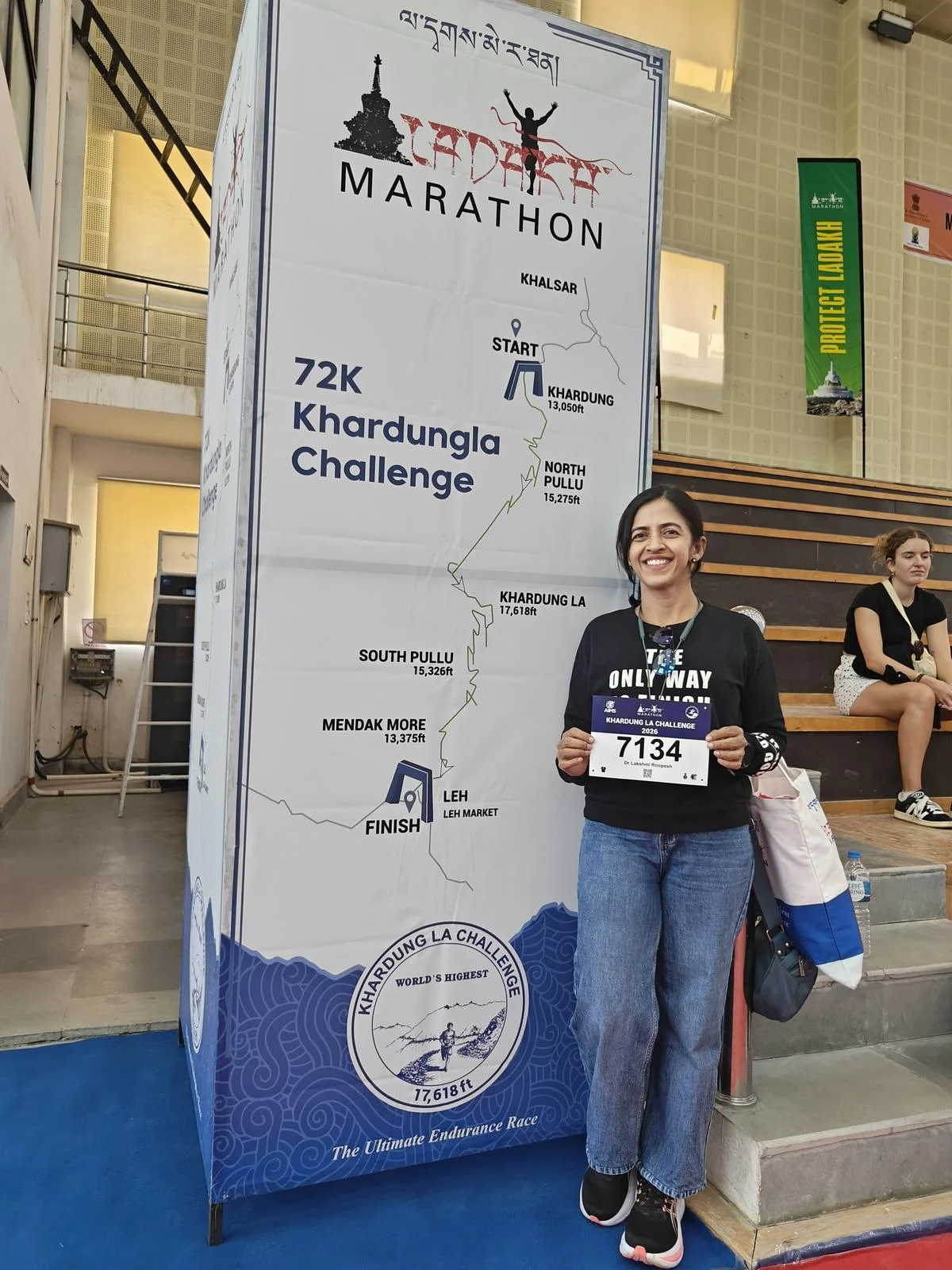
Dr. Lakshmi Roopesh, a dentist from Bengaluru, began her running journey in 2017 with a humble beginning. "I could not even run 100 meters," she admits. Her progress since then has been remarkable, marked by several full marathons and two ultras of approximately 50 kilometers. This year, she is set to tackle her most challenging distance yet: the 72-km Khardung La Challenge at the Ladakh Marathon.

"It is not just a run, but a challenge," states Dr. Roopesh, who has previously completed a half-marathon (in 2 hours and 51 minutes) and a full marathon (in 5 hours and 39 minutes) at the Ladakh Marathon. She identifies the low oxygen levels, rapid altitude gain, and stringent cutoff times as key factors contributing to the race’s difficulty.
Her dream of conquering the Khardung La Challenge, sparked in 2023 by the electrifying atmosphere at the finish line, has driven her to meticulous preparation. She has enlisted the guidance of Manish Jaiswal, one of India’s most respected ultra-running coaches. Her training program is comprehensive, encompassing regular strength and conditioning sessions under the tutelage of a personal physiotherapist and close collaboration with a nutritionist. Dr. Roopesh views this upcoming run as a crucial test of her limits. "What I am looking forward to is what the mountains will teach me on this journey. They have their own way of telling you things about life," she concludes, highlighting the profound philosophical dimension of her participation.
The High Altitude Sports Foundation: A Commitment to Promoting Health and Culture
The High Altitude Sports Foundation, the organizing body behind the Ladakh Marathon, plays a pivotal role in promoting sports and healthy lifestyles in the challenging high-altitude environment of Ladakh. Established with the aim of harnessing the region’s unique geography for athletic pursuits, the foundation has successfully cultivated a globally recognized event.
Chronology of the Ladakh Marathon:

- Early Years (Pre-2010): Seeds of the idea for a high-altitude marathon were sown, driven by a desire to showcase Ladakh’s potential for adventure sports.
- 2010: The inaugural Ladakh Marathon took place, marking a significant step in establishing Ladakh as a premier destination for endurance running.
- 2011-2020: The event steadily grew in scale and reputation, attracting more participants, expanding the race categories, and garnering international attention. The inclusion of longer ultra-marathons like the Silk Route Ultra and Khardung La Challenge began to define its extreme nature.
- 2020-2021: The global pandemic presented challenges, leading to potential postponements or scaled-down versions, but the commitment to the event remained.
- 2022-Present: The marathon has rebounded with renewed vigor, seeing record participation numbers and further solidifying its status as the "World’s Highest Marathon." The focus has increasingly shifted towards not just the physical challenge but also the cultural immersion and personal transformation experienced by runners.
Supporting Data and Growth:
The growth of the Ladakh Marathon is evident in its increasing participant numbers, the diversity of nationalities represented, and the expansion of race distances. The projected 10,000 visitors for the 13th edition, encompassing participants and their support staff, highlight the significant economic and cultural impact the event has on the region. The ₹1 crore prize pool underscores the event’s professional standing and its ability to attract top-tier athletes.
Official Responses and Vision:
Chewang Motup Goba’s vision extends beyond just organizing races. "We aim to promote sports in high-altitude regions, encourage a healthy lifestyle, and provide a platform for athletes to challenge themselves in an extraordinary environment," he states. The foundation actively collaborates with local communities, government bodies, and tourism agencies to ensure the event’s success and to maximize its positive impact on Ladakh’s economy and infrastructure.

Implications for High-Altitude Sports and Tourism:
The Ladakh Marathon serves as a powerful testament to the potential of high-altitude regions as venues for extreme sports. Its success has a ripple effect, inspiring similar initiatives in other mountainous terrains and contributing to the burgeoning field of adventure tourism. For Ladakh, the marathon is not merely an athletic event; it is a vital contributor to its economy, a promoter of its unique culture, and a symbol of the resilience and spirit of its people. The event encourages an appreciation for the delicate ecosystem of Ladakh, promoting responsible tourism and environmental awareness among its global participants. As the "World’s Highest Marathon" continues to evolve, it promises to inspire countless more individuals to push their limits, discover their inner strength, and embrace the unparalleled beauty of Ladakh.