

India’s automotive landscape is currently undergoing a seismic shift, driven by a dual mandate: the urgent need to decarbonize the transport sector and the strategic necessity of reducing a staggering reliance on imported crude oil. While the global narrative has largely been dominated by the rapid ascent of Battery Electric Vehicles (BEVs), India’s path to sustainable mobility is proving to be far more nuanced. In this multi-modal transition, flex-fuel technology has emerged as a formidable contender.
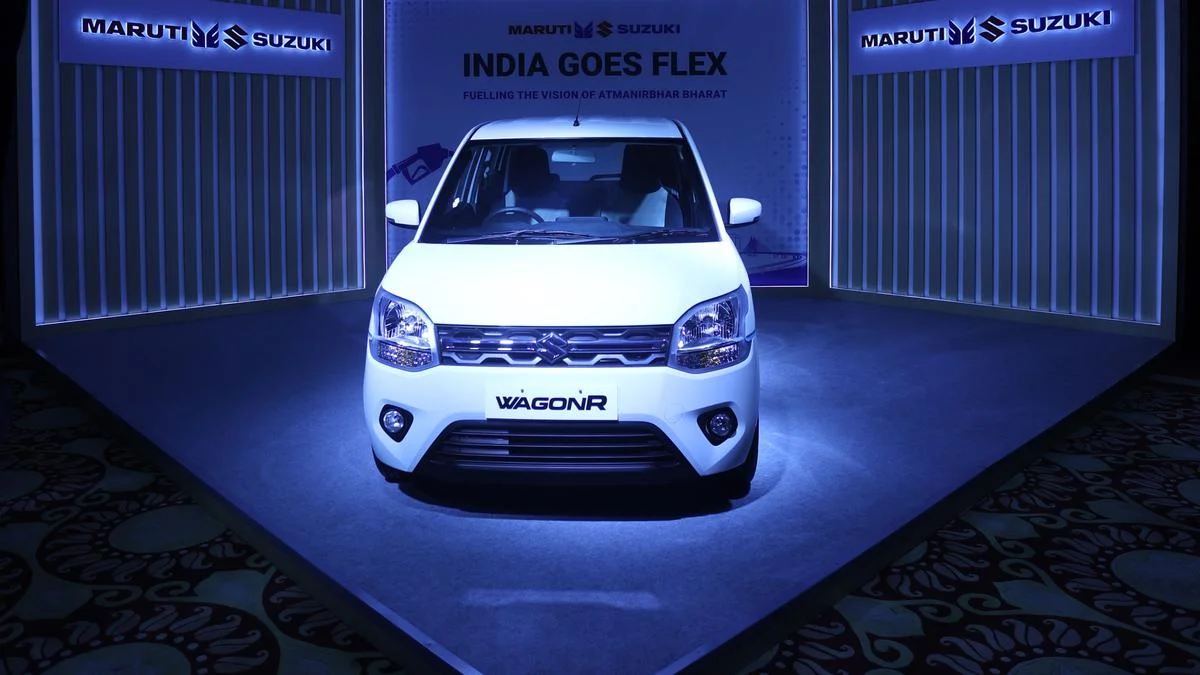
The recent unveiling of the Maruti Suzuki Wagon R Flex Fuel prototype marks a pivotal moment in this journey. By integrating sophisticated ethanol-compatible technology into one of the country’s most iconic and high-volume nameplates, India’s largest carmaker is signaling that the future of green mobility will not be a "one-size-fits-all" solution. Instead, it will be a mosaic of technologies, with flex-fuel internal combustion engines (ICE) playing a central role in bridging the gap between fossil fuels and a fully electrified future.
Main Facts: Engineering the Wagon R for an Ethanol Future
At its core, the Maruti Suzuki Wagon R Flex Fuel is a technical marvel designed to navigate the complexities of varying fuel chemistries. While it retains the familiar silhouette of the popular hatchback, its internal architecture has been extensively re-engineered.
Ethanol Compatibility and the E100 Threshold
The standout feature of this vehicle is its ability to operate on any ethanol-petrol blend, ranging from E20 (20% ethanol, 80% petrol) to E100 (100% hydrous ethanol). This flexibility is critical for a market like India, where ethanol availability and blending infrastructure are still in a state of regional flux.
The Advanced Engine Control Unit (ECU)
To manage the differing caloric values and combustion characteristics of ethanol versus petrol, Maruti Suzuki has equipped the Wagon R with an advanced Engine Control Unit (ECU). This system utilizes smart sensors to detect the ethanol concentration in the fuel tank in real-time. It then automatically adjusts ignition timing and fuel injection parameters to ensure optimal performance, fuel efficiency, and engine longevity, regardless of the blend.

Hardware Reinforcement
Ethanol is inherently corrosive and hygroscopic (it absorbs water). To counter this, Maruti Suzuki engineers have upgraded several critical components:
- Fuel System: The fuel pump, injectors, and fuel lines have been reinforced with ethanol-resistant materials to prevent degradation.
- Engine Components: Valves and valve seats have been hardened to withstand the different combustion temperatures associated with high-ethanol blends.
- Cold Start Technology: Since ethanol has lower volatility than petrol, starting an engine in cold conditions can be challenging. The Wagon R Flex Fuel incorporates specialized heating elements and mapping to ensure seamless starts even in low temperatures.
Chronology: The Evolution of India’s Ethanol Roadmap
The journey toward the Wagon R Flex Fuel did not happen in a vacuum. It is the result of a decade-long policy push by the Government of India to integrate biofuels into the mainstream energy mix.
- 2018: The National Policy on Biofuels: The government set an ambitious target of 20% ethanol blending in petrol (E20) by 2030. This policy provided the initial signal to manufacturers to begin R&D into flex-fuel engines.
- 2021: Accelerating the Timeline: Recognizing the rapid rise in oil prices and the success of early blending programs, the Prime Minister’s Office advanced the E20 target from 2030 to 2025-26.
- December 2022: Maruti Suzuki showcased its first mass-market flex-fuel prototype (the Wagon R) at the SIAM Ethanol Technology Exhibition in New Delhi, demonstrating that the technology was moving out of the lab and toward the production line.
- 2023-2024: Infrastructure Expansion: The government launched E20 fuel at select petrol pumps across the country, expanding from 15 cities to a nationwide rollout. During this period, Maruti Suzuki and other OEMs (Original Equipment Manufacturers) intensified testing to ensure vehicles could handle the increased ethanol concentrations without compromising the 15-year vehicle lifecycle standard in India.
- Present Day: The Wagon R Flex Fuel stands as a production-ready showcase, with an expected market launch in the ₹7.50 – 8.00 lakh price bracket, positioning it as an accessible entry point for eco-conscious consumers.
Supporting Data: The Economic and Environmental Rationale
The push for flex-fuel technology is backed by compelling data regarding India’s economic health and environmental commitments.
Reducing the Import Bill
India currently imports over 85% of its crude oil requirements. According to data from the Ministry of Petroleum and Natural Gas, the country’s oil import bill exceeded $150 billion in the 2022-23 fiscal year. By shifting toward domestically produced ethanol, India aims to save approximately ₹30,000 crore to ₹50,000 crore in foreign exchange annually once E20 blending is fully realized nationwide.
The Agricultural Synergy
Ethanol in India is primarily derived from sugarcane molasses, damaged food grains (like broken rice), and maize. This creates a direct economic link between the automotive sector and the agrarian economy.

- Sugar Industry Support: Ethanol production provides sugar mills with an alternative revenue stream, helping them pay farmers on time and reducing the surplus sugar stock that often crashes market prices.
- Carbon Footprint: From a "well-to-wheel" perspective, ethanol-blended fuels can reduce Greenhouse Gas (GHG) emissions by up to 20-25% compared to pure petrol. In the case of E100, the reduction in tailpipe CO2 emissions is even more dramatic, contributing significantly to India’s "Net Zero" goal by 2070.
Official Responses and Industry Perspectives
The introduction of flex-fuel technology has drawn responses from a wide spectrum of stakeholders, reflecting both optimism and a call for caution.
Maruti Suzuki India Limited (MSIL):
Company leadership has consistently emphasized that India requires a "balanced" approach. "While we are committed to electrification, we believe that for a country of India’s scale, multiple technologies must coexist," a senior Maruti Suzuki executive noted during a recent industry forum. "Flex-fuel offers a pragmatic solution because it utilizes existing internal combustion engine technology while significantly reducing the carbon footprint."
Ministry of Road Transport and Highways (MoRTH):
Union Minister Nitin Gadkari has been the most vocal proponent of flex-fuel vehicles (FFVs). He has frequently urged manufacturers to accelerate the launch of FFVs, suggesting that the transition to ethanol will not only clean the air but also "enrich the farmers of India instead of the oil-producing nations."
Society of Indian Automobile Manufacturers (SIAM):
SIAM has expressed support for the ethanol roadmap but has also highlighted the need for a stable pricing policy for ethanol. Industry experts argue that for consumers to switch to FFVs, the price of ethanol at the pump must be significantly lower than petrol to compensate for ethanol’s lower energy density (which results in slightly lower fuel mileage).
Implications: Challenges and the Path Ahead
The success of the Maruti Suzuki Wagon R Flex Fuel and the broader FFV movement hinges on overcoming several systemic challenges.

1. The Energy Density Gap
Ethanol contains about 33% less energy per gallon than petrol. This means a car running on E100 will typically see a drop in fuel efficiency (mileage) compared to one running on pure petrol. For the Indian consumer, who is notoriously price-sensitive regarding "kitna deti hai" (how much mileage does it give?), this gap must be bridged by a lower fuel price at the pump.
2. Infrastructure and Distribution
While ethanol can be transported via existing networks, high-blend ethanol (like E85 or E100) requires dedicated storage tanks and dispensing pumps at retail outlets. Ensuring that a driver in a rural district has the same access to ethanol as a driver in a metro city is a massive logistical undertaking that requires billions in investment from Oil Marketing Companies (OMCs).
3. Consumer Awareness and Trust
There is a lingering "trust deficit" regarding ethanol. Many older vehicle owners fear that ethanol blends will damage their engines. The industry faces a significant task in educating the public that modern Flex-Fuel Vehicles, like the Wagon R FFV, are purpose-built to handle these fuels without any loss in engine life or increase in maintenance costs.
4. A Multimodal Future
The ultimate implication of the Wagon R Flex Fuel is the realization that the internal combustion engine is not dead; it is evolving. In the coming decade, we are likely to see a stratified market:
- EVs for urban commuting and short distances.
- Hybrids for those seeking efficiency without range anxiety.
- Flex-Fuel/CNG for mass-market buyers who require affordability and utilize the existing refueling habits.
Conclusion
The Maruti Suzuki Wagon R Flex Fuel is more than just a new variant of a popular car; it is a laboratory on wheels and a statement of intent. It proves that the technology to run on 100% renewable fuel is ready for the Indian masses. However, for this technology to transition from a "showcase" to a "mainstream" success, the entire ecosystem—from the sugarcane fields of Uttar Pradesh to the petrol pumps of Kerala—must evolve in unison. If India can align its fuel pricing, infrastructure, and consumer trust, the flex-fuel revolution could become a cornerstone of the nation’s green energy legacy.
