

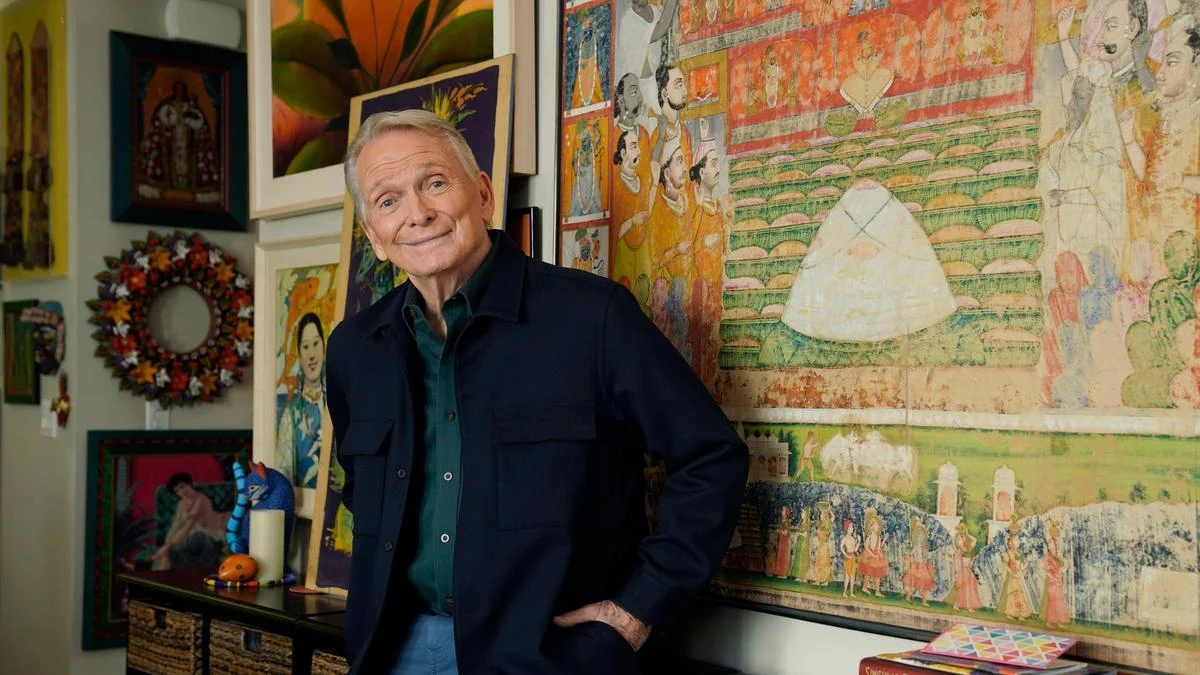
Hollywood’s undisputed king of sparkle, Bob Mackie, whose dazzling creations adorned icons from Cher to Liza Minnelli, has passed away at the age of 87. His death, announced on Monday, September 14, 2026, via his official Instagram account, marks the end of an era in costume and fashion design. Mackie, a visionary who masterfully blended opulence with humor, redefined stage and screen fashion, leaving an indelible mark on popular culture.
Mackie’s career, a luminous tapestry woven over five decades, was characterized by an unparalleled ability to translate personality and performance into unforgettable sartorial statements. His designs were not mere garments; they were extensions of the artists who wore them, amplifying their charisma and solidifying their legendary status. From the flamboyant plumage of Elton John’s stage wear to the iconic, skin-baring ensembles that became Cher’s signature, Mackie’s creations were as bold, brave, and breathtaking as the stars themselves.
His influence extended far beyond the red carpet and concert stages. Mackie’s design acumen was also recognized in the world of haute couture and even the humble world of dolls, with a celebrated Barbie doll clothing collection bearing his name. His genius was repeatedly acknowledged by the industry, evidenced by over 30 Emmy nominations, of which he won nine, and three Academy Award nominations for his cinematic costume work in films such as "Lady Sings the Blues," "Funny Lady," and "Pennies From Heaven."
While the cause of death was not immediately disclosed, Mackie’s team shared a poignant tribute on Instagram, stating, "His genius and extraordinary designs will live on forever, continuing to bring beauty into this world." This sentiment echoes the universal admiration for a designer who understood that true glamour is not just about sequins and rhinestones, but also about a profound understanding of human expression and a generous dose of wit.
The Rise of a Fashion Architect: A Chronological Journey
Born Robert William Mackie in 1939 into a middle-class family in Monterey Park, California, his early life offered no overt hints of the glittering future that awaited him. However, a burgeoning passion for drawing and a keen eye for detail laid the groundwork for his extraordinary career. Mackie’s initial foray into the fashion world was not through formal design school, but rather through a mentorship that proved pivotal. He began his professional journey at the prestigious Los Angeles tailor Henry Noble, where he honed his skills in the craft of garment construction.
His talent quickly garnered attention, leading to his first significant professional break designing for the iconic Marlene Dietrich in the early 1960s. This collaboration was a harbinger of the legendary partnerships to come. Mackie’s ability to capture the essence of his clients and translate it into visually stunning costumes set him apart.
The 1970s marked a period of explosive growth for Mackie’s career. He became synonymous with the vibrant, theatrical fashion of the era, most notably through his extensive work with Cher. Their collaboration on "The Sonny & Cher Comedy Hour" and later on Cher’s solo appearances became legendary. Mackie’s designs for Cher were daring, innovative, and unapologetically glamorous, pushing the boundaries of what was considered acceptable for female performers. He understood that Cher was not just a singer but a show-woman, and his costumes were integral to her captivating stage persona.
Simultaneously, Mackie’s association with other musical titans, including Elton John, further cemented his reputation as the go-to designer for artists who dared to be different. John’s flamboyant stage costumes, often adorned with intricate embroidery, feathers, and glittering embellishments, became as much a part of his musical identity as his piano playing. Mackie embraced the theatricality of these performances, creating garments that were not just clothing but works of art designed to command attention.
His impact on television was equally profound. For 11 years, Mackie served as the principal costume designer for "The Carol Burnett Show," a role that allowed him to showcase his versatility and his remarkable sense of humor. It was during this time that he created what is arguably his most iconic television costume: the "curtain dress." Worn by Carol Burnett in a sketch satirizing the classic film "Gone with the Wind," the dress, made from actual drapery fabric and complete with a brass curtain rod balanced on Burnett’s shoulders and a valance as a hat, was a stroke of comedic genius. This unforgettable creation, a testament to Mackie’s ability to blend high fashion with slapstick, now resides in the collection of the Smithsonian’s National Museum of American History, a permanent testament to his cultural significance.
Throughout the ensuing decades, Mackie continued to dress a constellation of stars, including Barbra Streisand, Tina Turner, and Diana Ross. His influence permeated the world of film, earning him Academy Award nominations for his work on films that demanded period authenticity blended with cinematic flair. His ability to research historical styles and imbue them with his signature modern sensibility made him a sought-after collaborator for filmmakers.
Beyond his work with individual artists, Mackie also ventured into the realm of doll design, creating a collection for Barbie that brought his sophisticated aesthetic to a new generation of admirers. This expansion demonstrated his understanding of how his design principles could translate across different mediums and audiences.

A Signature Style: Sequins, Rhinestones, and a Dash of Wit
Bob Mackie’s design philosophy was a masterful alchemy of opulence and personality. He was a pioneer in the lavish use of sequins, rhinestones, and glittering embellishments, transforming them from mere decorative elements into integral components of his creations. His garments often shimmered and sparkled under stage lights, capturing the attention of audiences and elevating the performances of his clients.
However, to define Mackie solely by his love for all things sparkly would be an oversimplification. Beneath the dazzling exterior lay a profound understanding of proportion, silhouette, and the power of a well-placed detail. He was a master of creating garments that were both glamorous and flattering, designed to enhance the natural beauty and charisma of the wearer. His designs were often bold and daring, pushing the boundaries of conventional fashion, yet they never felt gratuitous. There was always an underlying intelligence and purpose to his aesthetic choices.
Perhaps one of Mackie’s most enduring contributions was his ability to infuse his designs with a sense of humor and playfulness. The "curtain dress" for Carol Burnett is a prime example of this, but his wit was a recurring element in many of his creations. He understood that performance art often benefits from a touch of the unexpected, the slightly absurd, and the delightfully camp. This made his work resonate with audiences on multiple levels, offering both visual spectacle and a sense of joy.
Mackie’s approach to costume design was deeply collaborative. He didn’t just design clothes; he worked closely with his clients to understand their vision, their comfort levels, and the specific demands of their performances. This intimate understanding allowed him to create garments that felt like a natural extension of the artist’s persona, rather than something imposed upon them. His ability to forge such strong creative partnerships is a testament to his interpersonal skills and his genuine passion for his craft.
Industry Tributes and the Enduring Impact
The news of Bob Mackie’s passing has sent ripples of grief and admiration through the entertainment industry and the fashion world. Tributes have poured in from the many stars he adorned and the colleagues he inspired.
Cher, a lifelong muse and friend, was among the first to express her sorrow, stating, "Bob Mackie. I’m so sad. I’m so happy I got to see him. He was the most incredible, talented, beautiful person. He made me feel like a queen. I’m going to miss him forever." This sentiment speaks volumes about the personal connection Mackie forged with his clients, extending beyond professional admiration to deep personal bonds.
Fashion historian and critic, Valerie Steele, commented on Mackie’s legacy, saying, "Bob Mackie was a true titan of American fashion. He understood the power of costume to define a character and to elevate a performance. His work was bold, innovative, and undeniably glamorous. He brought a sense of theatricality and wit to everything he touched, leaving an indelible mark on popular culture."
Industry publications and news outlets are reflecting on his extensive career, highlighting his innovative use of materials, his groundbreaking silhouettes, and his ability to adapt to changing trends while remaining true to his unique aesthetic. Many are pointing to his work as a key influence on contemporary fashion, particularly in the realms of stage wear and red carpet glamour.
The implications of Bob Mackie’s passing are far-reaching. He not only dressed some of the most iconic figures of the 20th and 21st centuries but also fundamentally shaped the visual language of entertainment. His legacy is a testament to the power of creative vision, the importance of meticulous craftsmanship, and the enduring allure of glamour when infused with intelligence and a sense of fun.
Mackie’s designs were more than just fabric and thread; they were expressions of confidence, individuality, and the sheer joy of performance. As we mourn his loss, we can take solace in the vibrant, glittering tapestry of work he leaves behind, a legacy that will continue to inspire and dazzle for generations to come. The world of fashion and entertainment has lost a true maestro, but the sparkle he brought to the world will forever remain.
