

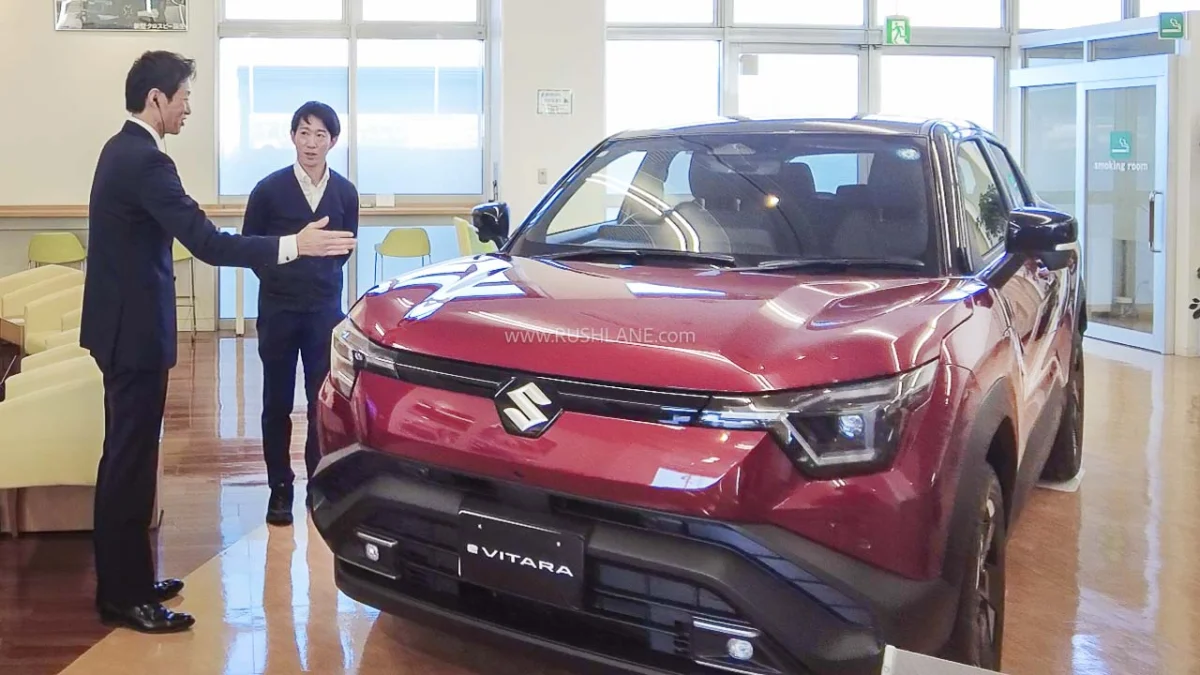
In a historic shift for the global automotive industry, Maruti Suzuki India Limited (MSIL) has announced a landmark achievement that underscores India’s rising prominence as a world-class manufacturing hub. The company has officially crossed the cumulative export milestone of 100,000 units to Japan, comprising three of its most strategically significant models: the Jimny 5-door, the Fronx crossover, and the all-electric eVitara.
This achievement is not merely a statistical success for Maruti Suzuki; it represents a fundamental paradigm shift in the decades-long partnership between India and Japan. For the first time, Japan—a nation renowned for its stringent quality standards and a powerhouse of automotive engineering—has emerged as the second-largest export market for Maruti Suzuki. This reversal of the traditional "technology-flow" (where Japan typically exported expertise and kits to India) highlights the maturity of Indian manufacturing ecosystems.
The Core Achievement: A New Export Powerhouse
The milestone is anchored by the exceptional performance of three specific models that have resonated deeply with Japanese consumers. During the 2025-26 fiscal year, these India-made vehicles propelled Suzuki to become the number one vehicle importer in Japan, surpassing traditional European luxury brands and other international manufacturers that have historically dominated the Japanese import segment.
Remarkably, vehicles manufactured by Maruti Suzuki in India accounted for nearly 100% of Suzuki’s total imports into its home market during this period. This data point illustrates a strategic consolidation of Suzuki’s global production footprint, with India serving as the primary source for specific high-demand segments in the Japanese domestic market (JDM).
The "Big Three" of the Export Milestone
- The Fronx: A compact crossover that blended SUV styling with urban maneuverability, proving to be the perfect fit for Japan’s dense metropolitan areas.
- The Jimny 5-door: An India-exclusive production model that fulfilled a global demand for a more practical version of the iconic off-roader, which was previously only available in a 3-door format in Japan.
- The eVitara: Maruti Suzuki’s first foray into the Battery Electric Vehicle (BEV) space, representing the cutting edge of the company’s technological evolution and India’s capability to produce high-tech green mobility solutions.
Chronology of a Success Story: From 2024 to 2026
The journey to 100,000 units was a calculated, multi-phase expansion that began in late 2024. The timeline reflects Maruti Suzuki’s aggressive pivot toward becoming a global export hub.

Phase 1: The Crossover Opening (August 2024)
The export push began in earnest in August 2024 with the shipment of the Fronx. This model served as a litmus test for Indian manufacturing quality in the Japanese market. Its success paved the way for more ambitious projects, proving that Indian-built interiors and fit-and-finish could satisfy the discerning Japanese palate.
Phase 2: The Off-Road Icon (December 2024)
By December 2024, Maruti Suzuki began exporting the Jimny 5-door. While the Jimny nameplate is legendary in Japan, the 5-door variant was a product of Indian engineering and manufacturing ingenuity. Its arrival in Japan addressed a significant market gap, catering to outdoor enthusiasts who required more utility than the traditional "Kei" car version of the Jimny could provide.
Phase 3: The Electric Evolution (September 2025)
The most significant technological leap occurred in September 2025 with the commencement of eVitara exports. As Suzuki’s first global strategic EV, the decision to manufacture it exclusively in India for the world (including Japan) was a massive vote of confidence in Maruti Suzuki’s Gujarat and Haryana facilities. This move effectively transitioned India from a producer of internal combustion engines (ICE) to a hub for future-ready electric mobility.
Supporting Data: Analyzing the Export Surge
The numbers behind this milestone provide a clear picture of Maruti Suzuki’s dominance in the Indian export sector. Japan’s rise to the position of the second-largest export market for MSIL is supported by consistent monthly performance data.
Fiscal Performance (FY2025-26)
During the 2025-26 financial year, the surge in demand for India-made models allowed Suzuki to capture the title of Japan’s top importer. This trend has shown no signs of slowing down, with the momentum carrying forward into the April-August period of the 2026-27 fiscal year.

Monthly Export Leaders (July 2026 Snapshot)
To understand the scale, one only needs to look at the export figures from July 2026, where Maruti Suzuki models dominated the top of the charts:
- Jimny: 5,784 units (2nd most-exported car from India).
- Fronx: 4,570 units (3rd most-exported car from India).
- eVitara: 2,524 units.
The inclusion of the eVitara in the top export list is particularly noteworthy. Exporting over 2,500 electric vehicles in a single month to a market as competitive as Japan indicates that India is successfully navigating the transition to electrification on a global scale. Other models contributing to MSIL’s strong export portfolio include the Dzire, Swift, Ertiga, Baleno, and Celerio, which find favor in markets across Latin America, Africa, and the Middle East.
Official Responses: Endorsement of Manufacturing Excellence
The leadership at Maruti Suzuki views this milestone as a validation of the "Make in India" initiative and a testament to the skill of the Indian workforce.
Hisashi Takeuchi, Managing Director and CEO of Maruti Suzuki, expressed his pride in the achievement, noting that the acceptance of these vehicles in Japan is a "powerful endorsement" of the company’s manufacturing prowess.
"The milestone of over 1 lakh exports of Jimny 5-door, FRONX, and eVITARA to Japan is a powerful endorsement of India’s manufacturing excellence," Takeuchi stated. He further reflected on the historical context of the partnership: "Suzuki originally entered India more than four decades ago to manufacture vehicles for the domestic market. Today, we are witnessing a complete transformation where Maruti Suzuki is producing world-class vehicles that are being exported back to Suzuki’s home country. This demonstrates the trust and confidence that Japanese customers have in the quality of products made in India."

Takeuchi’s comments highlight a significant cultural and industrial shift. The "Maruti" brand, once seen as a local partner to a global giant, has now evolved into a critical pillar of Suzuki’s global supply chain, responsible for high-value products like the eVitara and the Jimny.
Strategic Implications: India as a Global Automotive Hub
The success of Maruti Suzuki’s exports to Japan carries profound implications for the Indian economy and the global automotive landscape.
1. Quality as a Competitive Advantage
Japan has perhaps the highest barrier to entry regarding perceived quality and reliability. By successfully selling 100,000 units to Japanese consumers, Maruti Suzuki has effectively "certified" Indian manufacturing on the global stage. This success will likely make it easier for Indian-made vehicles to penetrate other high-standard markets, such as the European Union and North America.
2. The Shift to High-Value Exports
Traditionally, India’s automotive exports consisted of budget hatchbacks for developing economies. The current milestone involves a premium off-roader (Jimny), a modern crossover (Fronx), and a high-tech electric vehicle (eVitara). This shift toward high-value, tech-heavy exports significantly boosts India’s trade balance and positions the country as a leader in the next generation of mobility.
3. Strengthening the Supply Chain
To meet Japanese standards, Maruti Suzuki’s local vendors and component suppliers have had to upgrade their own processes. This "trickle-down" effect of quality requirements means that the entire Indian automotive ecosystem is becoming more sophisticated, fostering innovation in battery technology, electronics, and precision engineering.

4. Suzuki’s Global Strategy 2030
This milestone aligns perfectly with Suzuki’s long-term global vision, which identifies India as its most important growth driver. By concentrating the production of global models like the eVitara in India, Suzuki is leveraging India’s cost-competitiveness and growing technical expertise to compete with aggressive players in the global EV market, particularly those from China.
Conclusion: A Future Built on Export Excellence
Crossing the 100,000-unit export mark to Japan is more than a celebration for Maruti Suzuki; it is a signal to the global automotive industry that the "Made in India" tag is now synonymous with quality, reliability, and innovation. As the eVitara begins to lead the charge in the electric segment and the Jimny continues to capture the hearts of off-roaders, Maruti Suzuki is well-positioned to remain the vanguard of India’s industrial ambitions.
With Japan now firmly established as a primary destination for Indian cars, the road ahead looks promising. The next million units will likely be defined by further electrification, autonomous features, and a deepening of the synergy between Indian manufacturing and Japanese engineering—a partnership that has truly come full circle.
