

Introduction: The Enduring Legacy of Gloria Steinem and the Uncomfortable Scrutiny of Feminist Style
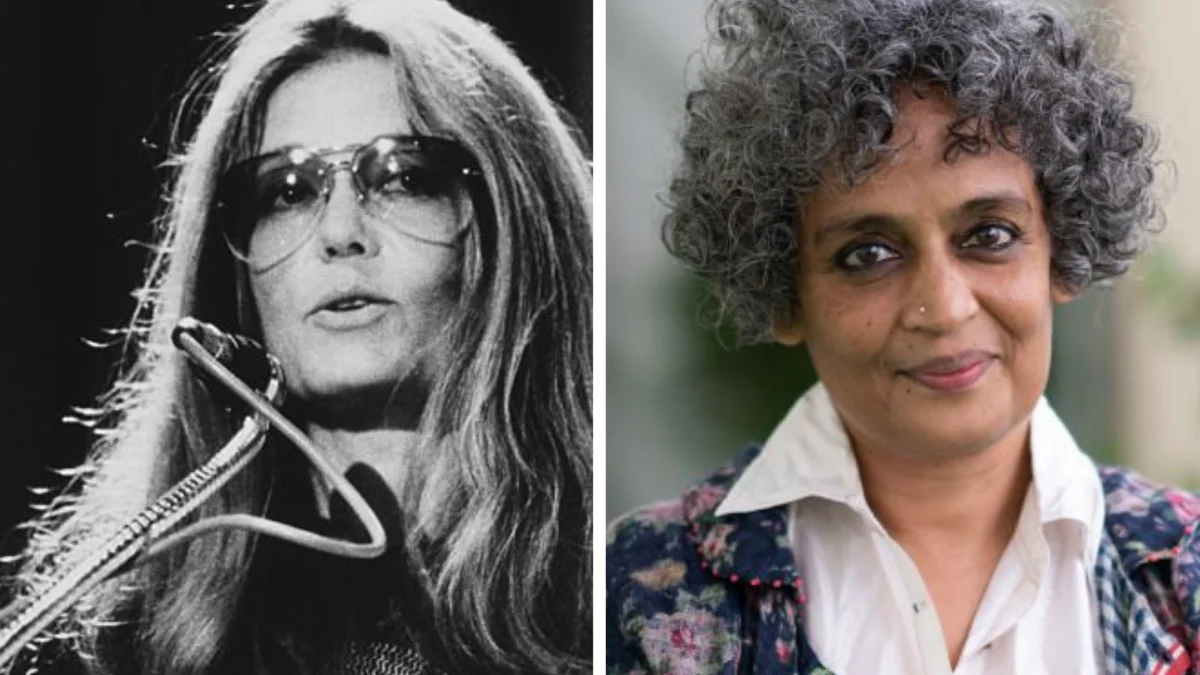
The recent passing of Gloria Steinem at the age of 92 marks the end of an era, but her indelible impact on the fight for gender equality continues to resonate. Steinem, a formidable journalist and activist, dedicated her life to ensuring women were recognized as full citizens, capable workers, insightful writers, and autonomous sexual beings. Yet, beyond her groundbreaking activism, Steinem was also a figure with a distinct and memorable personal style: her signature center-parted, effortless hair, oversized aviator sunglasses, and preference for bell-bottom trousers. This duality—the intellectual powerhouse and the stylish individual—raises a crucial question that has long plagued feminist discourse: why must a feminist "look the part"?
The initial framing of this question, as posed in the original article, "Are you educated? Do you work? Do you wear what you want? Do you vote? Do you have a bank account? Thank feminism," serves as a powerful reminder of the fundamental rights and freedoms that have been hard-won through feminist struggles. However, the subsequent focus on Steinem’s personal aesthetic, and the societal reactions to it, highlights a persistent tension. Her aviators, a practical necessity stemming from a family history of hereditary myopia, were still subject to dismissive commentary, with The Washington Post‘s Maxine Cheshire labeling her a "miniskirted pinup girl of the intelligentsia" in 1968. Even decades later, her sartorial choices were scrutinized, suggesting that the visual presentation of a feminist was as important to some as her intellectual contributions.
This article delves into the complex relationship between feminism and fashion, exploring the historical roots of this scrutiny, examining contemporary examples, and ultimately arguing for a more expansive and forgiving understanding of feminist expression. We will explore how the perceived "look" of a feminist has been both a tool for mainstream appeal and a site of internal policing, and how, in the pursuit of liberation, women have been inadvertently burdened with new aesthetic expectations.

The Double-Edged Sword of Appearance: Steinem, Roy, and the Public Gaze
Gloria Steinem’s sartorial choices, though often understated, were not immune to interpretation and judgment. Her preference for large aviator sunglasses, a practical solution to her vision needs, became an iconic part of her image. As she explained in a 2011 interview with Teen Vogue, "People were always pinching me on the cheek and so I felt I had a very fat face." This personal detail, however, did little to shield her from the gaze of those who sought to diminish her influence by reducing her to her appearance. The "miniskirted pinup girl" label underscores a historical tendency to dismiss women’s intellectual contributions by focusing on their perceived attractiveness or adherence to conventional feminine norms.
In stark contrast, Arundhati Roy, a celebrated author and activist, offers a different perspective. Roy, who identifies as a "natural-born feminist" shaped by her mother’s early lessons in self-reliance, embodies a feminism that is unburdened by aesthetic austerity. Her signature curly bob and kohl-lined eyes are familiar, but so is her evident pleasure in clothing. Roy’s wardrobe, featuring raw-silk kurtas, flowing skirts, and garments from Indian labels like Pero and Eka, demonstrates that her feminism does not necessitate an indifference to her appearance. Her style is a vibrant expression of her identity, seamlessly integrated with her political convictions. Roy’s approach challenges the notion that feminist expression must be outwardly austere or devoid of personal flair, suggesting that embracing femininity and advocating for women’s rights are not mutually exclusive.
This dichotomy between Steinem’s enduring image and Roy’s effortless embrace of personal style highlights a persistent societal paradox. While feminism strives for women to be judged on their intellect and actions, there remains an underlying expectation that feminists should conform to a particular aesthetic. This expectation can manifest in subtle ways, leading to the assumption that a rejection of conventional femininity is a prerequisite for genuine feminist belief.
The Social Media Backlash: Kriti Sanon and the Persistent Policing of Women’s Attire
The digital age has amplified these discussions, with social media platforms often becoming arenas for intense public debate and judgment regarding women’s fashion choices. The case of Indian actress Kriti Sanon, who faced backlash for wearing a bralette-style blouse in a Raksha Bandhan advertisement, exemplifies this trend. Sanon’s subsequent assertion that "culture lives in the heart, not on the neckline" and her questioning of why women are constantly told what to wear resonated with many. However, the campaign was ultimately withdrawn, underscoring the pervasive societal pressure to conform to traditional notions of modesty.

Even within ostensibly progressive online spaces, such as Reddit’s r/AskIndianFeminists, the sentiment that "decency should prevail" emerged. This highlights a deep-seated cultural anxiety surrounding women’s attire, where even within feminist discourse, there can be an underlying tendency to police boundaries and enforce perceived norms. The article aptly posits that if culture cannot be read from a neckline, perhaps feminism cannot be read from an eyebrow either. This suggests that judging a woman’s political convictions based on her appearance is an inherently flawed and superficial approach. The constant demand for women to justify their sartorial choices, regardless of their perceived political alignment, perpetuates a system where women’s bodies and their presentation remain subjects of public scrutiny and control.
The incident involving Kriti Sanon is not an isolated event. It reflects a broader pattern where women, particularly those in the public eye, are subjected to intense scrutiny for their clothing. This scrutiny often stems from deeply ingrained cultural expectations and patriarchal norms that dictate what women "should" and "should not" wear. The argument that "culture lives in the heart, not on the neckline" is a powerful reminder that true cultural values are internal and not merely reflected in outward appearances. However, the persistent withdrawal of campaigns and the ongoing debates on social media indicate that these internal values are still heavily influenced by external perceptions and societal pressures.
Fashion as a Weapon and a Shield: The Historical Roots of Feminist Aesthetic Policing
The discomfort surrounding feminist fashion choices is not a recent phenomenon; it has historical roots deeply embedded in the women’s liberation movement of the 1960s and 70s. For many feminists during this era, rejecting conventional markers of femininity – such as bras, high heels, excessive makeup, and meticulously styled hair – was a deliberate act of defiance against a patriarchal society that commodified and controlled women’s appearance. The burgeoning beauty and fashion industries, which profited from dictating how women should look, were viewed with suspicion.
Linda M. Scott, in her book Fresh Lipstick: Redressing Fashion and Feminism, argues that this initial rejection of compulsory femininity, while understandable, could inadvertently morph into its own form of aesthetic policing. The rejection of conventional femininity, when elevated to a prescriptive standard, could become another way of controlling women, creating a new set of rules for what constituted a "liberated" woman. This created a paradox where, in the act of seeking freedom from societal expectations, some feminists inadvertently imposed new ones.

The idea that certain aesthetic choices were inherently anti-feminist, such as waxing or embracing expensive fashion, reflects this historical tension. The argument often presented was that a true feminist would reject all superficial markers of femininity. This perspective, while rooted in a desire to challenge patriarchal structures, often overlooked the nuanced ways in which women could engage with fashion and beauty. It failed to acknowledge that personal expression, pleasure, and identity could coexist with feminist ideals.
Reclaiming the Narrative: Fashion as Art, Identity, and Joy
The notion that rejecting compulsory femininity is equivalent to rejecting femininity itself is a false dichotomy. As the article powerfully states, "An unshaved limb is no more authentic than a waxed one." The liberation that feminism seeks is not about adopting a uniform appearance, but about granting women the autonomy to make choices about their own bodies and lives. Clothes, far from being mere constraints, can be a canvas for craft, a source of pleasure, a vehicle for fantasy, a declaration of identity, and even a form of art. And sometimes, as the author reminds us, they are simply fun.
The question then becomes: why must fashion always arrive at the feminist table with an apology? The insistence on scrutinizing and questioning women’s fashion choices within feminist circles can be counterproductive. It diverts attention from the core issues of equality and justice and instead focuses on superficial markers. This internal policing can alienate individuals and create an unwelcoming environment for those who do not conform to a narrow definition of what a feminist should look like.
The embrace of fashion, in its myriad forms, can be a legitimate and powerful aspect of feminist expression. It can be a way of reclaiming agency and asserting control over one’s own image. It can be a form of self-care and self-celebration. It can be a subtle or overt way of communicating one’s identity and values to the world. To demand an apology for these choices is to deny women the full spectrum of human experience and expression.

Fashion as a Gateway: Slogans, Statements, and the Power of Visibility
Fashion has also served as a potent vehicle for feminism to enter public consciousness. Maria Grazia Chiuri’s iconic "We Should All Be Feminists" T-shirt for Dior in 2016 brought feminist discourse directly onto the runway, making a political statement wearable and accessible. Similarly, Gloria Steinem’s own "I Had an Abortion" T-shirt was a courageous act of visibility, challenging stigma and sparking conversations. These instances demonstrate how fashion can be a powerful tool for disseminating feminist messages and fostering dialogue.
However, the article wisely cautions against the oversimplification that a slogan on a T-shirt automatically equates to a committed feminist. True feminism is a complex and multifaceted ideology that goes far beyond outward declarations. The power of these fashion statements lies not in their ability to define someone as a feminist, but in their capacity to initiate conversations, raise awareness, and create solidarity.
The core argument here is that a woman’s outward appearance does not need to be a constant, overt political statement. A woman can wear a slogan tee, meticulously choose her earrings, or invest in impractical but beautiful shoes, without it necessarily being a declaration of her feminist credentials. She can appreciate the cut of a sleeve or the shade of her nail polish without feeling the need to justify it as a political act. The pressure to constantly translate personal choices into political statements can be exhausting and ultimately diminish the very freedom that feminism seeks to achieve.
The Unseen Burden: Why Women Are Still Asked to Explain Their Bodies
Despite the progress made, women continue to be expected to make their politics visible on their bodies. Whether they embrace conventional femininity or reject it, their appearance becomes a canvas upon which societal expectations and judgments are projected. A woman who adheres to traditional feminine norms might be seen as conforming, while one who deviates might be perceived as making a deliberate political statement. This creates a no-win situation, where women are constantly under pressure to perform their beliefs through their appearance.

The implication is that an eyebrow, a neckline, or a choice of footwear can somehow encapsulate the entirety of a woman’s political convictions. This reductionist approach not only trivializes the complexities of feminist thought but also places an undue burden on women to constantly articulate and defend their choices. The article’s poignant observation, "And yet, we keep asking her to," underscores the persistent societal demand for women to justify their existence and their choices, particularly through their physical presentation.
Gloria Steinem understood the power of her image and strategically used the attention it garnered to amplify the message of feminism and the work of others. Her auction of personal wardrobe items, which raised funds for her gender equality foundation, is a testament to this. The listing, "Own a piece of history," highlights not just the material value of her possessions but the symbolic weight they carry, representing decades of activism and a life dedicated to advancing women’s rights. Her legacy serves as a powerful reminder that personal style and political conviction can, and indeed should, coexist, and that the fight for equality is best served when we liberate ourselves from the restrictive notions of how a feminist "should" look.
Conclusion: Embracing the Full Spectrum of Feminist Expression
The conversation around feminist identity and appearance is far from over. The legacy of Gloria Steinem, a figure who navigated both profound activism and personal style with grace, invites us to move beyond rigid definitions and embrace a more inclusive understanding of feminist expression. The historical context of rejecting compulsory femininity is important, but it should not lead to a new set of aesthetic mandates.
Ultimately, feminism is about choice, autonomy, and the liberation of women from patriarchal constraints. This liberation extends to how women choose to present themselves. Whether it’s through a perfectly tailored suit, a flowing sari, a bold lipstick, or no makeup at all, a woman’s right to express herself without apology should be paramount. The focus must shift from policing appearances to championing the substantive issues of equality, justice, and empowerment. By recognizing that fashion can be a form of art, identity, and joy, and that not every sartorial choice needs to be a political manifesto, we can foster a more authentic and liberating feminist movement that celebrates the diverse and multifaceted experiences of women. The history of feminism is rich and varied, and so too should be its visual landscape.
