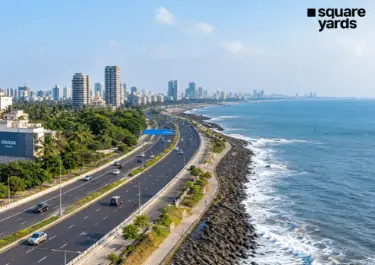
The landscape of Mumbai’s western coastline is undergoing a monumental shift as construction for the Versova-Bhayandar Coastal Road (VBCR) gathers momentum. Designed as a high-capacity arterial corridor, this project represents a critical phase in the city’s ambitious plan to create a seamless coastal link from the tip of South Mumbai to the northern reaches of the Mumbai Metropolitan Region (MMR). By bridging the gap between the affluent suburbs of Versova and the rapidly expanding residential hubs of Bhayandar, the project promises to redefine urban mobility, alleviate decades of traffic congestion, and unlock billions in real estate value.
Main Facts: A Game-Changer for North-South Connectivity
The Versova-Bhayandar Coastal Road is not merely a local highway; it is a strategic extension of the Mumbai Coastal Road Project (MCRP). Currently, the western suburbs rely heavily on three primary north-south arteries: the Western Express Highway (WEH), Swami Vivekanand (SV) Road, and the Link Road. All three are perpetually bottlenecked, leading to grueling commute times that often exceed 90 minutes for a 20-kilometer journey.
The VBCR aims to solve this by providing a signal-free corridor. Once fully operational and integrated with the Bandra-Versova Sea Link and the existing South Mumbai Coastal Road, commuters will be able to travel from Marine Drive to Bhayandar in approximately 30 to 40 minutes—a journey that currently takes nearly two hours during peak sessions.
Technical Breakdown of the Corridor
The project is a sophisticated blend of civil engineering, comprising elevated roads, sea bridges, and underground twin tunnels.
- Total Length: The main coastal section spans approximately 25–26 km, with an additional 5.6 km for the Dahisar-Bhayandar extension.
- Twin Tunnels: A highlight of the project is the 3.9 km twin tunnels connecting Malad and Kandivali, designed to bypass heavily congested residential zones without disturbing the surface-level ecology.
- Elevated Sections: To navigate the complex topography and creek areas, significant portions of the road—such as the Kandivali-Gorai and Dahisar-Bhayandar stretches—will be elevated.
- Signal-Free Movement: By utilizing interchanges and flyovers, the road ensures that traffic flows uninterrupted by local intersections.
Project Chronology: From Blueprint to Reality
The journey of the Versova-Bhayandar Coastal Road has been one of meticulous planning and phased execution. The project was conceived as a necessary northward extension to ensure that the benefits of the coastal road were not restricted to South and Central Mumbai.
Phase 1: Planning and Clearances (Pre-2023)
Initial years were dedicated to environmental impact assessments (EIA) and securing clearances from the Maharashtra Coastal Zone Management Authority (MCZMA). Given that the route passes through sensitive creek areas and near mangrove patches, the design was modified to include more elevated sections and tunnels to minimize the ecological footprint.
Phase 2: Commencement and Diversification (2023 – Early 2024)
Work commenced across multiple "packages" to expedite delivery. Construction began on the Versova-Bangur Nagar stretch and the Goregaon-Malad section. This phase focused on land acquisition and the initial piling work for the elevated structures.
Phase 3: Current Progress (Late 2024)
As of late 2024, construction is progressing rapidly across several strategic locations:
- Goregaon & Lokhandwala: Work on the interchanges that will connect these affluent residential pockets to the coastal road is underway.
- Malad & Kandivali: The focus has shifted to the preparatory work for the twin tunnels.
- Dahisar-Bhayandar Link: Construction on the 5.6 km elevated link has seen significant progress, aimed at connecting the municipal limits of Mumbai to the Mira-Bhayandar Municipal Corporation (MBMC).
Phase 4: Anticipated Completion (2028–2029)
The Brihanmumbai Municipal Corporation (BMC) and implementing agencies have set a target completion window between December 2028 and March 2029. This timeline accounts for the monsoon seasons and the complexity of the tunnel boring process.
Supporting Data: The Infrastructure Roadmap
To understand the scale of the VBCR, one must look at the specific segments that make up this 30+ km corridor. The project has been divided into distinct construction packages to ensure specialized handling of different terrains.
| Project Component | Approximate Length | Key Feature |
|---|---|---|
| Versova to Bangur Nagar | Variable | Elevated road & sea link integration |
| Goregaon to Malad | Variable | Connectivity to commercial hubs like Mindspace |
| Malad-Kandivali Tunnels | 3.9 km (Twin) | Underground bypass of congested suburbs |
| Kandivali to Gorai | 3.78 km | Elevated section over creek areas |
| Dahisar-Bhayandar Link | 5.6 km | Elevated bridge connecting two municipal zones |
| Total Corridor | ~31-32 km | Signal-free north-south movement |
The wider objective remains the reduction of traffic volume on the Western Express Highway by an estimated 30-35%, which would also lead to a significant reduction in carbon emissions from idling vehicles.
Official Responses and Strategic Vision
While specific quotes from the current administration emphasize "speed and quality," the overarching official stance from the BMC and the Maharashtra State Government highlights the project as a "lifeline for the future."
Officials have noted that the VBCR is not an isolated project but a part of a "Grid of Mobility." By connecting the coastal road with the Goregaon-Mulund Link Road (GMLR), the government aims to facilitate seamless East-West connectivity. This ensures that a resident of Mulund or Thane can reach the western coast and then travel north to Bhayandar or south to Nariman Point with minimal resistance.
Environmental concerns have also been addressed in official briefings, with the government committing to compensatory mangrove afforestation and the use of "Bridge Sensor Technology" to monitor the structural health of the sea-link portions without disturbing marine life.
Implications for Real Estate: The "Coastal Premium"
Perhaps the most significant impact of the Versova-Bhayandar Coastal Road will be felt in the real estate sector. Historically, Mumbai’s property prices are dictated by "Time-Distance" rather than "Kilometer-Distance." By slashing travel time, the VBCR is effectively bringing the northern suburbs "closer" to the city’s business districts.
1. The Transformation of Versova and Andheri
Versova and Andheri West are already premium markets. However, the Bandra-Versova Sea Link and the VBCR will turn these areas into central transit hubs. With average prices currently ranging between Rs 32,000 and Rs 46,000 per sq. ft., experts predict a steady 10-15% appreciation as the project nears completion. Top developers like Lodha and Rustomjee are already capitalizing on this by launching luxury projects that highlight "coastal views and connectivity."
2. Goregaon and Malad: The New Commercial Magnets
Goregaon and Malad are home to massive commercial hubs like Mindspace and Nesco. The coastal road’s interchange near Mindspace will make these offices accessible to talent living in South Mumbai or Bhayandar. This synergy is expected to drive demand for both Grade-A office spaces and premium residential apartments.
3. The Emergence of Madh and Gorai
Historically considered "weekend getaways" due to poor road connectivity, Madh and Gorai are poised for a residential boom. The Versova-Madh Bridge and the Gorai section of the coastal road will integrate these coastal pockets into the mainstream. With current prices around Rs 25,000 per sq. ft., these areas offer a "coastal living" lifestyle that was previously hindered by accessibility issues.
4. Bhayandar: The Affordable Frontier
The Dahisar-Bhayandar Link Road is perhaps the most transformative for middle-income families. Bhayandar offers housing at Rs 16,500 – Rs 18,500 per sq. ft.—nearly a third of the price in Versova. Improved connectivity means a professional can live in a spacious home in Bhayandar and commute to a job in Goregaon or Andheri in under 25 minutes.
Market Insights by Locality
| Locality | Avg. Price per sq. ft. (INR) | Key Developers |
|---|---|---|
| Andheri | 32,000 – 42,000 | Lodha, Kalpataru, Rustomjee |
| Versova | 32,000 – 46,000 | Lodha, Rustomjee, Godrej |
| Lokhandwala | 30,000 – 45,000 | Kalpataru, Mayfair Housing |
| Goregaon | 33,000 – 36,000 | Lodha, Wadhwa Group |
| Malad | 30,000 – 35,000 | Kalpataru, Rustomjee |
| Kandivali | 27,000 – 32,000 | Hiranandani, Kalpataru |
| Dahisar | 26,000 – 27,000 | Chandak, Rustomjee |
| Bhayandar | 16,500 – 18,500 | JP Infra, Lodha |
(Source: Square Yards Research)
Conclusion: A Vision for a "Moving Mumbai"
The Versova-Bhayandar Coastal Road is more than just a stretch of bitumen and concrete; it is a vital artery for a city that has long outgrown its infrastructure. By 2029, the project will not only have changed how Mumbaikars travel but also where they choose to live and work.
By integrating the northern-most suburbs into the high-speed coastal network, Mumbai is finally transitioning into a truly polycentric city. The implications—ranging from reduced stress for daily commuters to a robust surge in real estate investments—point toward a future where the "western suburbs" are no longer defined by traffic jams, but by the scenic, signal-free breeze of the Arabian Sea. As construction continues in Goregaon, Malad, and beyond, the dream of a 30-minute cross-city commute is closer than ever to becoming a reality.