

On a humid June morning in 2025, in the Kaliabor region of Assam’s Nagaon district, 24-year-old Niharika Deka took her family’s cattle to graze, stepping in for her mother. By sunset, what seemed like a routine chore had devolved into a medical emergency. An aggressive, relentless itch manifested around her eyelids and lips. Her mother, who had handled the cattle earlier that week, developed similar blistering rashes on her hands.
What followed was a frustrating cycle of clinical trials and errors. Doctors initially suspected a cosmetic allergy—perhaps a new soap or face cream. "The symptoms eased with medication, but the itch would flare up the moment I stepped into the fields or sometimes even just outside the house," Deka recalls. The mystery only unraveled when a pattern emerged across the village: students, farmers, and laborers were all reporting identical dermatological flare-ups. The culprit was eventually identified as a small, white-flowering weed that had quietly carpeted the landscape.
This is the face of Parthenium hysterophorus, an invasive alien species colloquially known as "Congress grass" or "carrot grass." While it has been present in India for decades, it is currently undergoing a terrifying resurgence in the Northeast, transforming from a roadside nuisance into a primary driver of public health distress and agricultural instability.
I. Main Facts: The Anatomy of a Bio-Invasion
Parthenium hysterophorus is native to the tropical and subtropical Americas. It is believed to have entered India in the 1950s, allegedly as a contaminant in imported wheat shipments. Since then, its spread has been nothing short of astronomical. By 2017, the Indian Council of Agricultural Research (ICAR) estimated that the weed had invaded 35 million hectares of land across the country.
The Biological Threat
The weed is not merely a competitor for space; it is a biological aggressor. Each plant can produce between 15,000 and 25,000 lightweight seeds, which are easily dispersed by wind, water, vehicles, and even animal fur. Beyond its reproductive capacity, Parthenium is notorious for its "allelopathic" properties—it releases chemicals into the soil that inhibit the growth of surrounding native plants, effectively creating a monoculture of toxicity.

Human Health Impacts
For humans, the plant is a potent allergen. Exposure to the plant’s pollen or the chemical parthenin found in its leaves and stems leads to:
- Contact Dermatitis: Severe skin rashes, itching, and long-term skin discoloration.
- Allergic Rhinitis: Respiratory issues, including sneezing and hay fever.
- Asthma: Chronic exposure can trigger or exacerbate respiratory distress.
In Niharika Deka’s case, the repeated flare-ups have left permanent dark patches around her eyes and mouth—a source of immense psychological distress. "I am of marriageable age, and my parents are worried," she says, highlighting the social toll of an ecological disaster.
II. Chronology: The Creeping Tide in the Northeast
The history of Parthenium in Assam reveals a shift from localized presence to widespread infestation.
- 1950s: Initial arrival in India.
- 2009–2011: A comprehensive survey conducted along 12 national highways in the Northeast found Parthenium at every single sampled site. At this time, Assam was classified as having "medium" infestation compared to high-infestation states like Karnataka and Andhra Pradesh.
- 2019: A landmark study using climate modeling identified the Northeast, the Western Himalayas, and Peninsular India as the three major "invasion hotspots." While some parts of India were projected to become less suitable for the weed due to extreme heat, the Northeast was flagged as a persistent refuge.
- 2021–2024: Residents in Morigaon and Nagaon began reporting that the weed was outpacing traditional control methods. Farmer Mahesh Nath from Raja Mayong noted that by 2021, the weed covered 70% of his one-acre vegetable plot.
- 2025–2026: The crisis reached a tipping point. Reports of Parthenium-induced allergies surged in Kaliabor, and the weed was detected for the first time in previously "clean" areas like the river island of Majuli.
III. Supporting Data: Why Assam is Vulnerable
The rapid proliferation of Parthenium in Assam is driven by a combination of environmental factors and human activity.
Climatic Suitability
Milon Jyoti Konwar, Principal Investigator of the All India Coordinated Research Project on Weed Management at Assam Agricultural University (AAU), notes that the state’s high moisture levels and moderate temperatures are "perfect" for the weed. Unlike in the arid plains of Central India, where the weed might wither in peak summer, Assam’s humidity allows it to persist and flower almost year-round.

The Construction Connection
Field surveys conducted by Chiranjeev Bezbaruah, Assistant Professor at Kaliabor College, suggest a link between infrastructure development and weed dispersal. Sand extracted from riverbanks for road construction and land-filling is often contaminated with Parthenium seeds. As this sand is transported across the state, the weed is "sown" along new highways and in the foundations of new homes.
The "Baby’s Breath" Trap
A significant factor in the spread is misidentification. Parthenium’s small white flowers bear a striking resemblance to Gypsophila, commonly known as "Baby’s Breath," used in floral arrangements. In Assam, locals have been seen using the toxic weed for:
- Bouquets and hair ornaments.
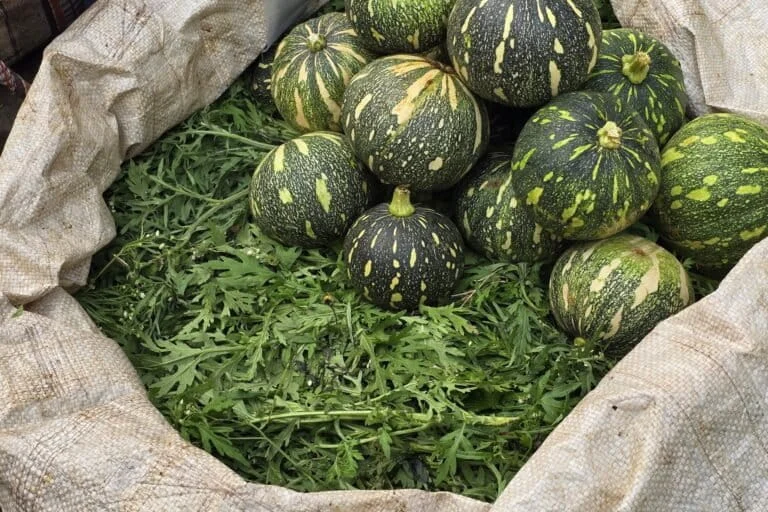
- Lining vegetable baskets: Vendors in local markets use the weed as a cushion for produce, unknowingly transferring seeds from one village to another.
- Decorations: Using the weed in festive decorations, which later gets discarded in home gardens.
IV. Official Responses: A Systemic Vacuum
Despite the escalating crisis, the institutional response remains fragmented. There is a glaring absence of a dedicated, state-specific Standard Operating Procedure (SOP) for the removal and disposal of Parthenium.
The Health Department’s Blind Spot
Perhaps the most concerning gap is in the medical sector. Dr. Phani Pathak, Joint Director of Health Services in Nagaon, admitted that the issue has not formally come to the department’s notice. "Without a sufficient number of confirmed cases directly attributing symptoms to Parthenium, the issue remains off the official radar," he stated. This "catch-22" situation—where a lack of studies leads to a lack of recognition—leaves victims like Niharika Deka to seek treatment through trial and error.
Agricultural and Forest Interventions
While organizations like the ICAR promote "Parthenium Awareness Week" every August, these efforts are often academic. In the field, forest personnel at the Pobitora Wildlife Sanctuary have attempted to clear 52 hectares of the weed, but they face a recurring problem: workers often lack protective gear (gloves, masks, and full-body suits), leading to the very allergic reactions they are trying to prevent.

The "Senna Tora" Strategy
Experts at AAU have suggested biological competition as a management tool. One possibility is the planting of Senna tora (Sicklepod). Though technically a weed itself, it has shown the ability to suppress Parthenium growth in Assam’s soil. However, large-scale implementation of this strategy has yet to be seen.
V. Implications: The High Cost of Inaction
The Parthenium invasion is not just a botanical problem; it is a threat to the foundational pillars of rural Assam.
1. Biodiversity and Wildlife
Parthenium has already been recorded in some of India’s most prestigious protected landscapes, including Kaziranga, Manas, and Orang National Parks. In these ecosystems, the weed displaces native grasses that herbivores like the One-horned Rhinoceros and the Indian Elephant depend on. If the weed continues to spread unchecked, it could lead to a "green desert" where nothing but Parthenium grows, forcing wildlife into increased conflict with human settlements in search of food.
2. Economic Burden on Farmers
For small-scale farmers like Mahesh Nath, Parthenium represents a double economic blow. It increases the cost of cultivation due to the need for expensive herbicides and additional labor for manual uprooting. Simultaneously, it reduces crop yields by competing for nutrients. Nath estimates that even with constant maintenance, the weed still claims 20-30% of his land.
3. Long-term Public Health Crisis
Without a state-led intervention, the Northeast is looking at a future of chronic dermatological and respiratory illness. Wildlife biologist Nilutpal Mahanta of The We Foundation India warns that the current level of concern among citizens is unprecedented for an invasive species. "We have seen water hyacinth and lantana for decades, but they didn’t make people sick. Parthenium does. That changes the stakes entirely," he says.

4. The Danger of Improper Disposal
A critical risk highlighted by recent removal drives is the "re-seeding" effect. Uprooted plants are often thrown into rivers or left in open trucks. This allows the seeds to travel even further. Without a protocol that mandates the burning or deep-pit composting of removed biomass, "clearing" the weed may actually be helping it spread.
Conclusion
The invasion of Parthenium hysterophorus in Assam is a clear signal of ecological volatility. As climate change makes the Northeast an even more hospitable "hotspot" for this toxic weed, the traditional, localized methods of control are proving insufficient.
What is required is a multi-sectoral "War on Parthenium." This includes:
- Public Health Mandates: Training rural healthcare providers to recognize and report Parthenium-related cases.
- Stringent SOPs: Government-mandated protocols for the safe removal, transport, and disposal of the weed.
- Mass Awareness: Campaigns to stop the use of the plant in floral decorations and vegetable transport.
- Integrated Management: Combining chemical, mechanical, and biological controls (like Senna tora) at a state-wide scale.
For Niharika Deka and thousands like her, the "white-flowered plant" is no longer just a weed—it is a shadow over their future. The question remains whether the state will recognize the invasion before the green carpet becomes a permanent fixture of the Assamese landscape.
