

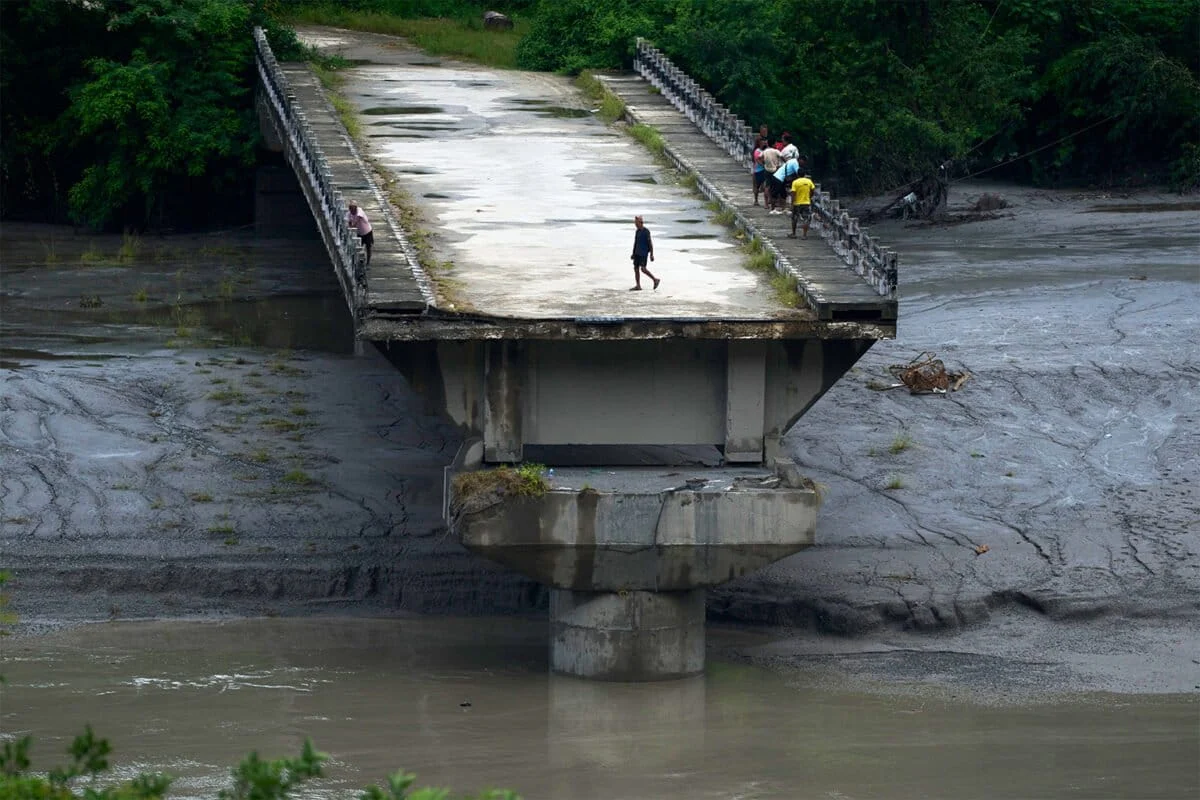
KATHMANDU — For decades, Nepal has anchored its hopes for middle-income status on the turbulent, snow-fed rivers of the Himalayas. The national strategy has been singular: harness the immense "white gold" of its river basins to fuel domestic growth and erase trade deficits through massive electricity exports to India and Bangladesh. However, in late August 2026, the fragility of this blueprint was laid bare.
A series of catastrophic flash floods, originating at the sensitive Nepal-China border, has not only decimated a significant portion of the national power grid but has also ignited a fierce debate over the nation’s energy security. As the climate warms and Himalayan glaciers become increasingly unstable, Nepal faces a pivotal question: Can an export-driven hydropower model survive a century of unprecedented environmental volatility?
Main Facts: A Sector in Crisis
The floods that tore through the Trishuli River basin starting on August 26, 2026, represent the single most damaging event in the history of Nepal’s power sector. The immediate statistics provide a harrowing snapshot of the destruction:
- Generation Loss: Approximately 281 megawatts (MW) of installed generation capacity was knocked offline, representing roughly 10% of the country’s total national grid capacity.
- Infrastructure Destruction: The 14.1-MW Devighat Hydroelectric Plant, a cornerstone of the grid for 42 years, was entirely wiped out. Additionally, a 25-MW solar power plant was severely damaged.
- Future Delays: Four major projects currently under construction, totaling 700 MW of future capacity, sustained significant damage, pushing back Nepal’s energy targets by years.
- Human Cost: A massive humanitarian crisis is unfolding at project sites. While government records confirm 639 people missing, the Independent Power Producers Association of Nepal (IPPAN) reports that up to 983 engineers and laborers remain unaccounted for, many feared trapped in submerged tunnels.
- Economic Impact: Early estimates suggest the damage to the hydropower sector could reach hundreds of billions of Nepali rupees, threatening to reverse the country’s recent achievement of becoming a net electricity exporter.
Chronology: The Descent of the Trishuli
The disaster began in the high-altitude regions along the Nepal-China border. On August 26, 2026, following a period of intense, localized rainfall and suspected glacial movements, a massive surge of water entered the Trishuli River system.

By August 27, the floodwaters reached the lower Trishuli basin, gaining momentum and picking up massive amounts of debris. The town of Betrawati Bazar was among the first major settlements to witness the river’s destructive power. Bridges were snapped like toothpicks, and the Pasang Lhamu highway—a vital trade artery—saw major sections swallowed by the river.
On August 28 and 29, the impact on the energy sector became clear. As the flood moved downstream, it hit the Trishuli-Devighat corridor. The Devighat plant, unable to withstand the sheer volume of slush and debris, was overwhelmed. Simultaneously, a critical transmission hub on the banks of the Trishuli was washed away, effectively isolating another 150 MW of power from the national grid.
By September 1, as the waters began a slow recession, the scale of the human tragedy emerged. IPPAN issued an urgent press release detailing the hundreds of workers "out of contact." Search and rescue operations were hampered by the destruction of access roads and the siltation of powerhouse tunnels, making entry nearly impossible for emergency teams.
Supporting Data: Engineering Success vs. Failure
The 2026 flood served as a brutal "stress test" for various engineering philosophies. A clear pattern emerged: projects designed with cost-efficiency as the primary metric suffered the most, while those incorporating high-resilience engineering survived.

The Tale of Two Designs
The most striking comparison lies between the destroyed Devighat plant and the 100-MW Super Trishuli Hydropower Project. Despite being located 100 kilometers downstream of the hardest-hit areas, Super Trishuli emerged largely unscathed.
According to project surveyor Laxman Devkota, the project’s survival was not accidental. It was the result of two specific design choices:
- Strategic Setback: The powerhouse was located significantly further from the riverbed than older designs.
- Advanced Hydrological Modeling: Construction was preceded by a rigorous flood-probability assessment that accounted for extreme climate scenarios, rather than relying on the standard 20–30 years of historical data.
The Vulnerability of Surface Structures
Data compiled by the Department of Electricity Development shows that surface-built powerhouses, dams, and desanders (basins used to remove silt) were the primary victims of the flood. In contrast, newer projects that utilized underground powerhouses and tunnels were far more resilient.
Experts note that surface structures were historically favored because they are 10% to 15% cheaper to build. However, the 2026 flood has demonstrated that this "saving" is a false economy when compared to the total loss of an asset.

Official Responses: Assessing the Damage
The government of Nepal and industry leaders have responded with a mix of urgency and caution.
Kulman Ghising, former head of the Nepal Electricity Authority (NEA) and former Energy Minister, characterized the event as a "once-in-a-century" disaster. He called for a fundamental shift in how the state regulates project sites. "We need to design the plants resilient to floods and, most importantly, adopt early warning systems as well as robust emergency evacuation measures," Ghising stated. He emphasized the need for longer access tunnels to powerhouses to prevent floodwaters from reaching sensitive electrical equipment.
The Nepal Electricity Authority (NEA) has focused on immediate stabilization. While they managed to restore power to most residential areas within 48 hours by rerouting supply, they have been tight-lipped regarding the long-term impact on export contracts. NEA officials stated that their current priority remains the rescue of trapped personnel, delaying a full technical audit of the damaged grid.
Ram Prasad Dhital, chairman of the Electricity Regulatory Commission (ERC), acknowledged the impending financial burden. He proposed the creation of a dedicated "loss-and-damage fund" for the hydropower sector, noting that the cost of building more resilient infrastructure would inevitably lead to higher tariffs for consumers. "It’s obvious that someone has to pay for it," Dhital remarked, referring to the estimated 10-12% increase in generation costs required for future-proofing.

Implications: A Strategic Rethink
The disaster has forced a confrontation with the "Hydropower-First" strategy that has dominated Nepali policy for decades.
1. The Export Viability Question
Nepal’s Energy Development Roadmap 2025 targets 15,000 MW of exports by 2035. However, Shree Raj Shakya of Tribhuvan University’s Institute of Engineering argues that this export-driven model is now fraught with "double risk."
- Physical Risk: The increasing frequency of Himalayan floods makes large-scale projects high-risk assets.
- Market Risk: As India scales its own renewable energy and prices drop, Nepal’s "clean energy" might become too expensive if generation costs rise by 12% due to necessary safety upgrades.
Shakya argues that Nepal should pivot toward "domestic consumption pragmatism," ensuring that the country’s energy transition (such as electrifying 25% of kitchens and 90% of passenger vehicles by 2030) is not derailed by export obligations.
2. The Solar Opportunity
One of the most significant implications of the flood is the renewed interest in solar energy. Currently, solar accounts for less than 3% of Nepal’s energy mix. The destruction of the Trishuli hydro projects has highlighted the danger of "putting all eggs in one basket."

Energy experts suggest that Nepal should aim for a 20% solar share. Solar plants can be built away from volatile river basins and provide critical power during the winter months when river flows—and thus hydropower output—are at their lowest. The 25-MW solar plant damaged in the flood was a setback, but proponents argue that decentralized solar is still far more resilient than centralized river-bound hydro.
3. Basin-Level Planning
Environmental economist Arjun Dhakal has raised concerns about the "haphazard proliferation" of projects. With over 30 projects in the Trishuli basin alone, the river has become a cascading hazard. When one dam fails or releases water, it creates a "domino effect" for projects downstream. Dhakal is calling for a moratorium on new licenses until comprehensive basin-level risk assessments—including Glacial Lake Outburst Flood (GLOF) risks from Tibet—are completed.
4. Economic Reversal
In 2025-2026, Nepal celebrated a landmark achievement: netting 18.75 billion rupees ($142 million) from electricity sales to India and Bangladesh. The August flood threatens to turn this surplus into a deficit. As winter approaches and river levels naturally decline, the damaged infrastructure will be unable to meet peak demand, likely forcing Nepal to spend its precious foreign exchange reserves to import electricity back from India.
Conclusion
The Trishuli floods of 2026 serve as a grim harbinger for the future of the Himalayas. While Nepal’s "white gold" remains its greatest economic asset, the traditional methods of extraction are no longer compatible with a warming world.

The path forward requires a painful but necessary evolution: shifting from low-cost, high-risk engineering to expensive, resilient infrastructure; diversifying the energy mix with solar; and perhaps most importantly, prioritizing national energy security over the allure of export revenues. For the families of the hundreds of missing workers and the millions of citizens facing higher energy bills, the cost of inaction has already become too high.
