

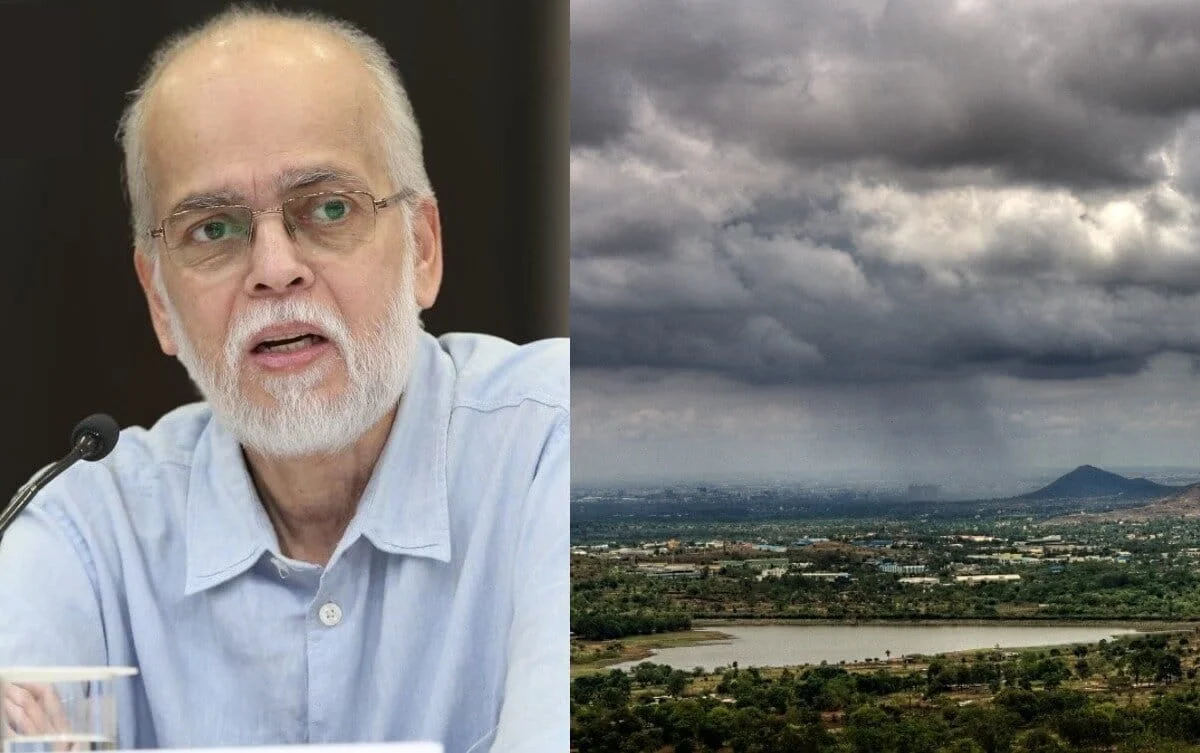
The global climate science community is mourning the loss of one of its most distinguished voices. Professor Krishna AchutaRao, a leading figure at the Indian Institute of Technology (IIT) Delhi’s Centre for Atmospheric Sciences (CAS), passed away on September 4, 2024, at the age of 62. His death marks the end of an era for Indian climate research, leaving behind a legacy defined by scientific rigor, institutional building, and a passionate advocacy for the Global South’s unique position in the climate crisis.
AchutaRao was more than a researcher; he was a bridge between complex mathematical modeling and the lived reality of millions of people vulnerable to environmental shifts. His work was instrumental in refining the science of climate attribution—the discipline of determining how much human activity contributes to specific extreme weather events—and his influence resonated from the lecture halls of New Delhi to the high-level negotiations of the Intergovernmental Panel on Climate Change (IPCC).
A Life Dedicated to Atmospheric Excellence: A Chronology
Krishna AchutaRao’s journey into the heart of atmospheric science was marked by a blend of engineering precision and mathematical depth. His academic foundation was laid at the Birla Institute of Technology and Science (BITS), Pilani, where he earned a Bachelor’s degree in Mechanical Engineering and a Master’s in Mathematics in 1986. This dual focus on the physical mechanics of systems and the abstract beauty of numbers would later define his approach to climate modeling.
Seeking to expand his horizons, AchutaRao moved to the United States, where he pursued a second Master’s degree and a PhD in Engineering from Tulane University in New Orleans. His time in the U.S. was not limited to academia; he honed his skills at the prestigious Lawrence Livermore National Laboratory (LLNL) in California. The LLNL is renowned for its high-performance computing and its role in pioneering climate models, and it was here that AchutaRao developed the technical expertise that he would eventually bring back to India.
In 2007, at a time when climate change was beginning to emerge as a central pillar of Indian public policy, AchutaRao returned to his home country. He joined the Centre for Atmospheric Sciences at IIT Delhi, an institution he would serve for nearly two decades. Over the years, he ascended to several leadership roles, including Head of CAS and Dean (Faculty), where he influenced not only the research direction of the institute but also the careers of dozens of young scientists.
The Science of Attribution: Distinguishing Signal from Noise
One of Professor AchutaRao’s most significant scientific contributions lay in the field of "climate attribution." For decades, scientists struggled to answer a fundamental question: "Was this specific heatwave or flood caused by climate change?" Before the refinement of attribution science, the standard answer was that no single event could be blamed on global warming.
AchutaRao’s research helped change that narrative. By focusing on anthropogenic (human-induced) forces, he developed methodologies to distinguish between natural climate variability and the "fingerprints" of human activity. His work provided the statistical and physical evidence needed to show how greenhouse gas emissions have increased the frequency and intensity of extreme weather events in South Asia.
His focus was intensely regional. While global models provided a broad overview, AchutaRao understood that for a country like India, the stakes were local. He directed his expertise toward understanding the Indian monsoon—the lifeblood of the nation’s economy—and how rising temperatures were altering its traditional patterns. His research helped put the regional impacts of global heating into sharp focus, providing policymakers with the data necessary to prepare for a more volatile future.
Global Impact: The IPCC and International Leadership
Professor AchutaRao’s expertise was recognized on the global stage through his long-standing association with the Intergovernmental Panel on Climate Change (IPCC). Since 2001, he served as a vital link between Indian climate science and the international community.
He rose to become a contributing author to the IPCC’s Fifth (AR5) and Sixth (AR6) Assessment Reports. These documents are considered the "gold standard" of climate science, synthesized by thousands of experts to guide global policy. AchutaRao’s contributions to these reports ensured that the specific vulnerabilities of the Indian subcontinent—ranging from Himalayan glacial melt to coastal sea-level rise—were represented with scientific accuracy.
Furthermore, his work at IIT Delhi led to the establishment of the Centre of Excellence for Climate Change Adaptation. This center became a hub for developing expertise in climate risk assessments. Under his guidance, the center focused on:
![Krishna AchutaRao, climate scientist who pioneered attribution research in India, dies at 62 [Obituary]](https://imgs.mongabay.com/wp-content/uploads/sites/30/2026/09/10155254/krishna-achutarao-collage-1200x753.jpg)
- Heat Extremes: Developing early warning systems and urban cooling strategies for India’s rapidly warming cities.
- Monsoon Variability: Modeling the shift in rainfall patterns to assist the agricultural sector.
- Vulnerable Communities: Identifying the specific hazards facing marginalized populations who lack the resources to adapt to sudden environmental shocks.
The Advocate: Balancing Development and Emissions
Beyond the laboratory and the ivory tower, AchutaRao was a vocal advocate for climate literacy. He was a frequent presence in the media, known for his ability to translate complex atmospheric data into language that the public and policymakers could understand.
He was particularly concerned with the "development-climate" paradox. In a 2020 interview with an IIT student, he articulated the challenge facing India: “This is a very critical time in our history, because we are a developing country poised to take off. Most of our development is yet to happen… So in that development, how are we going to make sure we don’t make the same high emission mistakes the rest of the developed world has made?”
AchutaRao argued that India did not have the luxury of choosing between growth and sustainability. He believed that the developing world must find a "third way"—a path to prosperity that bypasses the carbon-intensive history of the West. He often spoke about the uneven impacts of global heating, pointing out that those who contributed the least to the crisis were often the ones suffering the most. This sense of justice permeated his scientific work, driving him to provide the best possible data to support the Global South’s calls for climate equity.
Official Responses and Tributes
The news of his passing triggered a wave of tributes from across the scientific and academic spectrum. IIT Delhi released an official statement expressing deep sorrow: “IIT Delhi is deeply saddened by the demise of Prof. Krishna AchutaRao. Prof. AchutaRao served at the Institute for about two decades and held various positions of responsibility, including Dean (Faculty) and Head, CAS.”
Colleagues remembered him not just for his intellect, but for his character. Roxy Mathew Koll, a prominent climate scientist at the Indian Institute of Tropical Meteorology (IITM) in Pune, shared a moving tribute on social media. “What brought me closer to him was his keen scientific temper, his extraordinary attention to detail, and above all, his sense of humour. We will miss him deeply,” Koll wrote.
Students and former mentees described him as a mentor who demanded excellence but offered unwavering support. He was known for his "scientific temper"—a term popularized by Jawaharlal Nehru to describe a way of life that uses the scientific method—and he applied this rigor to everything from his peer-reviewed papers to his institutional administrative duties.
Implications: The Legacy and the Path Forward
The loss of Professor Krishna AchutaRao leaves a significant void in India’s climate infrastructure. At 62, he was still at the height of his influence, serving as a mentor to a new generation of scientists who are now tasked with navigating the most critical decade for climate action.
However, his legacy is firmly rooted in the institutions he helped build. The Centre of Excellence for Climate Change Adaptation at IIT Delhi continues to produce vital research that informs India’s National Action Plan on Climate Change. His work on attribution science has paved the way for legal and policy frameworks that can hold emitters accountable and justify the need for climate finance.
As India continues to grapple with record-breaking heatwaves and erratic monsoons, the methodologies developed by AchutaRao will remain essential tools. His life’s work serves as a reminder that science is not an abstract pursuit; it is a fundamental requirement for survival in a warming world.
In his 2020 interview, AchutaRao noted, “There is a role here to make sure you are not compromising one thing because you’re looking for another thing.” As India moves forward with its ambitious development goals, the scientific community will strive to honor his memory by ensuring that progress is never decoupled from the protection of the planet.
Krishna AchutaRao is survived by his family, a vast network of colleagues, and a generation of students who carry forward his commitment to a scientifically informed and equitable future. His contribution to atmospheric science has not only changed how we understand the weather—it has changed how we understand our responsibility to the earth.
