

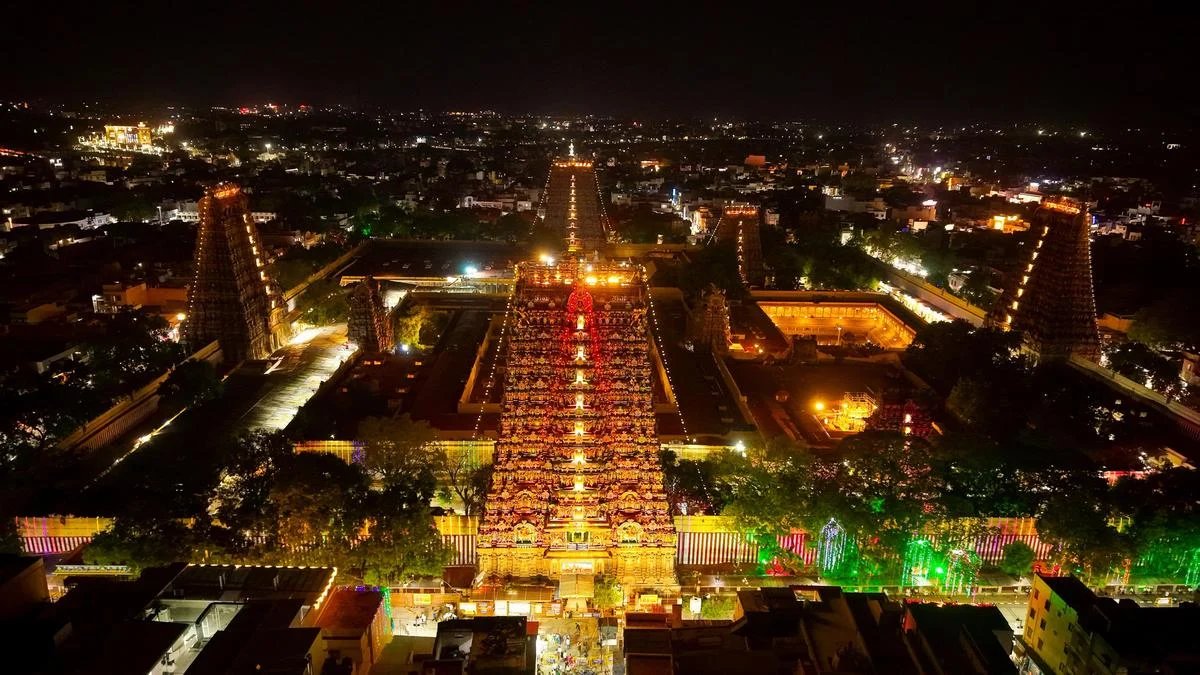
MADURAI – In the heart of southern Tamil Nadu, the city of Madurai stands as a testament to the enduring power of civilization. Often referred to as the "Athens of the East" and the "City of Junctions," Madurai is not merely a geographic location but a living museum where ancient history, vibrant commerce, and sensory experiences converge. From the intricate knots of a Sungudi saree to the ancient scripts unearthed in the dust of Keeladi, the city offers a profound narrative of resilience and cultural continuity.
Main Facts: The Pillars of Madurai’s Cultural Identity
Madurai’s identity is built upon three primary pillars: its architectural heritage, its specialized artisanal crafts, and its unique culinary landscape.

The city’s most recognizable craft is the Sungudi saree, a tie-and-dye tradition introduced by the Saurashtrian community. This community migrated from Gujarat to Madurai between the late 16th and early 17th centuries, finding patronage under the Nayak rulers. Today, the Sungudi tradition is recognized with a Geographical Indication (GI) tag, though it faces stiff competition from mechanized printing.
Parallel to its textiles is the fragrance of the Madurai Malli (Jasmine). The city serves as one of the world’s most significant hubs for jasmine cultivation. The Madurai Malli is also GI-tagged, prized for its thick petals, long petioles, and a fragrance that lingers far longer than other varieties. This floral economy supports thousands of families, from farmers in the rural outskirts to the expert weavers in the Mattuthavani market.

Finally, the city’s culinary heritage is headlined by Jigarthanda, a chilled dessert that has become synonymous with Madurai’s ability to blend diverse influences into a single, refreshing experience.
Chronology: A Timeline of the Vaigai Civilization
To understand Madurai today, one must look back over two millennia. The chronological development of the city reveals a layered history:

- Circa 580 BCE – 200 CE (The Sangam Era): Recent excavations at Keeladi, located just 12 kilometers from the city, have revolutionized South Indian historiography. The artifacts found here—ranging from sophisticated drainage systems to pottery inscribed with Tamil-Brahmi script—suggest a highly urbanized civilization thriving on the banks of the Vaigai River during the same period as the late Iron Age and early Historic period.
- 9th – 10th Century CE: The rise of Jain influence in the region. Samanar Malai (Jain Hill) in Keelakuyilkudi village became a center for religious and educational activity, evidenced by the rock-cut sculptures and bas-reliefs of Tirthankaras like Mahavira and Gomateshwara.
- 16th – 17th Century CE (The Nayak Dynasty): This was the golden age of Madurai’s modern layout. Under rulers like Thirumalai Nayak, the city saw the construction of the Teppakulam (the massive temple tank), the Pathu Thoon (Ten Pillars), and the grand Thirumalai Nayak Mahal. This era also welcomed the Saurashtrian weavers, who integrated their Northern tie-and-dye techniques with Southern aesthetics.
- 1921: A pivotal moment in modern Indian history occurred in Madurai when Mahatma Gandhi, moved by the plight of the local laborers, decided to discard his traditional attire in favor of the simple loincloth, a symbol of Indian self-reliance.
- 1970s – Present: The formalization of Madurai’s street food culture. Iconic establishments like Famous Jigarthanda grew from humble push-carts to city-wide franchises, while the "Madurai Malli" gained international fame, reaching markets in Singapore, the USA, and West Asia.
Supporting Data: The Economics of Craft and Agriculture
The survival of Madurai’s traditional sectors is backed by significant, albeit localized, economic data.
The Sungudi Textile Industry
The authentic Sungudi process is incredibly labor-intensive. A single saree can feature thousands of tiny knots, hand-tied before the fabric is submerged in dye. While machine-printed "Sungudi-style" sarees retail for as low as ₹500, authentic hand-knotted pieces range from ₹2,000 to ₹15,000. Organizations like Tharagai Sungudi in BB Kulam are vital to this economy, currently employing and training approximately 20 women to ensure the technical knowledge is not lost to the next generation.

The Jasmine Market
The Mattuthavani Flower Market is a whirlwind of activity where "mechanical precision" meets natural beauty. According to the Tamil Nadu Agritech Portal, the Madurai Malli is a major export commodity. The market handles tons of jasmine daily, which is then transported to airports in Madurai and Chennai for overnight delivery to international destinations. The GI tag has been instrumental in protecting the "Madurai Malli" brand from being diluted by varieties grown in other regions.
Archaeological Significance of Keeladi
The Keeladi excavation site has yielded over 18,000 artifacts. Carbon dating of charcoal samples from the fourth layer of the excavation confirmed that the settlement dates back to 580 BCE. This data provides empirical evidence that the Sangam period—long considered a literary myth by some—was a period of high urban literacy and industrial capability in the Vaigai valley.

Official Responses and Conservation Efforts
Local stakeholders and heritage warriors have expressed a mix of pride and concern regarding the city’s preservation.
The Crafts Council of India and local boutiques have been vocal about the "machine-print threat" to Sungudi. Experts argue that without government subsidies and better market access for handloom weavers, the authentic tie-and-dye technique could vanish within two decades. "Some warriors continue to fiercely protect tradition," notes a local cultural observer, highlighting the role of tourism agencies like Cholan Tours in bringing global attention to these artisans.

Regarding urban heritage, the Archaeological Survey of India (ASI) and the State Department of Archaeology have ramped up efforts at Keeladi, establishing a world-class museum to house the finds. However, residents around the Raya Gopuram and Pathu Thoon Street point out the challenges of living in a "living monument." The Raya Gopuram, an unfinished 17th-century gateway, currently sits amidst a bustling marketplace. Historians suggest that while the "unfinished" look is part of its charm, the encroachment of modern shops poses a risk to the structural integrity of the stone sculptures.
Implications: Tourism, Modernization, and Identity
The future of Madurai depends on its ability to balance rapid urbanization with heritage conservation. The implications of current trends are three-fold:

1. The Rise of Experiential Tourism
Madurai is moving away from being a "one-day temple stop." The popularity of the Samanar Malai climb (over 100 steps to view 9th-century inscriptions) and the evening vibrancy of Teppakulam suggest that tourists are seeking "micro-experiences." The Teppakulam, which acts as a microcosm of the city, offers a blueprint for successful public spaces where history (the mandapam) meets modern leisure (food stalls and amusement rides).
2. Gastronomy as a Cultural Ambassador
The culinary scene, particularly the Jigarthanda and Paruthipaal (cottonseed milk), serves as a low-barrier entry point for outsiders to engage with Madurai’s history. Establishments like Sri Sastha Paruthipaal, which has operated for 90 years, prove that traditional health drinks can maintain a loyal customer base even in the age of carbonated beverages. The "vada culture," featuring the unique mullu murungai keerai vada, remains a staple of the city’s night economy, providing affordable sustenance to the working class.

3. The Keeladi Effect on Tamil Identity
The ongoing discoveries in Keeladi are not just academic; they are deeply tied to the cultural identity of the Tamil people. By providing a "secular" archaeological record that emphasizes trade and literacy over religious iconography, Keeladi is reshaping how the youth of Madurai view their ancestry. The museum’s accessibility (entry fee of just ₹15) ensures that this history remains democratic and widely understood.
Conclusion
Madurai remains a city where the past is not tucked away in glass cases but is worn on the skin, tasted in the food, and smelled in the air. Whether it is the rhythmic clacking of a handloom in the Mahal area or the brisk sale of jasmine at Mattuthavani, the city’s heart beats in its traditions. To visit Madurai is to witness a civilization that refuses to be forgotten, expertly navigating the tension between the ancient and the contemporary. As the sun sets over the Vaigai, and the lights of the Teppakulam reflect in the water, one thing is clear: Madurai is not just a city; it is an enduring legacy.
