

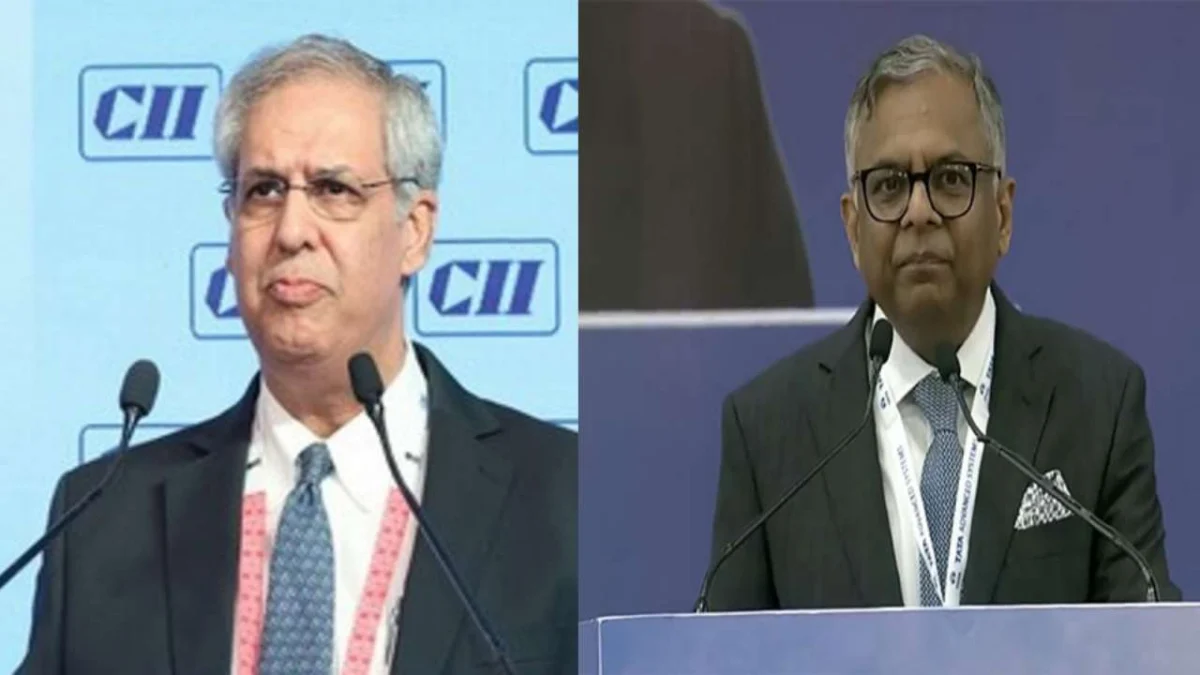
Mumbai, India – September 17, 2026 – An explosive and potentially destabilising rift has erupted at the pinnacle of India’s largest and most revered conglomerate, Tata Sons, as the philanthropic parent entity, Tata Trusts, has emphatically rejected the Board’s decision to reappoint N. Chandrasekaran as Executive Chairman for another five-year term. In a dramatic escalation of an internal power struggle, the Trusts declared the resolution to be "illegal and void," setting the stage for what could become a protracted and highly publicised legal and governance battle.
The contentious decision was made at a crucial Tata Sons Board meeting held today, where directors voted 4-1 in favour of extending Chandrasekaran’s tenure, which was set to conclude in February 2027. The lone, but critically significant, dissenting vote came from Noel N. Tata, Chairman of Tata Trusts and a nominee director on the Tata Sons Board. His opposition, rooted in alleged violations of the company’s Articles of Association (AOA) and a prior, publicly communicated decision by Chandrasekaran himself not to seek reappointment, has plunged the venerable 158-year-old group into a state of profound uncertainty.
This development marks a stark departure from the typical image of consensus and stability that the Tata Group has largely projected, particularly after the tumultuous leadership transition following Cyrus Mistry’s ouster. The Trusts, which hold a controlling stake of over 66% in Tata Sons, have not only questioned the legality of the Board’s action but also underscored the irreversible consequences of Chandrasekaran’s earlier declaration, suggesting a deep-seated disagreement over corporate governance principles and the sanctity of prior commitments.
Main Facts of the Imbroglio
The core of the dispute revolves around two primary points of contention: the interpretation and application of Tata Sons’ Articles of Association concerning the appointment of a Chairman, and the validity of a prior decision by N. Chandrasekaran not to seek reappointment.
)
At the heart of the matter is the 4-1 vote taken during today’s Tata Sons Board meeting. While the majority of four directors supported Chandrasekaran’s reappointment, Noel N. Tata, representing the paramount interests of Tata Trusts, cast the sole dissenting vote. According to Tata Trusts’ official statement, this vote renders the resolution "a legal nullity." The Trusts assert that the AOA specifically mandates that "a majority of the Trusts’ nominee directors" must vote in favour of such a resolution, whether for a first appointment or a reappointment. Given that Noel Tata is one such nominee director and voted against, the Trusts argue the condition was not met, thus invalidating the entire process.
Furthermore, Tata Trusts highlighted that N. Chandrasekaran had, on August 12, 2026, informed the Tata Sons Board of his decision not to offer himself for reappointment after his current term expires on February 20, 2027. This decision, the Trusts noted, was formally accepted by them the very next day, August 13, 2026. Following this acceptance, Tata Trusts had even advised Tata Sons to initiate the process for constituting a Selection Committee to identify a successor, in strict adherence to the company’s AOA. The Trusts now contend that such a publicly communicated and accepted decision carries binding consequences for all stakeholders – employees, lenders, market participants, and the majority shareholder – and cannot be unilaterally undone.
)
The immediate implication is a direct challenge to the authority and decision-making process of the Tata Sons Board by its principal shareholder. The use of strong legal terminology like "illegal and void" suggests that Tata Trusts is prepared to vigorously defend its position, potentially through legal avenues, setting the stage for a dramatic corporate confrontation that could have far-reaching consequences for the entire Tata ecosystem.
Chronology of a Mounting Conflict
The current standoff is not an isolated incident but rather the culmination of a series of events and simmering disagreements that have unfolded over the past year and a half. Understanding this timeline is crucial to grasp the depth of the current crisis:

July 2025: The narrative initially pointed towards stability and continuity. Tata Trusts had, at this juncture, unanimously backed the reappointment of N. Chandrasekaran for another five-year term. This endorsement from the conglomerate’s ultimate owners signaled strong confidence in his leadership.
September 2025: Following the Trusts’ unanimous backing, the Tata Sons Board, reflecting this consensus, agreed in principle to the proposal for Chandrasekaran’s reappointment. All indications were that a smooth extension of his tenure was imminent.
)
February 2026: The first cracks began to appear. While the Board was expected to formally approve the reappointment, the decision was deferred. The reason cited was the "absence of unanimity." This was a significant shift, indicating that dissent, albeit perhaps not yet explicitly stated or voted upon, had begun to brew within the Board or among key stakeholders. This deferral suggested that the initial unanimous support from the Trusts might have encountered obstacles in its translation to a formal Board resolution, or that other directors had developed reservations.
May and June 2026: The issue remained unresolved through subsequent Board meetings. Despite further discussions, a consensus on Chandrasekaran’s reappointment proved elusive. This prolonged indecision hinted at deeper underlying issues or disagreements that were not being publicly articulated but were preventing a resolution. The fact that the matter dragged on for several months suggested a growing divide rather than a temporary hiccup.
)
August 12, 2026: A pivotal moment occurred when N. Chandrasekaran himself communicated to the Tata Sons Board his decision not to seek reappointment after his current term expires on February 20, 2027. This was a surprising development, given the earlier backing from the Trusts and the Board’s initial agreement in principle. His decision could have been influenced by the ongoing lack of unanimity, a personal choice, or a strategic move. Regardless of the motivation, it introduced a new, definitive element into the succession planning.
August 13, 2026: The very next day, Tata Trusts formally accepted Chandrasekaran’s decision. This acceptance was not merely a passive acknowledgment; the Trusts actively advised Tata Sons to initiate the process for establishing a Selection Committee. The purpose of this committee was explicitly to appoint a successor, in accordance with the stringent provisions of the company’s Articles of Association. This action by the Trusts solidified the expectation of a leadership transition and underscored their commitment to a structured and legally compliant succession process.
)
September 17, 2026 (Morning): In a dramatic turn, the Tata Sons Board announced, by a majority vote, its resolution to reappoint Chandrasekaran as Executive Chairman for a further five-year term. This announcement directly contradicted Chandrasekaran’s own stated intention and the subsequent actions of Tata Trusts, igniting the current crisis.
September 17, 2026 (Later): Tata Trusts swiftly responded with an unequivocal official statement. They rejected the reappointment, labeling the Board’s resolution as "illegal and void." The statement detailed Noel Tata’s dissenting vote and laid out the legal grounds for their objection, citing violations of the AOA and the finality of Chandrasekaran’s earlier decision. This immediate and strong rebuttal confirmed the deep and irreconcilable chasm that had opened up between the Trusts and the Tata Sons Board.
)
Supporting Data and Context
To fully appreciate the gravity of this situation, it is essential to understand the unique governance structure of the Tata Group, the significance of the Articles of Association, and the historical context of leadership transitions within the conglomerate.
The Articles of Association: The Bedrock of Governance
The Articles of Association of Tata Sons are not mere procedural documents; they are the constitutional bedrock governing the conglomerate, particularly concerning critical appointments like that of the Chairman. Tata Trusts’ core argument hinges on Article 104B (or a similar provision), which, as they interpret it, requires "a majority of the Trusts’ nominee directors" to vote in favour of such a resolution. Since Noel Tata, a key nominee director representing the Trusts, voted against Chandrasekaran’s reappointment, the Trusts contend that this fundamental condition was not met. This makes the resolution, in their view, legally invalid. This clause effectively gives the Trusts a powerful, almost veto-like, say in who leads Tata Sons, reflecting their ultimate ownership and stewardship role. The dispute therefore is fundamentally about adherence to established governance protocols and the interpretation of these critical legal documents.
)
The Dominant Role of Tata Trusts
Tata Trusts hold a controlling stake of over 66% in Tata Sons, making them the ultimate owners and fiduciaries of the entire Tata Group. These trusts are primarily philanthropic, established by the Tata family to channel a significant portion of the group’s earnings towards charitable causes. This unique structure means that the Trusts are not merely investors seeking financial returns; they are custodians of the Tata legacy, values, and long-term vision. Their stance in this dispute is therefore not just about a board appointment but about safeguarding the foundational principles and governance integrity of the group. Their power stems not only from their shareholding but also from the moral authority they derive as the embodiment of the Tata ethos.
N. Chandrasekaran’s Tenure and Achievements
N. Chandrasekaran took the helm as Executive Chairman of Tata Sons in February 2017, following the dramatic ouster of Cyrus Mistry. His appointment was seen as a move to restore stability and professionalise leadership after a period of intense internal strife. During his tenure, Chandrasekaran has largely been credited with streamlining the conglomerate, focusing on digital transformation, and driving synergy across diverse businesses. He has overseen significant strategic moves, including the consolidation of various airline ventures under Air India, the push into new-age technologies, and efforts to deleverage certain group companies. These achievements undoubtedly contribute to the Tata Sons Board’s desire for his continued leadership, viewing him as a steady hand navigating complex global economic landscapes. This context makes the Trusts’ rejection even more striking, as it implies that legal and governance adherence outweighs performance in this specific instance.
)
Echoes of Past Leadership Battles
While the current situation has its unique facets, it inevitably draws parallels to the highly publicised ouster of Cyrus Mistry in October 2016. That saga, too, involved intense disagreements over governance, strategy, and the role of Tata Trusts versus the operational leadership. Mistry’s removal was also instigated by the Trusts, leading to a bitter legal battle that lasted for years. The current clash, involving Noel Tata (Cyrus Mistry’s brother-in-law) as the dissenting voice, suggests that the underlying power dynamics and the assertiveness of Tata Trusts in safeguarding its vision remain potent. This historical context adds a layer of seriousness, indicating that the Trusts are willing to engage in robust conflict when they perceive foundational principles to be at stake.
RBI Guidelines and Regulatory Scrutiny
Interestingly, Tata Sons’ initial statement announcing Chandrasekaran’s reappointment also mentioned that it "would initiate steps to comply with applicable RBI guidelines and seek guidance from the RBI, Tata Trusts and other stakeholders on compliance requirements." This inclusion is notable. Tata Sons, through its various entities, operates across sectors regulated by the Reserve Bank of India, particularly its financial services arm. The RBI has stringent "fit and proper" criteria for board members and specific governance norms for large financial conglomerates. The mention of seeking guidance from Tata Trusts on compliance requirements, even while the Trusts were preparing to challenge the reappointment, hints at the complex regulatory environment and the acknowledgment that the Trusts’ input is vital for navigating these. This adds another layer of scrutiny and potential external involvement to the unfolding drama.
)
Official Responses and Counter-Arguments
The official communications from both Tata Trusts and Tata Sons have laid bare the deep chasm that now exists at the apex of the conglomerate.
Tata Trusts’ Uncompromising Stance
Tata Trusts’ statement was unambiguous and firm. It reiterated that the resolution to reappoint Mr. N. Chandrasekaran as Chairman, Tata Sons, is "illegal." Their arguments can be summarised as follows:
)
- Violation of Articles of Association: The Trusts explicitly stated, "The resolution seeking to reappoint Mr. N. Chandrasekaran in the Board meeting today, with four Directors voting in favour, and Mr Noel Tata against, was a legal nullity in view of the provisions of the Articles of Association of Tata Sons." They emphasised that the process for appointing the Chairman, whether for a first term or reappointment, requires a "majority of the Trusts’ nominee directors to vote in favour." Since Noel Tata, a Trust nominee director, voted against, this fundamental requirement was not met.
- Finality of Chandrasekaran’s Prior Decision: The Trusts stressed that Chandrasekaran’s earlier decision on August 12, 2026, not to seek reappointment had been formally accepted by them on August 13, 2026, and had "attained finality." They argued, "Once such a decision has been publicly communicated, it has consequences which cannot be afterwards undone, since the Group’s employees, its lenders and counterparties, the market and the majority shareholder have all proceeded on it." This implies a breach of trust and an undermining of established processes once a public commitment has been made and acted upon.
- Disregard for Legal Opinion: Tata Trusts further revealed that Noel Tata had submitted a legal opinion from former Chief Justice of India, Justice D.Y. Chandrachud, regarding the correctness of the Trusts’ stand. Critically, the Trusts noted, "The same was not taken note of by the Board." This suggests that the Tata Sons Board proceeded with the vote despite having received high-level legal counsel questioning the legality of their proposed action, further intensifying the perceived disregard for due process.
- Call for Succession Committee: Maintaining their consistent position, the Trusts affirmed that "its position now remains unchanged and that the Selection Committee should proceed in accordance with Tata Sons’ Articles of Association for an orderly and timely leadership transition." This indicates their resolve to move forward with a search for a new leader, effectively rejecting any attempt to reverse Chandrasekaran’s previous decision.
Tata Sons’ Initial, Brief Announcement
In contrast to the Trusts’ detailed and legally charged statement, Tata Sons’ initial announcement was notably terse: it merely stated that its Board had "resolved by a majority vote to reappoint Chandrasekaran as Executive Chairman for a further five-year term after the expiry of his current tenure." The briefness and emphasis on "majority vote" without acknowledging the dissenting voice or the legal challenge from its principal shareholder were striking. The inclusion of the clause about complying with RBI guidelines and seeking guidance from various stakeholders, including Tata Trusts, retrospectively appears to be an attempt to pre-empt or mitigate the impending challenge, perhaps signaling an awareness of the contentious nature of the decision even as it was being made. As of now, Tata Sons has not issued a direct counter-statement to Tata Trusts’ forceful declaration of illegality, leaving their precise response and strategy unclear.
Far-Reaching Implications
The current standoff at Tata Sons carries profound implications that extend far beyond the immediate personalities involved. It threatens to destabilise one of India’s most significant corporate entities and could set new precedents for corporate governance in the country.
)
A Full-Blown Governance Crisis
This dispute is, at its core, a severe governance crisis. It highlights potential ambiguities or differing interpretations of the Articles of Association, particularly concerning the powers of the Board versus the rights and obligations of the majority shareholder (Tata Trusts). The Trusts’ assertion of "illegality" directly challenges the legitimacy of the Board’s decision, creating an unprecedented situation where the very authority of the Tata Sons Board is under question by its ultimate owner. Such a public disagreement at the highest level can erode confidence in the conglomerate’s internal controls and decision-making processes.
Looming Legal Battle
The use of terms like "illegal and void," coupled with the revelation of a legal opinion from a former Chief Justice of India, strongly indicates that Tata Trusts is prepared for, and perhaps already initiating, legal action. This could lead to a protracted and costly court battle, reminiscent of the Cyrus Mistry saga. A legal challenge would draw significant public and regulatory scrutiny, diverting management’s focus and resources from core business operations. The outcome of such a legal fight would have far-reaching implications for corporate law and governance standards in India, particularly for trust-owned entities.
)
Uncertainty and Leadership Instability
The immediate consequence of this rift is profound uncertainty at the leadership helm of India’s largest conglomerate. If Chandrasekaran’s reappointment is legally challenged and potentially overturned, it would create a vacuum at the top. The group would be left without a clear succession plan, especially given the Trusts’ insistence on continuing the Selection Committee process for a new leader. This instability could impact strategic decision-making, long-term projects, and the morale of the group’s vast workforce.
Market Reaction and Investor Confidence
The public nature of this dispute is likely to trigger negative reactions from financial markets. Shares of various Tata group companies, particularly Tata Motors, TCS, and Tata Steel, could experience volatility as investors react to the perceived governance risks. Lenders, business partners, and international collaborators might also view the internal strife with concern, potentially impacting future investments, credit ratings, and strategic alliances. The Tata brand, globally recognised for its stability and ethical conduct, risks reputational damage from such a public display of internal discord.
)
Reassertion of Trust Influence
This episode underscores the unwavering determination of Tata Trusts to assert its authority and uphold its interpretation of the group’s foundational governance principles. It signals that the Trusts are not merely passive shareholders but active custodians willing to intervene decisively when they perceive deviations from established norms or commitments. This reassertion of influence could reshape future interactions between the Trusts and the operational leadership of Tata Sons.
Impact on Chandrasekaran’s Effectiveness
Even if the reappointment were to stand eventually, the current legal and ethical cloud could significantly hamper N. Chandrasekaran’s effectiveness as Chairman. His leadership would be shadowed by questions of legitimacy and a public challenge from the majority shareholder. Furthermore, his earlier decision not to seek reappointment, and the subsequent reversal by the Board, adds a layer of complexity to his position, potentially affecting his credibility and mandate within the group.
)
The Path Forward: Mediation or Confrontation?
The immediate future hinges on whether the two powerful entities can find a path to reconciliation or if they are destined for a full-blown confrontation. Potential avenues include:
- Mediation: An independent mediator could be brought in to help interpret the Articles of Association and facilitate a resolution.
- Fresh Board Meeting: The Tata Sons Board might be compelled to revisit its decision, potentially with revised legal counsel, to avoid a protracted legal battle.
- Legal Challenge: If no consensus is reached, Tata Trusts is likely to pursue legal avenues, seeking to invalidate the reappointment through courts.
- Shareholder Intervention: Other minority shareholders, while holding less sway, might also weigh in on the governance implications.
This unprecedented clash demands immediate attention and a clear resolution to safeguard the integrity and future trajectory of one of India’s most iconic business empires. The coming days and weeks will be critical in determining whether the Tata Group can navigate this internal storm without significant lasting damage.
