

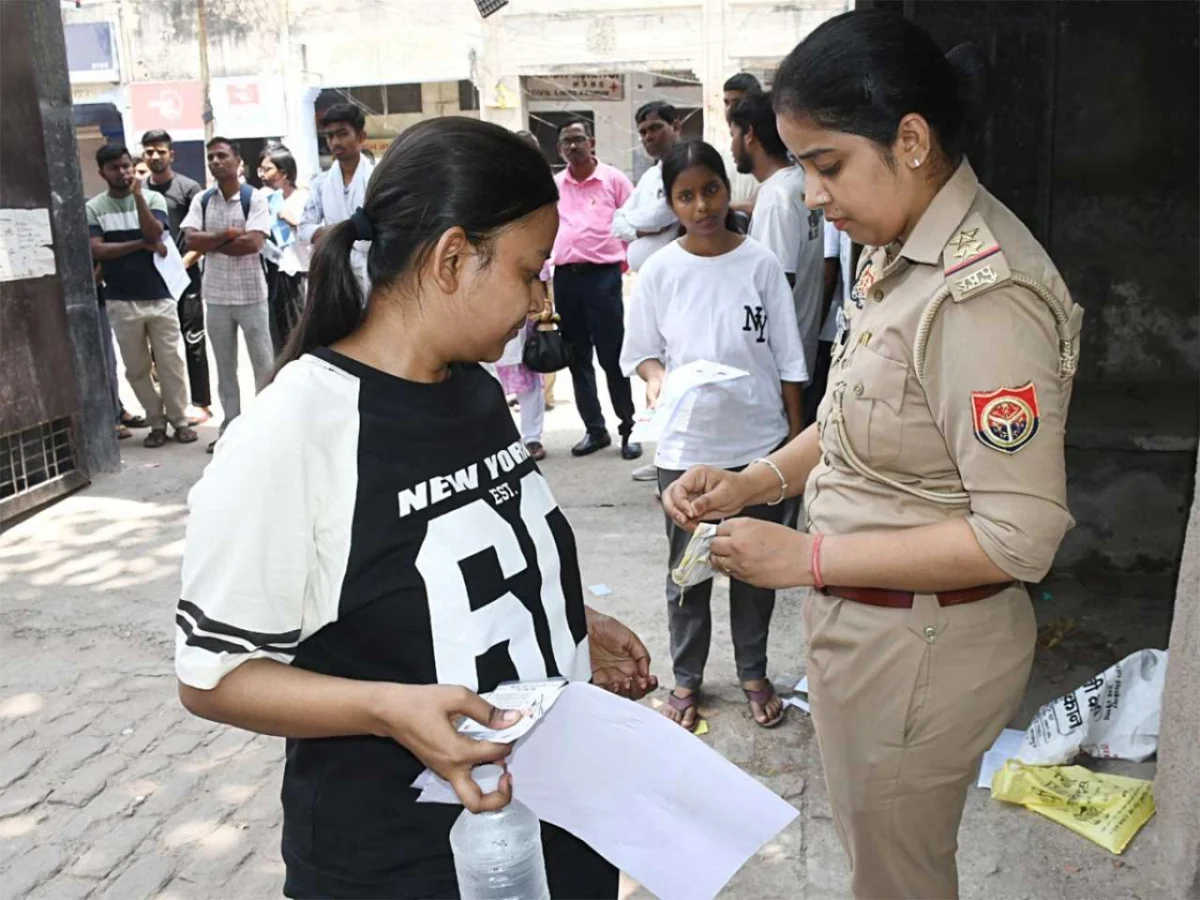
New Delhi: The National Testing Agency (NTA) has been forced to announce a re-examination for the English, Commerce, and Sociology papers of the University Grants Commission–National Eligibility Test (UGC-NET) June 2026 cycle, following widespread complaints and an exhaustive review by an expert committee. The decision underscores significant shortcomings in the administration and execution of these crucial examinations, impacting thousands of aspiring candidates seeking eligibility for Junior Research Fellowship (JRF), Assistant Professor positions, and PhD admissions.
The NTA, responsible for conducting this high-stakes national examination, acknowledged that the question papers for these three subjects were riddled with "substantive issues," prompting the drastic measure of a re-conduct. The review panel’s findings paint a grim picture of the quality of the original papers, citing a litany of errors ranging from fundamental grammatical and numerical mistakes to conceptual distortions and translation blunders.
Unveiling the Flaws: A Deep Dive into the Question Paper Deficiencies
According to the NTA’s official statement, the expert committee meticulously scrutinized the grievances raised by candidates and identified a pervasive pattern of errors across the English, Commerce, and Sociology papers. These deficiencies were not isolated incidents but rather a systemic problem that compromised the integrity of the examination.
Key issues identified include:
)
- Factual and Typographical Errors: This encompassed a broad spectrum of mistakes, including misspelt names of prominent scholars, distorted book titles, and incorrect numerical data. Such errors can lead to confusion and misinterpretation by candidates, unfairly penalizing those with accurate knowledge.
- Translation Blunders: For a national examination, accurate and nuanced translation is paramount. The committee found significant translation mistakes, indicating a potential lack of linguistic expertise or oversight in the paper-setting process. This is particularly concerning for subjects like English, where linguistic precision is fundamental.
- Grammatical and Numerical Inaccuracies: Basic grammatical errors and mistakes in numerical figures can fundamentally alter the meaning of a question or the validity of an option. The presence of such errors suggests a failure in the basic quality control mechanisms of the NTA.
- Vague and Ambiguous Options: Candidates reported that the multiple-choice options provided were often vague or lacked clarity, making it difficult to discern the correct answer. This can lead to subjective interpretations and unfair marking.
- Non-Standard Terminology: The committee noted the use of terms that deviated from established and standard concepts within academic disciplines. This is a critical flaw, as it can mislead candidates who are expected to adhere to recognized academic parlance.
- Repetitive Questions and Options: The inclusion of identical or near-identical questions and answer choices within the same paper is another serious oversight, suggesting a lack of originality and thorough review in the question development process.
The NTA explicitly stated that the extent of these problems was so severe that they could not be rectified simply by removing faulty questions during the answer-key evaluation. This implies a fundamental flaw in the construction of the questions themselves, necessitating a complete re-examination to ensure fairness.
A Timeline of Disruption: The Path to the Re-Examination
The UGC-NET June 2026 session, a critical gateway for academic careers in India, was initially conducted as a Computer-Based Test (CBT) from June 22 to June 30, 2026, covering a diverse range of 87 subjects. The examination is a cornerstone for determining eligibility for Junior Research Fellowship (JRF), Assistant Professor posts, and for admissions into PhD programs across the country.

The smooth progression of the examination was disrupted when numerous candidates, particularly those who appeared for the English, Commerce, and Sociology papers, began voicing their concerns about the quality of the question papers. These complaints, disseminated through various channels, including social media and direct communication with the NTA, quickly gained traction and highlighted a significant issue.
In response to the mounting pressure and the prima facie validity of the complaints, the NTA constituted an expert committee to review the affected papers. This committee undertook a thorough examination of the question papers and the grievances submitted by the candidates.
)
The chronological progression leading to the re-examination can be outlined as follows:
- June 22-30, 2026: UGC-NET June 2026 examination conducted across 87 subjects in CBT mode.
- Post-Examination Period: Candidates from English, Commerce, and Sociology papers raise concerns and submit grievances regarding alleged errors in the question papers.
- NTA Review: The National Testing Agency establishes an expert committee to investigate the validity of the candidate complaints.
- Committee Findings: The expert committee submits its report, confirming "substantive issues" and a multitude of errors in the English, Commerce, and Sociology question papers.
- NTA Decision: Based on the committee’s findings, the NTA announces the re-examination for the English, Commerce, and Sociology papers.
- Announcement of New Schedule: The NTA releases the revised examination dates and timings for the re-conducted papers.
This sequence of events highlights a reactive approach by the NTA, where significant issues only come to light and are addressed after the examination has been conducted and candidates have already faced the flawed assessments.
)
Supporting Data: The Scope of the Problem
While specific numbers regarding the exact number of errors per question or the percentage of flawed questions are not publicly detailed by the NTA, the categorization of errors provides a clear indication of the systemic nature of the problem. The sheer breadth of issues—spanning factual, typographical, translational, grammatical, numerical, and conceptual domains—suggests that these were not isolated instances but rather indicative of a broader lapse in the quality assurance process.
The decision to re-examine entire papers, rather than attempting to salvage them through partial correction or compensatory marking, underscores the severity of the flaws. This indicates that a substantial portion of the questions in these three subjects were deemed irredeemably problematic.
)
The NTA’s admission that the errors were so extensive that they could not be fixed during answer-key evaluation is a critical piece of supporting data. This implies that the errors were not minor slips but fundamental defects that could have significantly impacted candidates’ performance and the fairness of the results.
Official Responses: NTA’s Acknowledgment and Action Plan
The National Testing Agency has been the primary source of official communication regarding this issue. In its statements, the NTA has:
)
- Acknowledged the Errors: The NTA has openly admitted to the presence of "substantive issues" and "many factual, typographical, and translation errors" in the question papers for English, Commerce, and Sociology.
- Cited Expert Committee Findings: The agency has consistently referred to the findings of the expert committee as the basis for its decision to re-conduct the examinations. This lends credibility to the NTA’s actions and demonstrates a commitment to transparency.
- Announced the Re-Examination Schedule: The NTA has provided a clear and detailed schedule for the re-examination of the three affected papers:
- English: September 9, 2026 (Shift 1: 9:00 AM to 12:00 Noon)
- Commerce: September 9, 2026 (Shift 2: 3:00 PM to 6:00 PM)
- Sociology: September 10, 2026 (Shift 1: 9:00 AM to 12:00 Noon)
- Clarified Fee Structure: The NTA has assured candidates that no additional examination fee will be levied for the re-conducted papers. This is a welcome relief for candidates who have already incurred expenses related to the initial examination.
- Addressed Admit Cards and Centres: Information regarding examination centres and the release of admit cards for the re-examination will be communicated separately by the NTA.
- Reassured about Other Subjects: The NTA has explicitly stated that the re-examination of these three subjects will not cause any delay in the declaration of results for the remaining 84 subjects of the UGC-NET June 2026 session. Provisional answer-key challenges for these subjects have been processed, and results, JRF allocations, and e-certificates are expected to be issued as per the original schedule.
- Explained Eligibility Criteria for Re-Examined Subjects: For the three subjects undergoing re-examination, the NTA has outlined that Assistant Professor eligibility will be determined by considering 6% of the candidate count from either the June examination or the re-examination, whichever yields a greater number of eligible candidates. Subject-wise and category-wise distribution for JRF, Assistant Professor eligibility, and PhD admission will follow the prescribed UGC-NET regulations.
While the NTA’s response demonstrates a commitment to rectifying the situation, the underlying issues in the paper-setting process raise questions about the robustness of their quality control mechanisms.
Implications and Future Outlook: Lessons Learned and the Path Forward
The decision to re-examine the UGC-NET papers for English, Commerce, and Sociology carries significant implications for candidates, the NTA, and the broader academic ecosystem in India.
)
For Candidates:
- Uncertainty and Stress: The re-examination introduces further uncertainty and stress for candidates who have already invested significant time and resources in preparing for the initial exam. Many may have made plans based on the original examination dates, which now need to be revised.
- Additional Preparation Burden: Candidates will need to dedicate more time and effort to re-prepare for these specific papers, potentially impacting their other academic pursuits or job applications.
- Financial Implications: While the NTA has waived re-examination fees, candidates may incur additional costs related to travel, accommodation, and other expenses for the rescheduled tests.
- Erosion of Trust: The recurring nature of such examination-related controversies can erode the trust that candidates place in the NTA as a credible and efficient examining body.
For the National Testing Agency (NTA):
)
- Reputational Damage: This incident, following other similar controversies in national-level examinations, significantly tarnishes the NTA’s reputation and raises questions about its operational efficiency and quality control protocols.
- Need for Systemic Reforms: The NTA must undertake a comprehensive review of its paper-setting, moderation, and quality assurance processes. This includes ensuring adequate subject matter expertise, linguistic proficiency among paper setters and translators, and robust multi-stage review mechanisms.
- Increased Scrutiny: The NTA is likely to face increased scrutiny from the government, academic bodies, and the public regarding its examination conduct.
For the Academic Ecosystem:
- Delayed Admissions and Placements: The re-examination could lead to a delay in the finalization of results, impacting PhD admissions and the recruitment of Assistant Professors, thereby creating a ripple effect across academic institutions.
- Perception of Meritocracy: Repeated examination irregularities can undermine the perception of meritocracy in academic selections, potentially leading to a decline in the overall quality of aspiring academics.
Looking Ahead:
)
The UGC-NET June 2026 re-examination serves as a stark reminder of the critical importance of meticulous planning, rigorous quality control, and unwavering commitment to fairness in conducting national-level examinations. The NTA must learn from these shortcomings and implement robust reforms to prevent similar occurrences in the future. This includes investing in better training for paper setters, establishing independent quality review boards, and leveraging technology for enhanced error detection.
While the NTA has taken steps to rectify the immediate situation by announcing the re-examination and clarifying the process for other subjects, the long-term implications hinge on its ability to demonstrate a genuine commitment to improving its examination conduct and restoring the confidence of the academic community. The future of thousands of aspiring scholars and educators depends on it.
