

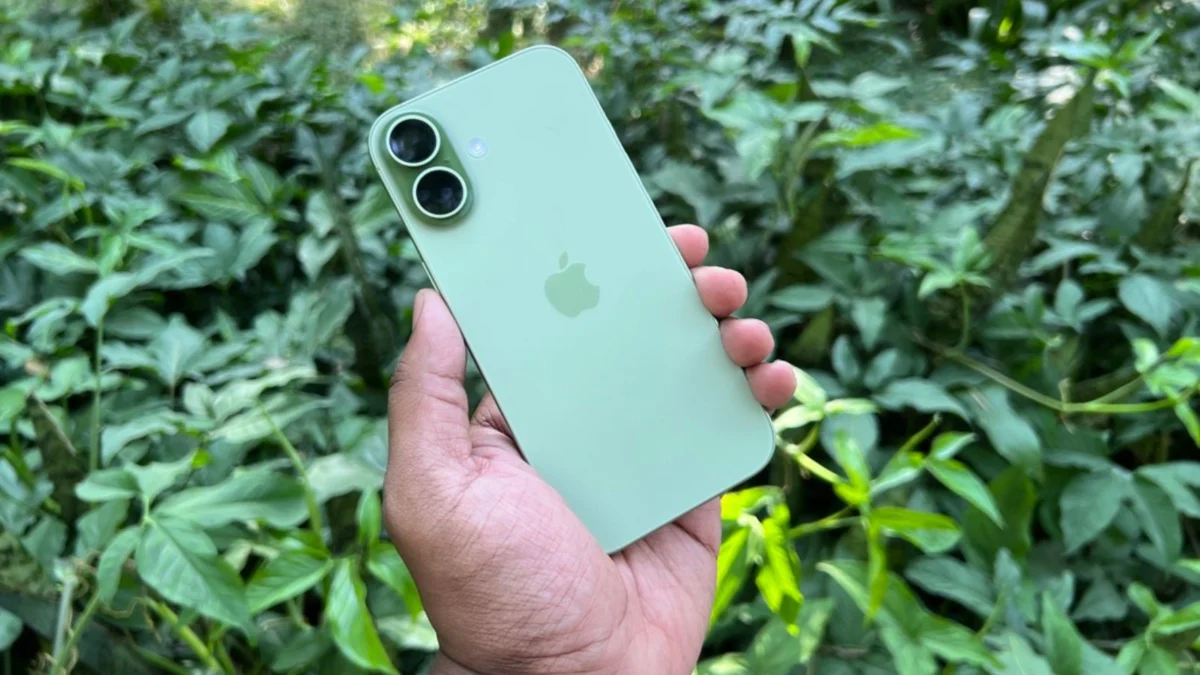
New Delhi, India – In the ever-evolving landscape of consumer technology, few decisions weigh as heavily on the minds of prospective buyers as the timing of a major smartphone upgrade. For aficionados of Apple’s iconic ecosystem, this dilemma has reached a fever pitch, epitomized by the current face-off between the well-established iPhone 17 and the highly anticipated, yet still shrouded in rumor, iPhone 18. With global component costs soaring and pushing smartphone prices to unprecedented levels, consumers are confronted with a critical choice: embrace the proven excellence of the iPhone 17 now, or exercise patience for a potential leap in innovation promised by its successor.
Updated: Sep 17, 2026 02:42 PM IST
(Image: Bijin Jose/The Indian Express)
This isn’t merely a matter of technological preference; it’s a significant financial commitment, aptly dubbed the "Rs 1 lakh question" in the Indian market. The iPhone 17, lauded for setting new benchmarks for Apple’s standard models, remains a compelling device. Yet, persistent leaks and industry whispers surrounding the iPhone 18 paint a picture of potentially transformative upgrades, particularly in critical areas like processing power, memory, and AI capabilities. This article delves deep into the arguments for each side, dissecting the merits of the iPhone 17, scrutinizing the tantalizing promises of the iPhone 18, and offering a comprehensive guide to navigating this crucial purchase decision.
The iPhone 17: Apple’s Best Base Model Yet, Under Pricing Pressure
The notion that a baseline iPhone necessitated compromise was a long-standing perception, one that Apple decisively shattered with the introduction of the iPhone 17. Launched to critical acclaim, this model was not just an incremental update but a significant reimagining of what a "standard" iPhone could offer, effectively narrowing the gap between the base and Pro variants.
A Deep Dive into the iPhone 17’s Capabilities (Chronology/Supporting Data)
Upon its debut, the iPhone 17 immediately distinguished itself with a suite of premium features previously reserved for higher-tier models or entirely new to the standard lineup:
- Display Excellence: At its heart was a vibrant 6.3-inch Super Retina XDR display. This wasn’t merely about size; it brought a silky-smooth 120Hz ProMotion refresh rate to the standard iPhone for the first time. ProMotion dynamically adjusts the refresh rate, offering fluid scrolling, incredibly responsive gaming, and a visibly smoother user interface experience, while also conserving battery life when high refresh rates aren’t needed. The Super Retina XDR technology, with its deep blacks, brilliant whites, and exceptional color accuracy, ensures an immersive visual experience for everything from casual browsing to high-definition video consumption.
- Powerhouse Performance: Under the hood, the iPhone 17 was driven by Apple’s formidable A19 chip. Engineered with an advanced neural engine, the A19 delivered staggering improvements in raw processing power, graphics rendering, and machine learning capabilities compared to its predecessors. This robust silicon was complemented by a generous 8GB of RAM, a substantial upgrade that unlocked the full potential of Apple Intelligence features. This new suite of AI functionalities, deeply integrated into iOS, enhanced everything from on-device language processing and image generation to predictive text and personalized notifications, making the iPhone 17 not just fast, but genuinely smart.
- Revolutionary Camera System: Photography received a significant boost with a dual 48MP rear camera setup. This high-resolution sensor, coupled with Apple’s advanced computational photography algorithms, allowed for unprecedented detail, improved low-light performance, and more versatile shooting modes. Users could capture stunningly detailed photos, professional-grade videos, and benefit from advanced features like Action Mode and Cinematic Mode. The 18MP front camera further elevated the selfie and video calling experience, delivering crisp, clear images with excellent dynamic range.
Collectively, these specifications positioned the iPhone 17 as arguably one of Apple’s most value-packed standard offerings to date, a device that genuinely delivered a flagship experience without the "Pro" moniker.
The Shadow of "Chipflation" and Price Hikes (Supporting Data)
However, the global economic landscape, particularly the phenomenon dubbed "chipflation," cast a long shadow over the iPhone 17’s market trajectory. The unprecedented demand for semiconductors, primarily fueled by the explosive growth of AI data centers and cloud computing infrastructure, has led to a significant surge in component costs across the tech industry. Manufacturing capacities have struggled to keep pace with this insatiable demand, creating a ripple effect that ultimately impacts end-consumer prices.
Apple, despite its massive scale and supply chain prowess, was not immune to these pressures. Consequently, the company implemented a steep price hike across its existing lineup in India. The 256GB base model of the iPhone 17, which initially debuted at a competitive Rs 82,900, saw a dramatic upward revision. Following recent adjustments, the price for the same configuration soared to Rs 99,900. This represents a substantial Rs 17,000 increase, translating to an over 20 percent hike from its launch price. This revised pricing pushes the standard iPhone 17 perilously close to the psychological and financial barrier of Rs 1 lakh, making the purchase decision considerably more complex for many consumers. The significant jump forces buyers to re-evaluate the immediate value proposition against the backdrop of an impending successor.
Anticipating the Future: The iPhone 18’s Promising Leaks (Chronology/Supporting Data)
While the iPhone 17 holds its own as a formidable device, the tech world’s gaze is already firmly fixed on its successor. The rumor mill, often a reliable precursor to Apple’s official announcements, has been churning with exciting details about the standard iPhone 18. Esteemed sources like MacRumors and Bloomberg’s reputable analyst Mark Gurman have provided consistent reports, painting a picture of a device poised to deliver significant advancements.
Projected Launch and Core Upgrades
The standard iPhone 18 is currently expected to launch in Spring 2027, likely falling between March and April. This timeline aligns with Apple’s historical product cycles, which typically see major iPhone updates announced in the fall, followed by subsequent releases or further refinements in the spring for certain markets or product lines. This anticipated launch window gives consumers a clear, albeit distant, horizon to consider their purchase strategy.
The reported upgrades for the iPhone 18 are not merely incremental; they suggest a strategic pivot towards enhanced performance, efficiency, and future-proofing, particularly in the burgeoning field of artificial intelligence.
-
A20 Chip: The 2nm Revolution: At the forefront of the iPhone 18’s rumored enhancements is the adoption of Apple’s next-generation A20 chip. Crucially, this chip is expected to be based on TSMC’s cutting-edge 2nm process technology. The transition to 2nm represents a monumental leap in semiconductor manufacturing. For consumers, this translates to several tangible benefits:
- Unprecedented Performance: Smaller transistors packed more densely lead to significantly faster processing speeds, enabling more complex computations in less time.
- Superior Power Efficiency: The reduced size and improved architecture of 2nm transistors mean less power consumption for the same workload, leading to potentially remarkable improvements in battery life, even with more demanding tasks.
- Enhanced Thermal Management: More efficient chips generate less heat, allowing for sustained peak performance without throttling, crucial for intensive gaming, video editing, and AI operations.
- AI Acceleration: The A20’s neural engine, benefiting from the 2nm process, is expected to deliver unparalleled AI and machine learning performance, further empowering Apple Intelligence features and opening doors for new, sophisticated on-device AI applications.
This move underscores Apple’s commitment to maintaining its lead in mobile silicon, leveraging TSMC’s advanced foundry capabilities to push the boundaries of smartphone performance.
-
12GB RAM: Fueling Local AI: Another significant upgrade rumored for the iPhone 18 is an increase in RAM from the iPhone 17’s 8GB to a substantial 12GB. In modern computing, RAM (Random Access Memory) is crucial for multitasking and handling large datasets. For smartphones, more RAM means smoother app switching, the ability to keep more applications active in the background without reloading, and significantly enhanced performance for memory-intensive tasks.
- The AI Imperative: This RAM bump is particularly critical in the context of advanced AI. "Complex, parameter-heavy AI models" require significant memory to operate efficiently, especially when run locally on the device rather than relying solely on cloud servers. With 12GB of RAM, the iPhone 18 would be better equipped to handle sophisticated AI tasks such as advanced language models, real-time image and video processing, and highly personalized intelligent assistants directly on the phone. This enhances user privacy, reduces latency, and allows for AI functionalities even without an internet connection, paving the way for future iOS updates to leverage this increased capacity.
-
Samsung M12+ Display: Balancing Cost and Quality: While the iPhone 17 already boasts a superb display, reports suggest that for the iPhone 18, Apple may opt for Samsung’s M12+ panel. This choice likely reflects a strategic decision to balance cutting-edge display technology with cost control. Samsung is a leading manufacturer of OLED panels, and their M-series panels are known for their exceptional quality, brightness, and energy efficiency. By combining a high-quality, albeit potentially more cost-effective, panel with the power efficiency of the A20 chip, Apple can deliver a premium visual experience while managing overall production costs. This highlights Apple’s intricate supply chain management, sourcing components from various industry leaders to achieve its design and performance goals.
-
Apple’s In-House C2 Modem: The Quest for Connectivity Independence: A long-standing objective for Apple has been to reduce its reliance on third-party suppliers, particularly for critical components like cellular modems. The iPhone 18 is believed to feature Apple’s in-house C2 modem. This transition away from external suppliers (like Qualcomm, which has historically dominated the modem market) offers several strategic advantages:
- Seamless Integration: An Apple-designed modem allows for deeper hardware-software integration, potentially leading to optimized performance, better power management, and more robust connectivity across various cellular networks (5G, LTE).
- Enhanced Efficiency: Apple can fine-tune the modem’s power consumption to work synergistically with its own chips and operating system, potentially delivering better battery life during cellular usage.
- Future-Proofing: Developing its own modem gives Apple greater control over future connectivity standards and technologies, allowing for quicker adaptation and innovation.
- Cost Control: Over the long term, in-house component development can lead to reduced manufacturing costs and increased profit margins.
These rumored upgrades collectively paint a picture of an iPhone 18 that is not just faster, but also smarter, more efficient, and better prepared for the demands of the next generation of mobile computing, particularly in the realm of on-device artificial intelligence.
The Strategic Angle: Apple’s Balancing Act (Official Responses/Implications)
Apple’s decisions regarding pricing, features, and release cycles are not made in a vacuum. They are carefully calibrated responses to market forces, technological advancements, and a finely tuned product strategy.
Innovation vs. Pricing: A Perpetual Challenge
The current pricing dilemma with the iPhone 17 underscores Apple’s perennial challenge: how to continue delivering groundbreaking innovation while managing rising production costs and consumer expectations. While Apple rarely comments directly on unreleased products or specific pricing strategies outside of official announcements, its actions speak volumes. The company’s consistent investment in proprietary silicon (A-series chips, M-series chips, C-series modems) and ecosystem development (iOS, Apple Intelligence) demonstrates a commitment to differentiating its products through tightly integrated hardware and software.
The price hike on the iPhone 17, driven by "chipflation" and increased AI demand, is an unofficial acknowledgment of the rising cost of bleeding-edge technology. Apple is effectively signaling that consumers will have to pay more for the advanced components and R&D that go into their devices. This move could also be seen as a way to strategically position the iPhone 18, potentially allowing Apple to absorb some of the anticipated higher manufacturing costs for the 2nm chip and 12GB RAM without an even more drastic price increase upon launch, or to justify an already higher expected launch price for the new model.
Apple Intelligence as the New Frontier
The emphasis on Apple Intelligence features in the iPhone 17 and the rumored AI-centric upgrades for the iPhone 18 (A20 chip, 12GB RAM) reveal Apple’s strategic focus. AI is not just a buzzword for the company; it’s being positioned as the next major paradigm shift in personal computing. By enhancing on-device AI capabilities, Apple aims to deliver a more personalized, intuitive, and private user experience. This focus also serves as a powerful justification for significant hardware upgrades and potentially higher price points, as consumers are increasingly willing to pay for smart features that genuinely enhance their daily lives. The iPhone 18, with its robust AI foundation, is clearly being designed to be a leader in this new era of intelligent smartphones.
Sustainability, Longevity, and Market Share
Apple’s long-term software support for its devices, often extending to five or even six years, influences consumer upgrade cycles. While a new iPhone launches annually, many users hold onto their devices for several years, relying on Apple’s commitment to delivering software updates and security patches. This longevity means that even an iPhone 17 purchased today will remain a highly capable device for years to come.
However, the rapid pace of technological advancement, particularly in AI, could accelerate upgrade cycles for those who desire the absolute latest capabilities. In the competitive global smartphone market, where Android rivals constantly push boundaries with features and aggressive pricing, Apple must strike a delicate balance. Its premium pricing strategy relies on delivering unparalleled user experience, ecosystem integration, and perceived value. The iPhone 18’s rumored enhancements are crucial for Apple to maintain its innovative edge and market share against increasingly capable competitors.
The Verdict: Navigating the Purchase Decision (Implications)
The choice between the iPhone 17 and waiting for the iPhone 18 is highly personal, contingent on individual needs, budget, and appetite for the latest technology.
When to Buy the iPhone 17 Now:
The iPhone 17 remains an outstanding device and a compelling purchase under specific circumstances:
- Significant Discounts: If you can find the iPhone 17 at retailer discounts that bring its price closer to its original Rs 82,900 launch price, or even below it, the value proposition becomes incredibly strong. At a discounted rate, it offers flagship performance, an excellent display, and robust camera capabilities that will satisfy most users for years.
- Upgrading from an Older Model: For users currently on an iPhone 14 or older model (or indeed, any older Android device), the iPhone 17 represents a substantial leap forward. The upgrade in display technology (ProMotion), processing power (A19 chip), camera quality, and the introduction of Apple Intelligence will feel transformative, justifying the purchase immediately.
- Immediate Need: If your current phone is failing, severely outdated, or you simply need a new device now, the iPhone 17 is a readily available, top-tier option that won’t disappoint.
- Not a "Bleeding Edge" Enthusiast: If you’re not overly concerned with having the absolute latest processor or the most advanced AI features that might come in six months, the iPhone 17 offers a stable, powerful, and feature-rich experience. Its proven performance ensures reliability and satisfaction.
When to Wait for the iPhone 18:
Patience could be a virtue, especially if certain conditions align:
- Paying Full Price for iPhone 17: If you are contemplating paying the revised, higher price of Rs 99,900 for the iPhone 17, the decision to wait for the iPhone 18 becomes significantly more justifiable. For a price point so close to Rs 1 lakh, the marginal wait for potentially substantial upgrades becomes more appealing.
- Desire for Cutting-Edge Technology: If you consistently want the latest and greatest, and value future-proofing your device, the iPhone 18’s rumored specifications are highly attractive. The A20 chip’s 2nm process promises unprecedented efficiency and performance, while the 12GB RAM will be crucial for the next generation of on-device AI.
- Long-Term AI Capabilities: With Apple’s clear strategic focus on Apple Intelligence, the iPhone 18, with its enhanced RAM and A20 chip, is expected to be significantly better equipped to handle future, more complex AI models locally. This could translate to a device with stronger long-term relevance and capability as AI continues to evolve rapidly.
- Connectivity Enhancements: The potential inclusion of Apple’s in-house C2 modem could bring notable improvements in cellular efficiency and performance, which might be a deciding factor for users in areas with challenging network conditions or those who prioritize optimal connectivity.
- Current Phone is Sufficient: If your current smartphone is still performing adequately and can comfortably tide you over for another six months, waiting allows you to evaluate the iPhone 18’s actual features, performance benchmarks, and official pricing upon its release. This provides a clearer picture and minimizes buyer’s remorse.
Other Considerations:
- Trade-in Values: Consider the potential trade-in value of your current device. This can significantly offset the cost of a new iPhone, whether it’s the 17 or the 18.
- Financing Options: Explore EMI plans or other financing options that can make the purchase more manageable, regardless of which model you choose.
- Ecosystem Lock-in: For existing Apple users, the decision often revolves around staying within the ecosystem, leveraging existing accessories and software purchases.
Conclusion
The "Rs 1 lakh question" confronting prospective iPhone buyers today is a microcosm of the larger forces shaping the technology industry: relentless innovation, escalating component costs, and ever-evolving consumer expectations. The iPhone 17 stands as a testament to Apple’s ability to deliver a premium experience in its standard lineup, a proven performer that offers immediate satisfaction. However, its recent price hike, coupled with the tantalizing whispers of the iPhone 18’s advanced A20 chip, increased RAM, and superior AI capabilities, introduces a compelling argument for delayed gratification.
Ultimately, the decision rests on a blend of financial prudence, technological appetite, and personal urgency. For those who can secure the iPhone 17 at a discounted price or have an immediate need for an upgrade from a much older device, it remains an excellent choice. But for those paying the full, revised price, or for enthusiasts who prioritize future-proofing and the bleeding edge of AI-driven mobile computing, waiting for the iPhone 18’s anticipated Spring 2027 arrival could indeed be a worthwhile investment in the next generation of smartphone innovation. The coming months will undoubtedly unveil more details, shaping what promises to be one of Apple’s most debated product cycles in recent memory.
