

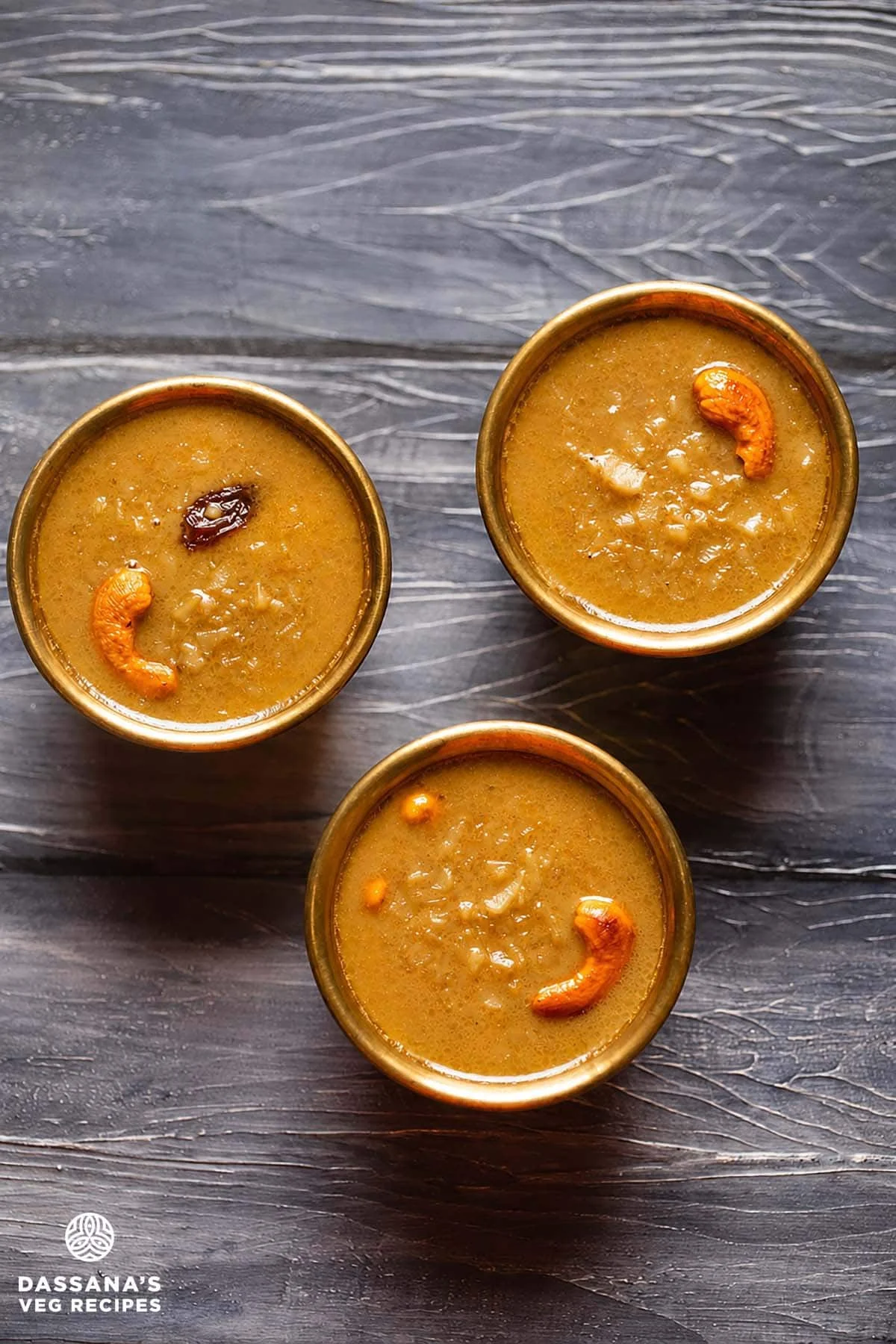
THIRUVANANTHAPURAM — As the monsoon clouds begin to retreat and the golden sun of Chingam bathes the lush landscapes of Kerala, the air fills with the fragrance of Thumba flowers and the rich, smoky aroma of melting jaggery. While the harvest festival of Onam is defined by many sights—the intricate floral carpets (Pookalam) and the rhythmic pulses of the Vallam Kali (snake boat races)—its culinary soul resides in the Sadya, a grand vegetarian banquet served on a banana leaf. At the pinnacle of this feast sits the Ada Pradhaman, a dessert so steeped in tradition that it is often referred to as the "King of Payasams."

This mahogany-hued delicacy, a complex symphony of rice flakes, coconut milk, and unrefined sugar, represents more than just a sweet ending to a meal; it is a testament to Kerala’s agricultural heritage and its meticulous approach to slow-cooked gastronomy.

The Core Identity: Defining the Pradhaman
To the uninitiated, "Payasam" and "Pradhaman" might seem interchangeable, but to a Malayali palate, the distinction is significant. While Payasam is a broad category of sweet milk or jaggery-based puddings found across South India, a Pradhaman specifically denotes a richer, more elaborate preparation, typically involving coconut milk and jaggery.

The defining characteristic of Ada Pradhaman is the Ada itself. These are small, flat, dried pieces of rice pasta. Historically, the preparation of ada was a labor-intensive ritual. Households would soak parboiled rice, grind it into a fine paste, spread it thinly over wilted banana leaves, steam it, and then meticulously chop the resulting sheets into tiny flakes. Today, while high-quality ready-made dried ada has become the standard for modern kitchens, the culinary principles governing its preparation remain unchanged.

The Contrast: Ada Pradhaman vs. Palada Payasam
A common point of confusion for those outside the region is the difference between Ada Pradhaman and Palada Payasam. Both utilize the same rice ada as their base, yet they occupy different ends of the flavor spectrum:

- Palada Payasam: A creamy, ivory-colored dessert made by reducing dairy milk with white sugar until it achieves a delicate pink hue. It is prized for its subtle, lacto-sweetness.
- Ada Pradhaman: A bold, dark, and earthy preparation using jaggery (concentrated cane juice) and multiple "extracts" of coconut milk. It is flavored with warm spices like dry ginger and cumin, offering a depth of flavor that is both rustic and sophisticated.
Chronology of Craft: The Stages of Preparation
The creation of a perfect Ada Pradhaman is a chronological exercise in patience and temperature control. It is not a dish that can be rushed; rather, it is "built" in layers.

Phase I: The Hydration and Tempering of the Ada
The process begins with the rehydration of the dried rice flakes. In a journalistic survey of traditional kitchens, chefs emphasize the importance of "rinsing." After the ada is boiled until tender—a process taking approximately 15 to 20 minutes—it must be immediately plunged into cold water. This shock-treatment removes excess surface starch, ensuring that each piece of rice pasta remains distinct and "silk-like" rather than clumping into a gelatinous mass.

Phase II: The Jaggery Infusion
The second stage involves the "Sarkara Varatti" or the cooking of the ada in jaggery syrup. Unlike white sugar, jaggery contains impurities and minerals that require it to be melted and strained through fine muslin. The cooked ada is simmered in this concentrated syrup. This is a critical chemical stage: the rice flakes absorb the dark sweetness, turning from translucent white to a deep amber. This simmering continues until the mixture achieves a thick, jam-like consistency, ensuring the sweetness is locked into the core of the pasta.

Phase III: The Hierarchy of Coconut Milk
In traditional Kerala cuisine, coconut milk is categorized by its "extraction."

- The Third Extract (Moonnam Paal): Thin and watery, used for the initial simmering.
- The Second Extract (Randam Paal): Medium consistency, added to build body.
- The First Extract (Onnam Paal): The thickest, richest cream, added at the very end.
The final addition of the thick coconut milk is the most delicate moment. The heat must be reduced to a whisper; if the mixture boils after the thick milk is added, the coconut fats can curdle, ruining the smooth texture of the Pradhaman.

Phase IV: The Aromatic Finish
The final act is the tempering. Cashews and raisins are fried in golden ghee (or coconut oil for a vegan-compliant version) until the nuts are toasted and the raisins swell into plump globes. These are poured over the pudding along with a finely ground blend of cardamom, dry ginger (Chukku), and toasted cumin.

Supporting Data: The Nutritional and Chemical Profile
While often viewed purely as an indulgence, the ingredients of Ada Pradhaman offer a fascinating look at traditional nutritional wisdom.

| Ingredient | Role | Nutritional/Chemical Note |
|---|---|---|
| Rice Ada | Carbohydrate Base | Provides slow-release energy; gluten-free. |
| Jaggery | Sweetener | Unlike refined sugar, jaggery retains molasses, providing iron, magnesium, and potassium. |
| Coconut Milk | Fat Source | Rich in Lauric acid, a medium-chain triglyceride (MCT) that is easily metabolized. |
| Dry Ginger | Digestive Aid | Counteracts the heaviness of the coconut milk and aids in digestion. |
| Cumin | Carminative | Adds an earthy note and prevents bloating after a heavy Sadya meal. |
Data from culinary analysts suggests that a single serving (approx. 200ml) of Ada Pradhaman contains roughly 460-470 calories. However, the glycemic index of jaggery is lower than that of refined sugar, leading to a more gradual rise in blood glucose levels—a factor that has kept this traditional sweet relevant in modern health-conscious discussions.

Official Perspective: The Cultural Experts’ View
To understand the significance of Ada Pradhaman, one must look at the "Official Response" from Kerala’s cultural historians. Dr. Lakshmi Nair, a renowned culinary expert in the region, has frequently noted that the Pradhaman is a "reflection of the land."

"In Kerala, the coconut tree is the Kalpavriksha (the divine tree that provides everything)," says Nair. "The use of coconut milk instead of dairy in our most prestigious desserts is a historical marker of our geography. Furthermore, the inclusion of ginger and cumin in a dessert is a uniquely Malayali trait, showcasing an ancient understanding of Ayurveda where food is medicine. The spices are there to ensure that even after a 26-dish Sadya, your digestive system remains balanced."

Festival organizers for the Thrikkakara Temple—the center of Onam celebrations—state that the preparation of the Prasadam (religious offering) always includes a version of the Pradhaman, highlighting its status as a "pure" food suitable for both gods and commoners.

Implications: The Evolution of a Tradition
The survival of the Ada Pradhaman recipe in the 21st century has several implications for global food trends.

1. The Rise of "Plant-Based" Heritage
Long before "veganism" became a global trend, the Ada Pradhaman was inherently plant-based (provided coconut oil is used instead of ghee). As the world shifts toward dairy-free alternatives, this traditional dish has found new life in international metropolitan centers like London, New York, and Dubai, where it is marketed as a gourmet vegan custard.

2. Preservation of Slow Cooking
In an era of instant desserts and microwaveable sweets, the Ada Pradhaman remains a bastion of "Slow Food." The requirement to simmer the jaggery and gently temper the coconut milk prevents the dish from being fully "industrialized." While instant mixes exist, they fail to replicate the complex "Maillard reaction" that occurs when jaggery and rice are slow-cooked together.

3. Diaspora and Identity
For the millions of Keralites living abroad, the preparation of Ada Pradhaman during Onam is a vital link to their identity. The availability of dried ada and canned coconut milk in global supermarkets has allowed the diaspora to maintain this ritual, though many still insist on sourcing "dark jaggery" from their hometowns to ensure the authentic mahogany color.

Conclusion: More Than a Dessert
The Ada Pradhaman is a culinary masterpiece that encapsulates the history, geography, and philosophy of Kerala. It is a dish that demands respect—both in its preparation and its consumption. As it is served on the bottom right corner of the banana leaf, its dark, glistening surface reflecting the festive lights, it serves as a reminder that the best things in life are often those that require the most time, the finest ingredients, and a deep connection to one’s roots.

Whether enjoyed hot on a rainy afternoon or chilled as a refined evening treat, the Ada Pradhaman remains the undisputed monarch of the Malayali kitchen, a sweet legacy that continues to thrive across generations and borders.
