

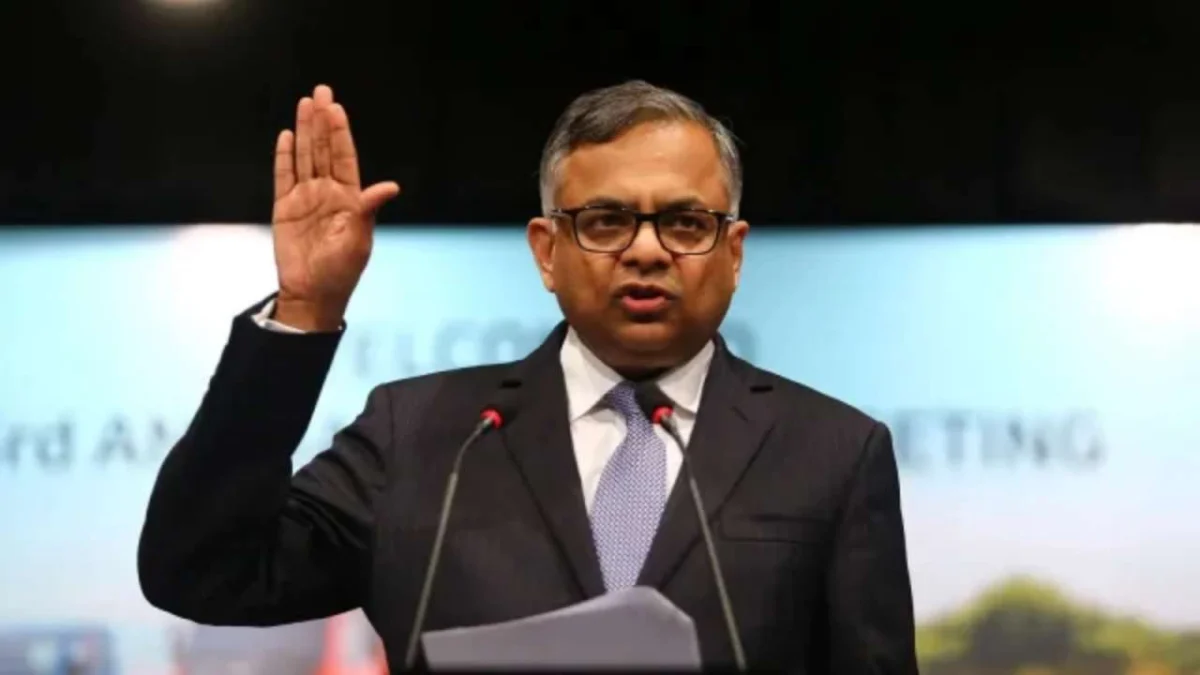
Mumbai, India – In a significant development that could reshape the leadership landscape of India’s most iconic conglomerate, Tata Trusts, the principal shareholder of Tata Sons, has declared the reappointment of N. Chandrasekaran as Chairman of Tata Sons to be invalid. The Trusts contend that the resolution, passed during a board meeting on September 17, failed to secure the mandatory affirmative support of its nominee directors, as stipulated by the company’s Articles of Association (AoA). This unprecedented challenge by the majority shareholder introduces a layer of legal and corporate governance complexity, potentially leading to a fresh wave of internal turmoil within the venerable Tata Group.
The core of Tata Trusts’ argument rests on a specific clause within Tata Sons’ AoA, which necessitates the explicit support of a majority of its nominee directors for certain key resolutions. With two nominees representing the Trusts on the board, the requirement was for both to vote in favour of Chandrasekaran’s reappointment. However, one of the two nominee directors cast a dissenting vote, thereby, according to the Trusts, invalidating the resolution. Adding to the gravity of the situation, Tata Trusts has firmly stated that the Chairman’s casting vote cannot be invoked to overcome this specific AoA condition, as it applies only in instances of an overall equality of votes, not to the pre-requisite affirmative support from nominee directors.
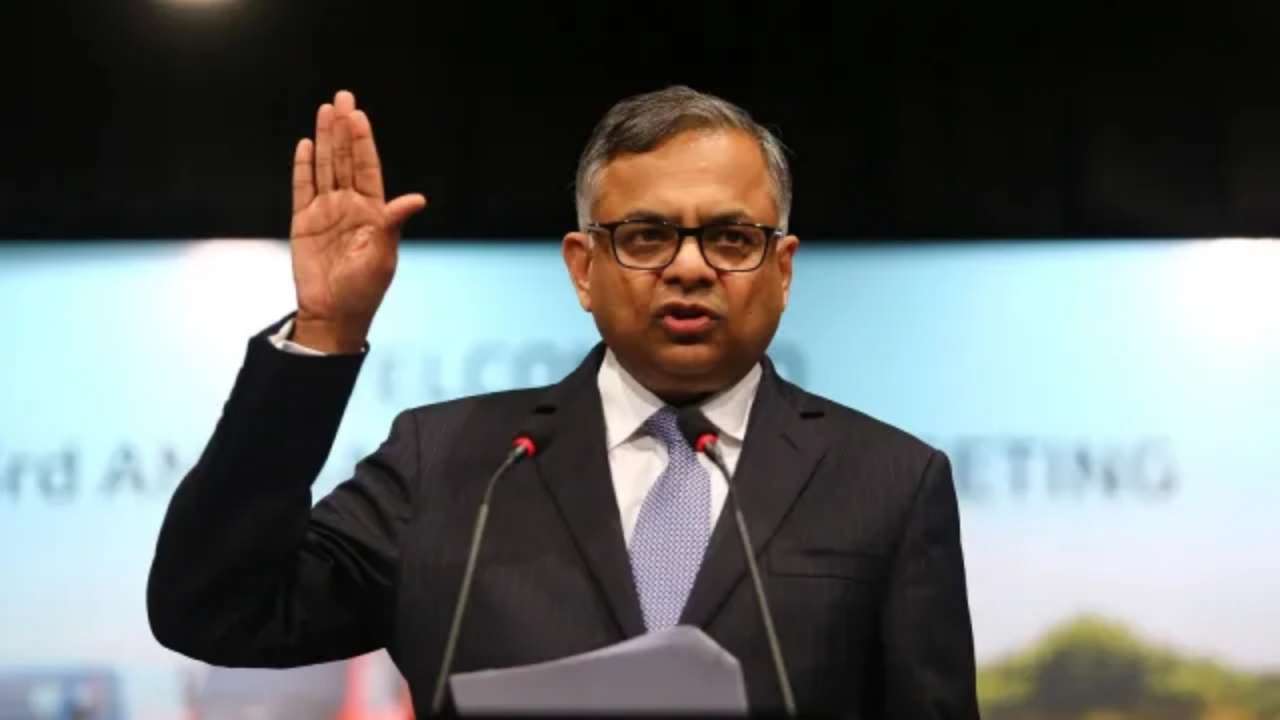
This declaration from Tata Trusts, which holds approximately 66 percent of Tata Sons, not only questions the legitimacy of Chandrasekaran’s continued tenure but also reignites long-standing debates surrounding corporate governance, shareholder rights, and the intricate power dynamics within the sprawling Tata empire. The Trusts’ strong stance, further bolstered by references to the Supreme Court’s upholding of their affirmative voting rights during the contentious Cyrus Mistry dispute, signals a potential high-stakes legal and corporate battle ahead.
Unpacking the Core Dispute: An Unprecedented Challenge to Leadership
The statement issued by Tata Trusts on Sunday meticulously laid out its grounds for invalidating the September 17 resolution. At its heart lies the interpretation and strict adherence to the Articles of Association (AoA) of Tata Sons, the holding company that controls the vast array of Tata Group entities, from Tata Steel to Tata Motors and TCS. The Trusts emphasized that the resolution to reappoint N. Chandrasekaran as Chairman did not secure the mandatory support required from its nominee directors.
)
This isn’t merely a procedural oversight; it touches upon the fundamental governance framework of Tata Sons. The Articles of Association are essentially the rulebook governing a company’s operations, defining the rights and responsibilities of its shareholders, directors, and officers. For a conglomerate as intricate and historically significant as Tata, these articles are not just legal documents but custodians of its legacy and principles.
The dispute highlights the powerful role of nominee directors, particularly those representing majority shareholders like Tata Trusts. Their presence on the board is intended to safeguard the interests of the shareholder and ensure that crucial decisions align with the larger vision and values of the ownership entity. In this instance, the dissenting vote from one of the two Tata Trusts nominees proved to be the pivotal factor, leading to the current impasse.

The Mandate of the Articles of Association (AoA)
At the crux of Tata Trusts’ contention is a specific provision within the Tata Sons’ Articles of Association. This critical clause stipulates that certain resolutions, particularly those concerning key leadership appointments, require the "affirmative support of a majority of directors nominated by Tata Trusts." Given that Tata Trusts is the dominant shareholder, holding approximately 66 percent of Tata Sons, this provision is a powerful safeguard for its interests and strategic direction.
With two nominee directors representing Tata Trusts on the Tata Sons board, the interpretation of this clause meant that both directors had to cast their vote in favour of Chandrasekaran’s reappointment for the condition to be met. The Trusts’ statement explicitly confirmed that this did not happen; one of the two nominees voted against the resolution during the September 17 board meeting. This single dissenting vote, therefore, rendered the required affirmative support unavailable under the terms of the AoA.
)
The significance of this condition cannot be overstated. It represents a special majority requirement that goes beyond a simple board majority vote. It grants Tata Trusts, as the primary owner, a veto-like power over crucial decisions, ensuring that the strategic direction of Tata Sons remains aligned with the philanthropic and long-term objectives enshrined by the Trusts. This mechanism is designed to prevent a situation where the board, potentially influenced by other factors, might make decisions contrary to the foundational principles or majority shareholder’s mandate.
The Casting Vote Conundrum: A Matter of Specificity
Further complicating the matter, Tata Trusts also preemptively addressed the potential argument concerning the Chairman’s casting vote. In many corporate governance structures, a chairman holds a casting vote, which can be exercised in situations where there is an equality of votes on a resolution, effectively breaking a deadlock.
)
However, Tata Trusts firmly asserted that this mechanism is inapplicable in the current scenario. They argued that the Chairman’s casting vote is available "only in case of equality of votes at the overall board level and does not apply to the requirement concerning Tata Trusts’ nominee directors." This distinction is crucial. The AoA condition requiring affirmative support from nominee directors is a precondition for the validity of the resolution itself, distinct from the outcome of the general board vote.
The Trusts articulated this point with stark clarity: "There was no paralysis and there was no deadlock. The Board put a question, and the AoA answered it in the negative." This statement underscores their position that the AoA’s specific requirement was simply not met, and no subsequent procedural mechanism, such as a casting vote, can retrospectively validate a resolution that failed to clear a fundamental, pre-established hurdle. This argument highlights the legal precision with which Tata Trusts is approaching the matter, emphasizing that the AoA’s conditions are absolute and not subject to circumventing measures.
)
Chronology of Events and Declarations: A Timeline of Dispute
The current dispute, while seemingly sudden, is rooted in the long-standing and often complex relationship between Tata Trusts, as the majority shareholder, and Tata Sons, the operating entity.
- September 17, [Year]: The Tata Sons board convenes a meeting where the resolution for the reappointment of N. Chandrasekaran as Chairman is tabled. The vote takes place, and one of the two Tata Trusts’ nominee directors votes against the resolution.
- [Date, Day of the Week]: Tata Trusts issues a comprehensive statement publicly challenging the validity of Chandrasekaran’s reappointment, citing the violation of the Articles of Association and the lack of mandatory affirmative support from its nominee directors. This marks the public unveiling of the internal disagreement.
- Previous Tenure of N. Chandrasekaran: Chandrasekaran was initially appointed as Chairman of Tata Sons in early 2017, following the dramatic ouster of his predecessor, Cyrus Mistry. His tenure has been marked by strategic initiatives aimed at streamlining the vast conglomerate, divesting non-core assets, and focusing on growth areas like technology and sustainable energy. His reappointment was widely anticipated, making the Trusts’ challenge all the more surprising.
The Cyrus Mistry Saga: A Crucial Legal Precedent
Tata Trusts’ current stance is not without significant historical and legal backing. The Trusts explicitly referred to the Supreme Court proceedings that arose from the contentious removal of former Tata Sons chairman Cyrus Mistry in 2016. This reference is critical because it directly relates to the very Articles of Association clauses now being invoked.
)
During the prolonged legal battle that followed Mistry’s ouster, the National Company Law Appellate Tribunal (NCLAT) had initially held that the affirmative voting rights of Tata Trusts’ nominee directors under Articles 104B and 121 of the AoA were "oppressive." NCLAT viewed these rights as granting the Trusts undue power, potentially hindering independent board functioning.
However, the Supreme Court, in a landmark ruling, set aside NCLAT’s finding. The apex court unequivocally accepted Tata Sons’ (and by extension, Tata Trusts’) position, upholding the validity and enforceability of these affirmative voting rights. The Supreme Court recognized these provisions as legitimate tools for the majority shareholder to protect its interests and ensure the company’s adherence to its foundational principles.
)
Tata Trusts’ argument is therefore powerful: if Tata Sons successfully defended these very protections before the highest court in the land, it cannot now unilaterally disregard them. This legal precedent provides a robust foundation for the Trusts’ current challenge, making it difficult for Tata Sons to dismiss the claims as merely procedural or minor. It establishes that the affirmative voting rights are not just internal rules but legally sanctioned powers essential to the governance structure of Tata Sons. The Mistry episode thus serves as a powerful reminder of the deep-seated implications of these AoA clauses and the readiness of Tata Trusts to assert them when necessary.
Corporate Governance Debate: Trusts vs. Public Listing
Beyond the immediate question of Chandrasekaran’s reappointment, the Trusts’ statement also touched upon a broader corporate governance debate: the argument that listing Tata Sons on the stock exchange would be necessary to strengthen its governance framework. This suggestion has periodically surfaced, often from quarters advocating for greater transparency and market discipline for the ultimate holding company of such a vast group.
)
Tata Trusts, however, firmly rejected this argument. They pointed to the existing robust governance standards that Tata Sons has voluntarily adopted, even without being a publicly listed entity. These provisions include:
- Independent Directors: The presence of independent directors on the board, crucial for providing unbiased oversight and protecting minority shareholder interests.
- Audit and Nomination Committees: The establishment of specialized committees, typically mandated for listed companies, to ensure financial integrity, risk management, and objective leadership succession planning.
- Related-Party Transactions: Strict guidelines and oversight for transactions between Tata Sons and its associated entities, preventing conflicts of interest and ensuring fairness.
- Retirement of Directors by Rotation: A common practice in listed companies to ensure periodic review and renewal of board composition.
- Insider Trading Regulations: Adherence to principles that prevent the misuse of privileged information, even in a privately held context.
The Trusts emphasized that these comprehensive governance standards had been adopted voluntarily by Tata Sons before the current issue with Chandrasekaran’s reappointment arose. This suggests that, in their view, the company already operates with a high degree of transparency and accountability, rendering the argument for a public listing as a prerequisite for good governance moot. Their stance reinforces the belief that strong governance can be cultivated internally through adherence to robust policies and ethical practices, irrespective of public market mandates.
)
Official Responses and Awaited Clarifications
As of the latest reports, the statement from Tata Trusts represents the primary official communication on this matter. There has been no immediate public response or counter-statement from Tata Sons or N. Chandrasekaran regarding the Trusts’ allegations. The silence from Tata Sons’ side could be attributed to a number of factors: internal deliberations, legal consultations, or a strategic decision to formulate a comprehensive response rather than a hasty one.
The absence of a direct rebuttal from Tata Sons or Chandrasekaran leaves several questions unanswered and underscores the gravity of the situation. The corporate world, investors, and the public will be keenly awaiting an official clarification or response from the company. Such a response would be crucial to understand Tata Sons’ interpretation of its own AoA, its stance on the validity of the September 17 resolution, and its plan for navigating this unprecedented challenge. The clarity provided by all parties will be instrumental in determining the path forward and in reassuring stakeholders about the stability and governance of the Tata Group.
)
Implications: A Seismic Shift in Tata’s Power Dynamics
The challenge posed by Tata Trusts carries profound implications, potentially triggering a seismic shift in the power dynamics and operational stability of the entire Tata Group.
Legal Implications: A Path Towards Further Litigation
The most immediate consequence could be a renewed legal battle. Tata Trusts’ explicit declaration of invalidity is a strong legal assertion that, if not resolved amicably, could lead to petitions in various tribunals or courts. The interpretation of specific AoA clauses, the applicability of the casting vote, and the overarching validity of the September 17 resolution will all be subject to judicial scrutiny. Such litigation can be protracted, costly, and divert significant management attention and resources. The legal precedent from the Cyrus Mistry case, while favouring the Trusts, might also open avenues for new legal arguments from Tata Sons’ side, should they choose to contest the Trusts’ interpretation.
)
Corporate Governance Implications: Scrutiny and Reform
This dispute will undoubtedly bring Tata Sons’ corporate governance practices under intense scrutiny. It raises questions about board processes, the roles of nominee and independent directors, and the transparency of decision-making at the highest level. Investors and corporate governance watchdogs will be closely examining how the company adheres to its foundational documents and manages internal conflicts. The outcome could force a re-evaluation or even amendments to the AoA to prevent similar ambiguities or disputes in the future, potentially impacting the balance of power between the Trusts and the operational management.
Leadership and Stability: Uncertainty at the Helm
The most immediate and visible implication concerns the leadership of Tata Sons. If Chandrasekaran’s reappointment is indeed deemed invalid, it creates a vacuum at the helm of the entire conglomerate. This uncertainty could destabilize strategic initiatives, delay crucial decisions, and cast a shadow over the group’s future direction. A leadership transition, whether immediate or gradual, would be a complex undertaking, requiring careful management to maintain continuity and confidence. The situation could also impact Chandrasekaran’s personal standing and his ability to effectively lead other Tata Group companies where he holds leadership positions.
)
Reputational Impact: A Blow to Brand Tata
The Tata Group has long been lauded for its strong ethical foundations, impeccable corporate governance, and commitment to stakeholder welfare. This public disagreement, particularly involving the Trusts that embody the group’s philanthropic ethos, could dent this carefully cultivated reputation. Negative headlines and perceptions of internal strife can erode public trust, deter potential partners, and make it challenging to attract top talent. The "Brand Tata" is a significant asset, and any perceived instability at its core can have far-reaching reputational consequences.
Operational and Financial Impact: Market Volatility and Investor Confidence
While Tata Sons itself is not publicly listed, its subsidiaries are. Any instability at the holding company level can trigger anxiety among investors in listed Tata Group companies. This could lead to volatility in stock prices, as markets react to uncertainty surrounding leadership and strategic direction. Investor confidence, both domestic and international, hinges on the stability and clear governance of the parent entity. A prolonged dispute could make it harder for Tata Group companies to raise capital, forge new partnerships, or execute large-scale projects, impacting their operational and financial performance.
)
Future of Tata Trusts’ Role: Reaffirmation or Redefinition
The dispute also serves to underscore and potentially redefine the role of Tata Trusts as the ultimate guardian of the Tata legacy. By asserting its rights so forcefully, the Trusts are reaffirming their commitment to upholding the AoA and the foundational principles of the group. This move could be interpreted as a necessary step to ensure long-term alignment with the group’s philanthropic mission, or conversely, as an overreach into operational matters by a non-executive shareholder. The resolution of this conflict will likely set a precedent for the future relationship between the Trusts and the management of Tata Sons.
Expert Perspectives
Legal experts and corporate governance analysts are closely watching this unfolding situation. Many suggest that the precise wording and interpretation of the AoA will be paramount, and the Supreme Court’s previous ruling on the Mistry case will undoubtedly play a significant role in any legal proceedings. Corporate governance specialists emphasize the importance of clear communication and a swift resolution to minimize disruption and maintain investor confidence. They highlight that such internal disputes, especially in conglomerates of Tata’s stature, underscore the delicate balance between shareholder rights, board autonomy, and effective leadership.
)
Conclusion
The challenge by Tata Trusts to N. Chandrasekaran’s reappointment marks a critical juncture for the Tata Group. It underscores the enduring power of foundational corporate documents like the Articles of Association and the pivotal role of majority shareholders in shaping a company’s destiny. The situation highlights the complex interplay between ownership, governance, and leadership within one of the world’s most respected business empires. As the corporate world awaits further developments and official responses from Tata Sons, the resolution of this dispute will not only determine the future leadership of the conglomerate but also set significant precedents for corporate governance practices in India’s business landscape. The stakes are undeniably high, and the path forward demands careful legal navigation, robust corporate dialogue, and a renewed commitment to the principles that have long defined the Tata legacy.
