

AGARTALA — In the collective imagination of the Indian traveler, the "Land of the Seven Sisters" often evokes the misty hills of Meghalaya, the sprawling tea estates of Assam, or the snow-capped peaks of Arunachal Pradesh. Yet, tucked away in the geographical embrace of Bangladesh on three sides, Tripura has long remained a footnote in the narrative of Northeastern tourism. Often overlooked and under-visited, the state has historically been a destination reserved for those with familial ties or specific bureaucratic mandates.
However, a significant shift is underway in the landscape of Indian hospitality. Hotel Polo Towers Limited, a dominant force in the Northeastern hospitality sector, has recently unveiled its latest venture: Chapter Lakeside, Tripura. This 17-key upscale boutique property, situated on the banks of the historic Rudrasagar Lake, represents more than just a new hotel; it is a strategic bet on the untapped cultural and ecological wealth of Tripura.
Main Facts: A New Paradigm for Destination-Led Hospitality
Chapter Lakeside is the flagship of the "Chapter" brand, a design-forward concept conceived by Deval Tibrewalla, Whole Time Director and CEO of Hotel Polo Towers Limited. The property is positioned not merely as a place of lodging but as a "gateway" into the specific character of the state.
Located approximately 90 minutes from the Maharaja Bir Bikram (Agartala) Airport, the hotel is strategically positioned to offer views of the iconic Neermahal—the "Lake Palace" of Tripura, built by Maharaja Bir Bikram Kishore Manikya Bahadur in the 1930s. The property features 17 meticulously designed keys, a lake-view pool, a poolside bar, and an all-day dining restaurant named Cassette Kitchen & Bar.
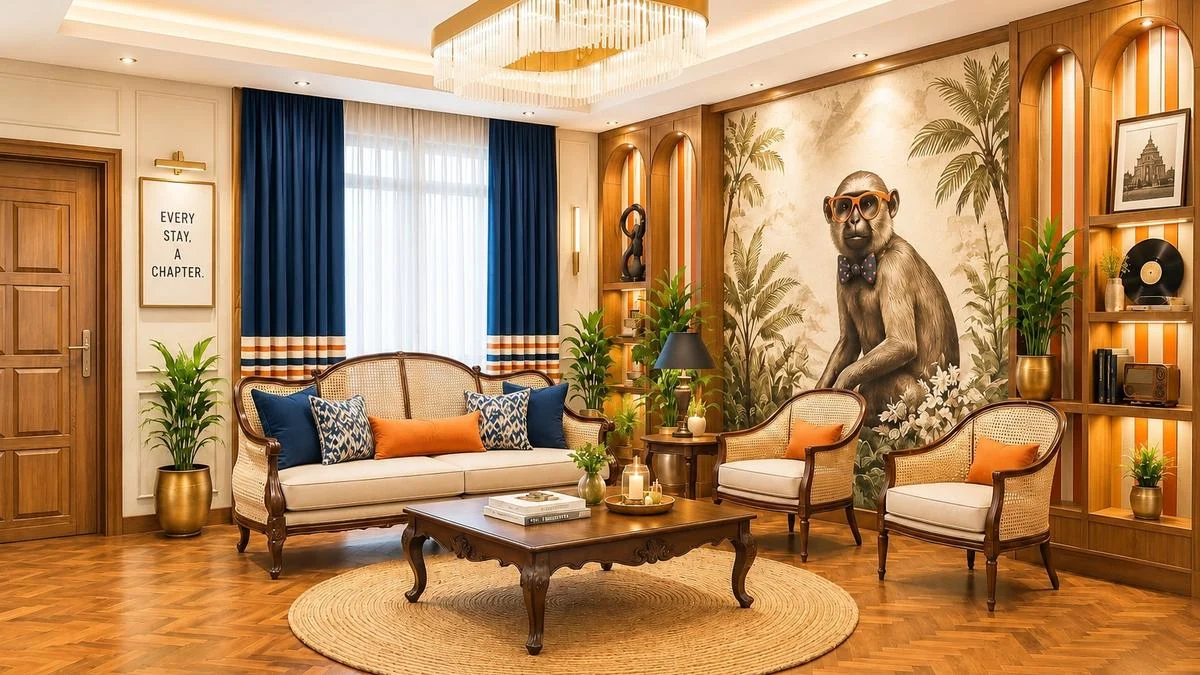
The "Chapter" philosophy hinges on the principle that "the place comes first." Unlike cookie-cutter luxury chains that transplant a standardized aesthetic regardless of geography, Chapter Lakeside integrates the destination into its very DNA. This is achieved through a "design spine" anchored by the "Animal in Residence"—in this case, the Spectacled Langur (Phayre’s leaf monkey), a rare primate native to the region.
Chronology: From Regional Stalwart to Boutique Innovator
The journey toward the launch of Chapter Lakeside reflects the broader evolution of the Polo Towers Group. For decades, the group has been a pioneer in the Northeast, establishing landmark properties in Shillong and Cherrapunji. The expansion into Tripura marks a calculated move into "frontier tourism"—areas with high potential but low current penetration.

The development of Chapter Lakeside followed a rigorous process of cultural immersion. Rather than importing materials, the design team spent months researching Tripura’s indigenous crafts. The state is a global biodiversity hotspot for bamboo, with over 21 species found locally. The chronology of the project’s development involved:
- Site Selection (2021-2022): Identifying Rudrasagar Lake as the focal point due to its proximity to Neermahal and its status as a Ramsar site (a wetland of international importance).
- Design Integration: Collaborating with local artisans to incorporate Tripura’s world-renowned cane and bamboo work into the hotel’s physical structure and furniture.
- Culinary Research: Engaging with local Kokborok and Mui Borok communities to translate traditional, often oil-free, tribal recipes into an upscale dining format.
- Soft Launch and Training: Upskilling local hospitality talent, ensuring that the service reflects the authentic warmth of Tripuri culture.
Supporting Data: Tripura’s Untapped Potential
The decision to invest in Tripura is backed by emerging trends in the Indian travel market. Post-pandemic, there has been a 35% increase in interest toward "offbeat" and "slow travel" destinations within India. Tripura, despite its low profile, offers a density of attractions that rival more established circuits:
- Biodiversity: Tripura is home to four wildlife sanctuaries (Sepahijala, Trishna, Gumti, and Rowa). The state boasts a forest cover of over 60%, providing a haven for migratory birds and rare primates.
- Heritage: Beyond Neermahal, the state houses the Unakoti rock-cut carvings—massive 7th–9th century bas-relief sculptures that some historians suggest could rival Angkor Wat if properly promoted.
- Connectivity: The recent modernization of the Agartala Airport, now the second busiest in the Northeast after Guwahati, has drastically reduced the friction of travel. Improved road connectivity via the Agartala-Akhaura rail link and national highway expansions has also made the state more accessible to the mainland.
- The Bamboo Economy: Tripura produces some of the finest cane and bamboo products in the world. By integrating these into luxury hospitality, the project supports a local industry that employs thousands of rural artisans.
Official Responses: The Vision of Deval Tibrewalla
In an exclusive dialogue, Deval Tibrewalla addressed the skepticism often directed at Tripura as a luxury destination. When asked "Why Tripura?", his response was a defiant "Why not?"
"Ours is an upscale boutique brand built on a simple guiding principle: the place comes first," Tibrewalla explained. "Design, food, art, music, and experiences start with the destination, then get edited into a sharp, contemporary hotel. Its pools, spas, and restaurants are not add-ons. They are part of the way guests read the place."
Tibrewalla is vocal about redefining the term "upscale." For the Polo Towers Group, luxury is not synonymous with "expensive wallpaper" or imported marble. "Wise decisions, aesthetic concept coupled with visual and spatial concept make it upscale," he noted. "Build the pool where the view is best from. Cook food from the region. Build a bar with a point of view. Keep it sharp, warm, and local. That is Chapter."
A cornerstone of this local focus is the Cassette Kitchen & Bar. The name itself is a historical nod; it serves as a tribute to R.D. Burman, the legendary music composer who belonged to the Tripuri royal family. "The Northeast isn’t a theme here; it’s simply where the kitchen starts," the management team stated. The menu focuses on the "clean" flavors of the region, utilizing berma (fermented fish), river fish, bamboo shoots, and banana flowers, emphasizing the health-conscious, oil-free traditions of Tripuri cooking.
Implications: Socio-Economic Impact and the Future of Tourism
The opening of Chapter Lakeside carries significant implications for the socio-economic fabric of Tripura and the wider Northeast.

1. Employment and Upskilling:
By focusing on local talent, the Polo Towers Group is addressing the regional challenge of "brain drain," where hospitality professionals often leave the Northeast for opportunities in Delhi or Bangalore. By providing "upscale" opportunities within the state, the project fosters a local ecosystem of professional growth.
2. Cultural Preservation:
The "Animal in Residence" concept—using the Spectacled Langur as a design motif—serves as a subtle form of environmental advocacy. By placing indigenous flora, fauna, and crafts at the center of a luxury experience, the hotel validates and preserves cultural identities that are often sidelined by globalization.
3. The "Chapter" Roadmap:
Tripura is only the first page. The group has plans to expand the "Chapter" brand across the region. Each property will tell a different story: while Tripura focuses on the legacy of the Manikya kings and the serenity of Rudrasagar, the upcoming Meghalaya chapter will pay homage to the state’s rock-and-roll culture and its "Hill Myna" identity.
4. Tourism Infrastructure as a Catalyst:
History has shown that luxury boutique properties often act as "anchors" for a destination. Much like how the Taj Lake Palace defined Udaipur, Chapter Lakeside has the potential to elevate the profile of the entire Rudrasagar circuit. This, in turn, encourages government and private investment in ancillary services like boat tours, guided heritage walks, and craft markets.
Conclusion: A Story Still Being Written
For too long, Tripura has been the "silent sister" of the Northeast. The launch of Chapter Lakeside suggests that the silence was not due to a lack of things to say, but a lack of a platform from which to say them.
As travelers increasingly seek authenticity over opulence, the "Chapter" model offers a blueprint for how Indian hospitality can evolve. By leaning into the "localness" of the fabric rather than just the "story told around it," Deval Tibrewalla and the Polo Towers Group are inviting the world to read a new chapter of Indian travel—one where the destination is not just a backdrop, but the protagonist.
In the shadows of Neermahal, as the sun sets over Rudrasagar Lake, Tripura is finally ready for its close-up. The question is no longer "Why Tripura?", but rather, "What took us so long to get here?"
