

CHENNAI – In a move that signals a definitive shift in its long-term strategy for the Indian subcontinent, Stellantis N.V. has officially completed the acquisition of full ownership in Stellantis Automobiles India Private Limited (SAIPL). By buying out the remaining stake held by Hindustan Motor Finance Corporation Ltd. (HMFCL), a subsidiary of the CK Birla Group, the global automotive titan has effectively dissolved its long-standing joint venture in favor of a wholly-owned subsidiary model.
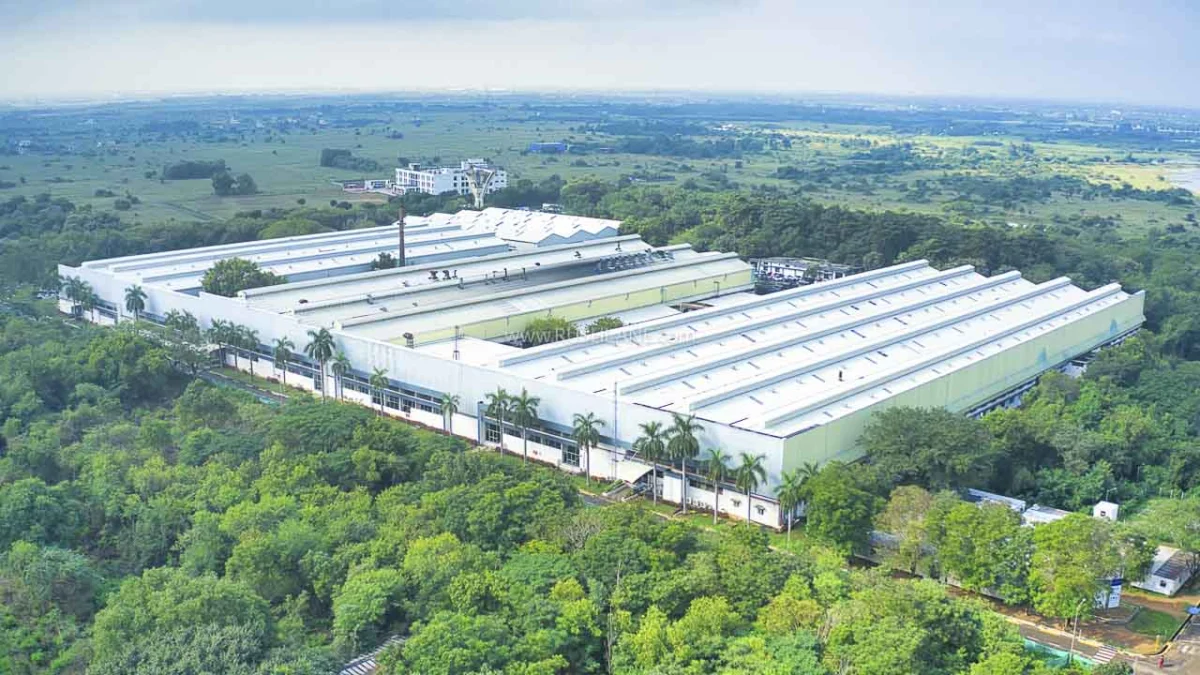
This acquisition, executed through a Foreign Direct Investment (FDI) transaction, grants Stellantis total control over the manufacturing facility located in Thiruvallur, Tamil Nadu. The move comes at a critical juncture for the company, as it seeks to reconcile modest domestic sales figures with an ambitious roadmap for production expansion, deeper localization, and a robust export strategy that positions India as a primary manufacturing hub for emerging markets.
I. The Acquisition: Consolidating Power for Agility
The transition from a joint venture to a 100% owned entity is more than a mere change in the cap table; it is a strategic consolidation designed to streamline decision-making. Historically, joint ventures in the Indian automotive sector—while useful for navigating local regulatory landscapes—have occasionally struggled with split governance and differing corporate priorities. By acquiring HMFCL’s stake, Stellantis aims to eliminate these friction points.
According to company insiders, the full ownership of SAIPL is expected to:
- Simplify Governance: With a single board and a unified reporting structure to the global headquarters in Amsterdam, the Indian operations can bypass the complexities of multi-partner approvals.
- Enhance Integration: The move allows for a more seamless integration of Stellantis’s global manufacturing standards and digital transformation initiatives directly into the Thiruvallur plant.
- Accelerate Speed-to-Market: As the Indian automotive landscape becomes increasingly competitive with the rise of EVs and tech-heavy SUVs, the ability to pivot production lines and introduce new models quickly is paramount.
The Thiruvallur facility currently serves as the heartbeat of Citroën’s Indian operations, producing the C3 hatchback, the eC3 electric vehicle, the C3 Aircross SUV, and the recently launched Basalt Vision. Under the new ownership structure, this facility is poised to become the cornerstone of Stellantis’s "Dare Forward 2030" regional goals.
II. A Chronological Journey: From Partnership to Autonomy
The path to full ownership has been a decade-long evolution, reflecting the changing dynamics of the Indian automotive industry.
- 2017: The Foundation: The partnership between the then-PSA Group (Peugeot-Citroën) and the CK Birla Group was inked. This was a landmark agreement that signaled the French automaker’s return to India after a hiatus. The deal involved two joint ventures: one for vehicle assembly (SAIPL) and another for powertrain manufacturing (AVTEC Ltd).
- 2019-2020: Brand Entry: Citroën officially announced its entry into the Indian market, focusing on a "C-Cubed" program specifically designed for Indian consumer preferences—Cool, Comfort, and Clever.
- 2021: Production Commencement: Vehicle assembly began at the Thiruvallur plant. The facility, which had historical ties to Mitsubishi assembly under the CK Birla umbrella, was modernized to meet global standards. The first model to roll off the line was the Citroën C5 Aircross, followed by the more localized C3.
- 2021-2024: The Stellantis Merger: Following the global merger of PSA and FCA (Fiat Chrysler Automobiles) to form Stellantis, the Indian operations were brought under a single leadership umbrella, though manufacturing remained split between Thiruvallur (Citroën) and Ranjangaon (Jeep, in a JV with Tata Motors).
- 2024: Full Acquisition: Recognizing the need for total operational control to meet aggressive 2028 targets, Stellantis moved to acquire the remaining equity from HMFCL, ending the manufacturing partnership with the CK Birla Group while maintaining cordial relations for other business interests.
III. Supporting Data: Scaling the "Make in India" Ambition
Stellantis is backing its ownership change with significant capital and production commitments. The company has revealed a trajectory that envisions the Thiruvallur plant not just as a domestic supplier, but as a global export powerhouse.
Production and Workforce Projections
The growth targets for the Thiruvallur facility are aggressive. Stellantis aims to increase annual production from approximately 16,000 units in 2026 to over 43,000 units by 2028. This represents a staggering 160% increase in output over a two-year window.
To support this surge, the direct workforce at the plant is projected to more than double. Currently, the plant employs 610 individuals (as of the 2026 baseline); this figure is expected to cross 1,200 by 2028. When factoring in the indirect employment generated through the supplier park and logistics network, the impact on the local Tamil Nadu economy is substantial.
Localization and Export Reach
One of Stellantis’s greatest successes in India has been its localization program. The Thiruvallur plant has achieved a localization rate of over 95%. This high level of domestic content is a double-edged sword of efficiency; it shields the company from global supply chain shocks and currency fluctuations while making the vehicles price-competitive for both Indian buyers and export markets.
Currently, the plant serves eight export markets across four continents, including regions in Southeast Asia, Africa, and South America. The 43,000-unit target for 2028 includes a significant portion dedicated to these international markets, leveraging India’s low-cost, high-quality manufacturing base.
Financial Commitment
Stellantis has confirmed that its cumulative investment in India has now surpassed Euro 1 billion (approximately Rs 11,000 crore). This investment covers:
- Manufacturing Infrastructure: Modernizing the Thiruvallur and Ranjangaon facilities.
- Product Development: The creation of the "C-Cubed" platform and the adaptation of the CMP (Common Modular Platform) for Indian conditions.
- Localisation: Building a robust tier-1 and tier-2 supplier ecosystem.
- Software and R&D: Establishing major software hubs in Bengaluru and Hyderabad that support Stellantis’s global digital cockpit and autonomous driving programs.
IV. The Sales Conundrum: Domestic Performance vs. Industrial Scale
While the industrial side of the business is scaling up, the domestic sales charts tell a more nuanced story. Between September 2025 and August 2026, Stellantis recorded a combined domestic sales figure of 14,342 units.

- Citroën: 11,244 units.
- Jeep: 3,098 units.
On average, the company is selling roughly 1,195 units per month across both brands. For context, the Indian passenger vehicle market sees leaders like Maruti Suzuki and Hyundai selling tens of thousands of units monthly.
The disparity between the 14,342-unit annual sales and the 43,000-unit production target for 2028 highlights the company’s "Export-First" or "Export-Equal" strategy. Stellantis is positioning India as a "Third Engine" (alongside North America and Europe) to drive growth in the "Middle East & Africa" and "Indo-Pacific" regions. By utilizing the Thiruvallur plant as a global hub, Stellantis can maintain high factory utilization rates even if domestic demand remains in a slow-growth phase.
V. Official Responses: A Vision for Integration
Shailesh Hazela, CEO and Managing Director of Stellantis India, emphasized that the acquisition of SAIPL is a milestone in the company’s journey toward becoming a more agile and customer-centric organization.
"This ownership change is a pivotal step in our commitment to India," Hazela stated. "By bringing the Thiruvallur operations entirely under the Stellantis fold, we are ensuring closer integration with our global standards and a much faster response time to both local market requirements and our expanding export demand."
Hazela further noted that the company’s focus remains steadfast on three pillars: new product investments, deeper localization, and export competitiveness. While he stopped short of announcing specific new models, he hinted that the increased capacity would accommodate "future-ready" vehicles, likely referencing the brand’s ongoing transition toward electrification and the expansion of the SUV portfolio.
VI. Strategic Implications and Future Outlook
The decision to take full control of manufacturing carries several long-term implications for the Indian automotive ecosystem:
1. The EV Transition
With the eC3 already in production, Stellantis is one of the few global OEMs in India with a functional EV assembly line and a high degree of battery localization. Full ownership allows them to aggressively pursue the Indian government’s PLI (Production Linked Incentive) schemes and potentially introduce more EV models from the global STLA platforms without needing to negotiate investment shares with a partner.
2. Export Hedging
The target of 43,000 units by 2028 suggests that Stellantis is not waiting for the Indian market to "mature" to Citroën’s quirky styling or Jeep’s premium pricing. Instead, they are using the plant to serve global demand, which provides a financial cushion. If domestic sales pick up, they have the capacity; if they don’t, the plant remains profitable through exports.
3. Competition with the "Big Four"
To reach its targets, Stellantis will eventually need to challenge the dominance of Maruti Suzuki, Hyundai, Tata Motors, and Mahindra. The full ownership of its plant gives it the "lean" structure required to compete on margins. The challenge, however, remains brand awareness and the expansion of the "La Maison Citroën" and Jeep dealership networks, which currently lag behind the market leaders.
4. The Future of Jeep
While the Thiruvallur plant is now 100% Stellantis-owned, the Jeep facility in Ranjangaon remains a joint venture with Tata Motors. This creates a dual-track manufacturing strategy. Analysts will be watching closely to see if Stellantis eventually seeks a similar consolidation for its Jeep operations or if the synergy with Tata Motors remains too valuable to disrupt.
Conclusion
Stellantis’s acquisition of the remaining stake in the Thiruvallur facility is a bold declaration of intent. It signifies that the company is moving past the "testing the waters" phase and is now fully committed to India as a strategic industrial pillar. While domestic sales volumes present a formidable challenge, the 160% production growth target and the Rs 11,000 crore investment floor suggest that Stellantis is playing the long game.
By securing total autonomy, Stellantis has cleared the deck for a more aggressive pursuit of the Indian market and beyond. The next three years will be the ultimate litmus test for this strategy, as the company attempts to turn the Thiruvallur plant into a high-output engine of growth in an increasingly crowded and electrified global automotive landscape.
