

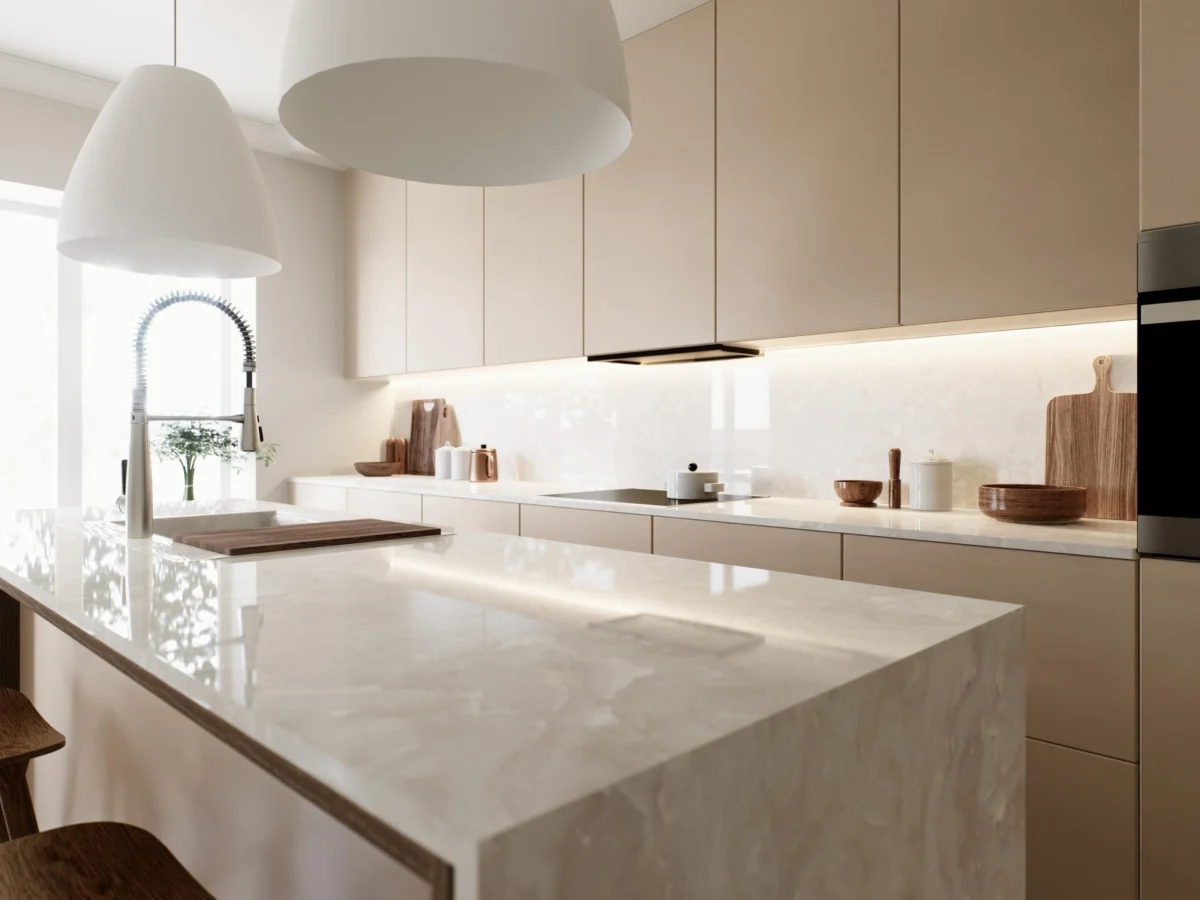
The vision of a pristine, snow-white kitchen countertop is a staple of global interior design magazines, yet in the context of an Indian household, it has historically been viewed with a mixture of desire and dread. For decades, the "Indian Mother’s Turmeric Test" has been the ultimate gatekeeper for kitchen materials. From the vibrant yellow of haldi to the stubborn oils of a sputtering tadka and the acidic bite of tamarind, the Indian kitchen is a high-octane laboratory that subjects surfaces to extreme thermal and chemical stress.
As we move into 2026, the market has shifted away from traditional granite and high-maintenance marble toward engineered solutions. Two titans have emerged in this space: Quartz and Nano White. While they may look identical to the untrained eye, their molecular compositions, performance under pressure, and long-term viability differ significantly. This report provides an exhaustive analysis of these materials, helping homeowners navigate the technicalities of "White Kitchen" aesthetics without sacrificing functional sanity.
1. Material Composition: The Science Behind the Surface
To understand how these surfaces behave under a hot pressure cooker, one must first look at what they are made of.
Quartz: The Engineered Hybrid
Quartz is not a natural stone in its slab form; it is an "engineered stone." It comprises approximately 90% to 95% crushed natural quartz crystals, which are among the hardest minerals on Earth. These crystals are bound together by polymer resins and infused with pigments to create specific colors and patterns.
The inclusion of resin is Quartz’s greatest strength and its primary weakness. The resin makes the surface entirely non-porous, meaning it never requires sealing. However, because resin is essentially a high-grade plastic, it remains sensitive to extreme heat—a critical factor in Indian cooking.
Nano White: The Crystallized Glass
Nano White is a different beast entirely. It is a form of crystallized glass manufactured from a sophisticated blend of silica and other natural minerals. Through a process of high-temperature fusion, the material becomes a dense, bright white solid.
Unlike Quartz, Nano White does not rely on resin for its structure. It is a homogenous, glass-like material that replicates the luminous sheen of premium Thassos marble. In the Indian market, Nano White is categorized by "Grades." While G3 and G4 were early iterations prone to chipping, the current industry standards are G7 and G9, which offer superior density and a more refined finish.
2. Chronology: The Evolution of the Indian Countertop
The journey to the modern white countertop has been a multi-decade evolution:
- The Granite Era (1990s–2010s): Black Galaxy and Tan Brown granites dominated. They were indestructible but limited the aesthetic to dark, heavy tones.
- The Marble Experiment (2000s–2015): Homeowners tried Indian and Italian white marbles. Most regretted it within two years as the porous stone absorbed turmeric and lemon juice, leading to permanent yellowing and etching.
- The Quartz Revolution (2015–Present): Quartz entered the market as the "miracle material," offering the look of marble with the strength of granite. It remains the most popular premium choice today.
- The Nano White Emergence (2020–2026): As modular kitchen designs became more minimalist, the demand for a "pure, seamless white" led to the rise of Nano White. It addressed the heat-sensitivity issues that some Quartz users experienced near high-flame gas burners.
3. Supporting Data: The Performance Benchmarks
In a head-to-head comparison, the performance of these materials varies based on the specific stresses of the kitchen environment.
The Stain Resistance Matrix
In a simulated Indian kitchen test, both materials were subjected to 12-hour exposure to turmeric paste, red chili oil, and black tea.
- Quartz: Shows excellent resistance. Most stains wipe off with a damp cloth. However, if a stain is left for over 24 hours on a lower-quality quartz, a faint ghosting may occur.
- Nano White: Performs slightly better due to its glass-like surface. It is virtually impossible for liquids to penetrate the surface of a G7 or G9 slab.
The Thermal Stress Test
This is the "make or break" category for many Indian households.
- Quartz: Can withstand temperatures up to roughly 150°C. However, a "thermal shock" (placing a hot patila directly from the stove onto the counter) can cause the resin to scorch, leaving a permanent yellow or brown ring.
- Nano White: Being a glass-based product fused at extremely high temperatures, it has a much higher melting point. It can handle brief contact with hot vessels much more gracefully than Quartz.
Pricing Structure (Estimated 2026 Market Rates)
| Material | Grade / Type | Price Per Sq. Ft. (Material Only) |
|---|---|---|
| Quartz | Entry-level (Domestic) | Rs. 250 – Rs. 400 |
| Quartz | Mid-range (Calacatta Design) | Rs. 450 – Rs. 900 |
| Quartz | Premium (Imported/Branded) | Rs. 900 – Rs. 1,500+ |
| Nano White | G5 Grade | Rs. 280 – Rs. 380 |
| Nano White | G7 Grade | Rs. 300 – Rs. 450 |
| Nano White | G9 Grade | Rs. 420 – Rs. 550 |
4. Professional Perspectives: Fabrication and Aesthetics
Architects and interior designers often weigh these materials based on factors beyond just durability.
The Designer’s View: Aesthetics and Variety
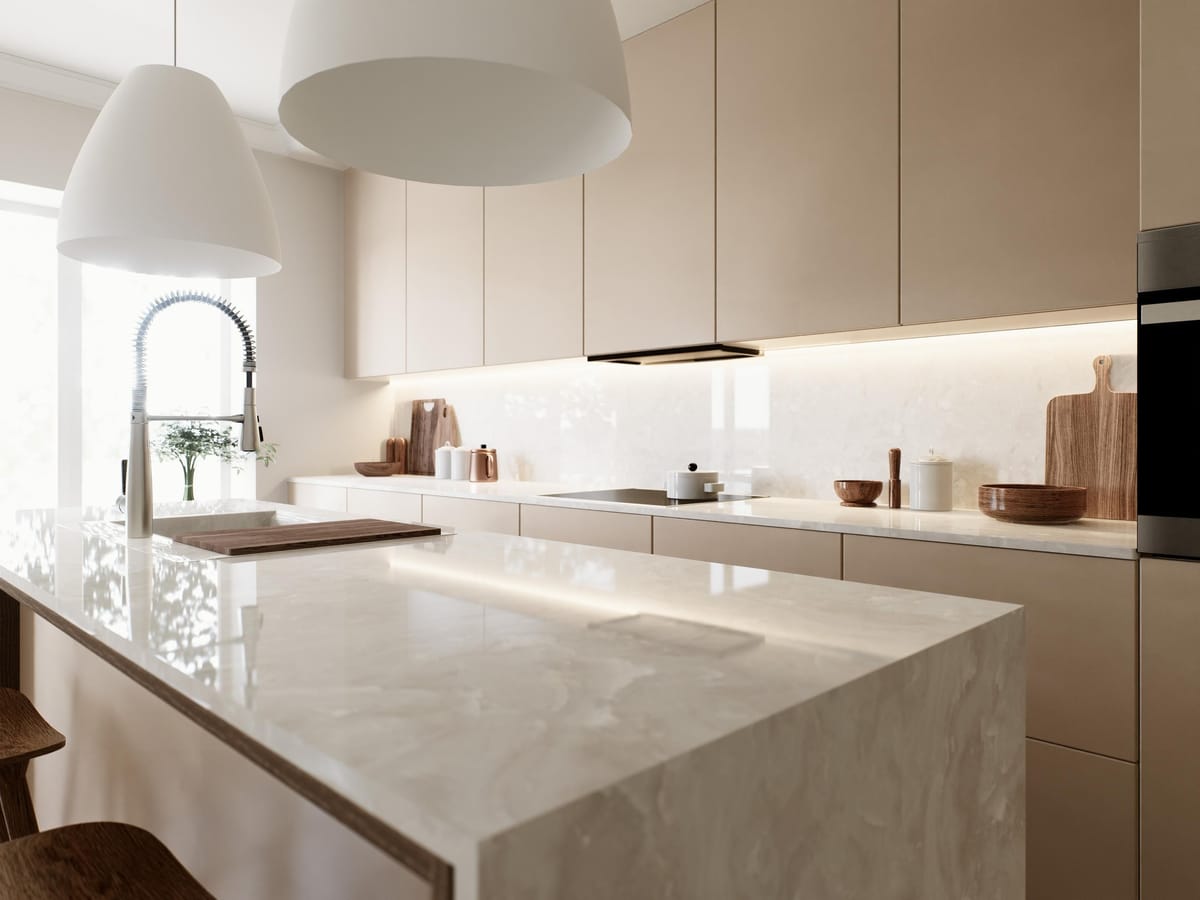
Quartz is the undisputed king of variety. Because it is engineered with pigments, manufacturers can recreate the look of Carrara marble, concrete, or even wood. If a homeowner wants "veining" or a "sparkle" finish, Quartz is the only option.
Nano White, conversely, is "monochromatic." It offers a singular, blindingly beautiful white. For a "Hospital-Clean" or "Ultra-Modern" look, Nano White is superior, but it offers zero design flexibility.
The Fabricator’s Warning: Installation Complexity
From a contractor’s perspective, Nano White is notoriously difficult to work with. Because it is a crystallized glass, it is prone to "edge-chipping" during the cutting process. It requires specialized diamond-tipped blades and high-speed water cooling.
"If your fabricator is used to cutting granite, they will likely ruin a Nano White slab," warns Ar. Vikram Mehta, a Mumbai-based interior consultant. "Quartz is much more forgiving to cut and install, which is why local contractors often push homeowners toward Quartz."
5. Maintenance and Longevity: The 10-Year Outlook
Investing in a kitchen countertop is a 15-to-20-year decision.
Quartz Maintenance
- Do: Use mild soap and water. Use a trivet for all hot pans.
- Don’t: Use abrasive scrubbers or harsh chemicals like bleach, which can degrade the resin over time.
- Lifespan: 10–15 years before the resin might show slight dulling in high-use areas.
Nano White Maintenance
- Do: Wipe spills immediately. Use specialized glass cleaners for extra shine.
- Don’t: Drop heavy cast-iron pots on the edges. While hard, the material is "brittle" compared to the slightly more flexible resin-bound Quartz.
- Lifespan: 15–25 years. Because it is chemically inert and UV-stable, it will not yellow even if exposed to direct sunlight from a kitchen window.
6. Implications for the Indian Homeowner
The choice between Quartz and Nano White eventually boils down to the "Cooking Personality" of the household.
The "Active/Heavy" Kitchen
If the kitchen sees three full meals a day, involves heavy pressure-cooking, and uses high-flame gas burners, Nano White (G7 or G9) is the logical choice. Its superior heat resistance and acid tolerance (essential for tamarind and lemon-heavy cuisines) provide a safety net that Quartz cannot match. The slightly higher difficulty in installation is a one-time hurdle for a decade of worry-free cooking.
The "Lifestyle/Modern" Kitchen
If the kitchen is part of an open-plan living space where aesthetics are paramount, or if the cooking is "light" (Western-style, induction-based, or primarily reheating), Quartz is the winner. The ability to match the countertop to the flooring or cabinetry through intricate veining patterns allows for a cohesive interior design that Nano White’s starkness cannot provide.
Economic Implications
While premium Quartz can be significantly more expensive than Nano White, the entry-level Quartz is comparable. However, homeowners must account for "Waste Factor." Because Nano White chips easily, fabricators often ask for a 15-20% buffer in material, whereas Quartz usually requires only a 10% buffer.
7. Final Verdict: Making the Decision
For the 2026 homeowner, the "white kitchen" is no longer a pipe dream, but a calculated architectural choice.
- Choose Quartz if: You want a specific marble-like pattern, you prefer a softer feel to the stone, and you are disciplined enough to always use a trivet/stand for hot vessels.
- Choose Nano White (G7+) if: You want the whitest possible surface, you are worried about heat damage from gas stoves, and you have access to a high-skilled fabricator who can handle crystallized glass.
Expert Tip: Regardless of the choice, always demand a "Grade Certification." The market is flooded with "Nano-coated" tiles being sold as "Nano White Slabs." True Nano White is a solid-body material, not a coated one. Similarly, ensure your Quartz has at least 90% natural stone content to ensure it doesn’t feel like "plastic" over time.
In the battle of the whites, Nano White wins on functional durability for the traditional Indian context, while Quartz remains the champion of versatile, high-end design.
