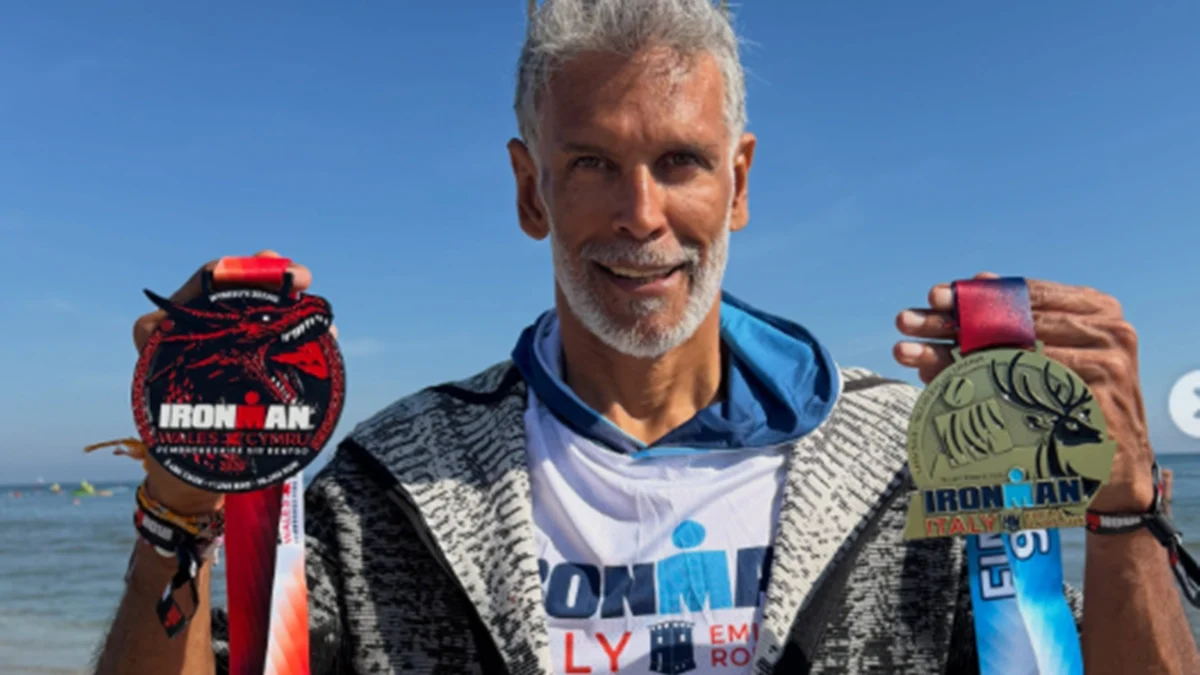
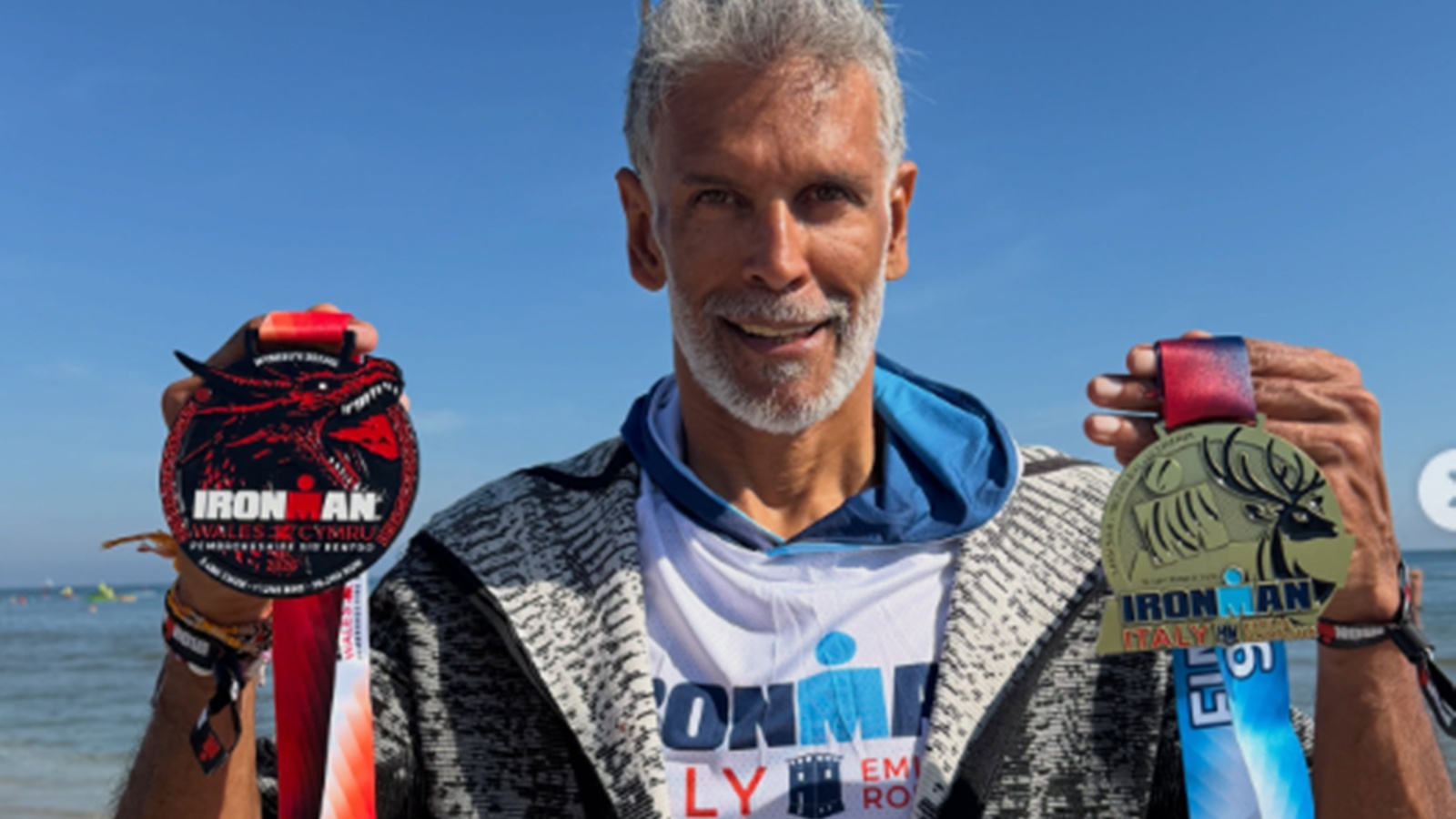
Mumbai, India – [Date] – In a testament to extraordinary human endurance and a profound understanding of his own physical limits, actor and fitness icon Milind Soman has once again captivated the nation. Just six days after conquering the formidable Ironman Wales, Soman pushed his body to its absolute limit by completing another full Ironman triathlon at Ironman Italy. This remarkable achievement, accomplished with mere days of recovery, transcends mere athletic accomplishment; it represents a deliberate experiment in understanding the intricate science of recovery and the nuances of individual fitness levels.
Soman’s recent feats highlight a critical, often overlooked, aspect of peak performance: the body’s capacity to bounce back from extreme physical exertion. While the completion of a single Ironman is a monumental undertaking, accomplishing two within a week, separated by a mere six days, places Soman in an elite category of athletes who not only possess immense physical power but also a sophisticated awareness of their physiological responses.
A Grueling Double: The Ironman Challenge Reimagined
The Ironman triathlon is globally recognized as one of the most demanding endurance events. It comprises a colossal 3.8-kilometer swim, followed by a grueling 180-kilometer bicycle race, and culminating in a full 42.2-kilometer marathon run. To complete one such event is a badge of honor; to complete two in such close proximity is almost unfathomable for the vast majority.
Soman’s initial conquest was Ironman Wales on September 13th. The Welsh course is notorious for its challenging terrain and unpredictable weather, demanding exceptional mental fortitude and physical preparation. Barely had the dust settled on his Welsh victory than Soman found himself at the starting line of Ironman Italy on September 19th. He replicated the entire grueling sequence: a 3.8km swim, a 180km bike ride, and a 42.2km run.
In an Instagram post that quickly went viral, Soman shared his exhilaration and the deeper meaning behind his audacious plan. “Did it AGAIN !!!! Six days later, one more Ironman ?? Doing Ironman Wales on the 13th of September and Ironman Italy on 19th September was a great experience!! This one was to learn new lessons on recovery, which is important to understand individual levels of fitness. One aspect of fitness is the time required to recover from a particular stress, to be able to do it again with the same level of comfort. A lot of interesting lessons,” he stated. The accompanying image, a glimpse of his post-race meal featuring rice and rajma (kidney beans), offered a humble yet powerful insight into his post-exertion nutritional strategy.
Expert Insight: The Science of Recovery Beyond Mere Completion
Soman’s explicit intention to use the second Ironman as a learning experience on recovery prompted an inquiry to fitness experts. Dr. Anjali Goyal, a renowned sports physiologist, lauded Soman’s approach, emphasizing the often-underestimated significance of recovery in the broader definition of fitness.
“This is a very useful way of thinking about fitness,” Dr. Goyal explained. “We often measure fitness by how fast someone can run, how much they can lift or how long they can exercise. But recovery capacity is another important part of performance. It’s not just about what you can do in the moment, but how efficiently your body can repair and prepare for the next challenge.”
Dr. Goyal elaborated on the physiological processes at play during the recovery phase. “Exercise, especially an endurance event of this magnitude, is a significant physiological stressor. During a demanding endurance event, muscles experience fatigue, glycogen stores are depleted, fluid and electrolyte balance is disrupted, and the cardiovascular and nervous systems are placed under substantial stress.”
The Body’s Renewal Process: What Happens During Recovery?
The period following intense physical activity is crucial for the body’s restoration and adaptation. “Recovery is the period in which the body restores energy stores, repairs damaged tissues, rebalances fluids and electrolytes, and gradually returns to its normal physiological state,” Dr. Goyal continued.
For endurance athletes, nutrition plays a pivotal role in this process. “Replenishing carbohydrates is essential to restore muscle glycogen, which is the primary fuel source for prolonged exercise. Simultaneously, adequate protein intake is vital to support muscle repair and synthesis, helping to rebuild the micro-tears that occur in muscle fibers during exertion.”
Beyond macronutrients, micronutrients, fluids, and electrolytes are equally important. “Fluids and electrolytes help replace the significant losses that occur through prolonged sweating. Dehydration and electrolyte imbalances can severely impair performance and recovery,” she added.
However, the most profound aspect of recovery, according to Dr. Goyal, is often the simplest: sleep. “And, perhaps most importantly, sleep provides a major opportunity for physical and neurological recovery. During deep sleep, the body releases growth hormones that are critical for tissue repair and regeneration, and the brain consolidates learning and processes information, which is crucial for cognitive function and motor skill refinement.”
The Individuality of Recovery: A Complex Equation
Dr. Goyal underscored that recovery is not a one-size-fits-all phenomenon. “Two people can complete exactly the same workout and require very different amounts of recovery. Factors such as training history, age, sleep quality and quantity, nutrition, stress levels, overall fitness level, injury history, and the intensity and duration of the exercise itself can all significantly influence how quickly and effectively an individual recovers.”
The disparity in recovery needs becomes particularly evident when comparing athletes with different levels of experience. “An elite endurance athlete who has spent years adapting to high training volumes and intensity cannot be directly compared with someone who is just beginning their fitness journey. The elite athlete’s body has developed superior physiological mechanisms for energy utilization, waste removal, and tissue repair,” she explained.
This intrinsic variability in recovery capacity leads to a crucial understanding: more is not always better. “This is also why doing more isn’t automatically doing better. If the training stress repeatedly exceeds the body’s ability to recover, fatigue can accumulate, leading to a decline in performance, a phenomenon known as overtraining syndrome. Inadequate recovery can also significantly increase the risk of illness and injury,” Dr. Goyal cautioned.
Training the Unseen Muscle: Enhancing Recovery Capacity
Interestingly, Dr. Goyal pointed out that recovery itself can be trained and improved over time. “With consistent and appropriate training, the body becomes better adapted to particular types of stress. An experienced endurance athlete may therefore recover from a workload that would leave a recreational athlete exhausted for several days. This adaptation is a result of improved metabolic efficiency, enhanced cardiovascular function, and more robust muscle repair mechanisms.”
However, this enhanced resilience does not negate the fundamental need for recovery. “The fitter you become, the better you may tolerate a given workload – but sufficiently demanding exercise still requires recovery. For the average person, this doesn’t mean attempting back-to-back Ironmans. Instead, it means paying close attention to how your body responds after a hard workout before deciding on the intensity and duration of the next session.”
Dr. Goyal offered practical advice for individuals aiming to optimize their recovery: “Sometimes, the smartest progression in a training plan is not necessarily adding more weight, distance, or intensity, but rather improving how well you recover between sessions. This can involve optimizing sleep, refining nutritional strategies, incorporating active recovery techniques like light stretching or foam rolling, and managing overall stress levels.”
Milind Soman’s Experiment: A Case Study in Elite Recovery
Milind Soman’s extraordinary feat of completing two Ironmans within six days, particularly with the explicit intention of studying his recovery, offers a compelling real-world case study. “The second race wasn’t just another endurance achievement; he deliberately used it to understand how his own body responded to an extraordinary level of repeated stress,” Dr. Goyal observed.
Soman’s post-race meal of rice and rajma, a staple in Indian cuisine, highlights the principle of utilizing familiar and readily available foods for post-exertion refueling. While specific nutritional strategies vary, the fundamental need for carbohydrates and protein remains constant. The inclusion of rajma, a good source of both protein and complex carbohydrates, alongside rice, is a practical and culturally relevant approach to replenish energy stores and support muscle repair.
His candid admission on Instagram about learning “new lessons on recovery” and understanding “individual levels of fitness” underscores a mature and intelligent approach to athletic pursuit. It moves beyond the singular focus on achieving a goal to a deeper, more scientific exploration of the human body’s capabilities and limitations.
Broader Implications: Redefining Fitness and Performance
Milind Soman’s remarkable achievement and his insightful commentary have significant implications for how we perceive fitness and athletic performance. It challenges the conventional wisdom that solely equates fitness with raw power or endurance capacity. Instead, it brings to the forefront the crucial, yet often sidelined, element of recovery.
For the general population, Soman’s journey serves as an inspiration to listen to their bodies and prioritize recovery as an integral part of any fitness regimen. It encourages a more holistic approach to health, recognizing that rest and repair are as vital as exertion. The message is clear: pushing your limits is important, but understanding your body’s capacity to recover and adapt is paramount for sustainable progress and long-term well-being.
As Dr. Goyal aptly put it, “The smarter you train, the better you recover. And the better you recover, the stronger you become.” Milind Soman’s double Ironman triumph is not just a feat of physical endurance; it is a powerful lesson in the intricate dance between stress and recovery, a dance that ultimately defines true athletic prowess and enduring human resilience.
Disclaimer: This article is based on information from the public domain and expert insights. It is crucial to consult with a qualified health practitioner before embarking on any new fitness routine or undertaking extreme physical challenges.