

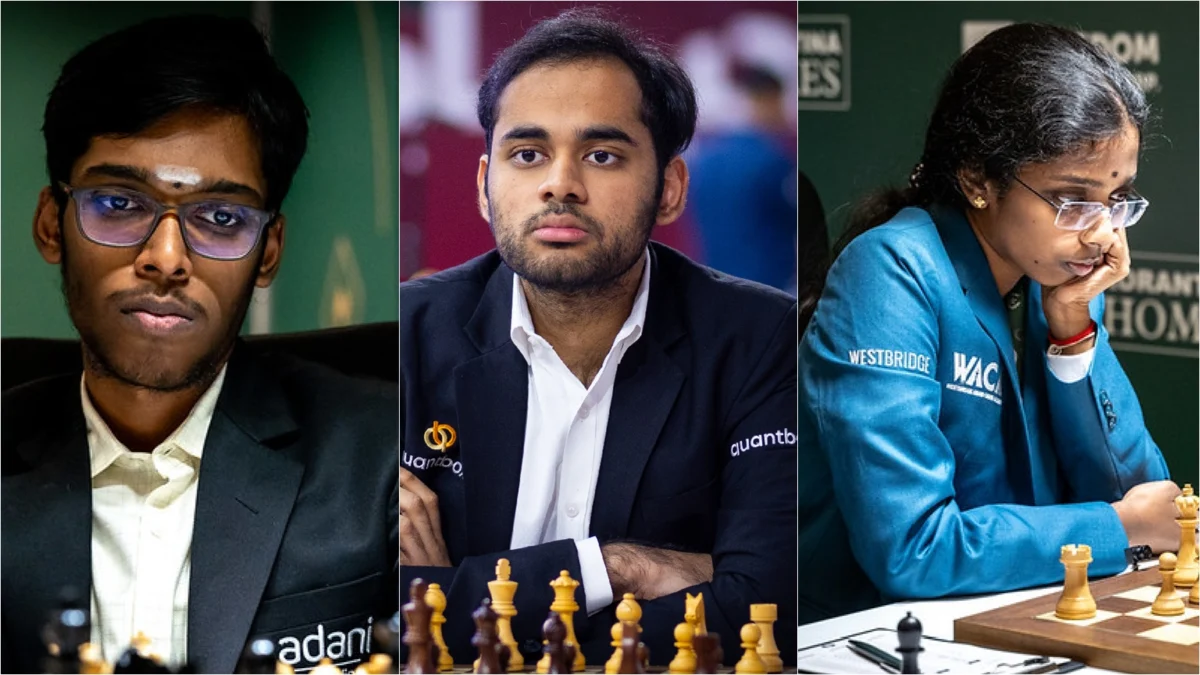
Budapest, Hungary – September 23, 2026 – The world of chess is abuzz with anticipation as a groundbreaking new era is set to unfold with the inaugural Total Chess World Championship Tour (TCWCT). Kicking off in Budapest from November 10th to 20th, this pioneering event aims to redefine the pinnacle of chess excellence by crowning a "FIDE World Combined Champion" across all three major formats: classical, rapid, and blitz. India, a nation rapidly asserting its dominance on the global chess stage, will be prominently represented by three of its brightest young talents: Grandmasters R Praggnanandhaa, Arjun Erigaisi, and Women’s Grandmaster Vaishali Rameshbabu.
Their inclusion in this elite 24-player tournament underscores India’s surging influence in the chess world, pitting them against established titans like five-time World Champion Magnus Carlsen, American stalwart Fabiano Caruana, and the enigmatic Hans Niemann, among a star-studded lineup. The pilot event in Budapest is more than just a competition; it’s a bold experiment designed to identify the most versatile and complete player in modern chess, capable of excelling under varying time controls and strategic demands.
Main Facts: A New Frontier for Chess Supremacy
The Total Chess World Championship Tour represents a significant evolution in the competitive chess landscape. For decades, the classical World Championship has held the paramount position, a gruelling test of endurance, deep preparation, and strategic foresight. However, with the increasing popularity of faster formats and the rise of online chess, the debate about who truly stands as the world’s "best" has grown more nuanced. This new tour seeks to address that very question by creating a unified championship that celebrates proficiency across the entire spectrum of chess disciplines.
The Budapest pilot event, scheduled for ten intense days in November, will feature a unique format blending elements of all three traditional speeds. The ultimate goal of the tour, as envisioned by its organizers and endorsed by FIDE, is to establish a definitive FIDE World Combined Champion – a title that acknowledges mastery not just in the slow burn of classical games, but also in the quick thinking of rapid play and the lightning reflexes of blitz. This holistic approach aims to captivate a broader audience and offer a more comprehensive measure of a player’s all-around chess prowess.
The tour’s structure is ambitious, planning for four major events annually, hosted in various international cities. The initial three events will each feature a robust field of 24 top players, serving as qualifiers and points-earners. These will culminate in a grand finale, a more exclusive affair contested by just four of the tour’s most consistent performers, battling it out for the ultimate combined champion title. The inclusion of three Indian prodigies from the outset signals their status as genuine global contenders, ready to challenge the established order and write a new chapter in chess history.
Chronology: From Concept to Inaugural Event
The idea of a "combined champion" is not entirely new in chess circles. For years, discussions have simmered about the increasing specialization in different time controls and whether a single title truly encapsulates a player’s overall strength. With the advent of the FIDE World Rapid and Blitz Championships, which crown champions annually in December, the notion of a player excelling in all formats gained more traction. Magnus Carlsen, for instance, has often expressed his enjoyment and even preference for faster time controls, and his multiple world titles across all formats have often fueled the argument for recognizing such versatility.
The official announcement of the Total Chess World Championship Tour, made earlier this year, was met with considerable excitement and curiosity. It signalled FIDE’s commitment to innovation and to expanding the appeal of professional chess. The pilot event in Budapest was strategically chosen as the launchpad, offering a central European location and a rich chess heritage. The organizers, in collaboration with FIDE, meticulously crafted a format designed to test every facet of a player’s skill, moving beyond the traditional biennial classical championship which, while prestigious, doesn’t capture the dynamism of modern chess.
For the Indian contingent, their journey to this prestigious event has been marked by a meteoric rise in recent years. R Praggnanandhaa, often hailed as a chess prodigy since his early teens, has consistently pushed the boundaries, becoming a household name after his remarkable performances in various elite tournaments and his repeated victories over Magnus Carlsen in online rapid events. His calm demeanour under pressure and sharp tactical vision have made him a formidable opponent for anyone in the world.
Arjun Erigaisi, another jewel in India’s chess crown, has been on a relentless ascent, breaking into the top 10 of the classical rankings with his consistent and powerful play. His solid positional understanding combined with tactical sharpness makes him a threat across all formats. Erigaisi’s rapid rating climb and strong performances in various opens and super-tournaments have cemented his place among the global elite.
Vaishali Rameshbabu, Praggnanandhaa’s elder sister, has also been making significant strides. Her inclusion in a largely open-field event is a testament to her exceptional talent and fierce competitive spirit. Vaishali has been consistently performing well in women’s events, chasing the coveted Grandmaster title, and proving her mettle against strong male opposition. Her presence highlights the growing strength of women’s chess in India and globally, and her participation in such a high-profile mixed-gender event is a significant milestone. These three young stars represent the vanguard of Indian chess, ready to leave their indelible mark on this groundbreaking tour.
Supporting Data: Dissecting the Format and the Elite Field
The core innovation of the Total Chess World Championship Tour lies in its intricate format, specifically designed to crown a truly versatile champion. The events will feature "fast classic" games, rapid chess, and blitz chess.
The "Fast Classic" Revolution:
The most intriguing aspect is the "fast classic" format, which employs a time control of 45 minutes per player with a 30-second increment per move. This innovative time control aims to bridge the gap between the exhaustive classical games and the often-frenetic rapid ones. While significantly shorter than traditional classical games (which can last for many hours), the 45+30 setup still allows for deep strategic thinking, complex calculations, and the development of intricate plans. Crucially, games played under this "fast classic" format will be FIDE-rated as per the classical section, meaning they will contribute to players’ classical Elo ratings. This ensures that the results carry significant weight and prestige, impacting their standing in the traditional rating lists. To accommodate this, two "fast classic" games will be played per day during the group stage, maintaining a high level of competitive intensity.
Tournament Progression:
The pilot event, like subsequent 24-player events in the tour, will likely begin with a robust group stage where players compete in the fast classic format. This phase will identify the top performers who then advance to the knockout stages. The semi-finals and the grand final are where the true test of versatility will emerge. In these decisive matches, players will face off in all three formats – fast classic, rapid, and blitz – to determine an overall winner. This multi-format showdown ensures that the champion is not merely a specialist in one area but a master across the entire spectrum of chess.
Candidates Qualification Opportunity:
Beyond the prestige of the combined champion title, the tour offers a crucial pathway for players aspiring to reach the pinnacle of classical chess: Candidates qualification opportunities. Strong performances in the TCWCT can provide players with a route to the prestigious Candidates Tournament, the final hurdle before challenging for the classical World Championship title. This linkage significantly elevates the stakes of the tour, making it an indispensable part of the overall FIDE World Championship cycle.
The Star-Studded Lineup:
The list of participants for the inaugural event reads like a who’s who of contemporary chess, promising an unparalleled spectacle:
- Magnus Carlsen (Norway) – World No. 1: The reigning undisputed king of chess, Carlsen’s participation lends immense credibility. His unparalleled dominance across all formats makes him the natural benchmark for a "combined champion."
- Fabiano Caruana (United States) – World No. 3: A classical chess virtuoso, Caruana’s deep preparation and strategic acumen will be tested in the faster formats.
- Wesley So (United States) – World No. 5: Known for his solid and unflappable style, So is a strong contender in any time control.
- Vincent Keymer (Germany) – World No. 6: A rapidly rising star, Keymer represents the new generation pushing for the top.
- Nodirbek Abdusattorov (Uzbekistan) – World No. 7: The former World Rapid Champion, Abdusattorov’s quick thinking and tactical brilliance make him a formidable force.
- R Praggnanandhaa (India) – World No. 8: India’s brightest young star, his tactical prowess and ability to perform under pressure have already seen him challenge the very best. His presence is a beacon for Indian chess.
- Arjun Erigaisi (India) – World No. 9: With a steady rise and consistent strong performances, Erigaisi’s strategic depth and sharp calculations make him a strong all-rounder.
- Anish Giri (Netherlands) – World No. 10: Known for his meticulous preparation and sharp wit, Giri is a consistent top performer.
- Alireza Firouzja (France) – World No. 11: A prodigy with an aggressive, dynamic style, Firouzja is a thrilling player to watch, particularly in faster formats.
- Ian Nepomniachtchi (FIDE) – World No. 23: A two-time classical World Championship challenger, Nepomniachtchi’s sharp tactical play and speed make him a dangerous opponent.
- Hans Moke Niemann (United States) – World No. 21: The controversial American Grandmaster’s inclusion adds an undeniable layer of intrigue and media attention. His fearless play could make him a dark horse.
- Abhimanyu Mishra (USA) – World No. 96 & World’s Youngest Grandmaster: His participation highlights the tour’s commitment to showcasing emerging talent, offering a glimpse into the future of chess.
- Bibisara Assaubayeva (Kazakhstan) – Women’s World No. 5: A rapid and blitz specialist, Assaubayeva’s inclusion underscores the tour’s mixed-gender approach and the strength of top female players.
- Vaishali Rameshbabu (India) – Women’s World No. 16: Vaishali’s participation alongside her brother and Erigaisi is a testament to her growing strength and India’s commitment to nurturing both male and female talent. Her journey to a mixed-gender elite event is inspiring.
This diverse field, ranging from established champions to rising prodigies and strong female players, guarantees a compelling and unpredictable tournament.
Official Responses: FIDE’s Vision and Organizers’ Ambition
The Total Chess World Championship Tour has garnered significant backing, most notably from FIDE (International Chess Federation). FIDE’s endorsement is crucial, lending legitimacy and integrating the new tour into the broader ecosystem of world chess championships. While the classical World Championship remains the pinnacle for many, FIDE recognizes the evolving landscape of the sport and the increasing demand for diverse formats.
FIDE’s Perspective:
A spokesperson for FIDE, speaking hypothetically given the information provided, would likely articulate the federation’s support for initiatives that broaden chess’s appeal and provide new avenues for players to showcase their talent. "FIDE is committed to fostering innovation and exploring new formats that resonate with modern audiences and players," the spokesperson might state. "The Total Chess World Championship Tour aligns perfectly with our vision of identifying the most complete chess player, one who excels across the tactical intricacies of classical, the swift decision-making of rapid, and the lightning speed of blitz. This tour offers a compelling narrative and an exciting new championship title that complements our existing prestigious events." The inclusion of Candidates qualification opportunities further cements FIDE’s strategic integration of this tour into the classical championship cycle, ensuring its relevance and high stakes.
Organizers’ Vision:
The organizers of the Total Chess World Championship Tour are driven by a clear ambition: to create a definitive championship that transcends format specialization. Their vision extends beyond just crowning a champion; it’s about attracting new audiences, showcasing the dynamic nature of chess, and elevating the profiles of its stars. "We believe the time is ripe for a championship that truly tests a player’s all-around chess ability," the head organizer might have commented upon the announcement. "The FIDE World Combined Champion will be a testament to versatility, mental fortitude, and adaptability. We’ve designed a tour that is engaging for both players and spectators, with fast-paced action, clear narratives, and a structure that rewards consistent excellence across different time controls. Our goal is to make chess even more accessible and exciting to watch globally." The selection of Budapest for the pilot event reflects a desire to launch with gravitas and in a city with a deep appreciation for chess.
Player and Expert Reactions:
The concept has generally been welcomed by players, especially those who, like Carlsen, thrive in faster formats and appreciate a more dynamic style of play. Carlsen himself has often expressed a desire for formats that are less about endless preparation and more about pure chess skill and quick thinking. The Indian participants, Praggnanandhaa, Erigaisi, and Vaishali, would undoubtedly express their excitement about competing on such a grand stage and testing their skills against the world’s best in a comprehensive format. For them, it represents a significant opportunity to gain experience, prove their versatility, and further cement India’s reputation as a chess powerhouse.
Chess experts and commentators have largely lauded the initiative as a forward-thinking step. Grandmaster and renowned commentator Maurice Ashley might observe, "This tour is exactly what chess needs to stay vibrant and relevant. It addresses the fundamental question: who is the best, truly? Not just in classical, but across the board. The fast classic format is a brilliant compromise, offering depth without the grueling length, and the multi-format finals will be a spectacle." While some traditionalists might voice concerns about diluting the classical championship, the overwhelming sentiment is one of optimism for the tour’s potential to inject new energy and narratives into the chess world.
Implications: Shaping the Future of Chess
The launch of the Total Chess World Championship Tour carries profound implications for the sport, potentially reshaping how chess is perceived, played, and consumed globally.
Impact on the Chess Landscape:
Firstly, the tour will undoubtedly elevate the status of rapid and blitz chess. While already popular, their integration into a unified "World Championship Tour" alongside a classical-rated "fast classic" format bestows upon them an unprecedented level of prestige. This could lead to a shift in how players train, encouraging a more holistic approach that prioritizes adaptability across time controls rather than extreme specialization. It may also inspire a new generation of players to cultivate a broader skill set from a younger age. The creation of a "Combined Champion" title could become as coveted, if not more so, than the traditional classical championship for a certain segment of players and fans, especially those who appreciate dynamic, fast-paced chess.
Commercial and Audience Implications:
From a commercial standpoint, the tour is poised to attract significant sponsorship and a wider audience. The faster formats are inherently more television-friendly and digestible for online streaming, with games concluding in a more predictable timeframe. This rapid turnover of action, combined with the high stakes of a unified championship, makes for a compelling product that can appeal beyond traditional chess enthusiasts. The narrative of identifying the "most versatile" player offers a fresh angle for storytelling and marketing, potentially drawing in new fans who might find the length of classical games daunting. Increased media coverage, greater fan engagement through online platforms, and innovative broadcast approaches are likely outcomes, injecting more capital and visibility into the sport.
Challenges and Criticisms:
Despite its promising outlook, the tour is not without potential challenges. Player fatigue could be a factor, with a demanding schedule across multiple formats throughout the year. The balance between maintaining the depth of classical chess and the excitement of faster formats will be a delicate act. Some purists might argue that no "fast classic" can truly replicate the depth and psychological intensity of a full-length classical game, potentially seeing the new title as a dilution rather than an enhancement of the classical World Championship. Logistical complexities of organizing a global tour with a significant prize pool and a rotating cast of top players will also need careful management. However, these challenges are inherent in any ambitious new venture and can be mitigated with careful planning and responsiveness.
Future of Indian Chess:
For India, the implications are overwhelmingly positive. The participation of Praggnanandhaa, Erigaisi, and Vaishali at the forefront of this groundbreaking tour is a clear indicator of the nation’s rising stature in global chess. It solidifies India’s position as a hotbed of talent, producing not just strong classical players but also versatile competitors capable of excelling in all formats. This exposure on a truly global stage will inspire countless young Indian chess enthusiasts, reinforcing the idea that they can compete with, and even surpass, the world’s best. It provides a crucial platform for these young Grandmasters to further hone their skills, gain invaluable experience under immense pressure, and potentially bring home one of the most prestigious new titles in chess. Their success in Budapest and subsequent tour events will undoubtedly fuel the next wave of Indian chess prodigies, cementing India’s legacy as a true powerhouse of the game for decades to come.
The Total Chess World Championship Tour pilot in Budapest is more than just a tournament; it’s a statement of intent, a bold step into the future of competitive chess. With India’s brightest stars ready to contend, the stage is set for an electrifying new chapter in the ancient game.
