

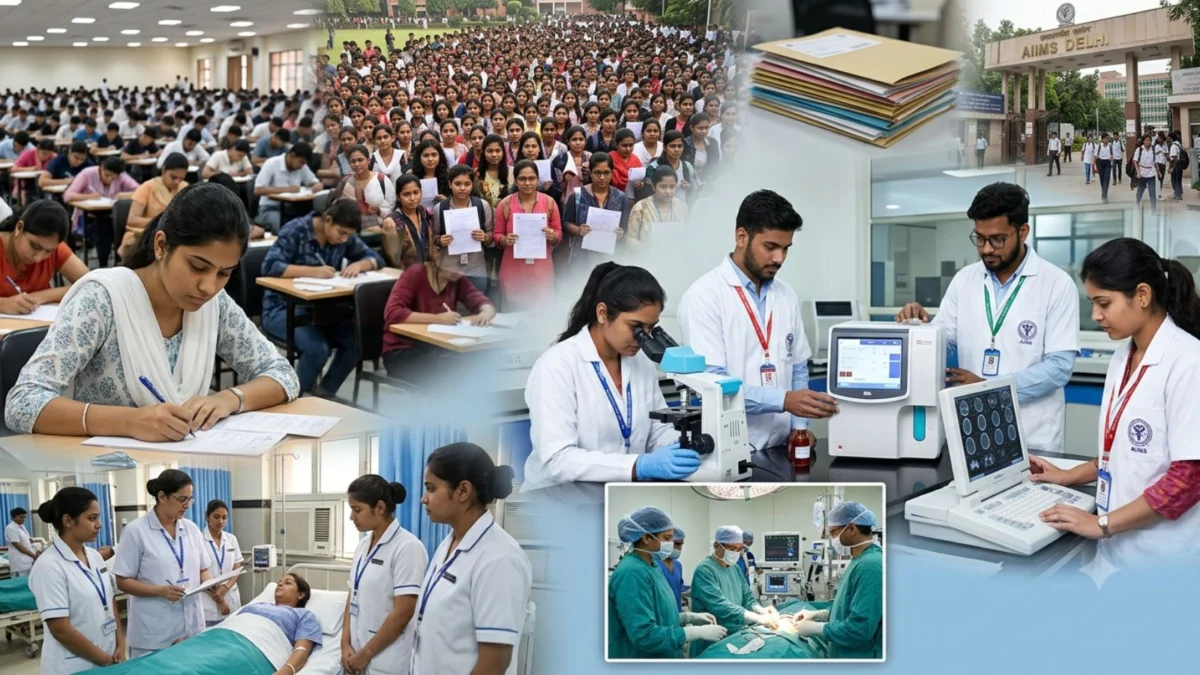
New Delhi, September 26, 2026 – The landscape of Indian healthcare education is undergoing a significant shift, with a surge in applications for undergraduate programs beyond the traditional MBBS and nursing courses. Data obtained by The Indian Express under the Right to Information (RTI) Act reveals a burgeoning interest in Allied and Healthcare Sciences, even as Bachelor of Science (BSc) (Hons) Nursing continues to command a larger share of aspiring students. For the August 2026 session, the All India Institute of Medical Sciences (AIIMS) received an astounding 1.91 lakh applications for its BSc (Hons) Nursing entrance examination, a testament to its enduring appeal. In parallel, the same prestigious institution saw over 1.17 lakh applications for its BSc Allied & Healthcare Courses, signaling a dramatic uptick in interest for these specialized fields.
This compelling data was brought to light by Vipul Sharma, a 30-year-old allied healthcare professional working in laboratory healthcare at Lady Hardinge Medical College. Sharma’s initiative in seeking this information underscores a growing realization within the healthcare community about the critical need to promote awareness and understanding of the diverse and promising career paths available in allied health sciences.
A Decade of Exponential Growth: Unpacking the Application Trends
The RTI response from AIIMS paints a vivid picture of escalating interest over the past five years. For the BSc (Hons) Nursing program, applications have seen a remarkable increase, jumping from 16,485 in 2021 to a staggering 1,80,117 in 2025, and reaching 1,90,740 for the August 2026 session. This consistent upward trajectory highlights the growing desirability of nursing as a profession, driven by factors such as stable employment opportunities and a clearly defined career progression.
The data also reveals a compelling, albeit slightly lower, growth trend for BSc Allied & Healthcare Courses. Applications for these programs have surged from a modest 6,878 in 2021 to an impressive 1,26,968 in 2025, with the August 2026 session seeing 1,17,033 applications. While still trailing behind nursing in absolute numbers, the percentage increase in applications for allied health programs is significant, indicating a substantial shift in student preferences and a growing recognition of the value and potential of these fields.
BSc (Hons) Nursing Entrance Exam Applications: A Steady Climb
| Category | 2021 | 2022 | 2023 | 2024 | 2025 | August 2026 (Approx.) |
|---|---|---|---|---|---|---|
| OBC (NCL) | 6,754 | 8,708 | 32,526 | 65,637 | 78,319 | 80,000+ |
| UR (Unreserved) | 5,542 | 6,487 | 19,180 | 34,772 | 48,988 | 50,000+ |
| SC | 2,292 | 2,755 | 9,883 | 22,109 | 28,543 | 30,000+ |
| EWS | 1,334 | 1,700 | 5,405 | 11,865 | 15,218 | 16,000+ |
| ST | 563 | 817 | 2,520 | 6,470 | 9,049 | 10,000+ |
| Total | 16,485 | 20,467 | 69,514 | 140,853 | 180,117 | 1,90,740 |
Note: August 2026 figures are based on the provided raw data for the specific session.
BSc Allied & Healthcare Courses Entrance Exam Applications: A Rapid Ascent
| Category | 2021 | 2022 | 2023 | 2024 | 2025 | August 2026 (Approx.) |
|---|---|---|---|---|---|---|
| OBC (NCL) | 3,326 | 3,483 | 12,400 | 29,242 | 54,489 | 55,000+ |
| UR (Unreserved) | 1,737 | 2,011 | 5,894 | 16,849 | 35,137 | 36,000+ |
| SC | 859 | 967 | 3,380 | 9,593 | 20,150 | 21,000+ |
| EWS | 759 | 809 | 2,321 | 6,692 | 11,586 | 12,000+ |
| ST | 197 | 209 | 694 | 2,291 | 5,606 | 6,000+ |
| Total | 6,878 | 7,479 | 24,689 | 64,667 | 1,26,968 | 1,17,033 |
Note: August 2026 figures are based on the provided raw data for the specific session.
Beyond MBBS: The Growing Appeal of Allied Healthcare
Sharma’s observation that "not everyone knows about the multiple professions that cost less to study and can offer good career opportunities" is a crucial point. The term "paramedical professions," once a broad umbrella, has evolved into the more precise and comprehensive "allied healthcare." This sector encompasses a diverse array of specialized undergraduate programs, including but not limited to Medical Laboratory Technology, Ophthalmic Sciences, Radiotherapy, and Perfusion Technology. These professionals are the backbone of modern healthcare, playing vital roles in diagnostics, therapeutics, and a multitude of other specialized services.
For students who aspire to careers in medicine but do not secure a coveted MBBS seat, allied healthcare offers a compelling alternative. Each year, approximately 22 lakh candidates appear for the National Eligibility cum Entrance Test for Undergraduate (NEET-UG), while the number of available MBBS seats hovers just above one lakh. This significant gap leaves a large number of bright minds seeking alternative pathways into the healthcare sector. Allied healthcare programs provide a structured and rewarding route for these students to contribute to patient care and public health.
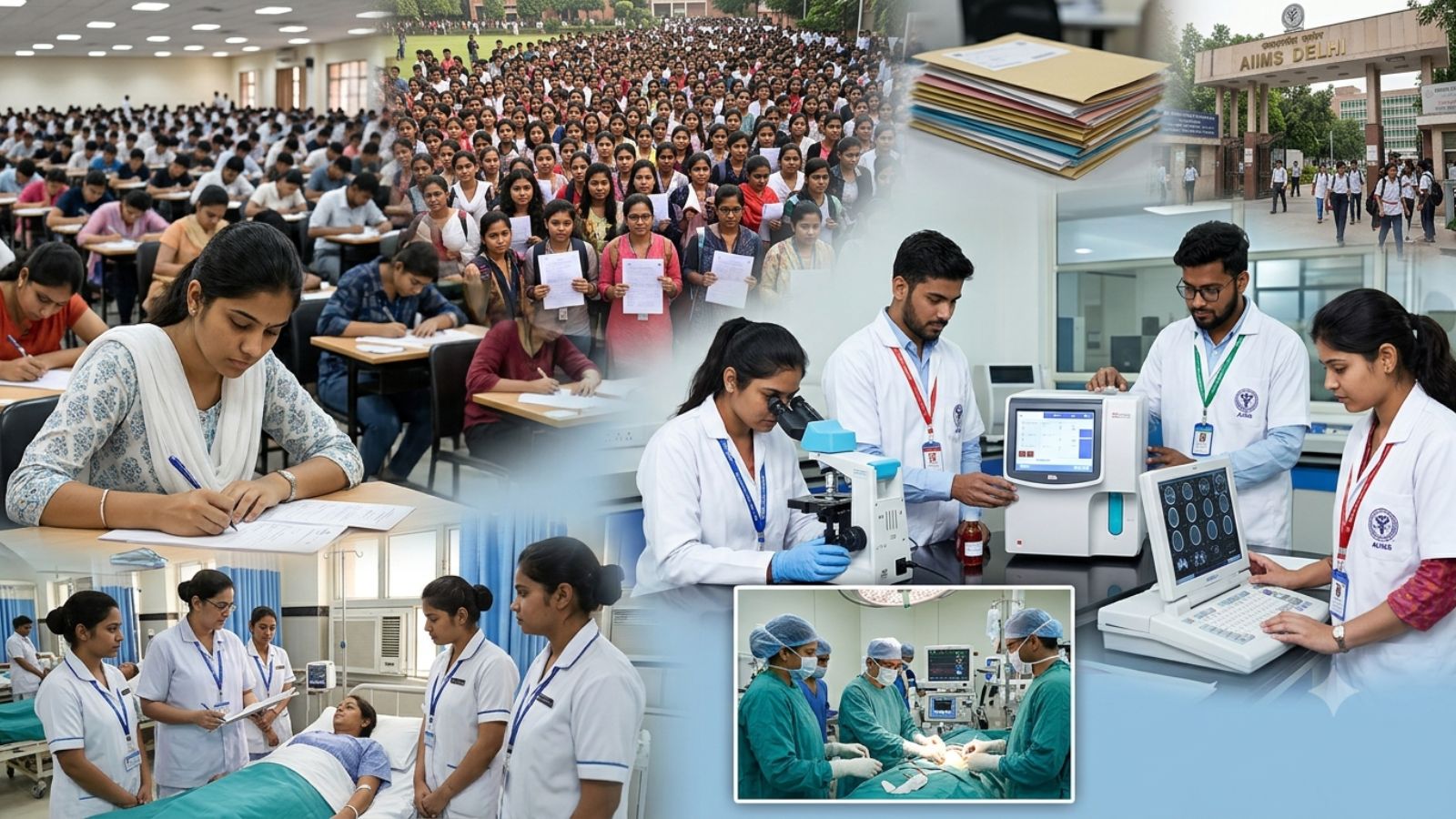
Institutions like AIIMS are at the forefront of offering both nursing and allied healthcare programs across their extensive network. Furthermore, premier medical institutions such as the Post Graduate Institute of Medical Education and Research (PGIMER) in Chandigarh also provide specialized allied healthcare courses, underscoring the growing academic recognition and institutional support for these fields.
Affordability and Accessibility: A Key Differentiator
A significant factor contributing to the increasing popularity of allied healthcare programs is their relative affordability compared to conventional medical education. Government medical colleges and Institutes of National Importance, including AIIMS, PGIMER, and the Jawaharlal Institute of Postgraduate Medical Education and Research (JIPMER), offer many allied healthcare programs at considerably lower fee structures. These fees can range from approximately Rs 1,500 to Rs 15,000 for an entire program at central institutions. State-run medical colleges also offer these courses at accessible rates, typically between Rs 20,000 and Rs 60,000 per year.
However, the cost can escalate significantly in private universities and deemed-to-be institutions. Bachelor’s programs in fields like Physiotherapy, Medical Imaging Technology, and Cardiac Technology can command annual fees ranging from Rs 80,000 to Rs 3 lakh, depending on the institution and the specific program. Shorter, skill-focused vocational courses and diploma programs offered by state paramedical boards generally fall within the Rs 20,000 to Rs 70,000 per year range. This spectrum of costs means that allied healthcare education is accessible to a wider range of socio-economic backgrounds, making it an attractive option for many.
The Visibility Factor: Why Nursing Remains a Dominant Choice
Despite the impressive growth in allied healthcare applications, nursing continues to enjoy greater visibility and recognition among students. Sharma attributes this to several factors, chief among them being the "clearer government recruitment pathway." The Nursing Officer Recruitment Common Eligibility Test (NORCET) has streamlined the process for nurses seeking government employment, offering a standardized and transparent selection mechanism. Coupled with a well-defined government pay structure, nursing presents a predictable and stable career trajectory that appeals to many.
Furthermore, the historical perception and established presence of nursing as a core healthcare profession contribute to its inherent visibility. The public is generally more familiar with the role of nurses in hospitals and healthcare settings, making it a more instinctive choice for many students considering a career in healthcare.
Shifting Perceptions: Allied Healthcare as a Primary Career, Not a Backup Plan
Sharma emphasizes a critical point: allied healthcare should not be relegated to the status of a mere "Plan B" for students who miss out on MBBS admissions. Instead, it should be recognized as a distinct and highly specialized group of healthcare professions with their own unique contributions and career trajectories. The diverse roles within allied healthcare, from intricate laboratory diagnostics to advanced imaging and therapeutic interventions, require specialized knowledge, skills, and dedication.
The varied work patterns within allied healthcare also present a different professional experience. Professionals in fields like biochemistry and other laboratory services often work in shift-based environments, contributing to the 24/7 operational needs of hospitals. This can offer a different work-life balance and professional engagement compared to more traditional hospital-based roles.
As the Indian healthcare sector continues to expand and evolve, the demand for skilled allied healthcare professionals is set to soar. The increasing application numbers are a clear indicator that students are recognizing the immense potential and rewarding careers available in these specialized fields. Fostering greater awareness, promoting comprehensive career counseling, and continuing to invest in quality education for allied health sciences will be crucial in harnessing this burgeoning talent pool and strengthening India’s healthcare infrastructure for the future. The data from AIIMS is not just a statistical report; it is a beacon, illuminating a new era of opportunity and specialization within the vital domain of healthcare.
