

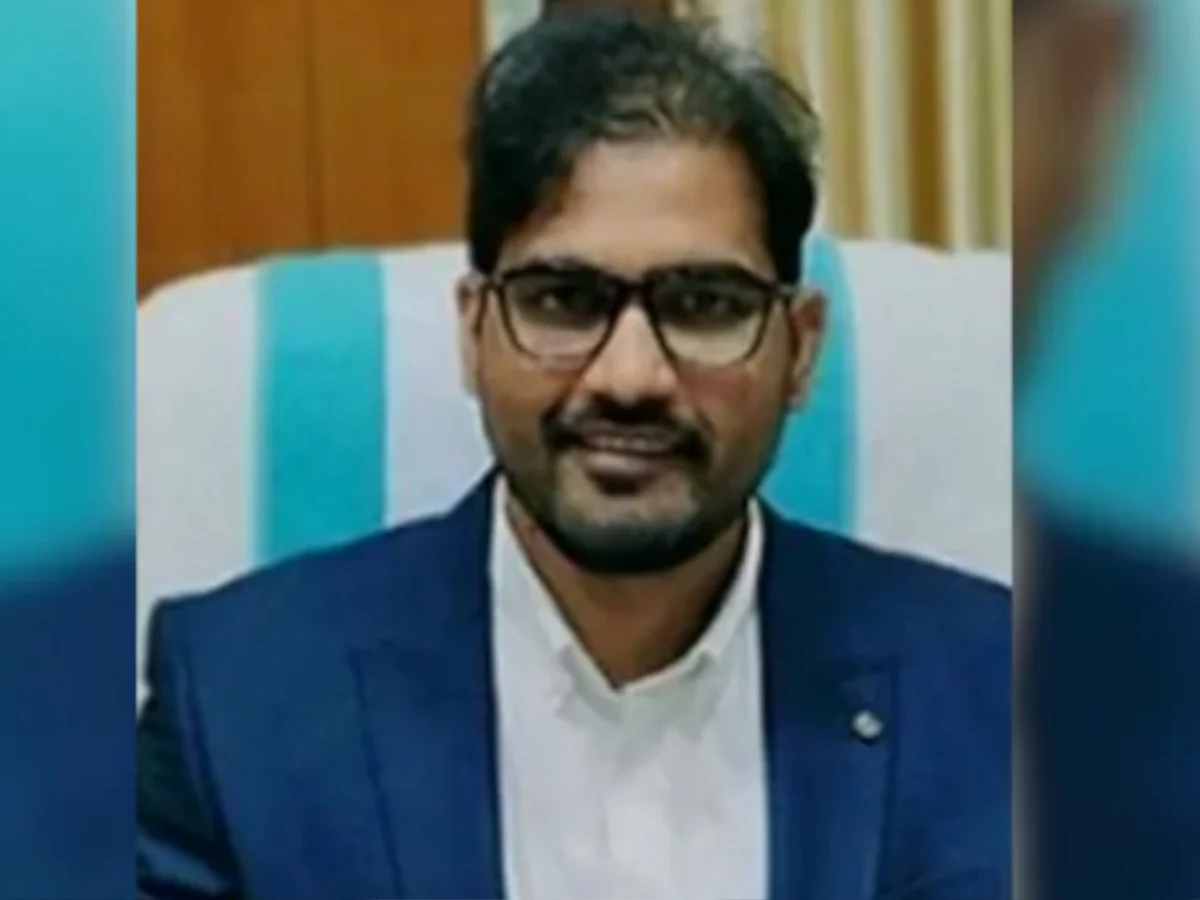
Bengaluru: In a significant development that has sent ripples through the administrative circles of Karnataka, Indian Administrative Service (IAS) officer Gyanendra Kumar Gangwar, currently serving as the Director of MSME, has been arrested by the Criminal Investigation Department (CID) of Karnataka Police. The arrest is in connection with alleged deep-seated irregularities and corruption in the Veterinary Officers’ examination conducted by the Karnataka Public Service Commission (KPSC). Gangwar, a 2016 batch officer, was allegedly serving as the Controller of Examinations at KPSC during the period the alleged malpractices took place.

The arrest marks a critical juncture in the ongoing investigation into what appears to be a sophisticated scam aimed at manipulating recruitment processes for lucrative government positions. Officials privy to the investigation have indicated that Gangwar’s prolonged silence and alleged lack of cooperation with the investigating agencies were key factors leading to his detention. The Enforcement Directorate (ED) had also previously searched his Bengaluru residence on August 23, underscoring the gravity of the allegations.
)
Unraveling the Allegations: A Bribery Scheme at the Core
At the heart of the scandal lies the accusation that Gyanendra Kumar Gangwar accepted a substantial sum of money, reportedly amounting to Rs 1.1 crore, from two candidates. In return for this illicit payment, it is alleged that Gangwar tampered with their Optical Mark Recognition (OMR) sheets, thereby guaranteeing their selection for the veterinary officer positions. This act, if proven, represents a blatant subversion of merit-based recruitment and a severe breach of public trust.

Gangwar has been formally booked under Section 318(3) of the Bharatiya Nyaya Sanhita (BNS), India’s new penal code, which deals with offenses related to cheating and fraudulent practices. Additionally, he faces charges under Section 10 of the Karnataka Public Examination (Measures for Prevention of Corruption & Unfair Means in Recruitment) Act, a legislation specifically designed to curb malpractices in public examinations. The invocation of these stringent laws highlights the seriousness with which the authorities are treating this case.
)
A Promising Career Under a Shadow: The Profile of Gyanendra Kumar Gangwar
Gyanendra Kumar Gangwar, a native of Uttar Pradesh, is an alumnus of the prestigious Indian Institute of Technology (IIT) Kanpur, where he earned a B.Tech in Electrical Engineering. His academic prowess and technical background suggest a trajectory of potential for significant contributions to public service. Prior to entering the civil services, Gangwar is reported to have spent four to five years in the corporate sector, a period that likely provided him with valuable professional experience.
)
He joined the Karnataka cadre as an IAS officer in 2016 and has since held a number of important administrative positions within the state. His tenure as Controller of Examinations at the KPSC, from February 2024 to March 2026 (though the dates appear to be a typo and likely refer to a past or upcoming period given the arrest), placed him in a position of immense responsibility, overseeing the integrity of crucial recruitment examinations. His subsequent appointment as Director of MSME, a role he assumed in June 2026 (again, likely a typo), further indicates his progression within the administrative hierarchy. However, these appointments now stand tarnished by the serious allegations he faces.
)
Chronology of Events: From Initial Complaint to Arrest
The investigation into the KPSC irregularities began to gain momentum following an initial complaint lodged at the Vidhana Soudha Police Station. The complainant, identified as Manjunath, accused KPSC officials of widespread irregularities in the recruitment process for veterinary officers within the Animal Husbandry Department. This initial complaint triggered a formal inquiry, which was later transferred to the more specialized Criminal Investigation Department (CID) on July 28, signifying the complexity and perceived sensitivity of the case.
)
The CID’s investigation intensified, focusing on the examination process itself, including the handling of question papers, the evaluation of answer sheets, and crucially, the alleged manipulation of OMR sheets. As the investigation progressed, Gyanendra Kumar Gangwar, by virtue of his position as Controller of Examinations at the KPSC during the relevant period, emerged as a key figure of interest.
)
Key Dates in the Investigation:
)
- July 28: The KPSC fraud case is officially transferred from the Vidhana Soudha Police Station to the CID, signaling a more in-depth investigation.
- August 20: Gangwar reportedly becomes incommunicado for two days, raising suspicions among authorities.
- August 22: Gangwar re-establishes contact with the government, amidst mounting pressure and ongoing inquiries.
- August 23: The Enforcement Directorate (ED) conducts a search of Gangwar’s Bengaluru residence, indicating a potential money-laundering or financial crime angle to the investigation.
- Undisclosed Date (Post-August 23): Following hours of questioning and alleged non-cooperation, Gangwar is detained by the CID.
- Undisclosed Date (Post-Detention): Gangwar is formally arrested and subsequently taken to Parappana Agrahara prison.
Supporting Data and Evidence: The OMR Sheet Manipulation
The core of the CID’s case appears to revolve around the alleged tampering of OMR sheets. OMR sheets are a crucial component of objective-type examinations, where candidates mark their answers using a pen or pencil. These sheets are then scanned and evaluated by machines, ensuring a standardized and impartial assessment. Any manipulation of these sheets, such as altering marks or overwriting answers, would fundamentally undermine the integrity of the examination process.
)
Sources within the investigation suggest that the specific allegations against Gangwar involve the alteration of OMR sheets for at least two candidates who allegedly paid him Rs 1.1 crore. The investigators are meticulously examining the digital and physical records of the examination, including server logs, candidate responses, and the process of OMR sheet handling, to corroborate these claims. The forensic analysis of the OMR sheets in question, along with digital evidence pertaining to their processing, will be critical in establishing Gangwar’s culpability.
)
Official Responses and Political Ramifications
The arrest of a senior IAS officer has inevitably drawn sharp reactions from political quarters. Union Minister Pralhad Joshi has publicly questioned the Karnataka government’s handling of the case, demanding greater accountability and transparency. His remarks highlight the political sensitivity surrounding the scandal and the pressure on the state administration to ensure a thorough and impartial investigation.
)
"The government’s handling of this case has come under scrutiny. We demand that the perpetrators of this KPSC fraud be brought to justice swiftly and that full accountability be ensured. The integrity of our public examination systems is paramount," stated a source close to Minister Joshi.
)
The KPSC, as an institution responsible for conducting public examinations, faces significant reputational damage from this incident. The commission is expected to issue a statement detailing its cooperation with the CID and outlining any internal measures being taken to prevent future recurrences. The state government, under Chief Minister Siddaramaiah, will be under pressure to demonstrate its commitment to good governance and to reassure the public that merit and fairness will be upheld in all recruitment processes.
)
Implications and Future Course of the Investigation
The arrest of Gyanendra Kumar Gangwar has profound implications for the KPSC, the Karnataka government, and the broader civil services.
)
- Erosion of Public Trust: Such incidents severely erode public trust in the fairness and impartiality of government recruitment processes. Aspirants dedicate years of hard work and preparation, and allegations of corruption in selection can lead to widespread disillusionment.
- Impact on the KPSC: The KPSC, a constitutional body, will need to undertake significant reforms to restore its credibility. This may involve enhancing internal vigilance, improving transparency in examination processes, and strengthening oversight mechanisms.
- Scrutiny of Other Recruitment Processes: This case may trigger a review of other recruitment examinations conducted by the KPSC and other state agencies, potentially uncovering further instances of malpractice.
- Call for Systemic Reforms: The scandal underscores the urgent need for systemic reforms in public examination procedures across the country, emphasizing technological safeguards, stricter accountability, and robust anti-corruption measures.
- Enforcement Directorate’s Role: The involvement of the Enforcement Directorate suggests that the investigation may extend to the financial aspects of the alleged corruption, potentially tracing the flow of illicit funds and identifying other individuals involved in the money trail.
The CID is expected to continue its intensive investigation, which may involve further interrogations of Gangwar, examination of his financial records, and interviews with other KPSC officials and candidates who appeared for the veterinary officers’ examination. The arrest of a high-ranking IAS officer is a stark reminder that no individual, regardless of their position, is above the law, and that the pursuit of justice will remain unwavering in safeguarding the integrity of public institutions. The coming weeks and months will be crucial in determining the full extent of this scandal and ensuring that those responsible are held accountable.
