


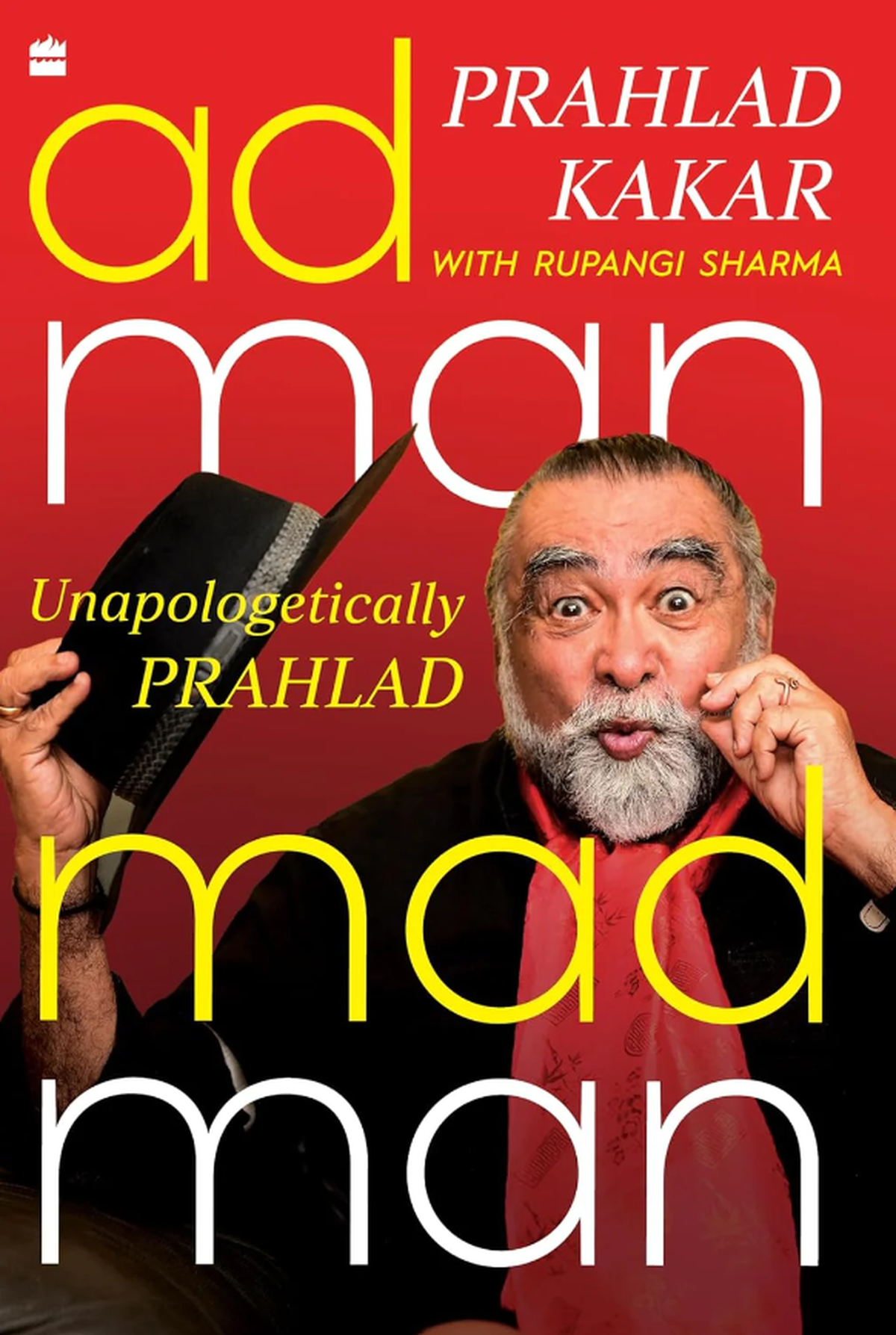
A maverick spirit forged in the crucible of Indian advertising, Prahlad Kakar, at 75, has finally penned his life’s unfiltered narrative. "Adman Madman: Unapologetically Prahlad," co-authored with Rupangi Sharma, is not just a memoir; it’s a vibrant tapestry woven with audacious campaigns, life-altering experiences, and a philosophy that champions embracing the unconventional.
The Genesis of a Legend: From Delhi’s Advertising Scene to a Creative Empire
Prahlad Kakar’s journey began in the bustling advertising circles of Delhi in the early 1970s, a time when the industry was burgeoning and ripe for disruptive ideas. His early career laid the foundation for what would become a formidable force in Indian advertising and filmmaking. After relocating to Mumbai, Kakar established Genesis Film Production, a company that would go on to become synonymous with groundbreaking creative work and nurturing burgeoning talent.
Now, at the venerable age of 75, Kakar finds himself reflecting on a life brimming with stories, enough, he quips, to fill a hundred books. It was during the enforced stillness of the lockdown that his partner, Mitali, suggested he commit these tales to paper. The result is "Adman Madman: Unapologetically Prahlad," a "no-holds-barred account of his most unforgettable experiences, peppered with viciously funny anecdotes from his personal life."
This memoir serves as a powerful testament to Kakar’s enduring legacy. Beyond his professional achievements, the book delves into his personal philosophy, one that advocates for stepping outside one’s comfort zone to unlock one’s true potential. Kakar, who balances teaching at the Prahlad Kakar School of Branding and Entrepreneurship with running Genesis Film Production, sees books as his "ultimate retreat," finding solace and inspiration in the works of T.S. Eliot, E.E. Cummings, Wilbur Smith, and Jean M. Auel, alongside his cherished collection of 150 Louis L’Amour westerns. "Adman Madman" is, therefore, not just a retrospective but a deliberate effort to impart wisdom to younger generations, showcasing the "way it used to be" and proving the invaluable lessons learned from embracing challenges.
A Candid Conversation: Piyush Pandey and Prahlad Kakar in Dialogue
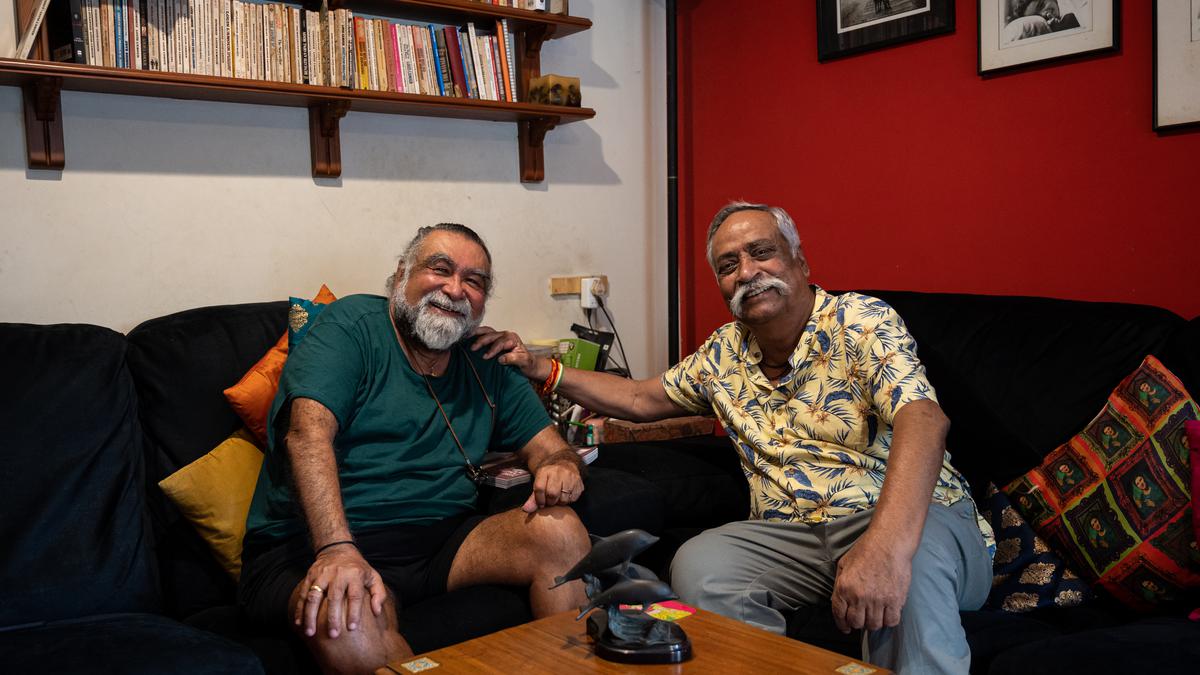
The launch of "Adman Madman" has been accompanied by insightful discussions, notably an engaging conversation between Kakar and fellow advertising titan Piyush Pandey, Chairman of Global Creative and Executive Chairman India, Ogilvy. Pandey, a long-time admirer and friend, highlights Kakar’s remarkable ability to foster talent, stating, "Prahlad has made many teams happen. A lot of good directors [and models] have first worked with him and then become big timers. So, there’s a whole lot of stories about team building and getting the best out of everyone, of learning from life."
This sentiment is echoed in the edited excerpts from their conversation, offering a glimpse into the mind of a man who has consistently pushed boundaries.
Embracing the ‘Madman’ Within: A Philosophy of Disruption
Pandey opens the dialogue by playfully acknowledging Kakar’s self-proclaimed "I’m here with my friend Prahlad Kakar, who calls himself the mad adman. But I think he’s a madman in life. If you read his book, he’s done some wonderful things in life, apart from advertising. Like scuba diving, starting a restaurant, and a film production company to teach people."
Kakar’s response immediately sets the tone for his philosophy: "Life is a classroom, and my earliest memories – from when I was four or five years – are of being thrown out of school. I continued to be thrown out of various institutions of great repute till I started realising that it was much more fun to be thrown out than to be part of them. So, then I used to engineer being thrown out." This early penchant for challenging the status quo underscores his lifelong commitment to questioning conventions. He elaborates on this by stating, "This whole business of teasing the establishment to react, because the establishment is a monolith, started young. The fact is that life throws everything at you, there are no terms of engagement. And you respond to the best of your ability. If advertising animals like you and me don’t confront a large establishment and say there are no rules of engagement, everything would sound the same."
Pandey offers a concise counterpoint, suggesting, "There’s only one rule of engagement and that is engaging with the audience."
Kakar expands on this, emphasizing the importance of not just engaging but captivating: "Not only engaging, but tickling their imagination and challenging them to take the journey with you. The moment you turn around and say 2+2 is not 4, it’s 22 – I’m giving you 2, you’re giving me 2, now let’s come out with 22 – it’s going to challenge them to interpret." He likens this to his personal journey, stating, "’Adding value to the communication’ was my whole journey through life. For instance, I was scared of boxing, but I was made to box. Because I abhorred it so much, it taught me how to face fear, to respond to it by making it productive."
Pandey astutely observes the parallel between boxing and strategic advertising: "Boxing is not aggression, it’s a science. It’s waiting for the right opportunity." Kakar, ever the provocateur, adds, "And creating the right opportunity."
Crafting Anthems: The Enduring Impact of "Yeh Dil Maange More"
One of the most iconic campaigns in Indian advertising history, the Pepsi slogan "Yeh Dil Maange More," is a testament to Kakar’s ability to tap into the cultural zeitgeist. Pandey reflects on its unintended yet profound impact: "Sometimes, people like us don’t know where our work will lead us. For instance, Prahlad would never have imagined that someday, a soldier would use the line ‘Yeh dil maange more’ [said by Kargil hero, Captain Vikram Batra, it was later referenced in the 2021 movie Shershaah]. That’s the impact you leave on people. At the time of writing it, Prahlad didn’t know that this was going to go this far."
Kakar reveals the creative genesis of the slogan, highlighting the crucial difference in interpretation: "And become a part of language. We were told by Pepsi to translate the line – what they had was ‘Ask for more’."
Pandey immediately grasps the distinction: "There’s a world of difference."
Kakar elaborates on the strategic brilliance of the original tagline: "Yes. Ask for more what? Pepsi? That’s consumption. Whereas what Anuja Chauhan and team [at JWT] made out of it was, ask for more from the heart. You’re not talking about Pepsi now, you’re talking about yourself. So, the line became huge, an anthem, that you ask for more from life." He then recounts the battle to get a specific Pepsi commercial approved, featuring children wearing Sachin Tendulkar masks: "When we made the Pepsi film with the Sachin Tendulkar mask [in the late 90s], we had to fight for it. We felt there was merit in the idea – of little children wearing masks of Sachin and playing cricket under a tree in a basti."
The client’s objection, "This isn’t our target audience," was met with Kakar’s characteristic challenge. He quotes the film’s director, Kenny D., to drive home the point: "whose is the bigger dream? A kid from a high rise who drinks Pepsi and wants to be Sachin versus a child from a basti who has nothing and wants to be Sachin? Advertising is storytelling."

The Heart of Advertising: Storytelling in the Age of AI
Kakar expresses concern about the current trajectory of advertising, where technology seems to be overshadowing the core art of storytelling. "Somehow, in the last couple of years, because we’re so overtaken by technology, we don’t understand that it’s only a vehicle, it’s not an end in itself."
Pandey concurs with this observation, stating, "I keep saying that Artificial Intelligence is fine, but you need some real intelligence behind it."
Kakar further emphasizes this point: "The heart of advertising is the story – if you lose the art of storytelling, you lose engagement. If you have to engage with young people today, whose attention span is 5-10 seconds, and you don’t do it with a story that affects them, then there’s no advertising." He acknowledges the benefits of modern tools: "Tools like AI and social media make life much easier because you don’t have to reinvent the wheel like we had to, but you also must have an idea that is worth delivering."
Life Lessons from the Arena and the Studio
Pandey praises the book for its focus on life lessons: "I loved the stories which are about life. What your book does is allow people to think about things that don’t seem to matter, but tactually matter a hell of a lot in life."
Kakar affirms this, explaining his multifaceted approach to life and work: "Absolutely. I wasn’t only doing one job. I was doing multiple things. But my whole approach to life is, if something really interests you or challenges you, why do you have to choose? When you do work that you enjoy, it’s immersive like a hobby. When I did scuba diving, it became a semi profession; cooking was a hobby, but it became restauranting, and so on. Everything I added to the kitty was not to earn more money or because it gave me a better lifestyle, it was just for pure pleasure."
The conversation then shifts to Kakar’s formative mentorship under filmmaker Shyam Benegal. Pandey notes the stark contrast between Benegal’s films and Kakar’s advertising work. Kakar reveals, "We disagreed violently." He then shares a significant lesson learned from Benegal: the importance of discipline and attention to detail, particularly in men. Benegal, known for his rigorous methods, even made mentees clean toilets, a practice that profoundly impacted Kakar.
Kakar explains his rationale for this unconventional training: "In our profession, is there a place for second best? I made men clean toilets because I realised very early in my own life that detailing isn’t a part of the male behaviour pattern. Women, because they’re multitaskers and aesthetically much more refined, have a far greater idea of detailing." He continues, "What makes a filmmaker different? It’s the detailing. What was stopping men was ego. I realised that the only way to break that barrier was to pitch their hunger for learning against their inability to do so. I do this in my class even now. Kids today are entitled, but I say ‘if you show in your exercises a lack of detailing, then you will clean the ladies toilet with a toothbrush’. Media is changing so quickly that you have to be ahead of the curve, and you can only do that with an open mind."
Pandey appreciates the book’s non-linear structure, finding it reflective of human thought processes: "What I liked about your book is that you switch from one incident to another, just like how a human being thinks."
Kakar explains his inspiration for this narrative style, drawing from Michael Herr’s "Dispatches" on the Vietnam War. He recounts a powerful anecdote about a resilient North Vietnamese soldier who repeatedly evaded American artillery fire, eliciting cheers from the very soldiers trying to defeat him. This story, Kakar argues, illustrates the indomitable human spirit and the unpredictable nature of conflict, which he sees as analogous to life’s challenges.
The Unwavering Pursuit: Passion as the Ultimate Driver
As the conversation draws to a close, Kakar reiterates the paramount importance of passion in achieving success. "The single overriding factor of success and failure is passion. And it is so difficult to incite that passion in kids now. The hunger is less. So, I have to really dig deep to find kids who are really hungry. That’s where the importance of failure comes in – you’ll want it more."
He concludes by reflecting on "the clan," the individuals he has mentored and helped establish their own production houses. This "clan," he believes, represents his enduring legacy, a testament to his belief in fostering talent and competition. "Advertising is a funny profession. It’s a profession of the young, and the longer you remain young, regardless of your age, the more relevant you are. The secret of my youth is that every few years, I help my entire office to set up their own production houses so that they will compete with me and raise the bar in the industry. I taught people a craft, they taught me how to stay young."
Pandey’s final words encapsulate the spirit of Kakar’s life and career: "On that note Prahlad, keep young, and keep them young."
"Adman Madman: Unapologetically Prahlad" is more than just a memoir of an advertising icon; it’s a compelling narrative that champions a life lived with audacious curiosity, unwavering passion, and a profound understanding of the human spirit. Kakar’s unapologetic approach, evident in both his professional work and his personal philosophy, continues to inspire, reminding us that the greatest rewards often lie beyond the confines of our comfort zones.
