

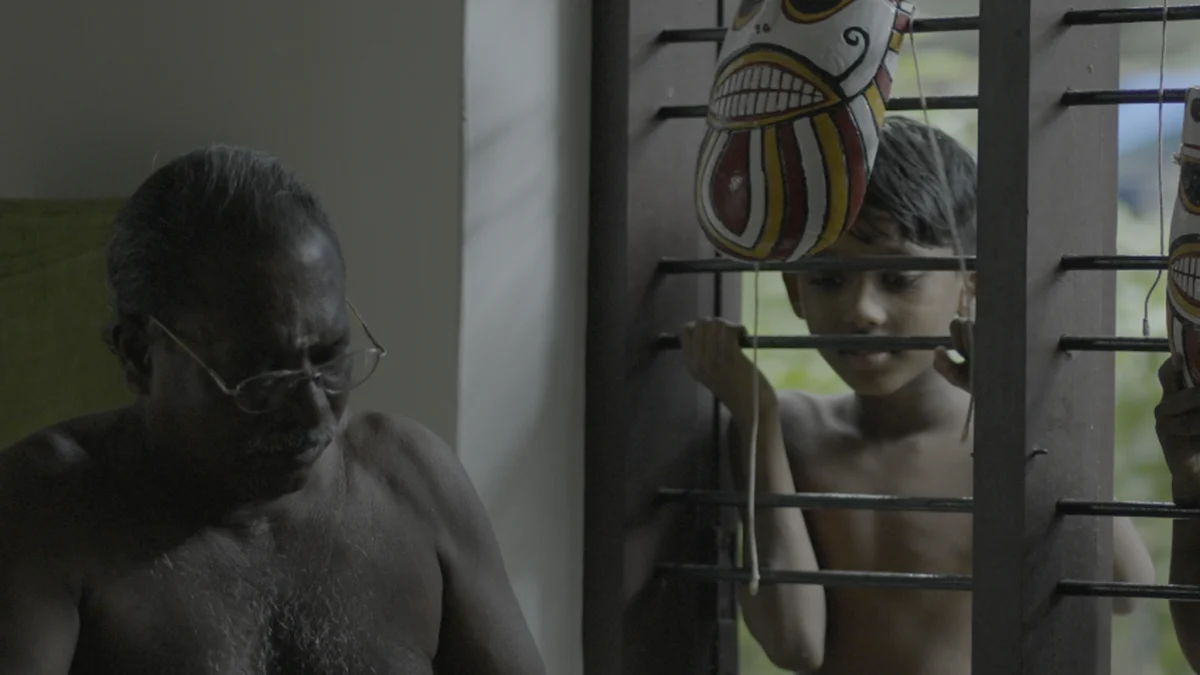
The poignant short documentary, "It Was Here Before Our Time," by filmmaker Ramith Kunhimangalam, has been selected for the prestigious Focus Short Documentary category at the 18th International Documentary & Short Film Festival of Kerala (IDSFFK). The film delves into the profound cultural and spiritual significance of Maari Theyyam, a unique ritualistic art form deeply rooted in the Kannur region of Kerala. Through its evocative visual language and insightful narrative, Kunhimangalam’s work serves as a vital homage to a tradition grappling with the inexorable march of time, a transition from a communal bonding ritual to a spectacle, and a plea to preserve its intrinsic integrity before it is irrevocably altered.
The Essence of Maari Theyyam: A Ritual of Survival and Harmony
Ramith Kunhimangalam’s documentary, "It Was Here Before Our Time," is not merely a recording of a cultural practice; it is a deeply personal and meticulously crafted exploration of an art form that occupies a unique and often overlooked space within the vibrant tapestry of Kerala’s Theyyam traditions. The film’s title itself hints at its core theme: the deep historical roots of Maari Theyyam and the filmmaker’s urgent desire to document its essence before it succumbs to the inevitable transformations brought about by modernization and changing societal perceptions.
Unlike the more opulent and widely recognized forms of Theyyam, Maari Theyyam, as Kunhimangalam highlights, is distinguished by its understated grandeur and its profound connection to a specific, often challenging, period of the year. "It is rooted in the place I am from," states Kunhimangalam, referring to his native Kannur. "Maari Theyyam is different from other Theyyams in that it does not boast the opulence of those forms." This distinctiveness is central to the documentary’s narrative.
The ritual’s timing is particularly significant. Maari Theyyam is performed exclusively during the Malayalam month of Karkadakam, which falls between July and August. This period is synonymous with the monsoon season, a time often associated with scarcity, hardship, and the prevalence of illnesses in many rural communities. The documentary explains that the region of Madayikkavu in Kannur, the spiritual home of Maari Theyyam, is believed to be afflicted by a myriad of curses. Legend has it that the local rulers, desperate to alleviate the village’s misfortunes, sought the intervention of Polla, a revered "Pulayan gurukkal" – a healer and magician from the Pulaya community. It is said that Polla, through his spiritual prowess, managed to ward off these calamities by symbolically drowning them in the Arabian Sea.
This historical context imbues Maari Theyyam with a profound sense of purpose, portraying it not just as a religious performance but as a vital mechanism for social survival and collective well-being. The documentary meticulously details the structure of the Maari Theyyam performance, often referred to as Karkadaka Theyyam. Typically, it involves a troupe of six artistes, each embodying a distinct character: Marikkaliyan, Maamayakkaliyan, Maarikalichi, Maamayakalichi, Maarikkuliyan, and Maamaayakkuliyan. These performers engage in a moving procession, visiting households and symbolically collecting the maladies and misfortunes of each family. This act of transference is poignantly depicted as the Theyyam artistes carry these burdens in palm fronds, which are ultimately cast into the sea, a symbolic act of purification and renewal. The 31-minute film captures these rituals, which are traditionally observed on the 16th and 17th days of Karkadakam, weaving together performances with explanations that underscore the art form’s role in fostering social harmony and ensuring community survival.
A Visceral Aesthetic: Reimagining the Visual Language of Tradition
A significant aspect of Ramith Kunhimangalam’s artistic vision, as revealed in "It Was Here Before Our Time," is his deliberate attempt to imbue the visual documentation of Maari Theyyam with a distinct aesthetic sensibility. He expresses a concern that much of the existing visual record of this art form has lacked the artistic depth and emotional resonance he believes it deserves. "The Theyyams do not walk on a fixed path because it is believed to be blind and deaf," Kunhimangalam explains, referring to the spiritual belief that the Theyyam embodies a divine entity that moves according to its own will. "They take a route they like. I wanted my visuals to interact with nature."
This desire to create a dialogue between the performance and its natural environment is a hallmark of the documentary’s visual style. Kunhimangalam contrasts this with the increasingly modernized settings in which some Theyyam performances are now held. "Other Theyyams, in recent years, are performed on floor with interlocked tiles under an asbestos roof. They lack the originality that was there in the past," he laments. His film, conversely, embraces the raw, untamed beauty of the natural world as an integral component of the Maari Theyyam experience.

The visual palette of "It Was Here Before Our Time" is deliberately muted, dominated by shades of grey. This choice is a direct homage to the overcast skies and the omnipresent rain characteristic of the Karkadakam season. Rain, in the film, is not merely a backdrop; it is an active participant, reinforcing the deep-seated, almost primal, connection between humanity and the divine forces of nature. The costumes themselves, with their painted wooden masks and simple, light green palm-frond frills, are presented as a stripped-down yet profoundly impactful representation of Theyyam, retaining its essential details without the embellishments that might detract from its core spiritual essence. This aesthetic choice underscores the filmmaker’s commitment to authenticity and his belief that the true power of Maari Theyyam lies not in external grandeur but in its inherent spiritual and communal significance.
The Producer’s Vision and the Filmmaker’s Craft
The documentary is produced by the esteemed actor-director Rajesh Madhavan, whose involvement lends significant weight to the project. Madhavan’s support has undoubtedly played a crucial role in bringing Kunhimangalam’s vision to fruition. The film artfully navigates between intimate conversations with various stakeholders involved in the Maari Theyyam tradition – the performers, the community elders, and those who have a deep understanding of its cultural context – and the visceral, often awe-inspiring, depiction of the performances themselves.
Kunhimangalam’s approach to capturing the raw energy and spiritual intensity of Maari Theyyam is a testament to his meticulous planning and deep understanding of filmmaking. The documentary cautiously zooms in on the often daunting and powerful imagery of the Maari Theyyam, accompanied by the resonant sounds of howls and screams, while simultaneously offering a grounded, humanistic perspective on the divine. This juxtaposition allows the audience to engage with the ritual on multiple levels, appreciating its visual spectacle while also grasping its underlying spiritual and emotional currents.
A fine arts graduate, Kunhimangalam emphasizes the demanding nature of capturing such an unpredictable and spiritually charged art form. "I had done my share of research, talking to people, going to locations, marking possible routes and setting up frames in my mind," he shares. "We should be one step ahead to capture events as they happen. A lot of the frames in the film were planned. I had imagined the sequences a certain way; to see it play out in front of me as intended was thrilling as a filmmaker." This blend of rigorous pre-production and the ability to seize fleeting, powerful moments in real-time is a hallmark of his directorial skill. His previous experience as an assistant director on notable films like Don Palathra’s "Family" and Mr. Madhavan’s "Pennum Porattum" has clearly honed his ability to navigate complex narratives and deliver impactful visual storytelling.
Echoes of the Past, Reflections of the Present: A Timeless Dialogue
"It Was Here Before Our Time" transcends a simple depiction of a cultural ritual; it invites viewers to contemplate the enduring connections between the past, the present, and the potential future of traditions like Maari Theyyam. The documentary masterfully draws parallels between the historical context of Maari Theyyam’s emergence and the anxieties of our contemporary world, particularly in the shadow of recent global health crises. "The form is peculiar visually. To me, it even resembles the pictures of the coronavirus we have seen," Kunhimangalam observes, a startling but thought-provoking comparison that highlights the timeless nature of human struggles against unseen forces and the rituals developed to confront them.
Beyond its immediate cultural context, Kunhimangalam ventures into more speculative, yet intriguing, territory by exploring potential ancient links to Maari Theyyam. He posits possible connections to Mayan and African traditions, primarily due to the masked aspects of the performance. While acknowledging the absence of concrete historical evidence, he artfully weaves these hypotheses into the fabric of the film. This is achieved through the evocative musical score composed by Christo Xavier, who also serves as a co-producer, adding another layer of sonic depth and cultural resonance to the documentary. This exploration, while not presented as definitive, encourages a broader perspective on the potential shared roots of ritualistic practices across different civilizations.
The overarching ambition of the documentary is to act as a temporal anchor, an attempt to momentarily halt the relentless flow of time and its inevitable impact on cultural forms. Kunhimangalam expresses his concern over the increasing commodification of Theyyam, where the emphasis has shifted towards creating shareable photos and videos, transforming a sacred ritual into mere entertainment. "There’s nothing much that can be done about this," he admits with a sense of resigned realism. "I did this film now to show Maari Theyyam with as much integrity as I can before it evolves into something else." This statement encapsulates the film’s poignant urgency, a heartfelt plea to appreciate and preserve the authentic spirit of Maari Theyyam before its essence is diluted by the pressures of modernity and the allure of spectacle.

Official Recognition and the Future of Cultural Preservation
The inclusion of "It Was Here Before Our Time" in the Focus Short Documentary category at the 18th International Documentary & Short Film Festival of Kerala (IDSFFK) in Thiruvananthapuram marks a significant recognition of the film’s artistic merit and cultural importance. The screening at the Sree theatre on Sunday, September 27, 2026, provided a platform for audiences to engage with this compelling narrative and for the filmmaker’s message to resonate widely.
The IDSFFK is a renowned platform that celebrates diverse voices and perspectives in documentary filmmaking, making it an ideal venue for a film like Kunhimangalam’s that tackles profound cultural and societal issues. This selection not only validates the filmmaker’s efforts but also shines a spotlight on the lesser-known but culturally rich art form of Maari Theyyam, potentially sparking further interest and dialogue surrounding its preservation.
The film’s narrative about the transition of Maari Theyyam from a communal bonding ritual to a spectacle is a microcosm of a larger trend affecting many traditional art forms worldwide. As societies evolve and global influences permeate local cultures, the challenge of maintaining the integrity of age-old practices becomes increasingly complex. "It Was Here Before Our Time" serves as a powerful case study, illustrating the delicate balance between evolution and preservation.
While Kunhimangalam acknowledges the inevitability of change and expresses a degree of resignation, his film itself is a proactive step towards mitigating this loss. By meticulously documenting Maari Theyyam with artistic integrity and a deep respect for its origins, he offers a valuable resource for future generations. The documentary is not just a passive observation; it is an active intervention, a conscious effort to archive a specific moment in the life of a tradition, preserving its spirit for those who may come after.
The implications of "It Was Here Before Our Time" extend beyond the realm of filmmaking. It prompts broader questions about cultural heritage, the role of art in society, and our collective responsibility to safeguard traditions that embody unique historical, spiritual, and social values. As the film resonates with audiences at IDSFFK and potentially beyond, it encourages a deeper appreciation for the nuanced beauty of art forms like Maari Theyyam and underscores the urgent need for conscious efforts to ensure their survival, not as mere relics of the past, but as living, breathing expressions of cultural identity. The documentary stands as a testament to the power of cinema to capture not just images, but the very soul of a tradition, urging us to reflect on what we stand to lose if we fail to listen to the whispers of "It Was Here Before Our Time."
