

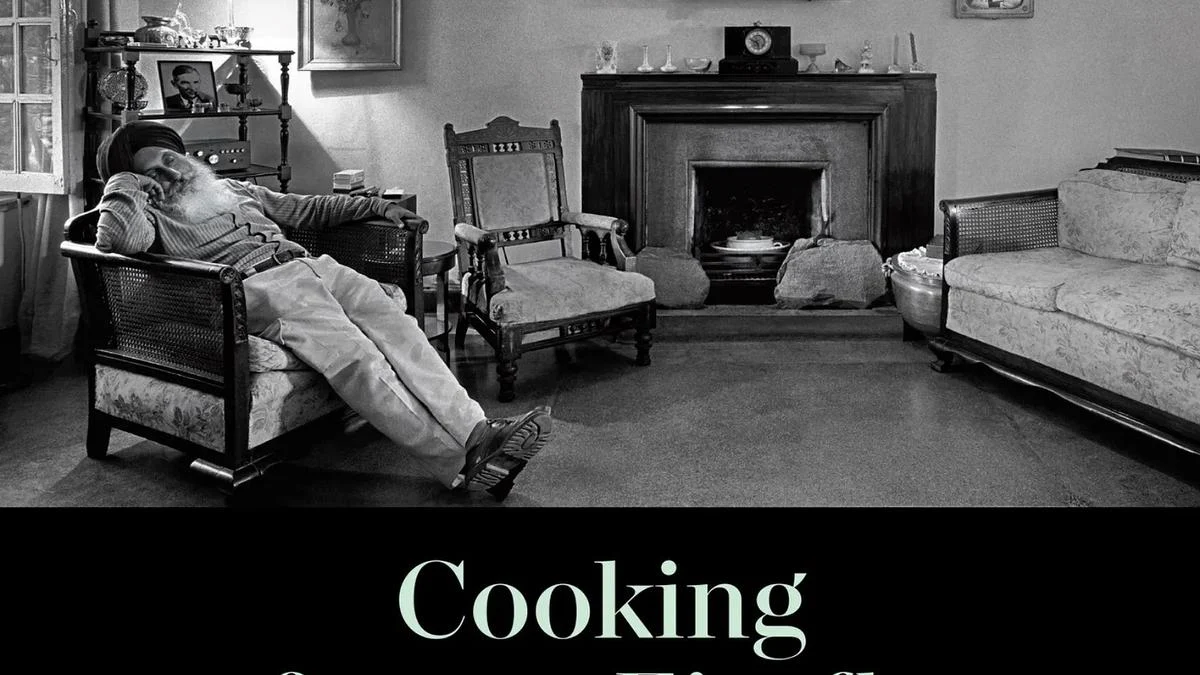
In the tapestry of human experience, few threads are as vibrantly colored or as deeply scented as the connection between food and memory. For many, a specific tempering of daal or the particular tang of a seasonal pickle is not merely a sensory experience but a portal—a visceral transport to a grandmother’s sun-drenched kitchen or a parent’s bustling dining table. It is this profound intersection of gastronomy, heritage, and social history that forms the core of author and publisher Malvika Singh’s latest literary endeavor.
On September 15, the Prakriti Foundation will host "At the Table with Malvika Singh" at the Amethyst Cafe in Chennai. The evening, dedicated to readings and discussions surrounding her memoir, Cooking for my Firefly, promises to be more than a book launch; it is an invitation to revisit an era where the dining table served as the beating heart of Indian social and intellectual life.
Main Facts: Food as a Metaphor for a Bygone Era
Malvika Singh—a name synonymous with Indian publishing, cultural commentary, and the legacy of the influential journal Seminar—has released the second volume of her planned memoir trilogy. Titled Cooking for my Firefly, the book occupies a unique space in contemporary Indian literature. While it contains recipes that are intrinsic to the narrative, Singh is quick to clarify that it is not a traditional cookbook. Instead, she utilizes the culinary arts as a metaphor to navigate the complex landscapes of family, friendship, travel, and the evolving identity of Delhi.
The "Firefly" of the title refers to her late husband, Tejbir Singh, affectionately known as "Jugnu" (the Hindi word for firefly). The memoir is a tribute to their life together, a partnership that stood at the center of a vibrant, open-house culture in the nation’s capital. Through the lens of the kitchen and the dining room, Singh captures a period in India’s post-independence history that feels increasingly like a myth to the younger generation—a time of unhurried conversations, intellectual rigor, and an almost sacred devotion to the communal meal.
The upcoming event, moderated by the Prakriti Foundation, aims to unpack these themes, exploring how the act of sharing a meal can preserve the legacy of a family and a city.

Chronology: From Pandemic Reflections to Published Legacy
The genesis of Cooking for my Firefly was born out of the forced stillness of the COVID-19 pandemic. As the world retreated indoors and the frantic pace of modern life ground to a halt, Singh found herself reflecting on the stark differences between her upbringing and the world her grandchildren are inheriting.
- The Lockdown Catalyst (2020-2021): During the global lockdowns, Singh began documenting her experiences. Her initial intent was private: to create a record for her grandchildren. She sought to capture the essence of a "different time and a different age" where social interactions were governed by different rules of engagement.
- The Evolution of the Memoir: What began as a family chronicle soon expanded into a broader social history. Singh realized that her personal memories of Delhi’s elite intellectual circles, the informality of great thinkers, and the ritualistic nature of family lunches were part of a vanishing Indian heritage.
- The Publication of the Trilogy: Cooking for my Firefly follows her previous biographical works, cementing her role as a chronicler of the Lutyens’ Delhi milieu. The book integrates photographs taken by Tejbir Singh over decades, providing a visual rhythm to her prose.
- The 2024 Discourse: The upcoming event on September 15 represents the culmination of this journey, bringing these Delhi-centric memories to a pan-Indian audience in Chennai, highlighting the universal nature of food as a cultural anchor.
Supporting Data: The Sociology of the Indian Dining Table
To understand the weight of Singh’s memoir, one must look at the sociological shifts in Indian urban life over the last fifty years. In the mid-20th century, particularly within the intellectual and political circles of Delhi, the "Open House" was a staple institution.
The Sacrosanct Meal
Singh notes that in her youth, the family meal was "sacrosanct." This wasn’t merely about nutrition; it was a scheduled period of "engagement and embrace." Supporting this view is the traditional structure of the Indian joint family and the subsequent "extended" social families of the 1970s and 80s. These gatherings were the primary vehicles for "legacy stories"—the oral traditions that pass values and history from one generation to the next.
The Informality of Intellectualism
One of the most striking anecdotes in the book involves the late journalist Dilip Padgaonkar and filmmaker Mani Kaul. Singh recounts returning home near midnight to find the two luminaries sitting on her drawing-room floor. They had let themselves in, helped themselves to daal chawal (lentils and rice) and rum, and were singing while they waited for their hosts.
This level of informality—where a friend’s home was an extension of one’s own—stands in sharp contrast to the highly curated, RSVP-driven social lives of contemporary urban India. The "data" of Singh’s life suggests that the physical space of the home was once far more porous, allowing for the "unexpected conversations" that often spark creative and intellectual breakthroughs.
Global Encounters
Singh’s memoir also documents the intersection of the local and the global. She recalls hosting international film icons like Frank Capra and Bert Haanstra for dinner after meeting them at a film festival. In an era before the "paparazzi culture" and "autograph books" took over, these encounters were defined by a shared curiosity about work and life. The dining table served as a neutral ground where a Delhi host and a Hollywood legend could find commonality over a home-cooked meal.

Official Responses: Malvika Singh on the Spirit of the Book
Speaking on the motivations behind the book, Malvika Singh emphasizes the shift in how society connects. Her reflections serve as the "official" commentary on the cultural loss she seeks to mitigate through her writing.
"It was a different time, a different age, and we all did things differently," Singh remarks, pointing to the erosion of the "open house" philosophy. She describes her home with Tejbir Singh as a place where the door was rarely locked to friends. "Our house is an open house," she says, characterizing it as a hub for meals, drinks, and, most importantly, the exchange of ideas.
On the role of the dining table, Singh is emphatic: "In our time, having a meal together was very important… We talked about the legacy stories, spoke about what we are doing today, and our dreams for the future." For Singh, the loss of these rituals is not just a change in lifestyle, but a loss of a specific type of human engagement that fostered deep community bonds.
The Prakriti Foundation, in its endorsement of the event, suggests that Singh’s work is vital for contemporary audiences. By hosting this discussion, the Foundation highlights the memoir’s role in documenting the "Delhi of all its glory," serving as a bridge between the historical reality of the capital and its modern-day transformation.
Implications: The Future of Memory and the Digital Divide
The publication of Cooking for my Firefly and the subsequent discussions it has sparked carry significant implications for how we view heritage in a rapidly modernizing India.
1. The Preservation of "Intangible" History
While history books often focus on political shifts and economic data, Singh’s work argues for the importance of "intangible" history—the flavors, the household rhythms, and the social etiquette of an era. As urban India moves toward high-rise living and digital socialization, the "open house" culture is becoming extinct. Singh’s memoir serves as a blueprint for what is being lost.

2. The Intergenerational Gap
Singh’s initial motivation—writing for her grandchildren—highlights a growing concern among the Indian elite and middle class: the "disconnection" of the younger generation from their ancestral roots. By framing history through food (something universal), Singh provides a more accessible entry point for younger readers to understand the socio-political climate of their grandparents’ time.
3. Food as a Resistance to Fast-Paced Life
In an age of food delivery apps and "desk lunches," the idea of a "sacrosanct" meal is almost radical. The memoir implies that the decline of the communal dining table correlates with a decline in deep, civil discourse. Reclaiming the table, as Singh suggests, might be a way to reclaim the "informality and community" that once defined Indian urbanity.
4. The Role of the Memoir in Identity Formation
For the younger generation, to whom this period of India is merely a "story," Singh’s book provides a sense of identity. It asserts that Indian identity is not just found in national monuments or political movements, but in the specific way a family gathers to discuss their "dreams for the future" over a bowl of daal.
As Malvika Singh prepares to share these stories at the Amethyst Cafe, the event stands as a reminder that while the fireflies of the past may have dimmed, their light remains preserved in the recipes and recollections of those who kept the table ready for a friend.
Event Details:
- At the Table with Malvika Singh
- Date: September 15, 2024
- Time: 6:30 PM onwards
- Location: Amethyst Cafe, Whites Road, Royapettah, Chennai
- Entry: Open to all (RSVP required at 9940620268)
