

PUNE – Bajaj Auto, one of India’s leading automotive manufacturers and the world’s largest three-wheeler maker, released its comprehensive sales data for September 2026 this morning. While the headline figures indicated a 5% year-on-year growth in total volumes, the report triggered a significant sell-off on the National Stock Exchange (NSE). The company’s stock plummeted by 9%, resting at Rs 9,900, as investors reacted to a sharper-than-expected decline in domestic two-wheeler sales, which overshadowed a stellar performance in the export markets.
The dichotomy between domestic struggles and international success has placed Bajaj Auto at a crossroads. As the industry enters the crucial festive season, the company’s ability to regain its footing in the home market will be under intense scrutiny by analysts and stakeholders alike.
The Core Numbers: A Tale of Two Markets
In September 2026, Bajaj Auto reported total sales (including two-wheelers and commercial vehicles) of 5,38,443 units. This represents a modest but steady 5% increase over the 5,10,504 units sold during the same month in 2025. On the surface, the growth suggests resilience; however, a granular look at the data reveals a complex internal shift.
The primary driver of growth was the export segment. Combined exports for two-wheelers and commercial vehicles surged by 32%, reaching 2,43,987 units. Conversely, the domestic market told a different story. Total domestic sales fell by 9%, dropping to 2,94,456 units from 3,25,252 units a year ago. This net loss of over 30,000 units in the domestic market has raised concerns about consumer sentiment in India’s entry-level and executive motorcycle segments.
Domestic Two-Wheeler Performance: The Pulsar Paradox
The most striking takeaway from the September report was the 12% decline in domestic two-wheeler sales. Bajaj sold 2,39,771 units in India, a significant drop from the 2,73,188 units recorded in September 2025.
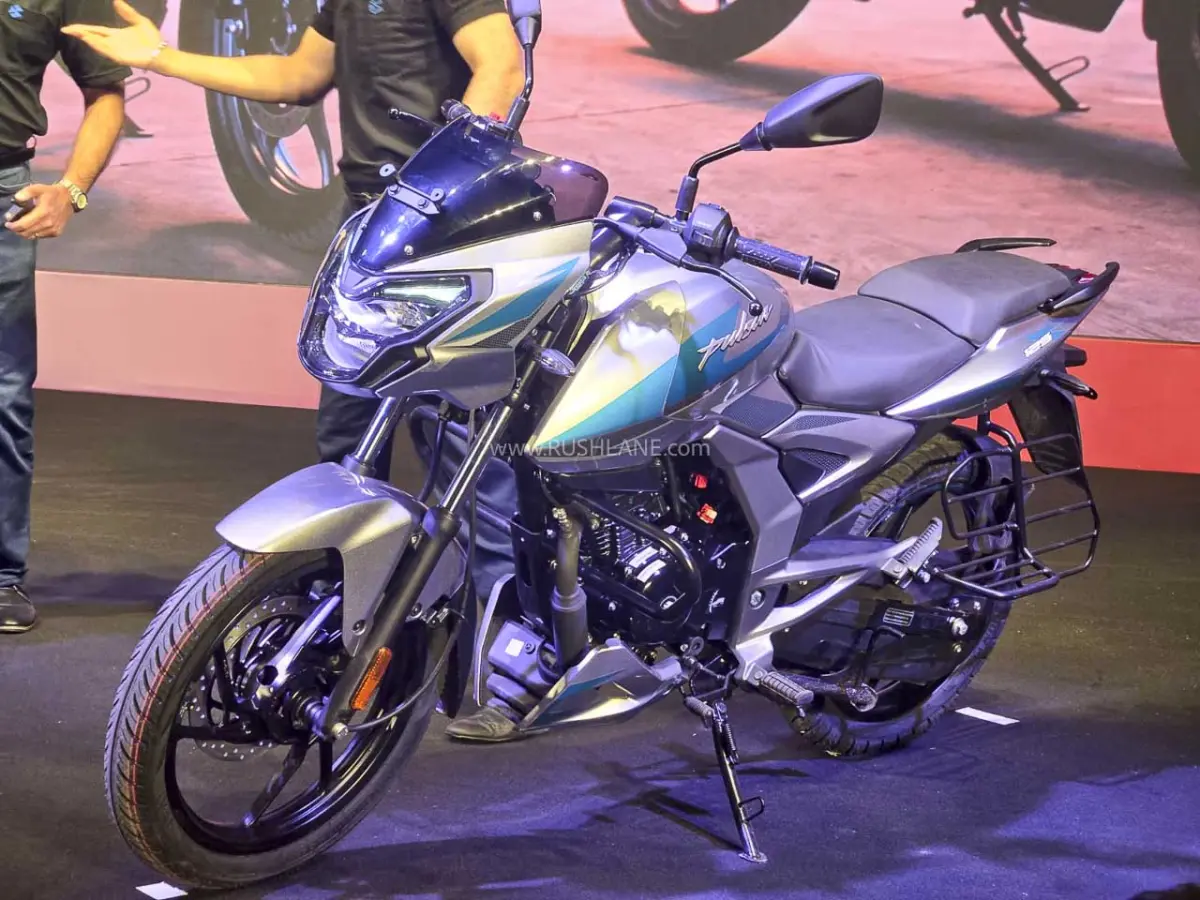
This decline is particularly surprising given Bajaj’s aggressive product strategy over the last quarter. Just last month, the company launched updated versions of its "bread and butter" models—the Pulsar 125 and Pulsar 150. These models have historically been the backbone of Bajaj’s domestic volume. The failure of these new launches to immediately stimulate demand suggests either a cooling of interest in the 125cc–150cc segment or intense competitive pressure from rivals like TVS Motor Company and Hero MotoCorp.
Market analysts suggest that while the Pulsar remains a formidable brand, the shift in consumer preference toward premium mid-capacity bikes (250cc and above) or electric scooters may be cannibalizing the traditional executive commuter base.

Exports: The "World’s Favourite Indian" Reclaims Its Title
While the domestic front faced headwinds, Bajaj Auto’s international business provided a robust safety net. Two-wheeler exports witnessed a massive 34% jump, climbing from ,57,665 units in September 2025 to 2,11,723 units in 2026.
This 54,058-unit increase in shipments more than compensated for the domestic shortfall in terms of sheer volume. Bajaj’s footprint in Africa, Latin America, and Southeast Asia remains a critical pillar of its business model. The recovery in export markets—many of which had been struggling with currency devaluations and inflationary pressures in previous years—appears to be in full swing. This geographic diversification allows Bajaj to remain profitable even when the Indian market faces cyclical downturns.
Commercial Vehicles: Consistent Growth Across Borders
The Commercial Vehicle (CV) segment, primarily comprising Bajaj’s iconic three-wheelers, continued to be a bright spot in the company’s portfolio. Total CV sales reached 86,949 units, marking a 9% growth over the 79,651 units sold in the previous year.
- Domestic CV Sales: Rose by 5% to 54,685 units. This growth is largely attributed to the increasing adoption of CNG and electric three-wheelers in urban centers, where Bajaj maintains a dominant market share.
- Export CV Sales: Grew by 17% to 32,264 units. The demand for affordable last-mile connectivity in emerging economies continues to fuel this segment.
The CV business remains a high-margin vertical for Bajaj Auto, providing a financial cushion that helps the company maintain its industry-leading EBITDA margins despite fluctuations in the two-wheeler space.
First-Half Fiscal Year Analysis (April–September 2026)
Looking at the broader picture, the first half of the 2026-27 fiscal year (H1 FY27) presents a much more optimistic outlook. Between April and September 2026, Bajaj Auto’s total sales reached 29,87,135 units, a substantial 24% increase compared to the 24,05,357 units sold in H1 FY26.
Key H1 Highlights:
- Total Two-Wheelers: Sales rose 24% to over 2.5 million units.
- Total Commercial Vehicles: Volumes increased by 24% to 4,80,622 units.
- Export Dominance: Overseas sales accounted for 15,10,701 units, representing 50.5% of total volumes. Notably, exports contributed to roughly 83% of the total volume gain seen in the six-month period.
- Domestic Resilience: Despite the September dip, domestic H1 volumes grew by 7% to 14,76,434 units.
The H1 data suggests that the September domestic slump might be a localized blip rather than a long-term trend, though the market’s reaction indicates a "wait and watch" approach regarding the upcoming festive demand.
Market Reaction: Why the Stock Price Crashed
Following the sales announcement, Bajaj Auto’s stock became the top loser on the Nifty 50. The 9% drop to Rs 9,900 wiped out billions in market capitalization in a single trading session.

Why did the market react so negatively to 5% growth?
- Missed Estimates: Institutional investors and brokerage firms had pegged September sales significantly higher. The 12% domestic 2W decline was a "negative surprise" that analysts had not fully priced in.
- Festive Season Anxiety: In India, the period between September and November (encompassing Ganesh Chaturthi, Dussehra, and Diwali) usually accounts for 25-30% of annual sales. A decline just as the festive season kicks off is seen as an ominous sign for Q3 earnings.
- Valuation Concerns: Before today’s drop, Bajaj Auto’s stock had been trading at a premium. When a high-valuation stock misses volume targets, the correction is often swift and severe.
Official Context and Strategic Outlook
While Bajaj Auto has not released a formal statement regarding the stock price volatility, company insiders point toward a "rebalancing of inventory" ahead of the peak festive weeks. The launch of the new Pulsar range is expected to gain momentum in October as dealership dispatches translate into retail sales.
Furthermore, Bajaj’s focus on the "Clean Freedom" initiative—highlighted by the world’s first CNG motorcycle, the Freedom 125—is expected to contribute more significantly to domestic numbers in the coming months as production scales up to meet high initial booking numbers.
Implications for the Industry
Bajaj Auto’s September performance serves as a bellwether for the Indian automotive industry. Several implications emerge:
- Rural vs. Urban Divide: The slump in entry-level 2Ws (125cc) often indicates a slower recovery in rural purchasing power. If this trend persists, it may signal broader economic headwinds for the FMCG and retail sectors.
- Export-Led Stability: For Indian OEMs (Original Equipment Manufacturers), a strong export strategy is no longer optional. Bajaj’s ability to grow despite a domestic dip proves the value of global hedging.
- The Premiumization Trend: As commuters move away from basic 100cc-150cc bikes, manufacturers must pivot toward "lifestyle" biking. Bajaj’s partnership with Triumph and its expansion of the KTM range are strategic moves to capture this higher-margin segment.
Conclusion
September 2026 has been a month of contradictions for Bajaj Auto. On one hand, the company has demonstrated its prowess as a global player, with exports reaching new heights. On the other, it faces a sobering reality in its home market, where traditional strongholds are being tested.
As the company moves into the heart of the festive season, the industry will be watching closely. Will the "Pulsar" brand and the innovative "Freedom" CNG platform be enough to reverse the domestic slide? For now, the export markets are carrying the weight, but for Bajaj Auto to maintain its status as a market leader, it must find a way to reignite the engines of domestic demand. The road to the end of the fiscal year remains long, and while the H1 growth of 24% provides a sturdy foundation, the volatility of the last 30 days serves as a reminder that in the automotive world, momentum is a fragile thing.
