

Introduction
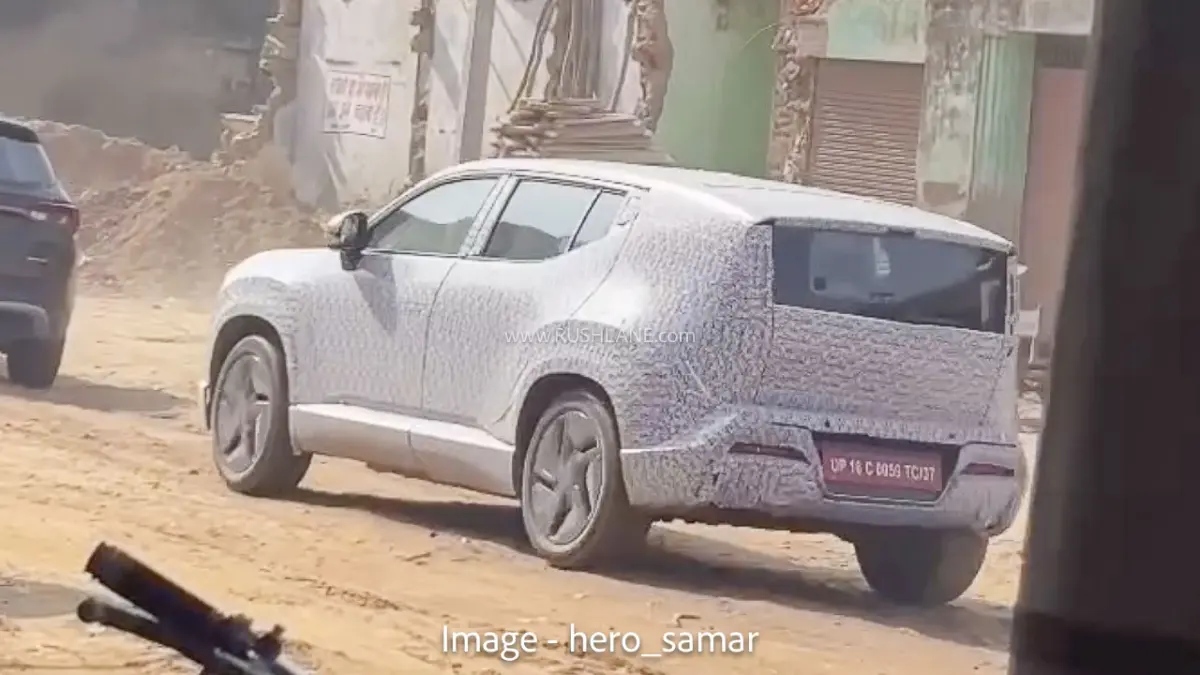
The Indian automotive landscape is standing on the precipice of a radical transformation, and Honda Cars India, a brand long synonymous with engineering precision and internal combustion reliability, is preparing to play a lead role. In a significant development that underscores the brand’s commitment to its "Electric Vision," a new prototype—the Honda 0 Alpha EV—has been spotted undergoing rigorous testing on the challenging road conditions of Rajasthan.
Spied near the company’s manufacturing facility in Tapukara, the 0 Alpha EV is not merely a new model; it is the physical manifestation of Honda’s global "0 Series" philosophy. Designed from the ground up as a "born-EV," this midsize SUV is slated for a commercial debut between late 2026 and early 2027. As Honda targets a portfolio of ten new models in India by 2030, the 0 Alpha represents the tip of the spear in a $9.4 billion global strategic pivot aimed at reclaiming market share through electrification, localized sourcing, and cutting-edge design.
Main Facts: The 0 Alpha EV at a Glance
The Honda 0 Alpha EV enters a segment that is rapidly becoming the most contested space in the Indian market. Unlike the Honda Elevate, which was designed primarily for internal combustion and hybrid powertrains, the 0 Alpha utilizes a dedicated EV architecture.

Key Specifications and Features:
- Platform: "Thin, Light, and Wise" dedicated EV platform.
- Battery Capacity: Expected 65 kWh to 75 kWh Lithium Iron Phosphate (LFP) packs.
- Range: Projected to exceed 500 km on a single charge (WLTP/ARAI).
- Charging: DC fast-charging capabilities allowing a 20% to 80% charge in approximately 15 minutes.
- Dimensions: A wheelbase ranging between 2,700 mm and 2,800 mm, significantly longer than current midsize SUVs, prioritizing cabin volume.
- Design Aesthetic: A blend of utilitarian boxiness and futuristic aerodynamics, featuring 18-inch aero-efficient alloy wheels.
Chronology of Development: From Concept to Indian Soil
The journey of the Honda 0 Alpha EV began far from the dusty roads of Rajasthan. To understand its significance, one must trace the timeline of Honda’s recent electrification strategy.
January 2024: The Global Reveal
At the Consumer Electronics Show (CES) in Las Vegas, Honda unveiled the "0 Series" global EV line-up. The company announced a departure from traditional "heavy and thick" EV designs, opting instead for a "Thin, Light, and Wise" approach. This marked the birth of the design language seen on the 0 Alpha.
Mid-2024: The India Commitment
Honda Cars India officially confirmed that India would serve as one of three global hubs for its EV transition, alongside North America and Japan. The company announced a roadmap to launch 10 new products by 2030, including a dedicated EV based on the Elevate’s success but utilizing a more advanced platform.
Late 2024: The Tapukara Sightings
The first prototypes of the 0 Alpha began appearing in heavy camouflage near the Tapukara plant. These tests focused on thermal management of the battery in India’s extreme heat and the durability of the suspension on "bad road" sections, which are characteristic of the Indian hinterland.

October 2026 (Projected): Production Commencement
Industry insiders suggest that the vehicle will move into pre-production phases by late 2026, aligning with Honda’s goals of a post-Diwali launch or an early 2027 market entry.
Supporting Data: Design, Engineering, and Interior Gadgetry
The latest spy shots provide a wealth of data regarding the SUV’s physical and technological layout.
Exterior Engineering
The 0 Alpha EV adopts a "tall-boy" stance that maximizes vertical space. The roofline remains remarkably flat until the rear, where a roof-mounted spoiler aids in reducing drag—a critical factor for EV range. The wheel arches are squared off, giving it a rugged, SUV-centric appeal, while the 18-inch wheels are designed with "aero-inserts" to minimize air turbulence.
One of the most striking features is the upright fascia. Lacking a traditional radiator, the "grille" area is completely closed off, housing sensors for Advanced Driver Assistance Systems (ADAS). The lighting signature is described as "sharp and futuristic," likely employing full-LED matrix setups.
The "Thin, Light, and Wise" Platform
Traditional EVs often suffer from a high floor due to bulky battery packs. Honda’s new platform utilizes a compact e-Axle (which integrates the motor, inverter, and gearbox into one unit) and a low-profile battery frame. This allows for a lower center of gravity, improving handling, while simultaneously offering more legroom than the Honda Elevate, despite having similar exterior dimensions.

Interior and Connectivity
Spy shots of the cabin reveal a minimalist, "Man Maximum, Machine Minimum" philosophy. A large, centrally mounted touchscreen dominates the dashboard, serving as the hub for Honda’s next-generation connected car suite.
- Digital Cockpit: A secondary, rectangular digital instrument cluster provides EV-specific data such as regenerative braking levels, real-time energy flow, and turn-by-turn navigation.
- Practicality: Despite the digital focus, Honda appears to have retained physical toggles for critical functions like climate control, acknowledging the tactile preferences of Indian drivers.
- Features: Wireless smartphone integration, a 360-degree camera system, and potentially a panoramic sunroof (visible in some silhouette shots) are expected to be standard on higher trims.
Official Responses and Strategic Context
While Honda Cars India has remained tight-lipped about the specific "0 Alpha" nomenclature, their broader corporate strategy provides the necessary context. Honda Global recently announced a $9.4 billion cost-cutting initiative. A significant portion of these savings is being redirected into EV R&D and "Chinese-style" sourcing efficiency—leveraging high-volume, low-cost supply chains to keep EV prices competitive.
In an official statement regarding their Indian operations, Honda executives noted, "India is a pillar of our global growth. Our transition to electrification here will be measured but decisive, ensuring that our products meet the unique durability and value requirements of the Indian consumer."
The decision to test the 0 Alpha in Rajasthan is a calculated one. The region’s temperature fluctuations and varied road surfaces provide the ultimate "stress test" for LFP battery chemistry, which Honda is expected to favor due to its superior thermal stability and lower cost compared to Nickel Manganese Cobalt (NMC) cells.
Implications: Reshaping the Competitive Landscape
The arrival of the Honda 0 Alpha EV will send ripples through the Indian automotive market, specifically targeting two major demographics: the tech-savvy urban buyer and the "premium-utilitarian" family.

1. The Battle for Midsize EV Supremacy
The 0 Alpha will not have a free run. It enters the ring just as the Hyundai Creta EV and the Tata Sierra EV are expected to be at the peak of their product cycles. Tata Motors currently holds the first-mover advantage in the EV space, but Honda’s reputation for "bulletproof" reliability and the sophisticated engineering of a born-EV platform could sway buyers who are wary of the software glitches sometimes associated with early-adoption EVs.
2. Infrastructure and Ecosystem
Honda’s entry into the long-range EV segment necessitates an expansion of the charging ecosystem. It is expected that Honda will partner with major energy firms to establish "Honda-exclusive" fast-charging hubs at dealerships and key highway points, mirroring the strategies of luxury brands but at a mass-market scale.
3. Shift in Manufacturing Philosophy
The 0 Alpha marks a shift from "local assembly" to "local integration." By sourcing battery components and e-Axle parts locally or through strategic Asian partners, Honda aims to price the 0 Alpha in the ₹20 lakh to ₹27 lakh bracket. This would make it a direct competitor not just to other EVs, but to high-end petrol and diesel SUVs, accelerating the "ICE-to-EV" migration.
Conclusion
The Honda 0 Alpha EV is more than just a car; it is a statement of survival and ambition. For a brand that was perceived to be lagging in the global electric race, the 0 Alpha proves that Honda has been observing, learning, and engineering in the shadows.
With its "Thin, Light, and Wise" architecture, a focus on "bad-road" durability, and a design that prioritizes passenger comfort over unnecessary stylistic flourishes, the 0 Alpha is tailor-made for the evolving Indian palate. As testing continues in the heart of Rajasthan, the automotive world watches closely. If Honda can marry its legendary build quality with this new-age electric efficiency, the 0 Alpha may well become the benchmark for the next generation of Indian mobility.
