

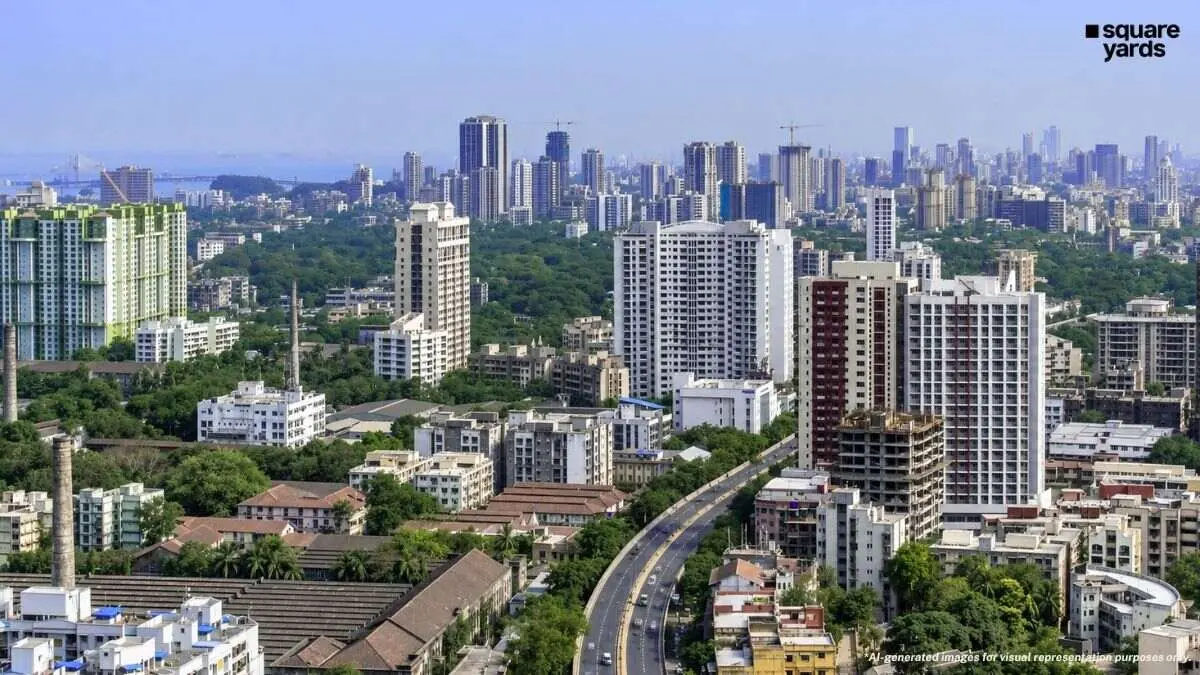
NEW DELHI — India’s real estate landscape has reached a historic milestone, shattering previous investment records to post its strongest quarterly performance to date. According to the latest comprehensive market report by CBRE, the sector attracted a staggering $9.5 billion in equity capital during the third quarter (Q3) of 2026. This influx of capital marks a pivotal shift in the nation’s economic trajectory, driven by an aggressive expansion in data centers, a resurgence in high-end office leasing, and strategic land acquisitions across the country’s primary urban corridors.
The record-breaking figures underscore a robust institutional confidence in the Indian property market, which has now seen a cumulative investment of $18.6 billion in the first nine months of 2026. As the market evolves, the traditional dominance of residential and standard commercial assets is being challenged by specialized infrastructure, most notably the data center segment, which has emerged as the primary magnet for global and domestic investors.
1. Main Facts: A Quarterly Performance Without Precedent
The Q3 2026 investment data reveals a market in the midst of a sophisticated transformation. The $9.5 billion figure represents the highest-ever quarterly equity inflow in the history of Indian real estate. This surge is not merely a localized phenomenon but a systemic growth pattern across major metropolitan areas, with Mumbai, Delhi-NCR, and Chennai collectively accounting for 53% of the total investment.
Key Pillars of the Q3 Surge:
- Data Center Dominance: For the first time, data centers have claimed the largest share of quarterly investment, accounting for 57% of the total capital deployed.
- Equity Capital Concentration: Approximately 91% of the total capital was funneled into three specific categories: built-up office spaces, data centers, and land/development sites.
- Office Market Resilience: Despite global economic fluctuations, India’s office leasing grew by 9% year-on-year, reaching 18.7 million square feet (msf) in Q3 2026.
- Strategic Land Banking: Land acquisitions for future development remained a high priority, with 72% of land-purchase capital earmarked for residential, office, and data center projects.
The investment climate is characterized by a "flight to quality," where institutional investors are prioritizing assets that offer long-term yield stability and align with India’s burgeoning digital economy.
2. Chronology: The Road to the 2026 Peak
The path to this record-breaking quarter began with a steady recovery in late 2024 and throughout 2025, as the post-pandemic "return-to-office" mandates gained momentum. However, the 2026 boom is distinct in its composition.
- Q3 2025: The market was characterized by steady growth, with Delhi-NCR leasing roughly 1.6 msf of office space. At this time, data centers were viewed as an "alternative" asset class rather than a mainstream investment target.
- Q1-Q2 2026: The first half of the year saw a gradual buildup of capital, with $9.1 billion invested across six months. Investors began shifting focus toward land parcels in anticipation of a supply crunch in Tier-1 cities.
- Q3 2026 (The Current Peak): Investment doubled compared to the average of previous quarters. The dramatic rise in Delhi-NCR office leasing—reaching 3.3 msf, more than double the previous year’s levels—signaled a massive absorption of Grade-A commercial space.
This chronological progression highlights a shift from cautious optimism to aggressive expansion, particularly as the "Digital India" initiative and the rise of AI-driven demand necessitated a rapid scaling of data infrastructure.
3. Supporting Data: A Sectoral and Regional Deep Dive
To understand the scale of the $9.5 billion investment, a granular look at the data reveals where the money is moving and how it is impacting local valuations.
The Data Center Explosion
The emergence of data centers as the leading asset class (57% of investment) is the most significant trend of 2026. This shift is supported by research from Square Yards, which suggests that the expansion of the data center industry will have a massive "multiplier effect" on the broader economy. Estimates indicate that this expansion could generate demand for up to 195 msf of housing by 2030, as the ecosystem around these centers—including logistics, technical support, and auxiliary services—requires a localized workforce.
The Commercial-Residential Nexus: Delhi-NCR Case Study
The relationship between commercial leasing and residential appreciation is most evident in the Delhi-NCR region.
- Office Rents: On Gurugram’s prestigious Golf Course Road, office rents surged by 26% year-on-year to reach ₹100 per square foot (psf).
- Residential Spills: This commercial demand directly correlated with a 10.2% quarterly rise in average home prices in the same area, reaching ₹23,550 psf.
- Noida’s Growth: In Sector 150, Noida, average asking prices climbed from ₹11,950 psf in late 2025 to ₹12,300 psf by mid-2026, reflecting a sustained upward trend driven by infrastructure development.
Divergent Trends in Major Hubs
While the national outlook is positive, the data shows a divergence in performance across cities:
- Growth Leaders: Delhi-NCR, Bengaluru, and Hyderabad recorded significant increases in office leasing activity.
- Cooling Markets: Mumbai, Pune, and Chennai saw a decline in office absorption during Q3. For developers, this suggests that while capital is flowing into these cities (particularly for data centers and land), the tenant market for traditional office space is becoming more selective.
4. Official Responses and Industry Sentiment
Industry leaders and analysts suggest that the current investment climate is a reflection of India’s maturing real estate regulatory environment and its status as a global technology hub.
CBRE Analysis:
Analysts at CBRE point out that the $18.6 billion year-to-date investment is a testament to the "structural strength" of the Indian market. They emphasize that the focus on development sites indicates that investors are not just looking for immediate returns from existing assets but are betting on the long-term growth of the Indian urban landscape.
Square Yards Perspective:
Data from Square Yards highlights the geographical shifts in demand. Their researchers note that the "5-15 km radius" around data centers in cities like Mumbai, Pune, Hyderabad, and Visakhapatnam is becoming the new "Goldilocks zone" for developers. These areas are expected to see a surge in mixed-use projects, combining residential units with retail and hospitality to serve the evolving needs of the tech-centric workforce.
Developer Outlook:
Large-scale developers are increasingly focusing on "integrated ecosystems." With land acquisitions accounting for a large share of the Q3 capital, the sentiment among developers is one of preparing for a "new supply cycle." However, they remain cautious about construction timelines and the rising costs of raw materials, which could influence the final price point of these upcoming projects.
5. Implications: What This Means for Buyers, Investors, and the Economy
The massive capital injection of Q3 2026 will have far-reaching consequences for various stakeholders in the Indian property market.
For Homebuyers: Increased Choice vs. Price Pressure
The heavy investment in land acquisitions is a double-edged sword for the average homebuyer. On one hand, the pipeline of upcoming residential projects will expand significantly, providing more choices in terms of location, amenities, and developer profiles. In markets with high unsold inventory, this increased supply could force developers to offer more competitive pricing or flexible payment plans.
On the other hand, in high-demand corridors like Gurugram or North Bengaluru, the surge in commercial activity is likely to keep upward pressure on prices. Buyers are advised to look beyond "asking prices" and evaluate actual transaction volumes and rental yields in specific micro-markets.
For Investors: The "Data Center Halo"
Investors are looking at a new map of growth. The "data center halo" effect means that property values in secondary locations—previously overlooked—may see rapid appreciation if they are within the service radius of a new data hub. Furthermore, the shift toward equity investment over debt suggests that the market is becoming more resilient, with investors willing to take on development risks for higher long-term rewards.
For the National Economy: Infrastructure as a Catalyst
The $9.5 billion investment acts as a catalyst for infrastructure development. Data centers require specialized power and connectivity grids, while large-scale office and residential projects necessitate better roads and public transport. This "private-led infrastructure growth" is expected to complement government initiatives, further solidifying India’s position as a preferred destination for global capital.
The Supply-Demand Equilibrium
A critical factor to watch in the coming quarters will be the "launch-to-absorption" ratio. With 72% of land acquisition capital targeting future projects, there is a risk of oversupply if the global economy slows down. However, the current 9% growth in office leasing and 3% rise in housing sales suggest that, for now, demand is keeping pace with the infusion of new capital.
Conclusion: A Transforming Skyline
As 2026 enters its final quarter, the Indian real estate sector stands at a historic high. The $9.5 billion investment surge in Q3 is more than just a number; it is a signal of the sector’s evolution into a technologically advanced, institutional-grade asset class.
While the dominance of Delhi-NCR, Mumbai, and Chennai remains undisputed, the rise of data centers as the primary investment vehicle is redrawing the map of Indian real estate. For stakeholders, the message is clear: the market is moving toward specialized, high-utility developments. Success in this new era will depend on the ability to navigate localized demand trends, manage the timing of new supply, and capitalize on the digital infrastructure boom that is currently reshaping the Indian skyline.
