

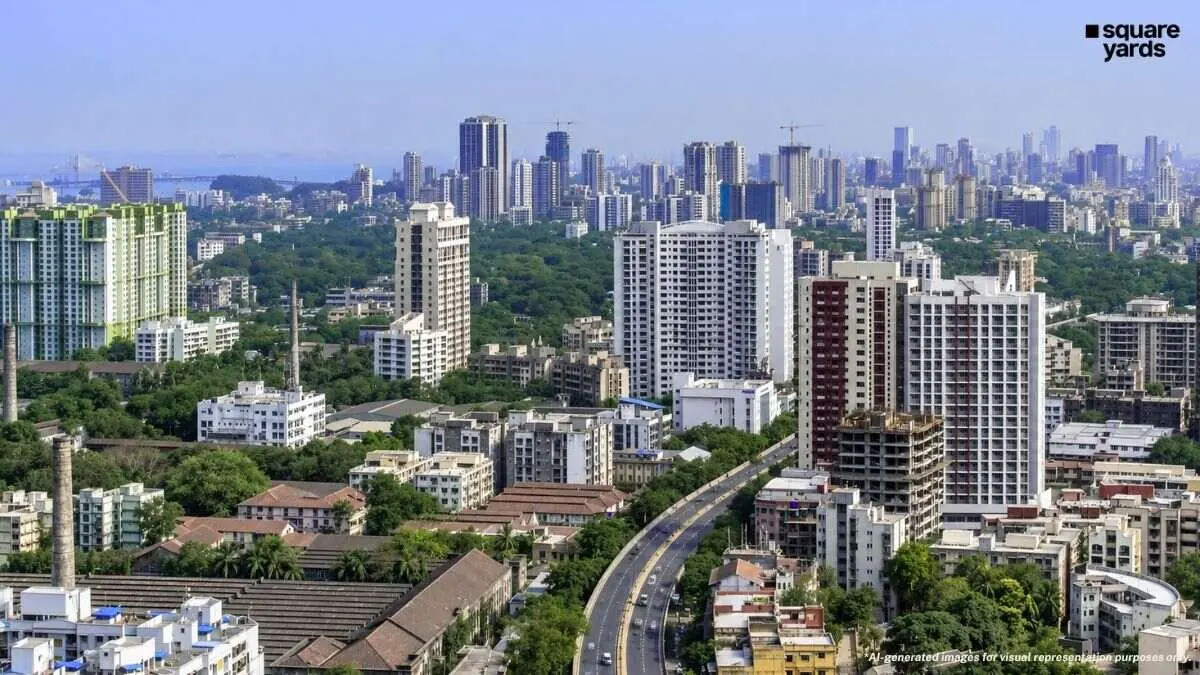
NEW DELHI – The Indian real estate landscape has reached a watershed moment, recording its highest-ever quarterly institutional investment in the third quarter of 2026. According to the latest comprehensive report by CBRE, the sector attracted a staggering $9.5 billion in equity capital between July and September. This surge not only underscores the resilience of the Indian economy but also signals a fundamental shift in investor preference toward digital infrastructure and strategic land banking.
The unprecedented flow of capital brings the total investment for the first nine months of 2026 to $18.6 billion, positioning the year to potentially break all previous annual records. As the market matures, the interplay between commercial leasing, data center expansion, and residential demand is creating a complex, multi-tiered growth story across India’s primary metropolitan corridors.
I. Main Facts: A Record-Breaking Quarter
The Q3 2026 investment figures represent a landmark achievement for the Indian property market. The $9.5 billion influx was driven by a combination of domestic institutional players and global private equity firms seeking stable returns in an otherwise volatile global environment.
The Rise of Alternative Assets
For the first time in the history of Indian real estate, data centers have emerged as the dominant asset class. Accounting for 57% of the total Q3 investment, this segment has outpaced traditional favorites like Grade-A office spaces and retail malls. This shift reflects the rapid digitization of the Indian economy, fueled by the proliferation of AI-driven services, cloud computing, and stringent data localization norms.
Regional Dominance
The investment was not distributed uniformly across the subcontinent. Three major clusters—Mumbai, Delhi-NCR, and Chennai—consolidated their positions as the primary recipients of capital, together accounting for 53% of the total investment share. While Mumbai remains the financial nerve center, Delhi-NCR has shown remarkable recovery in office leasing, and Chennai is rapidly becoming a preferred destination for both industrial and data center projects.
II. Chronology: The Road to the $9.5 Billion Peak
To understand the magnitude of the Q3 surge, one must look at the trajectory of the market over the preceding twelve months.
- Q4 2025: The market began seeing a stabilization in interest rates, encouraging long-term capital commitments. Developers started aggressive land acquisition phases in anticipation of a 2026 demand spike.
- Q1 & Q2 2026: The first half of the year saw steady growth, with $9.1 billion invested across six months. The focus remained on completing stalled projects and the expansion of Global Capability Centers (GCCs).
- Q3 2026 (The Surge): Several "mega-deals" in the data center space and massive land parcels being picked up by Tier-1 developers led to the $9.5 billion figure. This quarter alone surpassed the combined total of the first two quarters, marking a 100% acceleration in capital deployment.
- Current Standing: As of October 1st, 2026, the market is characterized by high liquidity and a "land-grab" mentality among developers looking to secure future pipelines for 2028-2030 deliveries.
III. Supporting Data: Analyzing the Segments
The health of the Indian real estate sector is currently being sustained by three distinct yet interconnected pillars: Office Leasing, Residential Sales, and Digital Infrastructure.
1. The Office Market: The Delhi-NCR Phenomenon
While national office leasing rose by a healthy 9% year-on-year, reaching 18.7 million square feet (msf), the regional disparities are telling.
- Delhi-NCR: The region recorded a spectacular jump, leasing 3.3 msf in Q3 2026 compared to just 1.6 msf in the same period last year. This 100%+ growth suggests a massive relocation and expansion trend among tech and consulting firms.
- The Price Ripple Effect: In Gurugram, specifically on the high-profile Golf Course Road, office rents surged by 26% year-on-year, hitting Rs 100 per square foot. This commercial appreciation has directly bled into the residential sector, where home prices in the same vicinity rose to Rs 23,550 per square foot—a 10.2% increase in just three months.
- Laggards: In contrast, Mumbai, Pune, and Chennai saw slight declines in office absorption this quarter, suggesting a temporary saturation or a shift in tenant preference toward the more affordable or infrastructure-heavy corridors of the North.
2. Data Centers: The New Engine of Growth
The $5.4 billion (57% of $9.5B) funneled into data centers is a strategic bet on India’s digital future.
- Housing Correlation: Industry estimates by Square Yards suggest that this expansion will necessitate massive residential support. By 2030, the data center boom is expected to drive demand for 195 million square feet of housing to accommodate the specialized workforce and ancillary service providers.
- The 5-15 KM Rule: Analysts have identified a "growth zone" within a 5-15 km radius of major data center hubs. Cities like Visakhapatnam and Hyderabad are seeing a spike in land prices in these peripheries as investors anticipate a "hub-and-spoke" development model.
3. Residential Real Estate: Premiumization Continues
Despite the massive focus on commercial assets, the residential sector grew by 3% year-on-year. While the growth percentage seems modest compared to the office sector, the value of transactions has increased significantly due to "premiumization."
- Noida Sector 150: Once considered a peripheral market, Sector 150 has seen asking prices rise from Rs 11,950 psf in late 2025 to Rs 12,300 psf by mid-2026. This reflects a steady, healthy appreciation driven by infrastructure completion.
IV. Official Responses and Market Sentiment
While the CBRE report provides the statistical backbone, industry leaders and analysts suggest a cautious but optimistic outlook.
Institutional Perspectives:
Analysts at CBRE indicate that the current investment climate is driven by "confidence in structural reforms and the transparency of the Indian real estate market." The shift toward equity investment rather than high-interest debt suggests that investors are looking for long-term value creation rather than quick exits.
Developer Sentiment:
Major developers in the Delhi-NCR and Mumbai regions have noted that the "cost of land is no longer a deterrent if the use-case is clear." The 72% of capital directed toward land acquisitions for mixed-use projects (office, residential, and data centers) indicates that the supply side is preparing for a "new India" where work-live-play ecosystems are the standard.
Market Research Observations:
Square Yards’ research highlights a critical nuance: while asking prices are rising, the actual absorption will depend on "construction timelines and the delivery of promised infrastructure." They warn that in markets with high unsold inventory, the new influx of capital could lead to heightened competition, potentially forcing developers to offer more "buyer-friendly" payment plans to maintain velocity.
V. Implications: What This Means for the Future
The record-breaking Q3 investment is not merely a number; it is a precursor to several structural changes in the Indian property market.
1. The Convergence of Commercial and Residential
The data clearly shows that where office leasing leads, residential prices follow. The 26% rent hike on Golf Course Road is a leading indicator for residential appreciation. Investors should look for "office-heavy" corridors as the safest bets for residential rental yields.
2. Supply Side Pressure and Pricing
With $9.5 billion entering the market, a significant portion is tied up in land acquisitions. As these projects hit the launch phase in 2027-2028, there will be a surge in supply. For the end-user, this is good news, as it provides more choices. However, for the speculative investor, it means that price growth may flatten in areas where supply outstrips organic demand.
3. The "Data Center Economy"
The projected demand for 195 msf of housing by 2030 due to data centers suggests that the next decade’s real estate "gold mine" may not be in the traditional city centers, but in the specialized "tech-industrial" corridors. Cities like Chennai and Hyderabad, which are becoming data center hubs, offer significant long-term appreciation potential for early-movers in the residential space.
4. Risk Factors to Monitor
Despite the euphoria, the decline in office leasing in Mumbai and Pune serves as a reminder that real estate is hyper-local. A "national boom" does not protect an investor from a "local bust." High vacancy levels in specific micro-markets could still lead to stagnant rents despite the overall national investment surge.
Conclusion
India’s real estate sector has successfully transitioned from a fragmented, localized market into a sophisticated, institutional-grade asset class. The $9.5 billion investment in Q3 2026 is a testament to the sector’s maturity. As the year draws to a close, all eyes will be on whether the final quarter can sustain this momentum, potentially pushing the annual investment beyond the $25 billion mark—a feat that would have been unthinkable a decade ago. For now, the message is clear: the Indian property market is no longer just about "homes"; it is the digital and commercial backbone of a rising global power.
