

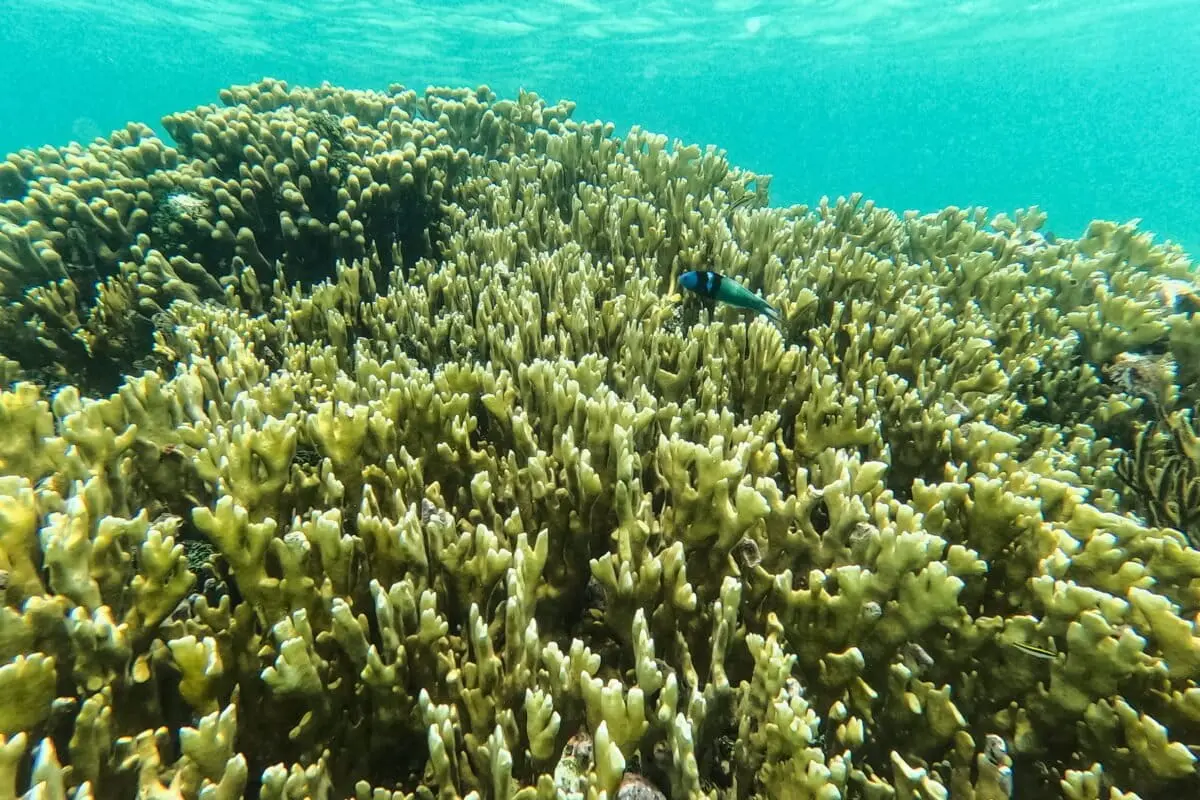
The world’s coral reefs, often described as the "rainforests of the sea," are currently locked in a desperate battle for survival against a backdrop of rapidly warming oceans. According to United Nations Secretary-General António Guterres, the traditional El Niño phenomenon—a natural climate pattern characterized by the warming of surface waters in the eastern Pacific—is being "supersized" by the overarching force of human-induced climate change. This intensification is creating a lethal environment for marine ecosystems, leading to unprecedented mass bleaching events that threaten to wipe out these biodiversity hotspots within a generation.
The United Nations Environment Programme (UNEP) has issued a sobering warning: coral reefs are now being struck by successive bleaching events before they have the chance to recover from previous thermal trauma. Likening the situation to an "overmatched boxer" taking repeated, heavy blows, the UNEP’s latest reports suggest that the window for ecological resilience is closing. Without immediate and drastic global intervention, the very foundation of marine life may soon crumble.
Main Facts: The Narrowing Window of Recovery
The fundamental crisis facing coral reefs today is not just the intensity of marine heatwaves, but their increasing frequency. Historically, coral reefs enjoyed decades of stability between major thermal stress events, allowing them to regrow and regain their structural complexity. However, research from the Global Coral Reef Monitoring Network (GCRMN) and the Australian Institute of Marine Science indicates a catastrophic shift in this timeline.
“Coral reefs once had decades to recover after major bleaching events. Today, they’re lucky to get five or six years,” explains Manuel González Rivero, a leading reef expert and author of the GCRMN report. For many reefs hit by the record-breaking marine heatwaves of 2024, the impending 2026-27 El Niño means they will have had less than a year to begin the recovery process before being struck again.

The biological stakes are immense. The Intergovernmental Panel on Climate Change (IPCC) warns that even if global warming is successfully limited to 1.5°C above pre-industrial levels, between 70% and 90% of all tropical coral reefs are expected to disappear. If warming reaches 2°C, the loss is projected to be 99%. This is no longer a distant threat; it is a current reality. In the last two years alone, global coral cover declined by an estimated 8.9%, a staggering loss for such a short period.
Chronology: From Isolated Events to a Global Permanent Crisis
The history of mass coral bleaching serves as a timeline of an accelerating environmental emergency.
- 1982-1983: The Harbinger. The first large-scale mass bleaching event was recorded in the eastern tropical Pacific. During a then-record-breaking El Niño, mortality rates in the Galapagos Islands reached 95-99%. This event proved that reefs at the edge of their environmental tolerance were the "canaries in the coal mine."
- 1998: The First Global Event (GCBE1). This was the first truly global bleaching event, resulting in the death of approximately 8% of the world’s total coral population. The Indian Ocean was particularly devastated.
- 2014-2017: The Longest Event (GCBE3). This three-year-long heatwave was the longest and most widespread on record, impacting reefs from the Great Barrier Reef to the Caribbean.
- 2023-2024: The Fourth Global Event (GCBE4). Triggered by a combination of climate change and a strong El Niño, this event saw over 80% of tropical reefs experience extreme heat stress.
- 2026-2027: The Predicted Peak. The World Meteorological Organization (WMO) predicts a near 100% probability that the current El Niño cycle will persist and peak toward the end of 2026. Scientists fear this will be the "death knell" for reefs that are currently in a weakened state.
Derek Manzello, Coordinator of NOAA’s Coral Reef Watch, notes that the background temperature of the ocean has risen so much that even "La Niña" years (the cooling phase of the cycle) are now warmer than El Niño years were forty years ago. We have entered an era of "permanent bleaching stress."
Supporting Data: A Deep Dive into India’s Reefs
The impact of these global trends is vividly illustrated in the waters surrounding the Indian subcontinent. India’s reefs, spread across the Lakshadweep archipelago, the Gulf of Mannar, the Andaman and Nicobar Islands, and Palk Bay, have become a critical case study for researchers.
A 24-year longitudinal study in Lakshadweep, led by the Nature Conservation Foundation (NCF) and researchers like Amruth P. of CHRIST University, revealed that coral cover has plummeted from 37% in 1998 to under 20% today. This decline is attributed almost entirely to repeated marine heatwaves.

The "Six-Year Rule"
The NCF study, led by Wenzel Pinto, identified a critical threshold: reefs require a minimum of six bleaching-free years to show significant recovery. In the current climate, that six-year window has become a rarity.
Regional Variations and Vulnerabilities
The data from India also reveals a surprising and troubling shift in coral vulnerability:
- Lakshadweep: Emerged as the hardest-hit region, with nearly 37% of coral cover bleached or dead in the most recent cycle.
- Andaman Islands: Showed more resilience, with only 11.5% mortality in the Mahatma Gandhi Marine National Park, likely due to local upwelling and cooling currents.
- The Porites Paradox: Historically, branched corals like Acropora were considered the most vulnerable to heat, while boulder-like Porites were seen as "tough." However, in Palk Bay, mortality reached 61.8% among Porites, while Acropora fared better. This suggests that as heatwaves intensify, even the most resilient species are reaching their breaking points.
Official Responses: Calls for Action and Monitoring
The escalating crisis has prompted a flurry of activity from international bodies and the scientific community. The WMO has intensified its seasonal forecasting, providing designated centers with data to help nations prepare for extreme weather. However, for coral reefs, "preparation" often means little more than documenting the decline, as the primary driver—ocean temperature—cannot be managed locally.
In India, the response has taken the form of a massive scientific mobilization. Recently, 188 ecologists and conservationists across the country signed a "Call to Action." This document seeks:
- Long-term Monitoring: Moving beyond snapshot surveys to continuous, sensor-based monitoring of reef temperatures and health.
- Stronger Research Funding: Investing in understanding the "refugia"—areas where reefs might survive due to unique local conditions.
- Ecological Restoration: Exploring heat-resistant coral breeding and transplanting programs.
UN Secretary-General Guterres continues to use the reef crisis as a primary argument for the rapid phase-out of fossil fuels. His rhetoric has shifted from "climate change" to "climate boiling," emphasizing that the ocean’s thermal inertia means that even if emissions stopped today, reefs would face decades of rising heat.

Implications: The Ripple Effect of Reef Collapse
The disappearance of coral reefs is not merely an aesthetic or environmental loss; it is an economic and humanitarian catastrophe in the making.
1. Biodiversity and Fisheries
Reefs occupy less than 0.1% of the ocean floor but support 25% of all marine life. Their collapse would lead to a "trophic cascade," where the loss of small reef fish leads to the decline of larger predatory fish, eventually crippling global fisheries that provide protein for over a billion people.
2. Coastal Protection
Coral reefs act as natural breakwaters, absorbing up to 97% of wave energy. Without them, coastal communities in India, Southeast Asia, and the Caribbean will face significantly higher risks from storm surges and rising sea levels. The cost of building artificial sea walls to replace the protection offered by reefs would run into the trillions of dollars.
3. The Adaptation Gap
The Indian study suggests a future of "winners and losers." Some reefs may adapt or be replaced by different, more heat-tolerant species, while others will simply collapse into rubble. This "novel ecosystem" will likely be far less diverse and provide fewer services than the reefs of the past.
4. The 2026-27 Horizon
As the world prepares for the peak of the current "supersized" El Niño, the scientific community is bracing for what could be the most documented ecological collapse in history. The task now is to identify and protect "climate refugia"—pockets of the ocean that stay cool enough for corals to survive—to serve as the seed banks for a future, cooler world.

In the words of Amruth P., "The task before us is to watch the current El Niño phase with an intensity we have never used before. We are no longer just studying reefs; we are documenting a race against time." The 2026-27 event will likely determine whether the "overmatched boxer" can stay on its feet or if the final blow has already been dealt.
