

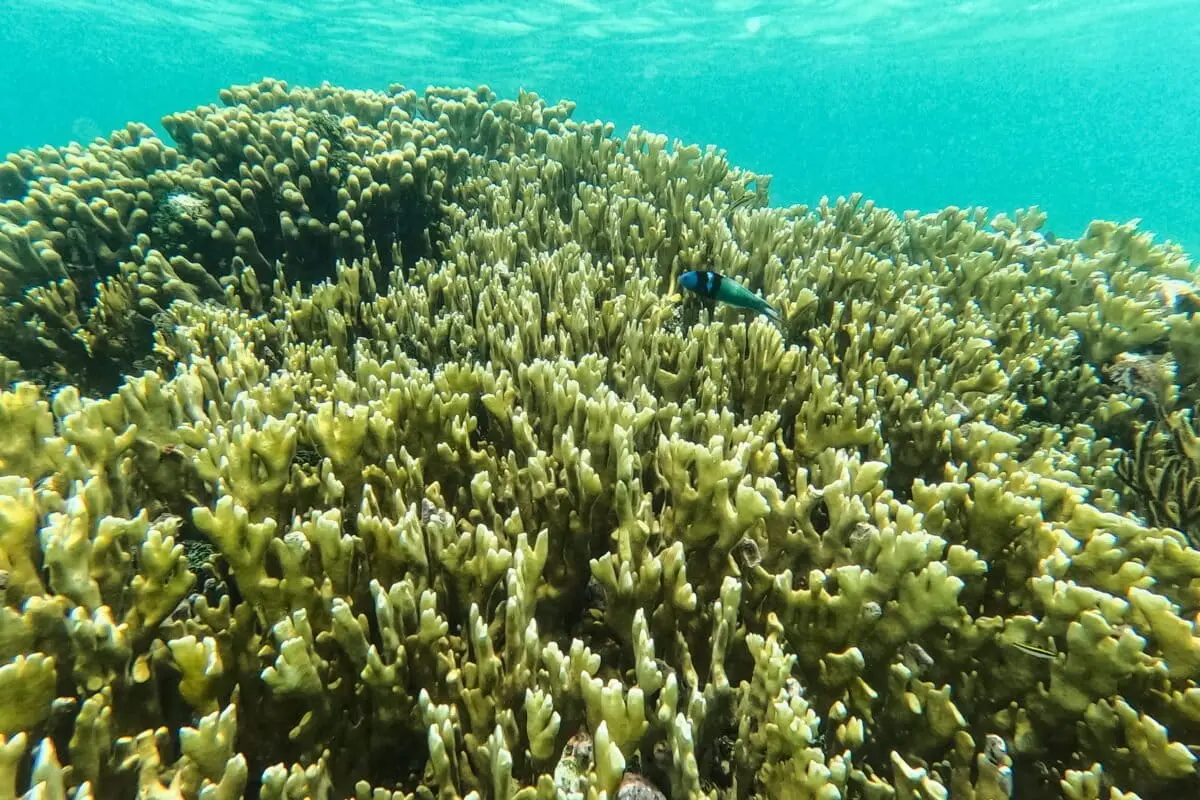
As the planet grapples with record-breaking temperatures, the symbiotic relationship between the ocean’s most vibrant ecosystems and the climate has reached a perilous tipping point. UN Secretary-General António Guterres has recently warned that the cyclical weather pattern known as El Niño is being “supersized” by a warming climate, creating a feedback loop that threatens to dismantle marine biodiversity. The United Nations Environment Programme (UNEP) has issued a stark assessment, likening coral reefs to an “overmatched boxer” taking repeated, heavy blows without the time to retreat and recover.
The crisis is no longer a distant projection; it is a current reality. With marine heatwaves increasing in frequency and intensity, the window for coral recovery is slamming shut, leaving scientists and policymakers racing to understand how—or if—these essential ecosystems can survive a decade of unprecedented thermal stress.
Main Facts: The Crisis of the ‘Recovery Window’
The fundamental challenge facing coral reefs today is not just the heat itself, but the frequency of its occurrence. Historically, coral reefs operated on a decadal cycle of disturbance and regrowth. When a major bleaching event occurred, the surviving polyps and new recruits typically had ten to fifteen years to rebuild the limestone architecture of the reef.
Today, that luxury has vanished. According to Manuel González Rivero, a reef expert at the Australian Institute of Marine Science (AIMS) and lead author of the Global Coral Reef Monitoring Network (GCRMN) report, the recovery window has shrunk to a mere five or six years. In many instances, particularly following the record-breaking marine heatwaves of 2023 and 2024, reefs are being hit by successive bleaching events with only a year of respite in between.
The Mechanism of Bleaching
Coral bleaching occurs when sea surface temperatures rise even slightly above the seasonal maximum. Corals, which are symbiotic organisms, expel the microscopic algae (zooxanthellae) living in their tissues. These algae provide the coral with up to 90% of its energy through photosynthesis and give the reefs their vibrant colors. Without them, the coral turns white and begins to starve. While bleaching is not an immediate death sentence, prolonged heat leads to mass mortality. If the heat subsides, corals can take back the algae, but this recovery process is energy-intensive and requires years of stable conditions to complete.
The 1.5°C Threshold
The Intergovernmental Panel on Climate Change (IPCC) has provided a grim outlook for tropical reefs. Even if global warming is successfully constrained to 1.5°C above pre-industrial levels, evidence suggests that 70% to 90% of existing warm-water coral reefs will disappear. If warming reaches 2°C, the loss is expected to be virtually total—exceeding 99%.

Chronology: From the ‘Harbinger’ to the Present Crisis
The history of mass coral bleaching is a relatively short but accelerating timeline that mirrors the curve of global carbon emissions.
1982–1983: The First Warning
The first large-scale mass coral bleaching event was recorded in the eastern tropical Pacific during the then-record-breaking El Niño of 1982-83. This event served as a "harbinger" for the future. In the Galapagos Islands, coral mortality reached a staggering 95% to 99%, effectively eliminating reefs from the southern islands. This region, often called "ground zero" for the El Niño-Southern Oscillation (ENSO), showed how extreme environmental changes could override the natural resilience of even the most robust marine systems.
1998: The First Global Event (GCBE1)
The 1998 El Niño triggered the first Global Coral Bleaching Event (GCBE1). It is estimated that 8% of the world’s total coral cover died during this single year. The Indian Ocean was particularly hard-hit, with some areas losing nearly all their shallow-water corals.
2009–2018: Persistent Decline
The following decade saw a further 14% loss in global coral cover. This period was marked by the third global event (2014–2017), which was the longest and most widespread on record, impacting reefs across all ocean basins.
2023–2025: The Current Crisis
We are currently witnessing the Fourth Global Coral Bleaching Event (GCBE4). During 2023 and 2024, global coral cover declined by an additional 8.9%. Experts note that the background ocean temperatures have risen so much that sea surface temperatures during current "cool" La Niña phases are now warmer than they were during El Niño events forty years ago.
2026–2027: The Predicted Peak
The World Meteorological Organization (WMO) has confirmed that El Niño is now "firmly established." Seasonal forecasts indicate a near 100% probability that El Niño conditions will persist through late 2026, peaking toward the end of that year. This suggests that the current bleaching cycle may be the most destructive yet, as it hits reefs that have had zero time to recover from the 2023-24 heatwaves.

Supporting Data: Regional Impacts and Indian Reefs
The impact of "supersized" El Niños is not uniform, but the overall trend is one of precipitous decline. Nowhere is this more evident than in the waters surrounding the Indian subcontinent.
The Lakshadweep Case Study
In India, the Lakshadweep archipelago has emerged as a focal point for climate research. A 24-year study conducted by the Nature Conservation Foundation (NCF) recorded a dramatic fall in coral cover, dropping from approximately 37% in 1998 to under 20% today.
Amruth P., a marine biologist at CHRIST University, Bengaluru, notes that the NCF study found a critical threshold for these reefs: they only show significant recovery when they receive at least six consecutive years free of bleaching. As the frequency of El Niño events increases, these six-year windows are becoming statistical anomalies.
Comparative Vulnerability in Indian Waters
A nationwide collaborative study led by NCF’s Wenzel Pinto revealed startling variations in how different Indian reef systems respond to heat:
- Lakshadweep: The worst-hit region, with up to 37% of coral cover bleached or dead between 2023 and 2025.
- Andaman Islands: The Mahatma Gandhi Marine National Park saw a lower mortality rate of 11.5%, suggesting local upwelling or currents may provide temporary "thermal refugia."
- Palk Bay: In a surprising reversal of biological norms, the typically vulnerable Acropora (branching corals) showed only 13.6% mortality, while the "hardier" Porites (boulder corals) suffered a 61.8% loss.
This data suggests that while the global trend is downward, local oceanographic conditions—such as water depth, turbidity, and current patterns—can significantly alter the fate of specific reef tracts.
Official Responses: A Call for Global and Local Action
The international community and local scientific bodies have reacted with increasing urgency to the "supersizing" of El Niño.

United Nations and WMO
UN Secretary-General António Guterres has used the coral crisis to reiterate the need for drastic cuts in fossil fuel consumption. The WMO-designated centers are now providing intensified seasonal forecasts to help nations prepare for extreme weather, but they acknowledge that for coral reefs, preparation options are limited compared to human infrastructure.
The GCRMN and ICRI
The Global Coral Reef Monitoring Network (GCRMN), under the International Coral Reef Initiative (ICRI), has called for a shift in conservation strategy. Instead of merely protecting reefs from local stressors like overfishing or pollution, there is a growing push for "active restoration"—including the breeding of heat-resistant coral strains—though many scientists warn this cannot scale fast enough to counter global warming.
The Indian "Call to Action"
In India, the scientific community has taken a stand. Recently, 188 ecologists and conservationists signed a "Call to Action" seeking a massive expansion in research and long-term monitoring. They argue that the 2026-27 El Niño represents a critical window for data collection that could determine the future of India’s marine policy. They are calling for:
- Standardized nationwide monitoring protocols.
- Increased funding for reef restoration projects.
- Stricter protection of "refugia" zones that have shown natural resilience to heat.
Implications: The High Stakes of Reef Loss
The disappearance of coral reefs is not merely an aesthetic or biological tragedy; it is a socio-economic catastrophe in the making.
Biodiversity and Fisheries
Coral reefs occupy less than 1% of the ocean floor but support more than 25% of all marine life. They serve as essential nurseries for commercial fish species. The collapse of these ecosystems threatens the food security of hundreds of millions of people globally, particularly in developing coastal nations and small island states.
Coastal Protection
Reefs act as natural breakwaters, absorbing up to 97% of wave energy. As El Niño events also bring more intense storms and rising sea levels, the loss of coral barriers leaves coastal communities—including major Indian cities like Mumbai and Chennai—increasingly vulnerable to catastrophic flooding and erosion.

The Adaptation Challenge
The findings by Pinto and other researchers suggest a future of "ecological winners and losers." Some reefs may adapt by shifting their species composition toward heat-tolerant varieties, but these "simplified" reefs may not provide the same level of ecosystem services as the diverse reefs of the past.
The fundamental conclusion of the current body of research is clear: the "supersized" El Niño is a symptom of a planet out of balance. While local conservation efforts are vital to give reefs a fighting chance, they are ultimately a "holding action." Without global climate stabilization, the boxing match between coral reefs and rising temperatures will have a predictable, and devastating, conclusion. The window for recovery is closing, and the time for intervention is now.
