

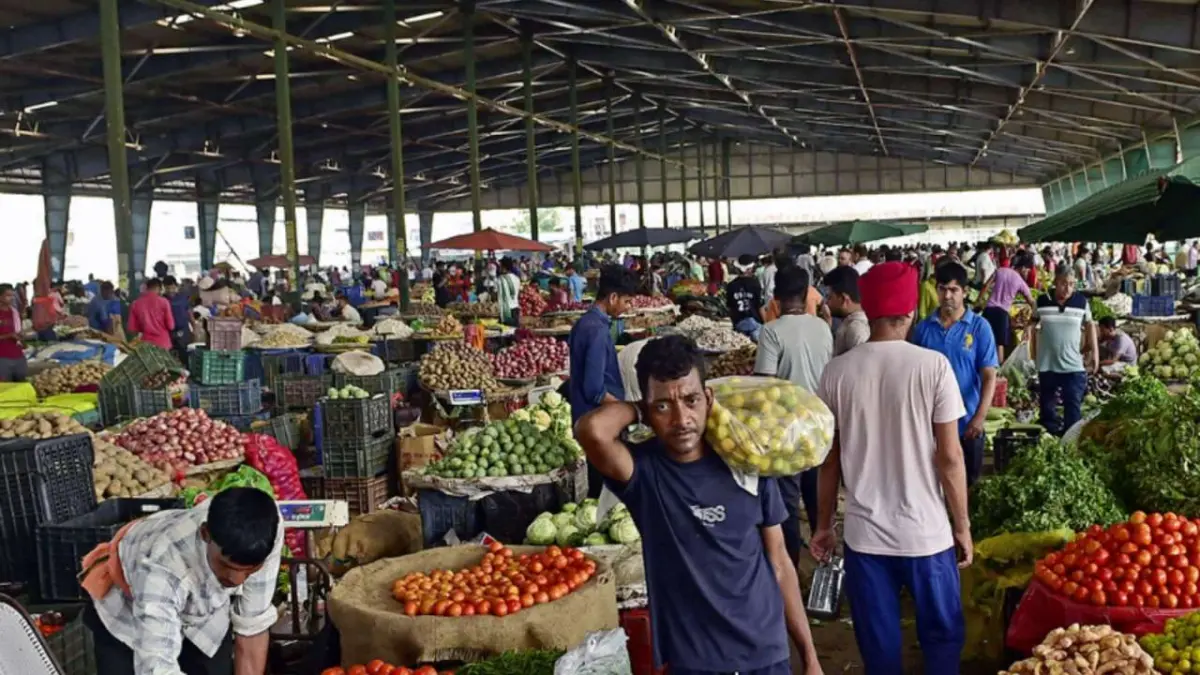
NEW DELHI, India – October 12, 2026 – India’s economic landscape is once again overshadowed by the specter of rising inflation, as new data released by the Ministry of Statistics and Programme Implementation (MoSPI) on Monday, October 12, 2026, revealed a significant uptick in consumer prices for September. Retail inflation, as measured by the Consumer Price Index (CPI), surged to 5.54% in September 2026, marking a notable increase from the 4.83% recorded in August. This accelerated pace of price rise, particularly the alarming jump in food inflation to 7.74%, is intensifying concerns among households already grappling with strained budgets and signaling a challenging path ahead for the Reserve Bank of India (RBI) regarding its monetary policy stance.
The latest figures paint a vivid picture of inflationary pressures permeating various sectors of the economy, driven primarily by an acute escalation in food prices. This persistent upward trajectory is expected to further erode the purchasing power of consumers, dampen demand, and necessitate decisive action from the central bank. Experts are now widely anticipating a continuation of the RBI’s rate hike cycle, with some forecasting multiple increases before the current financial year concludes.
Main Facts: Inflationary Pressures Intensify Across India
The headline retail inflation figure of 5.54% for September 2026 represents a sharp acceleration from the previous month’s 4.83%. This upward movement breaches critical psychological thresholds and brings inflation closer to the upper end of the RBI’s comfort zone, which typically aims to keep CPI within a band of 2-6%. The data, compiled using the newly adopted base year of 2024 for the Consumer Price Index, provides a fresh benchmark for understanding price movements within the Indian economy.
A deeper dive into the numbers reveals that the primary culprit behind this surge is food inflation. The Consumer Food Price Index (CFPI) witnessed a substantial leap, climbing to 7.74% in September from 5.97% in August. This significant increase underscores the immediate and tangible impact on the daily lives of millions of Indians, for whom food constitutes a major portion of their household expenditure. The inflationary impact is not uniformly distributed, with rural areas bearing a disproportionately higher burden. Retail inflation in rural India stood at 6.08%, while urban areas experienced a slightly lower, yet still concerning, rate of 4.88%. Similarly, food inflation was more pronounced in rural regions at 8.06%, compared to 7.18% in urban centers, highlighting potential disparities in supply chains, access, and pricing across the country.
This renewed inflationary pressure is not merely a statistical anomaly but a critical economic challenge that directly threatens household financial stability and casts a shadow over the nation’s growth prospects. The immediate concerns revolve around the erosion of purchasing power for essential goods, forcing families to re-evaluate their spending habits and potentially cut back on discretionary items. For the central bank, these figures present a clear dilemma: how to tame inflation without unduly stifling nascent economic growth.
Chronology of Rising Prices: A Persistent Challenge
The recent surge in September 2026 is not an isolated event but rather the latest chapter in India’s ongoing battle against inflationary pressures that have persisted through much of the current year. While the specific data provided in this report focuses on the month-on-month jump from August to September, it is crucial to view this development within a broader chronological context of sustained price increases.
The adoption of a new base year, 2024, for the Consumer Price Index by MoSPI, is itself a significant update. Base years are periodically revised to reflect changes in consumption patterns and the structure of the economy, ensuring that the inflation basket accurately represents household spending. While this revision provides a more contemporary measure, it also means that comparisons with data from older base years must be made with caution, focusing more on the trend and magnitude of change rather than direct numerical comparisons across different base periods. The fact that inflation has picked up so sharply even with a revised, potentially more accurate, basket signals genuine underlying pressures.
Throughout the preceding months of 2026, the Indian economy has contended with a confluence of factors contributing to price volatility. Global commodity prices, particularly crude oil, have remained elevated, exerting upward pressure on transportation costs and, consequently, on the prices of a wide array of goods. Geopolitical tensions and supply chain disruptions, a lingering aftermath of global events, have further exacerbated these cost-push factors. Domestically, monsoon performance has played a critical role, especially in agricultural output. Reports of a "poor monsoon" in certain regions leading up to September suggest direct impacts on crop yields, which then translate into higher food prices as supply dwindles relative to demand.
The depreciating rupee has added another layer of complexity. A weaker domestic currency makes imports more expensive, leading to "imported inflation." This is particularly relevant for commodities like crude oil, where India is a net importer. As the rupee loses value against major international currencies, the cost of these essential imports rises, feeding into domestic production costs and consumer prices.
The Reserve Bank of India, in its previous Monetary Policy Committee (MPC) meetings, has consistently articulated its primary mandate of maintaining price stability while supporting economic growth. Leading up to September 2026, the RBI has likely been on a tightening path, raising interest rates to curb demand-side inflationary pressures and anchor inflation expectations. The September figures, however, suggest that these measures, while necessary, have yet to fully contain the persistent and multifaceted drivers of inflation. The continued stickiness of commodity prices and rising global yields, as noted by experts, indicate that the external environment remains challenging, requiring a sustained and perhaps more aggressive monetary policy response from the RBI. The trajectory from August’s 4.83% to September’s 5.54% CPI, and the even steeper climb in food inflation, points to an intensifying battle that shows no signs of abating in the immediate future.
Supporting Data: A Granular Look at Price Increases
The MoSPI data provides a detailed breakdown of the inflationary landscape, highlighting which categories and regions are experiencing the most significant price pressures. This granular analysis is crucial for understanding the underlying dynamics and formulating targeted policy responses.
Disparities in Rural vs. Urban Inflation
As noted, the inflationary burden is not evenly distributed. Rural areas faced a higher overall retail inflation rate of 6.08% compared to 4.88% in urban areas. This rural-urban divide is even more pronounced in food inflation, with the Consumer Food Price Index (CFPI) hitting 8.06% in rural regions against 7.18% in urban centers. This disparity is often attributed to several factors, including:
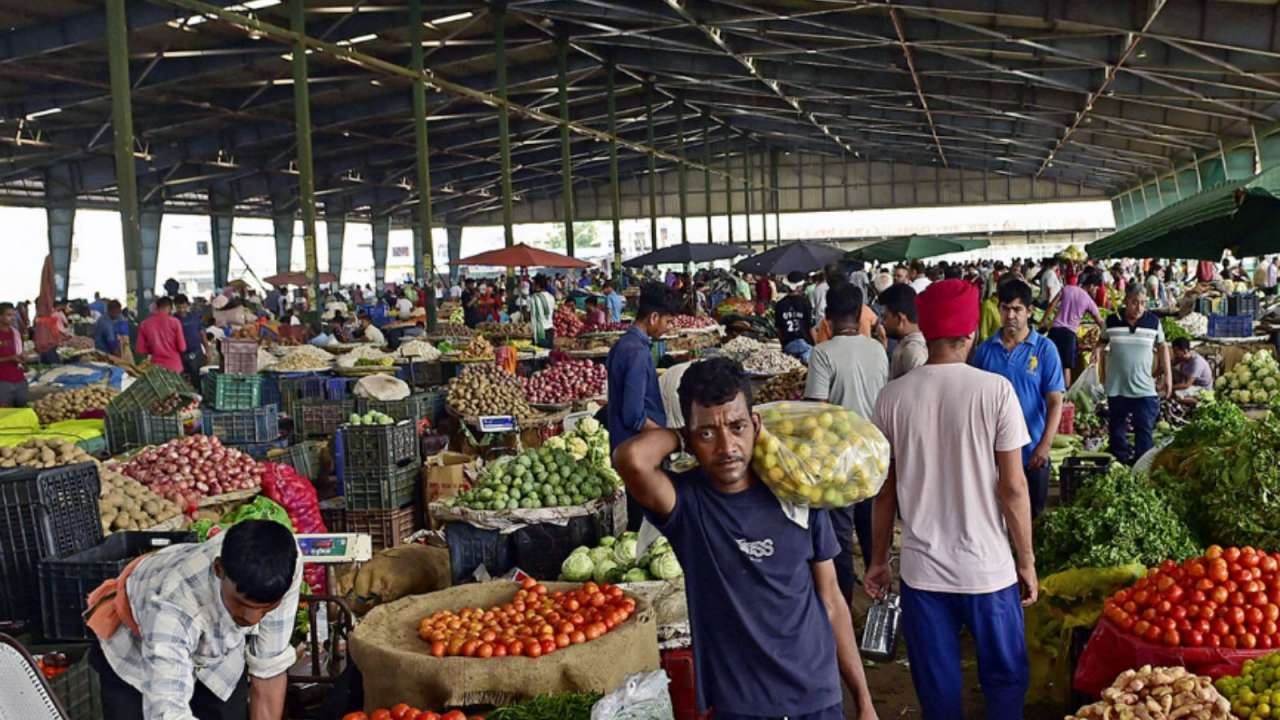
- Supply Chain Inefficiencies: Rural markets might have less efficient logistics, leading to higher transportation costs for bringing goods from production centers.
- Monsoon Dependency: Rural economies are often more directly dependent on agriculture, making them more vulnerable to adverse weather conditions that impact local food production and prices.
- Consumption Basket Differences: Rural households typically spend a larger proportion of their income on essential food items, making them more susceptible to food price shocks.
Item-Wise Inflation: The Spikes and the Dips
The breakdown of specific commodities offers a stark illustration of where inflationary pressures are most acutely felt:
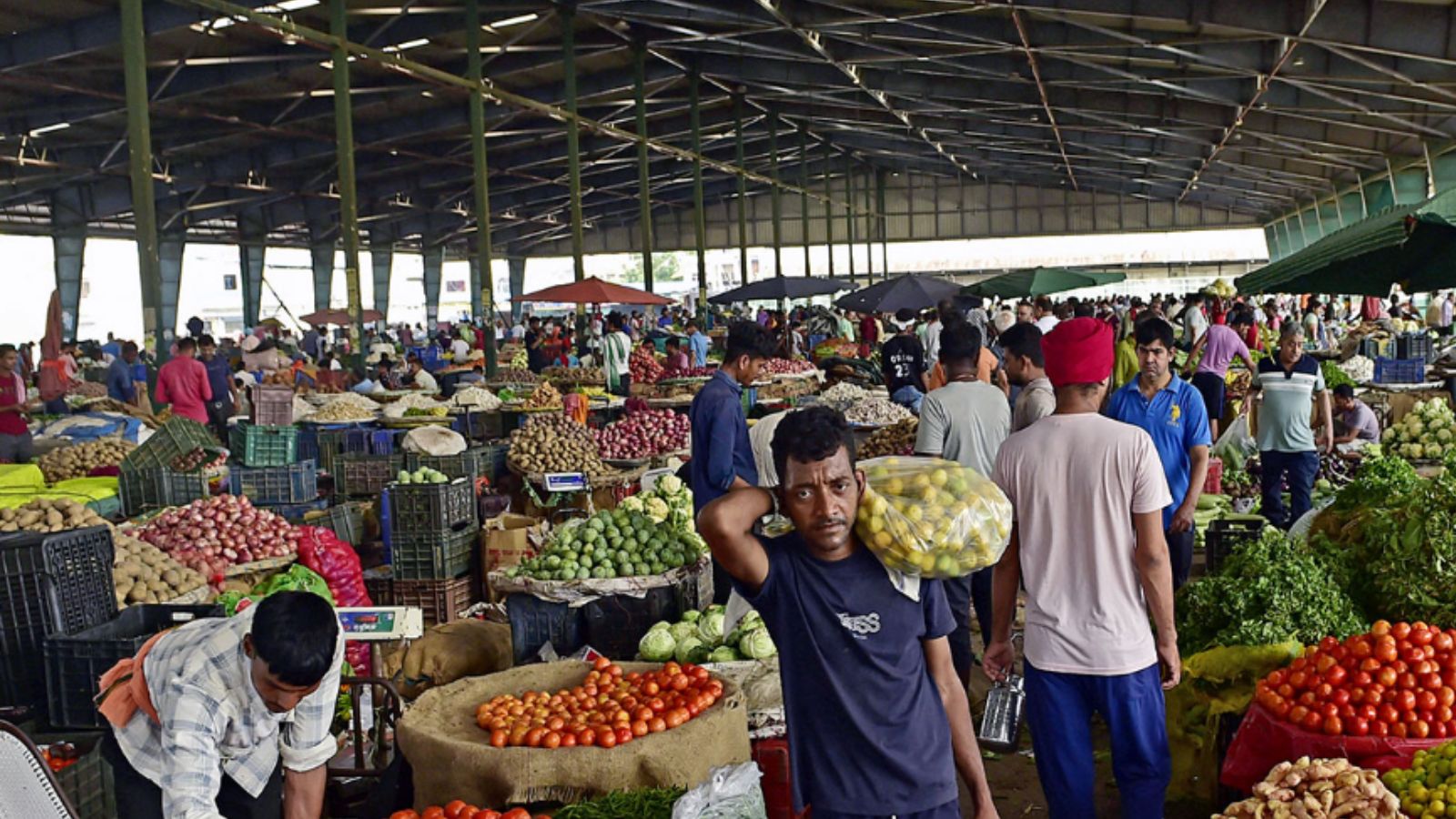
- Onions: The most dramatic increase was seen in onion prices, with inflation soaring to an astonishing 108.09% in September, a significant jump from 48.78% in August. This hyperinflation in a staple vegetable is particularly concerning, as onions are integral to Indian cuisine and their price volatility has historically been a politically sensitive issue. Such a surge is typically indicative of severe supply shortages, often linked to adverse weather conditions impacting harvests, storage issues, or disruptions in market supply chains.
- Precious Metals and Spices: Silver jewellery recorded a substantial inflation rate of 87.80%. While not a daily essential, this figure might reflect broader commodity price trends, particularly for precious metals, or increased demand as a hedge against economic uncertainty. Essential spices like ginger and garlic also saw significant price increases, at 62.85% and 54.62% respectively, impacting the cost of everyday cooking. Lemon prices also jumped by 36.41%. These increases in common ingredients underscore the widespread nature of food price pressures.
- Deflationary Items: In contrast, some items recorded deflation, offering a small respite. Potato prices continued their downward trend, with deflation at 11.50% in September (compared to 13.15% in August), suggesting a robust supply. Tomato prices also fell by 8.62%. Among non-food items, motor cars and jeeps saw deflation of -4.51%, possibly due to competitive market conditions, inventory adjustments, or a slight dip in discretionary spending on big-ticket items. Lady’s finger (okra) and coconut also recorded deflation of 4.48% and 3.99% respectively, indicating healthy harvests or sufficient supply for these particular produce items.
The contrasting movements—hyperinflation in staples like onions and certain spices versus deflation in others like potatoes and tomatoes—highlight the complex and often localized nature of agricultural markets and supply dynamics. While some seasonal produce might see price corrections due to good harvests, systemic issues affecting broader food categories continue to drive the overall food inflation higher.
State-wise Inflation: Regional Disparities
The data also reveals significant variations in retail inflation across major Indian states and union territories, underscoring the regional nuances of price dynamics:
- Highest Inflation: Puducherry recorded the highest combined retail inflation at 6.86%, followed closely by Odisha at 6.70% and Madhya Pradesh at 6.68%. These states might be facing specific regional supply challenges, higher transportation costs, or local demand-supply imbalances that contribute to elevated price levels.
- Mid-Range: Uttar Pradesh reported a combined inflation of 6.08%, while Maharashtra stood at 5.18%. These figures are above the national average in some cases or close to it, indicating broad-based inflationary pressures.
- Lowest Inflation: Delhi experienced the lowest combined inflation at 3.40%. This relatively lower rate in the national capital could be attributed to a more efficient supply chain for essential goods, higher market competition, or potentially different consumption patterns compared to other states.
These regional disparities are critical for policymakers, as they suggest that a one-size-fits-all approach to inflation management might not be entirely effective. Localized interventions, alongside broader monetary policy, may be necessary to address specific regional challenges.
MoSPI has emphasized that the CPI data for September 2026 is provisional. The next set of retail inflation data, pertaining to October 2026, is scheduled for release on November 12, 2026, or the next working day if that date falls on a holiday. This upcoming release will be crucial in determining whether the September surge was a temporary spike or indicative of a more entrenched inflationary trend.
Official Responses and Expert Analysis: A Consensus on Further Tightening
While direct official responses from the government or the Reserve Bank of India on the specific September 2026 figures are typically delayed until subsequent policy reviews, the implications of these numbers are clear and have been widely discussed by leading economists and financial strategists. The consensus points towards a firm stance from the central bank to combat inflation.
The Ministry of Statistics and Programme Implementation (MoSPI) plays a pivotal role in providing the foundational data that informs economic policy. By releasing these provisional figures, MoSPI ensures transparency and enables timely analysis by experts and policymakers. The upcoming release of October data will be keenly watched for further trends.
The Reserve Bank of India (RBI) operates under an inflation-targeting framework, aiming to keep CPI inflation at 4% with a tolerance band of +/- 2%. The September figure of 5.54% falls within this band but is closer to the upper limit, especially when considering the significant increase from August. Crucially, Dr. V K Vijayakumar, Chief Investment Strategist at Geojit Investments Limited, noted that the 5.54% September CPI print "came on expected lines" and is "in line with RBI’s forecast for Q3 CY2026." This suggests that while the number is high, it aligns with the central bank’s internal projections, indicating their awareness of the building pressures. However, even if anticipated, the actual realization of these high figures solidifies the need for responsive action.
Economists are largely unified in their assessment that the RBI will be compelled to continue its monetary tightening cycle. Garima Kapoor, Deputy Head of Research and Economist at Elara Capital, highlighted that "CPI inflation came in line with expectations as higher food and energy prices continued to feed into broader metrics." She explicitly stated, "Amid continued stickiness in commodity prices and rising global yields, we expect the RBI to continue to remain firmly on a path of rate hikes. We see another 2 hikes from the RBI this financial year." This forecast of two additional rate hikes underscores the perceived urgency and the RBI’s commitment to prioritizing inflation control.
Dr. V K Vijayakumar echoed this sentiment, emphasizing the multifaceted drivers of current inflation. He pointed to "rising crude oil prices, escalating food prices triggered by the poor monsoon and imported inflation arising from a depreciating rupee" as the "principal factors driving inflation." His analysis converges with Kapoor’s on the expected central bank action: "The RBI will have to go for two more rate hikes in this rate-hiking cycle unless crude prices fall steeply." The conditional "unless crude prices fall steeply" highlights the critical role of external factors, particularly global oil prices, in influencing domestic inflation and, consequently, the RBI’s policy decisions.
Both experts agree on the severe consequences of sustained high inflation. Vijayakumar specifically warned that "High inflation will certainly impact people’s purchasing power, which, in turn, will impact rural demand, too. FMCG demand is likely to be impacted." This direct link between inflation, purchasing power, and consumer demand is a major concern for the broader economy.
In essence, the expert consensus points to a challenging environment where external shocks (crude oil, global yields, rupee depreciation) combine with domestic factors (poor monsoon, supply chain issues) to fuel inflation. The RBI is expected to respond with further interest rate increases, prioritizing price stability, even if it means potentially moderating economic growth in the short term. The consistent messaging from these economists indicates that the market is already pricing in a more hawkish stance from the central bank.
)
Implications: Far-Reaching Consequences for India’s Economy
The sustained surge in inflation, particularly the sharp increase observed in September 2026, carries profound implications across various facets of the Indian economy, affecting households, businesses, and the nation’s overall growth trajectory.
For Households: Erosion of Purchasing Power and Budgetary Strain
The most immediate and tangible impact of rising inflation is felt by ordinary households. When prices of essential goods, especially food, climb steeply, the purchasing power of their income diminishes. Families find that their salaries buy less, forcing them to either cut back on consumption or dip into savings. This is particularly acute for low and middle-income groups, who allocate a larger portion of their budget to necessities like food, fuel, and utilities. The staggering 108.09% inflation in onions, coupled with significant increases in other common spices and vegetables, directly translates into higher grocery bills and immense strain on household budgets.
The rural-urban inflation disparity also implies that rural households, often with lower and less stable incomes, are disproportionately affected. This can exacerbate income inequality and lead to a decline in living standards for a significant portion of the population. Reduced disposable income also means less spending on non-essential goods and services, impacting discretionary consumption and overall consumer demand, which is a key driver of economic growth.
For Businesses: Cost Pressures and Demand Contraction
Businesses face a dual challenge from elevated inflation. Firstly, they grapple with increased input costs. Rising crude oil prices push up transportation and manufacturing expenses. Higher raw material costs, especially for agricultural commodities, directly affect food processors and consumer goods manufacturers. Businesses, in turn, may be forced to pass these increased costs onto consumers through higher prices, further fueling the inflationary spiral, or absorb them, which erodes profit margins.
Secondly, the erosion of consumer purchasing power leads to a contraction in demand, particularly for non-essential goods and services. As Dr. Vijayakumar noted, "FMCG demand is likely to be impacted." Fast-moving consumer goods (FMCG) companies, which cater to daily necessities, often see consumers down-trading to cheaper alternatives or reducing consumption during inflationary periods. This demand slowdown can affect sales volumes, revenue growth, and ultimately, investment and job creation. Businesses may delay expansion plans or even cut back on production if demand weakens considerably.
For the Economy: Growth Concerns and Policy Dilemmas
From a macroeconomic perspective, sustained high inflation poses a significant threat to stable economic growth. The combination of reduced consumer demand, increased business costs, and potentially higher interest rates can dampen investment and slow down the overall pace of economic activity. If not effectively managed, there is a risk of entering a period of stagflation – a challenging scenario characterized by high inflation coupled with low economic growth.
The RBI faces a delicate balancing act. Its primary mandate is price stability, which often necessitates monetary tightening (raising interest rates). However, aggressive rate hikes, while effective in cooling demand and taming inflation, can also slow down economic growth by making borrowing more expensive for businesses and consumers. The experts’ predictions of two more rate hikes highlight the RBI’s commitment to inflation control, but this will undoubtedly come with implications for the cost of capital and overall credit growth in the economy.
Furthermore, persistent imported inflation due to a depreciating rupee means that even if domestic demand is cooled, external factors can continue to exert upward pressure on prices. This adds another layer of complexity to the RBI’s policy decisions, as some inflationary drivers are beyond the direct control of domestic monetary policy.
Future Outlook: A Path Fraught with Challenges
The immediate future appears challenging. The next set of CPI data for October 2026, due on November 12, 2026, will be crucial in determining whether the September surge was an anomaly or part of a more entrenched trend. For inflation to moderate significantly, several conditions would need to materialize:
- Stabilization of Global Commodity Prices: A sustained fall in international crude oil prices would alleviate significant cost-push pressures.
- Improved Agricultural Output: A good Rabi crop season, following the potentially poor monsoon, could help stabilize food prices.
- Stronger Rupee: A reversal in the rupee’s depreciation would mitigate imported inflation.
- Effective Supply-Side Management: Government interventions to address supply chain bottlenecks and ensure efficient distribution of essential goods could also play a role.
However, given the current global economic uncertainties, geopolitical tensions, and domestic agricultural vulnerabilities, the path to sustained price stability remains fraught with challenges. The September 2026 inflation figures serve as a stark reminder of the persistent economic headwinds facing India and underscore the imperative for vigilant monitoring and proactive policy responses from both fiscal and monetary authorities to safeguard economic stability and protect the welfare of its citizens.
