

In the sprawling concrete jungle of Gurugram, where glass-fronted skyscrapers and high-rise apartments dominate the horizon, a quiet revolution is taking root along the periphery of a few discerning households. While most urban dwellers have retreated behind sterile brick walls and iron grills, a handful of residents are rediscovering an ancient, ecological alternative: the living fence.
Landscape architect Sonali Dahotre, in her comprehensive new volume The Living Fence, argues that these green boundaries are far more than aesthetic choices. They are vital ecological corridors, micro-habitats, and defensive structures that have shielded human settlements for millennia. As India faces the dual threats of rapid urbanization and climate change, Dahotre’s work serves as both a historical record and a practical manual for reintroducing nature into our immediate surroundings.
Main Facts: Defining the Living Frontier
At its simplest, a living fence is a row of plants grown along a property boundary to serve as a natural barrier. However, as Dahotre explains, the terminology varies based on the level of human intervention. A hedge typically consists of a single species, meticulously pruned and groomed to maintain a uniform, formal appearance. In contrast, a hedgerow is a more diverse assembly of multiple species—trees, shrubs, and climbers—allowed to grow into their natural forms.
The benefits of these green walls are manifold. Unlike concrete, which absorbs and radiates heat, living fences act as natural cooling systems. They provide:
- Security and Privacy: Thorns and dense foliage offer a formidable physical barrier.
- Biodiversity Refuges: They provide nesting sites for birds like bulbuls, and habitats for squirrels, butterflies, and bees.
- Climate Mitigation: They act as windbreakers, dust filters, and carbon sinks.
- Hydrological Management: In urban settings, they interrupt the flow of rainwater, allowing it to percolate into the soil rather than contributing to the "open drain" phenomenon seen on modern city roads during monsoons.
Despite these advantages, the tradition of living fences in India began to decline sharply in the early 1990s. As land prices skyrocketed and the socio-economic divide between neighborhoods widened, the "soft" boundaries of jasmine and hibiscus were replaced by "hard" boundaries of stone and mortar.
Chronology: From Ancient Fortifications to Modern Landscapes
The history of the living fence is as old as civilization itself. Dahotre traces the lineage of these structures across continents and eras, proving that the "green wall" was once a peak form of military and agricultural technology.
![Reclaiming nature’s many delights through living fences [Book Review]](https://imgs.mongabay.com/wp-content/uploads/sites/30/2026/10/09171446/Carissa-scaled-e1791546473535-1200x800.jpg)
Ancient and Classical Origins
The earliest written records of living fences date back to the 5th century BCE. The Greek philosopher Democritus detailed the creation of inexpensive, effective hedges using seeds of brambles, white thorn, and barberry. In the military sphere, Julius Caesar, during his 57 BCE campaign in Gaul, described the "fortified hedges" of the Nervii tribe. These were not merely garden borders but impenetrable walls of bent trees interwoven with thorns, designed to stop both the sight and movement of the Roman legions.
The Indian Context: From Kautilya to the Maharajas
While Indian texts may not use the modern term "hedgerow," the concept is deeply embedded in ancient land management. Kautilya’s Arthashastra mentions village boundaries defined by forests, bulbous plants, and trees like the salmali (silk cotton) and kshiravriksha (milky trees).
By the 18th century, living fences were being used as massive defensive infrastructures. Maharaja Devaraja Wodeyar II of Mysore established a legendary defensive hedge around the Bengaluru Pettah. This was no mere shrubbery; it was a 73-meter-wide barrier of thorny vegetation encircled by a deep ditch, designed to thwart invaders. Similarly, in Pondicherry, the French maintained a boundary hedge of large aloes and thorny plants, which the historian Robert Orme described as "impenetrable to the cavalry."
The European Transition
In the United Kingdom, hedgerows became the defining feature of the countryside, marking the Enclosure Acts. However, following World War II, many were ripped out to make way for industrial-scale farming. It was only in the late 20th century that the ecological catastrophe of this removal was realized, leading to modern laws in England and Wales that now protect hedgerows as vital heritage and biological assets.
Supporting Data: The Biodiversity Powerhouse
The ecological value of a living fence is best understood through the sheer volume of life it supports. Dahotre cites the work of British ecologist Robert Wolton, who conducted a two-year study on a single hedgerow near his home. His findings were staggering: the hedge was home to or visited by 2,070 species, ranging from mammals and birds to fungi, mosses, and insects.
In the Indian urban context, these fences serve as "stepping stones" for wildlife. In Gurugram, a single hedgerow of hibiscus and kanak champa (Pterospermum acerifolium) can host:
![Reclaiming nature’s many delights through living fences [Book Review]](https://imgs.mongabay.com/wp-content/uploads/sites/30/2026/10/09172324/CALOTROPIS-768x512.jpg)
- Pollinators: Bees and butterflies attracted to the nectar.
- Avifauna: Sunbirds, bulbuls, and sparrows that use the dense interior for nesting.
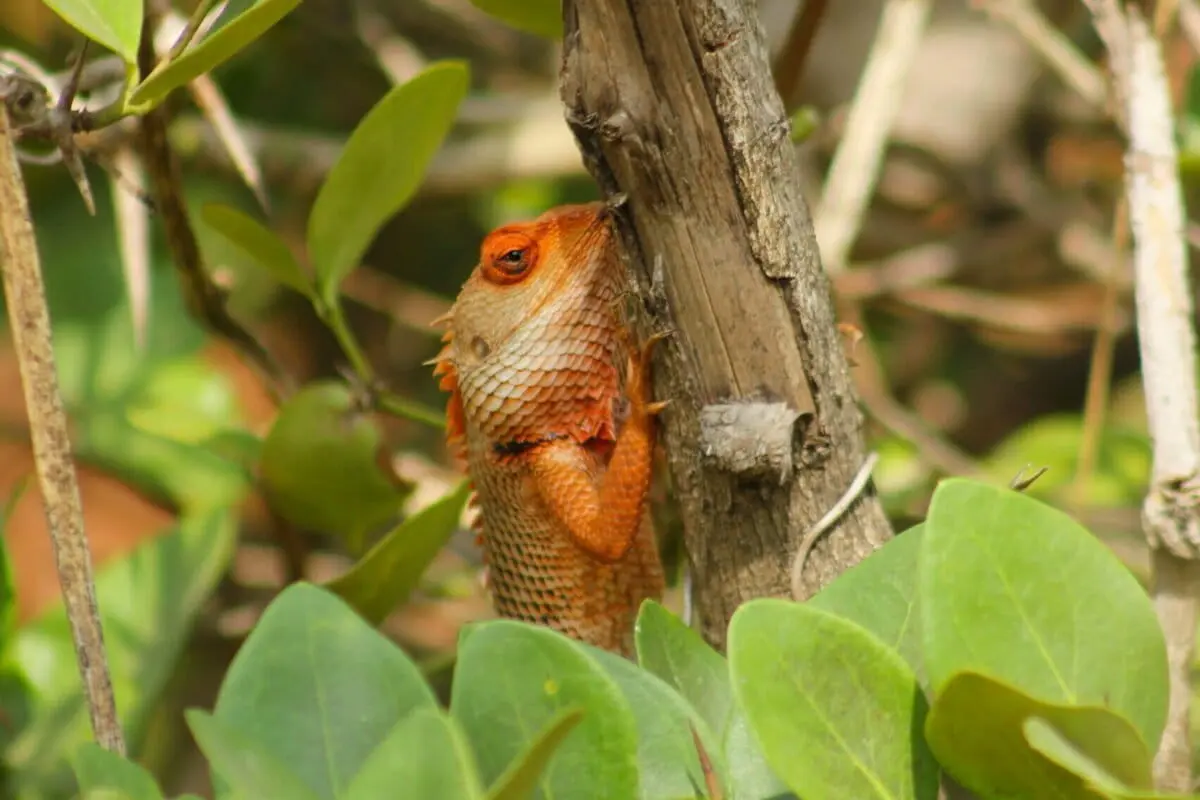
- Reptiles and Amphibians: Garden lizards (Calotes) and, in larger rural hedges, even chameleons.
- Carbon Sequestration: By capturing CO2 and storing it in biomass and the soil, a city-wide network of living fences could significantly offset urban carbon footprints.
Furthermore, the book highlights the "contour trench" effect. When plants are grown directly in the soil rather than in raised planters, they allow rainwater to linger. This reduces the velocity of urban runoff, which is a primary cause of the flash flooding that currently plagues Indian metros every monsoon.
Expert Perspectives: A Guide to Reclaiming Green Space
Dahotre’s book is not merely a theoretical treatise; it is a 368-page practical guide aimed at landscape architects, foresters, and homeowners. She emphasizes that the choice of species is critical to the success of a living fence.
Selection of Species
The book provides a detailed catalog of plants suited for the Indian climate. For example:
- Rosa brunonii (Himalayan Musk Rose): Known locally as chal or phulwari, this plant offers fragrant white flowers and orange-red fruits. It is ideal for creating fragrant, thorny barriers that can be trained into arches.
- Bauhinia racemosa (Bidi Leaf Tree): This hardy species thrives in rocky and arid soils. Beyond its physical barrier properties, it has deep cultural roots; its leaves are exchanged during Dussehra in Maharashtra and Goa as a symbol of gold.
- Thorny Succulents: Species like Opuntia and Euphorbia are recommended for rural areas where they serve as "green manure" and deter grazing livestock.
The Invasive Warning
However, Dahotre issues a stern warning against certain popular choices. Lantana camara and Tecoma species, while excellent at forming dense, low-maintenance barriers that attract birds, are highly invasive. Their tendency to outcompete native flora makes them "ecologically destructive" in the long run. The book advocates for a "native-first" approach to ensure the fence supports the local ecosystem rather than overwhelming it.
Implications: The Future of Urban and Rural Landscapes
The reintroduction of the living fence has profound implications for the future of Indian living. As cities expand, the "heat island effect" becomes a matter of public health. Concrete walls contribute to this by trapping heat; living fences mitigate it through evapotranspiration.
Socio-Economic Benefits in Rural India
In the rural sector, the implications are economic. A living fence is a "multipurpose asset." It provides:
![Reclaiming nature’s many delights through living fences [Book Review]](https://imgs.mongabay.com/wp-content/uploads/sites/30/2026/10/09172439/Hedge-aloe-768x512.jpg)
- Fodder and Fuelwood: Regular pruning provides resources for livestock and cooking.
- Medicinal Resources: Many hedge plants have pharmacological properties used in traditional medicine.
- Flood Protection: In the Gangetic plains of Bihar, planting bamboo parallel to rivers has been shown to slow floodwaters and protect homesteads from erosion.
A Shift in Urban Philosophy
For the urban resident, the move toward a living fence represents a shift in philosophy—from a mindset of "exclusion" to one of "coexistence." While a brick wall is a dead space, a living fence is a dynamic, evolving entity.
Dahotre’s The Living Fence arrives at a critical juncture. As urban roads turn into "open drains" and the sounds of nature are drowned out by construction, the humble hedge offers a path back to resilience. It suggests that the solution to our modern environmental crises may not lie in more concrete and technology, but in the ancient wisdom of the hedgerow—a boundary that doesn’t just divide, but breathes.
The only minor critique noted by readers is the book’s small font size—a small price to pay for a volume that is otherwise a "visual treat" and a vital blueprint for a greener, more sustainable India. Through this work, the living fence is poised to move from the fringes of our memory back to the center of our landscapes.
