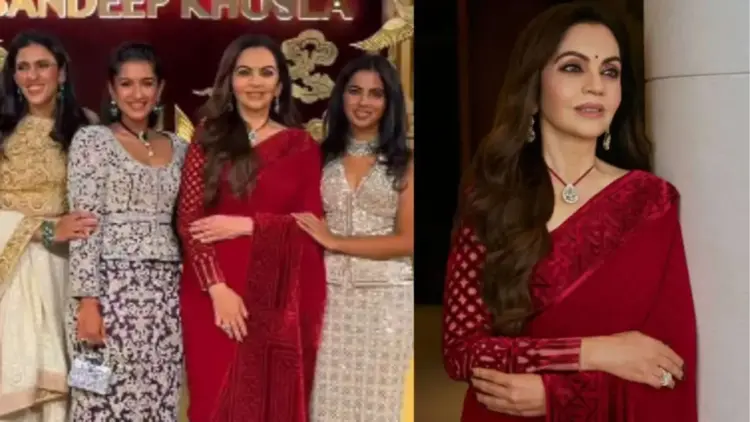
Mumbai, India – September 7, 2026 – The glittering tapestry of Mumbai’s social elite was further illuminated on September 6th as renowned fashion designers Abu Jani and Sandeep Khosla celebrated their illustrious 40-year journey in the world of haute couture. The milestone event, held at the opulent Mubarak Baug, the duo’s newly inaugurated flagship store, saw a constellation of stars from the realms of business, fashion, and cinema. However, it was the captivating presence of Nita Ambani, wife of Reliance Industries Chairman Mukesh Ambani, that truly commanded the spotlight, her exquisite choice of attire a testament to timeless elegance and sartorial mastery.
A Crimson Statement: Nita Ambani’s Regal Ensemble
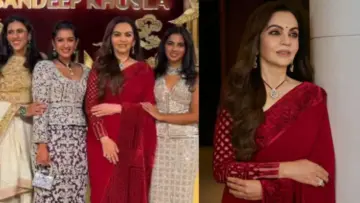
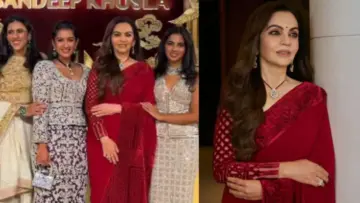
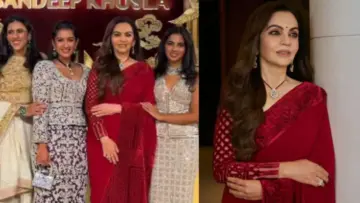
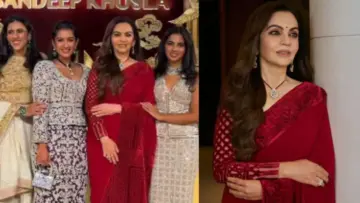
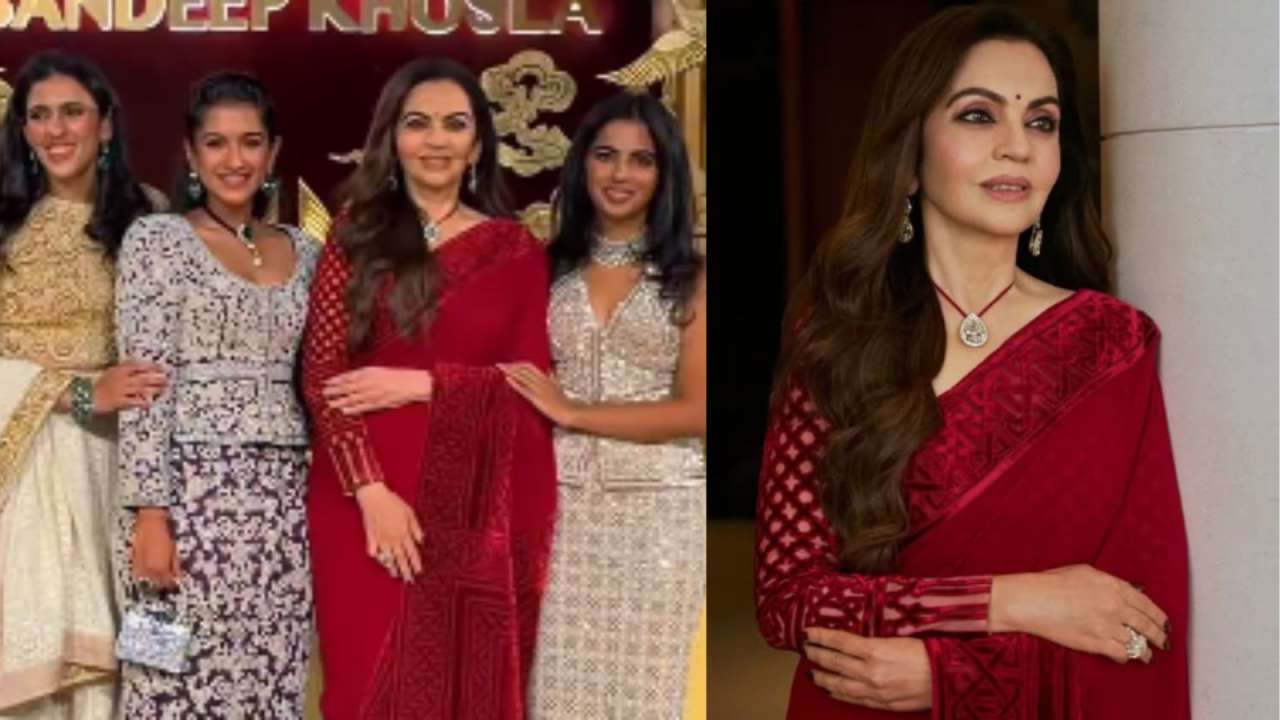
Nita Ambani arrived at the celebration draped in a breathtaking crimson saree, a hue that exuded both power and grace. The deep, rich shade of red was the perfect canvas for the intricate geometric detailing that adorned its border and pallu, adding a layer of sophisticated complexity to the otherwise solid, vibrant fabric. This meticulously crafted saree, a likely creation from the celebrated design house itself, lent an undeniable regal flair to her appearance.
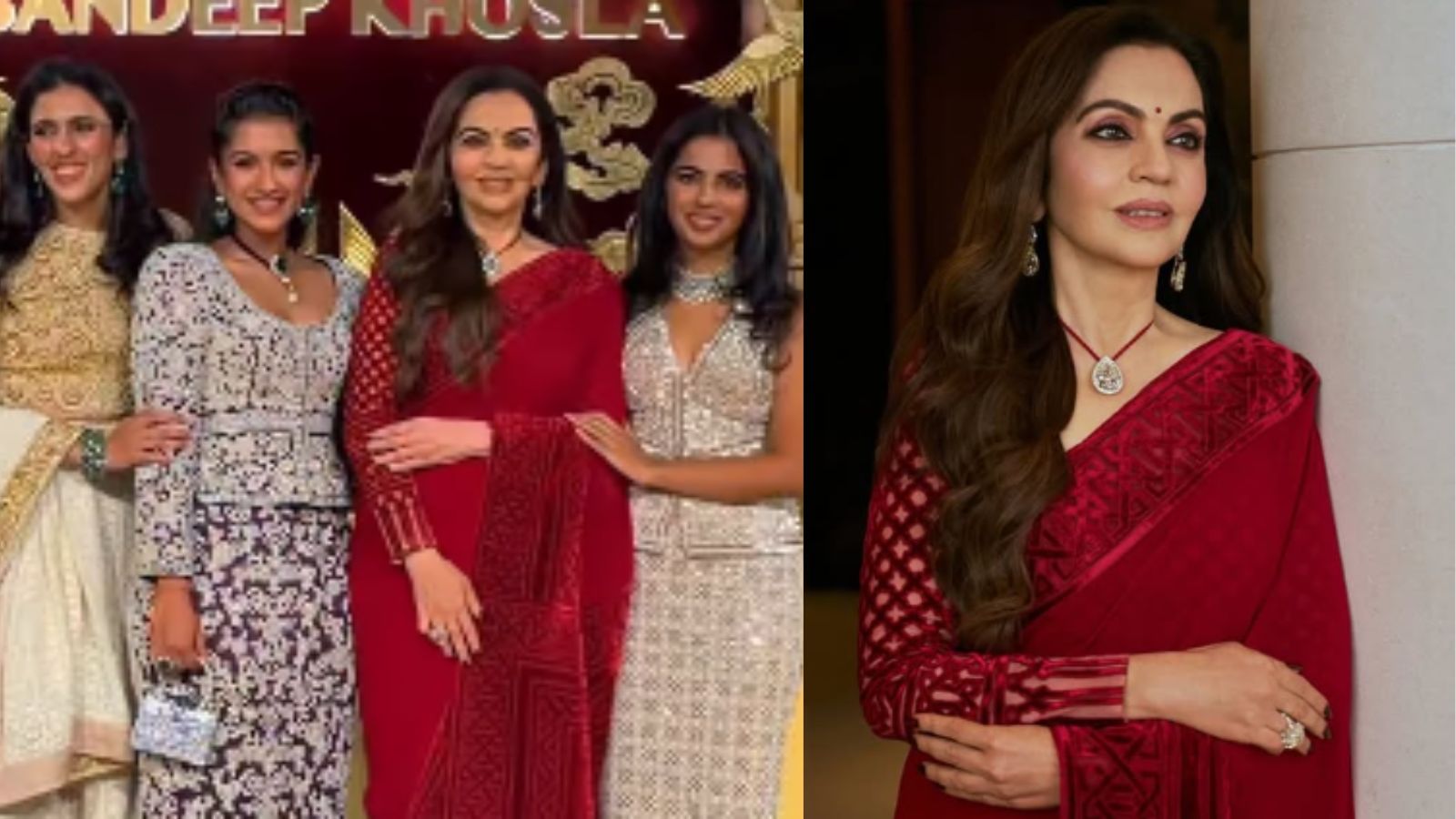)
Complementing the resplendent saree was a matching full-sleeved blouse, also featuring elaborate embroidery that seamlessly integrated with the saree’s design. The cohesive nature of the ensemble created a polished and festive look, perfectly befitting the celebratory occasion. The crimson hue, often associated with auspiciousness and celebration in Indian culture, was a powerful choice, resonating with the grandeur of the event and the legacy of the designers being honored.

Subtle Sparkle: The Art of Minimalist Adornment
In a move that underscored the power of her chosen attire, Nita Ambani opted for a strategy of minimalist adornment. This deliberate choice allowed the crimson saree to take center stage, its intricate details and vibrant color speaking volumes. Her jewelry, though understated, was impeccably selected. A delicate red-thread necklace, punctuated by a dazzling diamond pendant, added a touch of understated luxury. Matching drop earrings echoed the pendant’s design, further enhancing her refined aesthetic. A single statement ring provided a subtle yet effective sparkle.
)
Her beauty look was equally considered. Nita Ambani’s hair was styled in soft, flowing waves, framing her face and adding a touch of effortless glamour. Her makeup was expertly applied, featuring defined eyes that conveyed a sense of poise, a warm-toned blush that imparted a healthy glow, and a glossy nude-pink lip that added a touch of modern sophistication. A classic red bindi, a quintessential element of Indian traditional wear, completed her look, tying together the elements of classic elegance and contemporary style. This meticulous attention to detail, from the fabric to the final flourish of a bindi, cemented her status as a style icon.
)
A Legacy Unveiled: Abu Jani Sandeep Khosla’s Four Decades of Design
The event was not merely a social gathering but a significant commemoration of Abu Jani and Sandeep Khosla’s four-decade-long reign as pioneers in Indian couture. Since their inception in 1986, the designer duo has consistently pushed the boundaries of fashion, infusing traditional Indian crafts with a contemporary sensibility. Their work is characterized by an unparalleled mastery of embroidery, an exquisite eye for detail, and a bold yet elegant aesthetic that has adorned royalty, celebrities, and discerning clients across the globe.
)
The celebration of their 40th anniversary coincided with the grand opening of Mubarak Baug, their expansive new flagship store in Mumbai. This state-of-the-art establishment, spanning an impressive 20,000 square feet, is more than just a retail space; it is a sanctuary dedicated to the art of fashion. Mubarak Baug is designed to showcase the breadth of Abu Jani Sandeep Khosla’s creations, featuring their latest couture collections, exquisite jewelry, and a curated selection of archival pieces that narrate their design journey. The store also serves as a platform to celebrate and reimagine traditional Indian crafts for the modern era, embodying the designers’ commitment to preserving and evolving India’s rich artisanal heritage.
)
A Star-Studded Soirée: The Ambani Family and Beyond
The guest list for the evening was a testament to the designers’ widespread influence and deep connections within the industry. Nita Ambani was accompanied by her daughter, Isha Ambani, and daughter-in-law, Radhika Merchant, both of whom also made sartorial statements in their own right. Isha Ambani, known for her sophisticated style, and Radhika Merchant, who has rapidly emerged as a fashion force, were seen engaging with the designers, adding to the celebratory atmosphere.
)
Other prominent figures from the fashion and entertainment fraternity were also in attendance, including the ever-stylish Navya Nanda and the fashion-forward Sonam Kapoor. The presence of these influential personalities underscored the significance of the event and the enduring appeal of Abu Jani Sandeep Khosla’s design philosophy. The Mubarak Baug store opening itself was a momentous occasion, symbolizing a new chapter for the designers and offering a comprehensive experience of their creative universe.
)
The Evolution of an Iconic Brand: A Chronology of Success
The journey of Abu Jani and Sandeep Khosla began in the mid-1980s, a period when the Indian fashion landscape was undergoing a significant transformation. They emerged with a distinct vision, blending traditional Indian textiles and craftsmanship with Western silhouettes and avant-garde designs. Their early collections were characterized by their innovative use of fabrics, intricate embroidery techniques, and a bold approach to color and form.
)
1986: The official commencement of Abu Jani Sandeep Khosla’s design partnership, marking the beginning of an era of sartorial innovation in India.
1990s: The brand gained significant traction, dressing prominent Bollywood celebrities and socialites, solidifying their reputation for bespoke couture. Their designs became synonymous with opulence, intricate detailing, and a signature blend of Indian heritage and contemporary aesthetics.
2000s: Abu Jani Sandeep Khosla expanded their reach, venturing into international markets and collaborating with global luxury brands. Their creations were showcased at prestigious fashion weeks, garnering international acclaim. The brand also diversified its offerings to include ready-to-wear collections, jewelry, and home décor.
2010s: The designers continued to innovate, exploring new techniques, materials, and design concepts. They became known for their signature "couture with a conscience," incorporating sustainable practices and supporting traditional artisans. Their influence permeated beyond fashion, impacting interior design and lifestyle aesthetics.
2020s: The opening of Mubarak Baug in 2026 marks a pivotal moment, consolidating their legacy and providing a grand stage for their future endeavors. This state-of-the-art flagship store symbolizes their enduring commitment to craftsmanship, luxury, and the celebration of Indian heritage.
)
Supporting Data: The Economic and Cultural Impact of Couture
The Indian couture industry is a significant contributor to the nation’s economy and cultural landscape. Brands like Abu Jani Sandeep Khosla not only generate substantial revenue but also play a crucial role in preserving and promoting traditional Indian crafts and artisanal skills.
)
- Employment Generation: The couture sector directly and indirectly employs thousands of artisans, embroiderers, weavers, and skilled craftspeople across India, ensuring the continuation of age-old techniques.
- Cultural Preservation: High-end couture often serves as a modern-day canvas for traditional Indian motifs, embroidery styles (such as Zardozi, Chikankari, and Mirror work), and textile traditions, helping to keep them alive and relevant for younger generations.
- Global Brand Ambassadors: Designers like Abu Jani and Sandeep Khosla act as cultural ambassadors, showcasing India’s rich artistic heritage on a global stage through their international clientele and fashion shows.
- Economic Contribution: The luxury fashion market in India has seen robust growth, with couture houses contributing significantly to the retail and export sectors. The demand for bespoke outfits for weddings and special occasions fuels this segment of the market.
The success of designers like Abu Jani and Sandeep Khosla is intrinsically linked to the economic empowerment of these artisan communities and the sustained appreciation of India’s diverse textile heritage.
)
Official Responses and Industry Recognition
While specific official statements from Abu Jani and Sandeep Khosla regarding Nita Ambani’s presence are not detailed in the provided content, the act of Nita Ambani choosing to wear a creation from the design house for their milestone event speaks volumes. It signifies a deep respect for their artistry and a personal connection to their brand. The designers themselves have consistently expressed their passion for their craft and their commitment to elevating Indian fashion.
)
"We are incredibly humbled and grateful to have completed four decades in this beautiful journey," Abu Jani and Sandeep Khosla might have stated in a hypothetical official release, "Mubarak Baug is a dream realized, a space where we can share our vision of modern Indian luxury with the world. To celebrate this milestone surrounded by our loved ones and patrons is truly a blessing."
)
The fashion industry, in turn, has consistently lauded Abu Jani Sandeep Khosla for their groundbreaking work. Their influence is evident in the evolution of Indian bridal wear, their innovative use of traditional techniques, and their ability to consistently set trends. Celebrities and fashion critics alike have often praised their collections for their timeless appeal, impeccable craftsmanship, and sheer grandeur.
)
Implications for the Fashion Landscape and Beyond
Nita Ambani’s appearance at the Abu Jani Sandeep Khosla celebration carries several implications for the fashion landscape and the broader cultural narrative:
)
- Enduring Power of Traditional Aesthetics: Her choice of a traditional crimson saree, albeit a modern interpretation by a master designer, highlights the enduring appeal and relevance of Indian ethnic wear. In an era of rapidly evolving global fashion trends, the classic elegance of a well-crafted saree continues to hold significant sway, particularly for celebratory occasions.
- Celebrity Influence and Trendsetting: As a prominent figure and style icon, Nita Ambani’s sartorial choices are closely watched and often emulated. Her embrace of a classic yet statement-making look can inspire others to explore traditional silhouettes and rich color palettes.
- Synergy between Design Houses and Patrons: The event underscores the powerful symbiotic relationship between leading designers and their discerning clientele. Nita Ambani’s presence not only honors the designers but also serves as a powerful endorsement of their craftsmanship and legacy.
- The Significance of Flagship Stores: The inauguration of Mubarak Baug by Abu Jani Sandeep Khosla, coinciding with their anniversary, signifies a strategic move to consolidate their brand presence and offer an immersive experience to their customers. This trend of creating experiential retail spaces is becoming increasingly important in the luxury market.
- Cultural Diplomacy through Fashion: Events like these, attended by influential figures and celebrating significant artistic achievements, contribute to India’s cultural diplomacy. They showcase the country’s rich artistic heritage and its vibrant contemporary creative scene on an international platform.
In conclusion, Nita Ambani’s stunning appearance in a crimson saree at Abu Jani Sandeep Khosla’s 40th-anniversary celebration was more than just a fashion moment; it was a confluence of legacy, artistry, and influence. It served as a powerful reminder of the enduring allure of Indian couture and the significant contributions of designers who continue to shape its narrative. The event at Mubarak Baug not only celebrated four decades of design excellence but also heralded a new chapter, promising continued innovation and a deeper engagement with the rich tapestry of Indian craftsmanship.