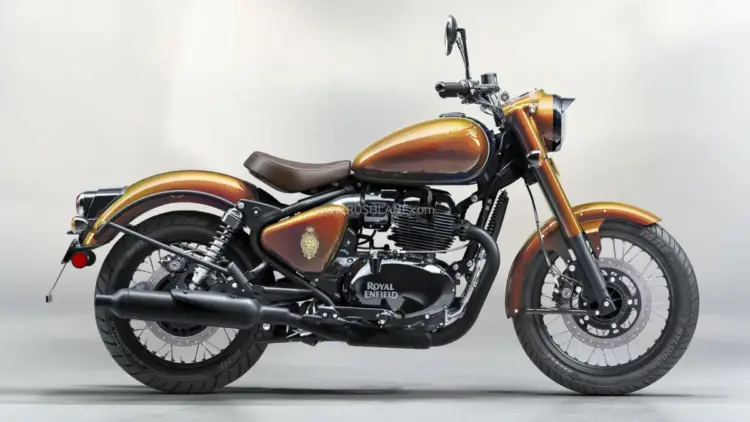
In the competitive landscape of the mid-size motorcycle segment, Royal Enfield continues to demonstrate why it remains the undisputed leader. The Chennai-based manufacturer recorded a robust performance in October 2026, navigating a complex market environment characterized by shifting consumer preferences and a festive season that demanded high inventory turnover. With a total domestic sale of 1,21,527 units, the brand has not only maintained its historical dominance but has also shown strategic growth in its premium higher-displacement categories.
Main Facts: A Steady Pulse in a Volatile Market
The headline figures for October 2026 reveal a brand that is comfortably cruising. Royal Enfield’s domestic sales reached 1,21,527 motorcycles, marking a 4.01% year-on-year (YoY) increase compared to the 1,16,844 units sold in October 2025. Perhaps more significant is the month-on-month (MoM) stability; sales grew by a marginal 0.17% (201 units) over September 2026’s 1,21,326 units.
While the aggregate numbers suggest a plateau, the internal dynamics of the sales breakup tell a story of a portfolio in transition. The legendary Classic 350 remains the cornerstone of the company’s volume, accounting for over 37% of total sales. However, the true "MVP" of the month in terms of growth was the Hunter 350, which provided the largest volume gain for the company. Furthermore, the burgeoning 450cc and 650cc segments are growing at a faster percentage rate than the core 350cc range, indicating a successful "premiumization" strategy.
Key Performance Indicators (KPIs) at a Glance:
- Total Domestic Sales: 1,21,527 units.
- YoY Growth: +4.01%.
- MoM Growth: +0.17%.
- Top Performer (Volume): Classic 350 (45,396 units).
- Top Performer (Growth): Hunter 350 (+4,322 units YoY).
- Segment Share: 350cc range accounts for 90.93% of total domestic volume.
Chronology of Performance: From September Stability to October Peaks
To understand the October performance, one must look at the preceding months. September 2026 was a period of inventory building in anticipation of the peak festive season in India. Royal Enfield entered October with a strong momentum, which is reflected in the fact that they managed to surpass their September high, albeit by a small margin.
Throughout October, the market witnessed a tug-of-war between traditional favorites and new-age entrants. The early part of the month saw a surge in bookings for the Bullet 350 and Classic 350, driven by the sentimental value these brands hold during the Diwali and Dussehra period. By mid-month, the focus shifted toward the adventure and "neo-retro" segments, where the Himalayan 450 and the Guerrilla 450 began to show significant traction.
The closing week of October saw a remarkable spike in the 650cc segment. This was bolstered by the arrival of the Anniversary Edition models and the continued popularity of the Shotgun 650, which saw its sales more than double compared to the previous month.

Supporting Data: Segment-by-Segment Deep Dive
The 350cc Powerhouse: The Foundation of Royal Enfield
Despite the introduction of more powerful engines, the 350cc J-platform remains the bedrock of Eicher Motors’ (Royal Enfield’s parent company) profitability.
- Classic 350: The veteran model sold 45,396 units. While it saw a 2.53% YoY dip and a 4% MoM decline, its sheer volume—maintaining a lead of over 18,000 units over the next best-selling model—underscores its status as a cultural icon.
- Bullet 350: The "legend" recorded 26,866 units, a healthy 5.11% YoY growth. However, it suffered a 5.83% MoM decline, likely due to internal competition from the Hunter 350.
- Hunter 350: This model is the brand’s most successful attempt at diversification. With 26,145 units sold, it grew nearly 20% YoY. Its gain of 4,322 units over October 2025 was the highest across the entire Royal Enfield lineup, proving that its lighter frame and accessible pricing are attracting a younger, urban demographic.
- Meteor 350: The cruiser segment faced some headwinds. The Meteor sold 12,096 units, an 18% YoY decline. However, it showed strong recovery signs with a 12.29% MoM increase, suggesting that long-distance touring interest remains resilient.
The 450cc and 650cc Ranges: The Growth Accelerators
While the 350cc bikes provide the volume, the 450cc and 650cc ranges are providing the growth momentum.
- Himalayan 450: The adventure tourer recorded 3,915 units, a massive 52.87% YoY jump. Its 29.25% MoM growth makes it one of the most successful high-performance single-cylinder bikes in the country.
- Guerrilla 450: Based on the Sherpa 450 platform, this roadster sold 1,875 units. While its MoM growth was flat (adding only 4 units), its YoY growth of 56.77% indicates that it is successfully carving out a niche against competitors like the Triumph Speed 400.
- 650 Twins & Super Meteor: The Interceptor and Continental GT 650 combined for 3,725 units (up 10.70% YoY). The Super Meteor 650 also performed admirably with 1,293 units, growing 45.28% YoY.
- Shotgun 650: The standout percentage gainer, the Shotgun recorded 216 units. While the absolute numbers are low, the 105.71% MoM growth suggests that supply chain constraints for this specific model are easing, or a new custom-inspired marketing push is yielding results.
Official Responses and Strategic Context
While official statements for the October month-end specifically focused on the "continued trust of the motorcycling community," industry analysts point toward several strategic moves by Royal Enfield.
Company sources suggest that the slight decline in Classic 350 sales is not a cause for concern but rather a result of "planned cannibalization." By offering the Hunter and the Bullet at different price points and personas, Royal Enfield is successfully keeping customers within its ecosystem rather than losing them to rival brands like Honda or Jawa-Yezdi.
Furthermore, the brand’s focus on "Apparel and Genuine Motorcycle Accessories" (GMA) has seen a significant uptick in October. For every Himalayan or 650 Twin sold, the attachment rate of accessories has reportedly reached record highs, contributing to the overall revenue per unit sold, even when domestic volume growth is in the single digits.
Implications: What This Means for the Future
The October 2026 sales data carries several long-term implications for the Indian two-wheeler market and Royal Enfield’s trajectory:

1. The "Mid-Size" Gold Mine
Royal Enfield’s ability to move 1.21 lakh units in a single month reinforces the fact that the Indian consumer is no longer just looking for "commuter" bikes. There is a definitive shift toward leisure motorcycling. The 350cc-650cc segment is the new "sweet spot," and Royal Enfield’s 90%+ market share in this specific bracket remains a formidable barrier to entry for competitors.
2. The Success of the Multi-Platform Strategy
The data proves that Royal Enfield’s three-platform strategy (J-Series 350cc, Sherpa 450cc, and the 650cc Twin) is working. The 450cc and 650cc categories grew by 54.11% and 19.42% YoY, respectively. These bikes carry higher margins, meaning that even if the 350cc volume remains stagnant, the company’s bottom line is likely to improve.
3. Resilience Against Competition
Despite the entry of global giants like Triumph (via Bajaj) and Harley-Davidson (via Hero), Royal Enfield’s numbers have not cratered. In fact, they are growing. This suggests that the brand’s community-building efforts, extensive service network, and "lifestyle" positioning are creating a moat that is difficult to breach through product specs alone.
4. Upcoming Launches
The success of the 650cc range in October (growing 26% MoM) sets a perfect stage for the upcoming launch of the Bear 650 and the highly anticipated Classic 650. If the Classic 650 can replicate the "Classic" magic with the refinement of the twin-cylinder engine, Royal Enfield might see another massive volume spike in 2027.
5. Urban vs. Rural Dynamics
The surge in Hunter 350 sales suggests that the brand is successfully penetrating Tier-1 and Tier-2 urban markets where maneuverability and "cool factor" are prioritized over the heavy, traditional thump of the Bullet. Conversely, the steady growth of the Bullet 350 shows that the rural and semi-urban stronghold remains intact.
Conclusion
Royal Enfield’s October 2026 performance is a masterclass in portfolio management. By balancing the "old world charm" of the Bullet and Classic with the "new world performance" of the Himalayan and Shotgun, the company has insulated itself from market volatility. While the 350cc range remains the breadwinner, the rapid acceleration of the 450cc and 650cc segments signals a future where Royal Enfield is not just a manufacturer of "retro" bikes, but a global powerhouse in performance-oriented mid-size motorcycling. As the brand moves toward the end of the 2026 fiscal year, the momentum appears to be firmly in its favor.