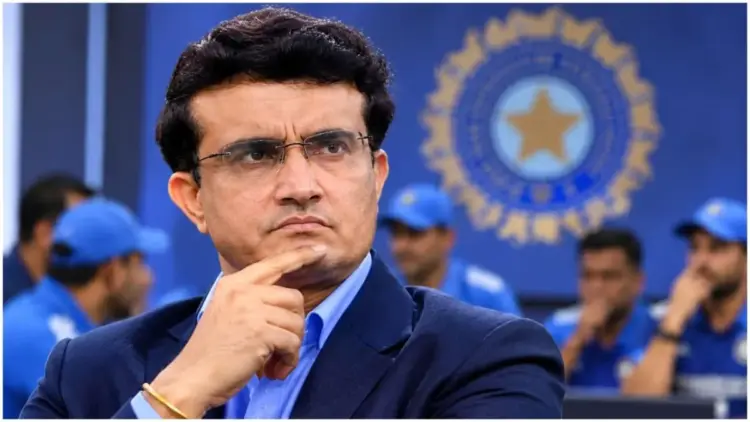
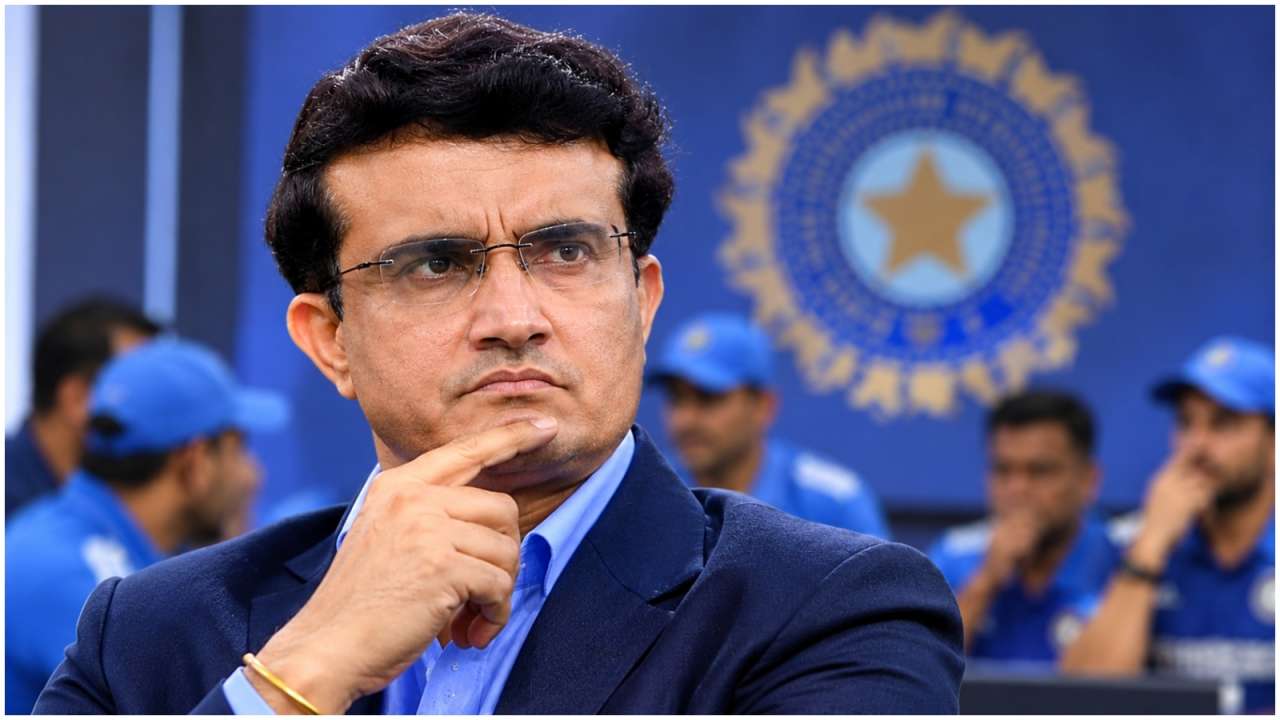
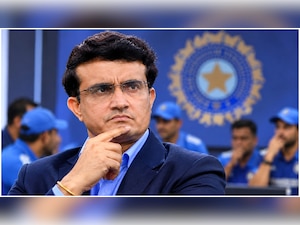
Wellington, New Zealand – November 23, 2026 – A frustrating draw in the Wellington Test against New Zealand has sparked a fiery debate within Indian cricketing circles, with former captain and influential figure Sourav Ganguly directly questioning the team management’s selection strategy, particularly the conspicuous absence of specialist spinners in the Playing XI. Despite being in a commanding position on Day 4, needing only eight wickets to secure victory, Team India’s inability to penetrate New Zealand’s stubborn resistance on a flattening Basin Reserve pitch led to an unsatisfying stalemate, prompting Ganguly to ask: "Where are Kuldeep Yadav and Manav Suthar?"
The draw, which saw India manage only three wickets across 75 overs on the final day, has raised critical questions about India’s approach to Test cricket overseas, especially on pitches that offer diminishing returns for pace bowlers as the match progresses. Ganguly’s comments, delivered via his widely followed X (formerly Twitter) account, lauded India’s batting prowess throughout the New Zealand tour but unequivocally stressed the non-negotiable requirement of a "genuine spinner" to clinch Test matches away from home. This critique opens up a broader discussion on team balance, workload management, and the foresight required in selecting a squad capable of adapting to diverse conditions over five grueling days.
Chronology of the Wellington Test: A Missed Opportunity Unfolds
The Wellington Test promised much for Team India, entering the contest with significant momentum from their white-ball performances on the tour. What unfolded over five days, however, was a classic Test match narrative of dominance, resilience, and ultimately, a drawn conclusion that felt like a defeat for the side that held the upper hand.
Setting the Stage: Expectations and Early Promise
The Basin Reserve pitch, known for its early assistance to seamers but a tendency to flatten out significantly as the match progresses, was expected to test both batting line-ups. India, opting for a pace-heavy attack, seemed to back their fast bowlers to do the bulk of the damage. Their decision-making, particularly regarding spin, would later become the focal point of Ganguly’s criticism.
India’s Initial Dominance: Batting and Early Breakthroughs
India’s batsmen delivered a strong performance in their first innings, posting a formidable total that put New Zealand under immediate pressure. This solid foundation was complemented by incisive bowling spells from the fast bowlers, who managed to exploit the early conditions and secure crucial breakthroughs. By the end of New Zealand’s first innings, India had established a significant lead, seemingly setting the stage for a comfortable victory. The team’s batting application, as Ganguly himself acknowledged, was "super," highlighting a positive aspect of their tour thus far.
New Zealand’s Resilient Fightback: The Day 5 Stalemate
The true test of India’s bowling attack came in New Zealand’s second innings. After a shaky start, the Kiwi middle-order, spearheaded by the resolute Daryl Mitchell and the gritty Glenn Phillips, mounted a defiant stand. Their partnership, characterized by stoic defence and opportunistic scoring, systematically blunted India’s bowling attack. As the pitch flattened and the ball softened, the pace bowlers found it increasingly difficult to generate wicket-taking opportunities. The absence of a specialist spinner capable of exploiting the footmarks, varying pace, and extracting turn became glaringly apparent.

The Decisive Day 5: A Failure to Convert
Entering the final day, India needed a mere eight wickets to wrap up the Test match. The cricketing world anticipated a decisive Indian victory. However, the day’s play saw New Zealand’s batsmen display remarkable tenacity. Across 75 overs, India’s bowlers toiled hard but could only manage to dislodge three New Zealand batsmen. Mitchell and Phillips’s resistance proved insurmountable, their long vigil effectively killing off India’s chances. With 15 overs still remaining in the day, both captains shook hands, agreeing to a draw, a decision that underscored India’s inability to find a breakthrough.
Captain Gill’s Justification: Bowler Fatigue
Following the match, Indian skipper Shubman Gill defended the decision to accept the draw, citing "tiredness of the bowlers" as a primary factor. While bowler fatigue is a genuine concern in Test cricket, especially on unresponsive pitches, this explanation did little to quell the growing unease among fans and pundits who felt the team had let a golden opportunity slip. The question lingered: would a specialist spinner, fresh and potent, have offered the vital breakthrough when the pacers were flagging?

Supporting Data: The Enduring Case for Specialist Spinners Overseas
Sourav Ganguly’s critique isn’t just a spontaneous reaction; it taps into a long-standing debate within Indian cricket about the optimal team composition for overseas Test matches. His argument is rooted in the fundamental dynamics of multi-day cricket and the evolving nature of pitches.
Ganguly’s Stance Amplified: The "Genuine Spinner" Imperative
Ganguly’s tweet explicitly stated, "to win test matches away a genuine spinner is a must on pitches which get flat with time." This isn’t merely about having a part-time option; it’s about deploying a bowler whose primary role is to take wickets through guile, flight, and turn, even when conditions are not overtly conducive to spin. On flat decks, pacers often struggle for purchase, relying heavily on reverse swing or exceptional skill. A specialist spinner, however, can create opportunities through drift, dip, variations in trajectory, and the sheer mental pressure of consistently hitting challenging lines and lengths. They offer a different dimension, a fresh angle of attack, and crucially, a viable wicket-taking option when the pace quartet is either tired or rendered ineffective by a docile surface. Washington Sundar, mentioned by Ganguly, while a capable all-rounder, might not possess the same wicket-taking threat as a primary spinner, especially on Day 4 or 5 of a Test.

Historical Context: India’s Spin Legacy and Overseas Challenges
Historically, India has been a powerhouse of spin bowling at home, producing legends from Erapalli Prasanna and Bhagwat Chandrasekhar to Anil Kumble and Harbhajan Singh, and more recently, Ravichandran Ashwin and Ravindra Jadeja. These spinners have often been the architects of India’s dominant home victories. However, overseas, the narrative shifts. While India has occasionally seen great spin performances (Kumble in Australia, Harbhajan in West Indies), the general tendency has been to lean heavily on pace in conditions perceived to favor fast bowling.
The challenge lies in recognizing that "overseas conditions" are not monolithic. While England or South Africa might offer consistent seam movement, New Zealand pitches, particularly as the game progresses, can become batting paradises. Australia, too, often presents hard, flat tracks where spin can be effective later in the match. The Wellington Test perfectly illustrated this: what began as a decent seaming track became increasingly docile, rendering the pace attack less potent over time. The lack of a spinner to provide control, extract subtle turn, and create rough for the pacers was a significant void.

The Modern Game: Evolving Pitches and Wicket-Taking Options
Modern Test cricket demands a versatile bowling attack. Pitches are often prepared to last five days, necessitating bowlers who can adapt and find ways to take wickets across different phases of the game. On Day 5, when cracks might appear, or the surface has worn down, a specialist spinner becomes invaluable. They can exploit these changes, offer genuine wicket-taking threats, and provide much-needed respite and control for the fast bowlers. The ability to bowl long spells without conceding many runs, while simultaneously threatening to take wickets, is a unique attribute of a specialist spinner. This dual role is often crucial in grinding down opposition batsmen.
Analyzing the Wellington Pitch: A Case Study in Flatness
The Basin Reserve pitch’s behavior over five days was a textbook example of a track that flattens out. Initial zip and seam movement gave way to a placid surface, where the ball came onto the bat beautifully. For pacers, this meant a reduced likelihood of edges, less swing, and a greater reliance on sheer pace and accuracy to dislodge batsmen. In such scenarios, a spinner’s ability to deceive batsmen in the air, or to generate subtle turn and bounce, becomes a potent weapon. The sustained resistance from Mitchell and Phillips was a testament to the comfortable batting conditions and India’s struggle to find a different avenue for wickets.

The Specifics: Kuldeep Yadav’s Credentials
Ganguly specifically named Kuldeep Yadav, a wrist-spinner whose unique art has often proven to be a wicket-taking marvel. Kuldeep’s ability to turn the ball both ways, coupled with his deceptive flight and variations, makes him a genuine threat, even on pitches that offer little for finger spinners. He has a proven track record of breaking partnerships and picking up crucial wickets in both white-ball and red-ball cricket. His exclusion from the Playing XI, and his earlier release from the Test squad to participate in domestic cricket (with Gurnoor Brar being added instead), now appears to be a decision warranting closer scrutiny. Had he been available and selected, his wrist-spin could have provided the much-needed X-factor on a day when pacers were drawing a blank. His presence would have added depth and variety to the attack, potentially creating opportunities that the pace-heavy line-up could not.
The Specifics: Manav Suthar’s Emergence
The other name mentioned by Ganguly, Manav Suthar, represents a newer generation of Indian spin talent. A left-arm orthodox spinner, Suthar made an impressive Test debut earlier this year against Afghanistan, where he claimed seven wickets in the match. His strong performances continued in the two-match Test series against Sri Lanka, where he scalped an astounding 16 wickets. These statistics highlight his potential as a consistent wicket-taker and a valuable asset in the longer format. His ability to bowl with control and extract turn, even on non-turning tracks, suggests he could have offered a viable alternative or complement to the existing bowling attack. His recent form makes his omission from the conversation for the Wellington Test even more perplexing for keen observers of domestic cricket.

The All-Rounder Conundrum: Washington Sundar’s Role
Ganguly’s specific mention of Washington Sundar, stating he "can play as an allrounder," implies that while Sundar offers batting depth and can bowl useful off-spin, he might not be considered a "genuine spinner" in the mold of a Kuldeep or Suthar when the primary objective is to take wickets on a challenging Day 5 pitch. Sundar’s strength lies in his economy and ability to hold an end, but his wicket-taking prowess in Test cricket, especially overseas, is still developing. For a team needing to force a result, the emphasis often shifts from containment to penetration, a role typically best fulfilled by a specialist.
Official Responses and Team Management’s Perspective
The immediate aftermath of a Test draw often sees captains and coaches offering explanations, which sometimes clash with the public’s perception or the opinions of seasoned former cricketers.

Shubman Gill’s Post-Match Comments: A Defense of Fatigue
Shubman Gill, in his role as stand-in captain, attributed the decision to accept the draw to the "tiredness of the bowlers." This is a common and understandable justification, as the physical demands of Test cricket are immense, particularly for fast bowlers operating on unyielding surfaces. However, this defense simultaneously highlights the very issue Ganguly raised: if pacers are tired, who is there to pick up the slack? The absence of a fresh, specialist spinner capable of bowling long spells and exploiting late-match conditions directly impacts the team’s ability to maintain pressure and take wickets. It implicitly suggests that the current bowling attack lacked the depth or versatility to push for a win when the primary weapon (pace) was blunted.
The Selection Committee’s Dilemma: Balancing Priorities
The selection committee faces a perpetual balancing act when picking squads for overseas tours. The default tendency is often to load the team with pace bowlers, assuming they will be the primary wicket-takers. Considerations include the specific pitch characteristics, the opposition’s strengths, and the overall team balance, including batting depth. The decision to release Kuldeep Yadav for domestic cricket, for instance, might have been driven by a desire to give him game time or by the belief that the Wellington pitch wouldn’t offer enough for his brand of spin, or that Washington Sundar’s all-round abilities were deemed more valuable. However, this strategy appears to have backfired in Wellington, where a specialist spinner could have been the difference-maker. The trade-off between an extra pace option, a batting all-rounder, and a pure wicket-taking spinner is a complex one, and the Wellington draw has forcefully reopened this debate.

The Coach’s View: Workload Management and Adaptation
While specific comments from the coaching staff are not yet available, their perspective would likely revolve around workload management for the fast bowlers and adapting to perceived conditions. Coaches often prioritize keeping their key pace battery fresh, and on a five-day tour, this can mean rotating bowlers or relying on them for specific phases. However, the Wellington outcome suggests that the adaptation strategy might have been flawed, failing to account for the pitch’s evolution and the potential need for a different kind of attacking option when pace alone wasn’t enough. The challenge for the coaching staff is to ensure that the team has both the primary weapons and the contingent strategies to win in all foreseeable scenarios.
BCCI’s Stance: Silence and Future Considerations
The Board of Control for Cricket in India (BCCI) typically maintains a more reserved public stance on specific team selection matters. However, Ganguly’s past role as BCCI President lends significant weight to his comments. While no immediate official response is expected from the board, such high-profile critiques from influential former players often prompt internal discussions and a re-evaluation of strategies for upcoming series. The BCCI, along with the selection committee, will likely be analyzing the Wellington result and its implications for future Test squad selections, especially concerning the role of specialist spinners in overseas conditions.

Implications and the Road Ahead
The Wellington draw is more than just a single match result; it carries significant implications for India’s immediate future, its strategic approach to Test cricket, and the careers of the players involved.
Impact on the Series and World Test Championship Points
While the initial article doesn’t specify the series context, a draw when a win was within reach inevitably impacts the series outcome (if it’s a multi-Test series) and, crucially, India’s standing in the World Test Championship (WTC) points table. Every point dropped in such circumstances can prove costly in the long run, affecting a team’s chances of qualifying for the WTC final. The Wellington draw represents a missed opportunity to consolidate their position or gain a crucial advantage.

The Broader Debate on Team Composition: A Strategic Re-evaluation
Ganguly’s comments have reignited a critical debate on India’s Test match composition overseas. Is India too reliant on pace? Are they underestimating the value of a specialist spinner, even on pitches initially deemed "pace-friendly"? The draw suggests a need for a more flexible and condition-adaptive approach to squad selection and playing XI choices. This isn’t just about picking an extra spinner; it’s about evaluating the entire bowling unit’s ability to take 20 wickets in all conditions over five days, especially when the primary pace attack might falter. The question of whether to play a genuine wicket-taking spinner, irrespective of the initial pitch report, becomes central to this re-evaluation.
Pressure on Selectors and Team Management
Such a public and pointed critique from a figure of Ganguly’s stature undoubtedly puts pressure on the current selection committee and team management. They will be compelled to address these concerns, either by justifying their current strategy or by demonstrating a willingness to adapt. Future selections, particularly for overseas tours, will be scrutinized even more closely, with every decision on spin options becoming a talking point. The challenge for the selectors is to strike the right balance between experience and emerging talent, while also ensuring the team has all bases covered.

Future of Kuldeep Yadav and Manav Suthar: A Renewed Focus
The immediate implication for Kuldeep Yadav and Manav Suthar is a renewed focus on their prospects. Ganguly’s advocacy could very well push them higher up the pecking order. Kuldeep, with his proven international experience, will likely be a strong contender for the next Test. For Suthar, his impressive domestic and nascent international record makes him a compelling case for inclusion in future squads, signaling that consistent performances in first-class cricket should be rewarded, especially when the national team identifies a specific need. Their unique skills might now be viewed as indispensable tools in India’s Test match arsenal, particularly for tours where pitches tend to lose their venom.
Learning from the Wellington Experience: Adapting for the Future
The Wellington Test serves as a crucial learning experience for Team India. It highlights the importance of not just starting strong but also having the strategic depth and tactical flexibility to close out a Test match, especially when the opposition shows resilience. For upcoming Tests, or future overseas tours, India might consider a more proactive approach to spin selection, potentially even playing two spinners if conditions are expected to flatten significantly. This could involve a combination of a finger spinner and a wrist spinner, or two different types of finger spinners, to offer variety and consistent wicket-taking threats.

The "Dada" Factor: The Weight of Ganguly’s Words
Sourav Ganguly’s voice carries immense weight in Indian cricket. As a former captain who transformed India into a formidable overseas touring side, and having served as the President of the BCCI, his insights are deeply respected and widely influential. His willingness to speak candidly on selection matters underscores the severity of the missed opportunity in Wellington. His comments are not merely personal observations but a reflection of a strategic concern that many in the cricketing fraternity share. His intervention ensures that this debate will not quickly fade, but rather intensify, potentially shaping India’s Test cricket strategy for years to come.
In conclusion, the draw in Wellington, while a testament to New Zealand’s resilience, has exposed a potential chink in India’s overseas Test armour. Sourav Ganguly’s timely and pointed critique serves as a vital call to action, urging the team management to re-evaluate its approach to spin bowling in conditions that demand sustained wicket-taking prowess over five days. The path forward for Indian Test cricket overseas might very well involve a greater reliance on the guile and skill of its specialist spinners, ensuring that no opportunity to seal a victory is left to chance.