Introduction

In a landmark move for the Indian automotive industry, Toyota Kirloskar Motor (TKM) has officially pulled the wraps off the highly anticipated Innova Hycross facelift. While a mid-cycle refresh usually focuses on cosmetic tweaks and minor feature additions, Toyota has gone significantly further, introducing a pioneering flex-fuel strong-hybrid powertrain. This updated iteration of India’s favorite premium MPV (Multi-Purpose Vehicle) is now capable of running on ethanol-petrol blends ranging from E20 all the way to E85, marking a critical step in the nation’s journey toward carbon neutrality and fuel self-reliance.

With introductory prices starting at Rs 19.59 lakh and topping out at Rs 31.99 lakh (ex-showroom), the new Innova Hycross facelift seeks to bridge the gap between traditional internal combustion engines and fully electric vehicles. By combining the efficiency of a self-charging strong-hybrid system with the flexibility of renewable ethanol, Toyota is positioning the Hycross as the ultimate solution for the environmentally conscious Indian family.

I. Main Facts: Variants, Pricing, and Core Specifications
The Toyota Innova Hycross facelift is not merely a single model update but a comprehensive overhaul of the lineup. The most significant inclusion is the "Flex Hybrid Electric" branding, which applies to the majority of the new range.

Pricing Structure
Toyota has strategically priced the facelift to cater to both fleet operators and private luxury buyers. The lineup is divided into the conventional petrol variant and the new Flex Hybrid Electric variants:

- Petrol GX Variant: Rs 19.59 Lakh (Entry-level conventional petrol)
- Flex Hybrid G Variant: Rs 19.99 Lakh (Equipped with a speed-limiting function for fleet safety)
- Flex Hybrid GX Variant: Rs 23.99 Lakh
- Flex Hybrid VX Variant: Rs 28.79 Lakh
- Flex Hybrid ZX Variant: Rs 31.99 Lakh
Note: All prices are introductory and ex-showroom.

The Flex-Fuel Advantage
The headline feature is the engine’s compatibility with high-ethanol blends. While the previous model was compliant with E20 (20% ethanol, 80% petrol), the facelifted Hycross can now process E85. This makes it one of the few mass-produced vehicles in the world to combine "Flex-Fuel" capabilities with "Strong Hybrid" technology. This dual-pronged approach ensures that even when running on higher ethanol blends—which typically have lower energy density—the electric motor compensates to maintain performance and efficiency.

Key Technical Specifications
- Engine: 2.0-litre, 4-cylinder petrol engine modified for ethanol corrosive properties.
- Hybrid System: Self-charging strong-hybrid with an integrated electric motor and Ni-MH battery.
- Combined Power Output: 186 hp.
- Engine Torque: 191 Nm.
- Transmission: e-CVT (Electronic Continuously Variable Transmission).
- Drive Modes: Eco, Normal, and Power.
II. Chronology: From Prototype to Production
The journey to the E85-compatible Innova Hycross has been a calculated strategic move by Toyota, aligned with the Indian government’s "Ethanol Blending Programme."

- Late 2022: Toyota launches the original Innova Hycross in India, shifting the brand from a ladder-frame diesel workhorse (Crysta) to a monocoque petrol-hybrid premium MPV.
- August 2023: In the presence of Union Minister Nitin Gadkari, Toyota showcased a "Flex-Fuel Strong Hybrid" prototype based on the Hycross. This was a global first, intended to demonstrate that hybrid technology could mitigate the fuel economy drop usually associated with high-ethanol fuels.
- 2024 Testing Phase: Toyota conducted extensive real-world testing across diverse Indian terrains to ensure the engine’s fuel lines, seals, and tank could withstand the corrosive nature of E85 ethanol.
- November 2026 (Launch): The production-ready facelift is launched, incorporating not just the new powertrain but also significant aesthetic and technological upgrades based on customer feedback.
III. Supporting Data: Design Evolution and Cabin Technology
The facelift brings a more commanding presence to the Innova Hycross, leaning further into the SUV-inspired aesthetic that has made it a success.

Exterior Refinements
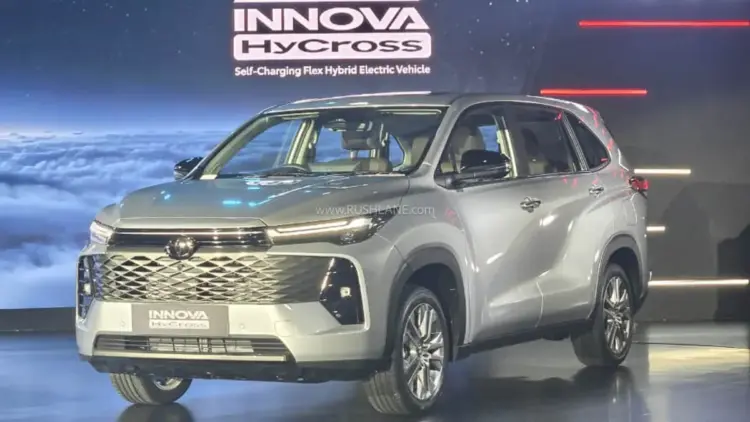
The front fascia has been redesigned to look broader and more aggressive. A new, larger grille dominates the face, featuring silver-finished geometric elements that provide a 3D effect. The Toyota emblem is housed in a slim black upper section that seamlessly connects to the redesigned projector LED headlamps. These headlamps now feature integrated double-stacked Daytime Running Lamps (DRLs), giving the vehicle a distinct light signature.

The side profile remains largely familiar but is enhanced by new multi-spoke alloy wheels and additional chrome detailing on the door handles and window surrounds. At the rear, the Hycross features double-stacked LED tail lamps, a roof-mounted spoiler, and a shark-fin antenna.

Available Color Palette:

- Super White
- Platinum White Pearl
- Silver Metallic
- Attitude Black Mica
- Blackish Ageha Glass Flake
The Digital-First Cabin
Inside, Toyota has answered the call for more modern technology. The centerpiece is a new 31.2 cm (12.3-inch) touchscreen infotainment system, a significant step up from the previous unit. This is paired with a 12.3-inch fully digital instrument cluster, creating a cohesive, high-tech driver cockpit.

Passenger comfort, a hallmark of the Innova brand, remains a priority. The "Ottoman" powered second-row seats return, offering lounge-like comfort. New additions include piano-black trim on the door panels and a revised folding table for rear passengers.

Luxury Features Include:

- 8-way power-adjustable driver’s seat with memory function.
- Ventilated front seats (essential for Indian summers).
- Dual-zone automatic climate control.
- Panoramic sunroof.
- 9-speaker JBL premium audio system with a dedicated subwoofer.
IV. Official Responses and Safety Standards
Toyota’s commitment to safety and sustainability is reflected in the standard equipment list of the facelifted Hycross.

Toyota Safety Sense (TSS)
The new Hycross continues to lead the segment in active safety. The Toyota Safety Sense suite (ADAS) includes:

- Pre-Collision System: Automatically applies brakes to avoid or mitigate collisions.
- Dynamic Radar Cruise Control: Maintains a set distance from the vehicle ahead.
- Lane Trace Assist: Helps keep the vehicle centered in its lane.
- Rear Cross-Traffic Alert: Warns of approaching vehicles when reversing out of parking spots.
Furthermore, the vehicle is equipped with six SRS airbags as standard across the higher trims, ensuring comprehensive protection for all three rows of passengers.

The "Flex Hybrid Electric" Philosophy
Official statements from Toyota Kirloskar Motor emphasize that the "Flex Hybrid Electric" vehicle is a "part of the company’s multiple pathway approach to help India achieve its goal of carbon neutrality." By utilizing ethanol—a fuel derived largely from agricultural waste and sugarcane in India—Toyota is helping reduce the country’s massive oil import bill while providing a vehicle that does not suffer from the "range anxiety" often associated with pure Battery Electric Vehicles (BEVs).

V. Implications: The Future of the Indian MPV Market
The launch of the Innova Hycross Facelift E85 has far-reaching implications for the automotive landscape in South Asia.

1. Disrupting the MPV Segment
The Innova has long been the undisputed king of the MPV segment. By introducing flex-fuel technology, Toyota has created a unique selling proposition (USP) that competitors like the Kia Carens or the Maruti Suzuki Invicto currently cannot match. It appeals to a new demographic: the environmentally conscious corporate buyer and the tech-savvy family.

2. Economic Impact of Ethanol
For the Indian government, the Hycross E85 is a "poster child" for the ethanol economy. If more manufacturers follow Toyota’s lead, the demand for ethanol will provide a stable income source for farmers and reduce the outflow of foreign exchange for crude oil. The "Flex Hybrid" system is particularly clever because ethanol has roughly 33% less energy content than petrol; however, the electric motor in the Hycross provides the "instant torque" and efficiency needed to mask this deficit, ensuring the driver feels no loss in performance.

3. Paving the Way for Future Models
The technology debuted in the Hycross is expected to trickle down to other Toyota and Maruti Suzuki models (under their global partnership). We may soon see E85-compatible versions of the Urban Cruiser Hyryder and the Grand Vitara, further democratizing green technology.

4. Resale Value and Brand Loyalty
Toyota’s reputation for reliability (QDR — Quality, Durability, Reliability) is a major factor in the Innova’s high resale value. By ensuring the facelift is compatible with future fuel standards (E85), Toyota is future-proofing the investment of its customers, ensuring the vehicle remains relevant even as fuel regulations tighten over the next decade.

Conclusion
The Toyota Innova Hycross Facelift E85 is more than just a car; it is a technological statement. It proves that luxury, utility, and environmental responsibility can coexist in a single package. With its refreshed design, upgraded dual 12.3-inch displays, and the revolutionary Flex Hybrid Electric powertrain, Toyota has set a new benchmark for what an Indian family car can be. As the infrastructure for E85 fuel expands across India, the Hycross stands ready to lead the charge into a cleaner, more sustainable automotive future.