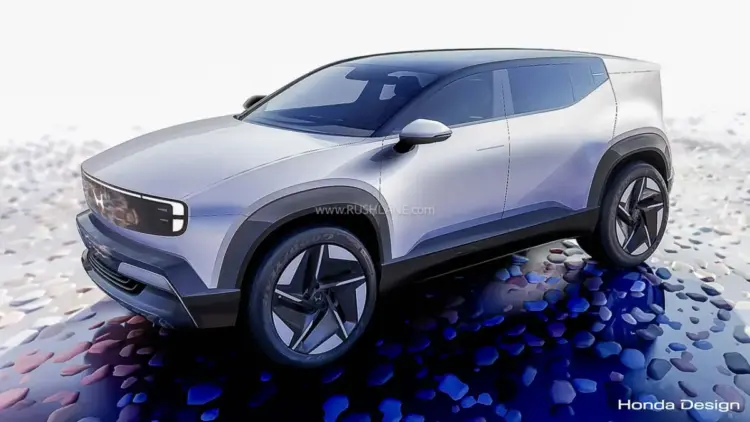
The Indian automotive landscape is on the precipice of a significant transformation as one of its most storied players, Honda Cars India, prepares to enter the high-stakes electric vehicle (EV) arena. Ahead of its global premiere scheduled for December 2, 2026, Honda has officially pulled back the curtain on the design philosophy of its first "made-in-India" electric SUV, codenamed the Alpha.
Conceived and crafted at the Honda Design Centre in Japan, the Alpha represents more than just a new model; it is a strategic manifesto for a brand that has traditionally relied on internal combustion excellence. Through a series of detailed exterior and interior sketches, Honda is signaling a shift toward a futuristic, tech-heavy, and space-efficient aesthetic that aims to redefine the mid-size electric SUV segment.
Main Facts: The Aesthetic and Functional Blueprint of the Honda Alpha
The release of the official sketches provides the most comprehensive look yet at the vehicle’s identity. The Honda Alpha is not merely an electrified version of an existing platform but a ground-up reimagining of what a Honda SUV should look like in the zero-emission era.
Exterior Styling: The New Face of Honda
The Alpha’s exterior design is characterized by a "distinctive and commanding" presence. The front fascia is dominated by a broad, dark panel—a departure from traditional grilles—which serves as the centerpiece for the newly designed ‘H’ emblem, specifically tailored for Honda’s electric lineup.

A slim, continuous LED lighting strip spans the upper edge of the fascia, flowing seamlessly into intricate lighting elements at the corners. This "lighting signature" is expected to become a hallmark of Honda’s future EV range. Below this, the bumper features horizontal openings and contrasting trim, suggesting a focus on aerodynamic efficiency and cooling for the battery management systems.
The silhouette reveals an upright, muscular SUV profile. Prominent wheel arches and substantial dark body cladding emphasize its ruggedness, while the gently tapering roofline adds a touch of modern athleticism. One of the most notable features in the sketches is the inclusion of flush-fitting front door handles, a premium touch aimed at reducing drag, while the rear door handles are integrated into the C-pillar area, maintaining a clean side profile.
Interior Innovation: The Digital Cockpit
Inside, the Alpha moves away from the conservative layouts of the City or the Elevate. The dashboard follows a horizontal, layered philosophy that prioritizes visibility and digital integration. The centerpiece is a large, freestanding central touchscreen infotainment system, complemented by a secondary digital instrument cluster situated behind a futuristic two-spoke multifunction steering wheel.
The sketches highlight a "blue ambient lighting" theme that runs across the dashboard and extends into the door panels, reinforcing the electric identity of the cabin. Despite the digital focus, Honda appears to have retained tactile controls for essential functions like climate control, housed in a slim panel below the main screen. The center console is "floating" or raised, providing additional storage space underneath—a common benefit of EV packaging.

Chronology: From Conception to the December Premiere
The journey of the Honda Alpha has been a meticulously planned multi-year endeavor, reflecting Honda’s cautious yet deliberate approach to the Indian EV market.
- Early 2024: Honda Cars India confirms its "ACE" (Asian Compact Electric) project, aimed at developing a localized EV platform for India and emerging markets.
- March 2026: Pan-India testing of the Alpha prototype begins. The vehicle is spotted in various terrains, from the high-altitude regions of the Himalayas to the humid coastal corridors, ensuring the battery and motor performance can withstand India’s extreme climatic diversity.
- August 2026: Honda’s Tapukara facility in Rajasthan undergoes significant tooling updates to accommodate the production of electric powertrains and battery assembly.
- November 2026: Honda officially announces the "Alpha" nameplate and releases the first set of design sketches to the global media.
- December 2, 2026: The global premiere is set to take place in India, marking the first time a major Honda global EV has debuted in the Indian market before other regions.
- Early 2027: Commercial launch and commencement of deliveries are expected across major Indian metropolitan hubs.
Supporting Data: Engineering and Market Context
While specific technical specifications remain under wraps until the December premiere, industry data and Honda’s global "0 Series" benchmarks provide a clear picture of what the Alpha will likely offer.
Platform and Powertrain
The Alpha is built on a dedicated EV platform that prioritizes a "Man Maximum, Machine Minimum" (M/M) philosophy. By placing the battery pack low and flat between the axles, Honda has maximized cabin floor space.
- Battery Capacity: Industry insiders suggest a battery pack ranging between 50kWh and 60kWh.
- Range: Targeted at the heart of the mid-size segment, the Alpha is expected to deliver a certified range of 450km to 480km (MIDC cycle) on a single charge.
- Charging: The vehicle will support DC fast charging, potentially capable of replenishing 10% to 80% of the battery in under 40 minutes.
Market Positioning
The Alpha enters a segment that is rapidly becoming the most competitive in the Indian EV space.

- Primary Competitors: Tata Curvv.ev, Maruti Suzuki eVX, and the upcoming Hyundai Creta EV.
- Target Demographic: Urban professionals and tech-conscious families looking for a primary vehicle that balances Honda’s legendary reliability with modern sustainable tech.
Official Responses: The Vision of Honda Design Centre Japan
Honda’s leadership has been vocal about the Alpha’s role in the company’s long-term sustainability goals. In statements accompanying the sketch release, Honda Cars India emphasized that the Alpha was designed with a "global mindset but an Indian heart."
Designers at the Honda Design Centre Japan noted that the challenge was to create a vehicle that felt "light and agile" despite the inherent weight of an electric powertrain. "The Alpha is a testament to our evolution," a senior design representative stated. "We wanted to move away from the ‘boxy’ SUV stereotype and move toward a ‘smart’ SUV silhouette that communicates intelligence and efficiency."
Furthermore, Honda has reiterated its commitment to the "Make in India" initiative. The Alpha will not only be sold domestically but is slated to be a key export product for Honda’s global network, potentially reaching markets in Europe and Southeast Asia. This localized production strategy is aimed at achieving cost-competitiveness in a price-sensitive market like India.
Implications: What the Alpha Means for the Indian Industry
The arrival of the Honda Alpha carries heavy implications for the brand, the consumer, and the broader Indian automotive ecosystem.

1. A Strategic Rebound for Honda
After the discontinuation of several models in the early 2020s, Honda’s portfolio in India had become lean. The Alpha is the first of 10 new models Honda plans to introduce in India by 2030. It marks the brand’s pivot from being a sedan-heavy manufacturer to an "SUV and EV-first" company. If successful, the Alpha could restore Honda’s market share to its former glory.
2. Setting New Standards for Interior Space
Honda has always been a master of interior packaging. With the Alpha, the company is leveraging the absence of a transmission tunnel and engine bay to provide "best-in-class" legroom. If the sketches are an accurate representation, the Alpha could offer the interior volume of a segment-above vehicle, a major selling point for Indian families.
3. The Infrastructure Catalyst
Honda’s entry into the EV space will likely accelerate the development of charging infrastructure. As a brand with a massive, loyal customer base, Honda’s move into EVs provides confidence to third-party charging providers to expand their networks, knowing that a high-volume player has entered the fray.
4. Technological Democratization
By introducing features like flush door handles, dual-screen cockpits, and advanced ADAS (Advanced Driver Assistance Systems) in a locally manufactured vehicle, Honda is helping democratize high-end technology. This forces competitors to innovate faster, ultimately benefiting the Indian consumer with better-equipped vehicles at more competitive price points.

Conclusion
The Honda Alpha is more than just a car; it is a bridge between Honda’s storied past and its electrified future. The design sketches released this November suggest a vehicle that is aesthetically confident and technologically ambitious. As the world looks toward the global premiere on December 2, the Alpha stands as a symbol of India’s growing importance in the global automotive value chain. For Honda, it is a high-stakes gamble on a green future—one that looks, at least on paper, poised to succeed.