

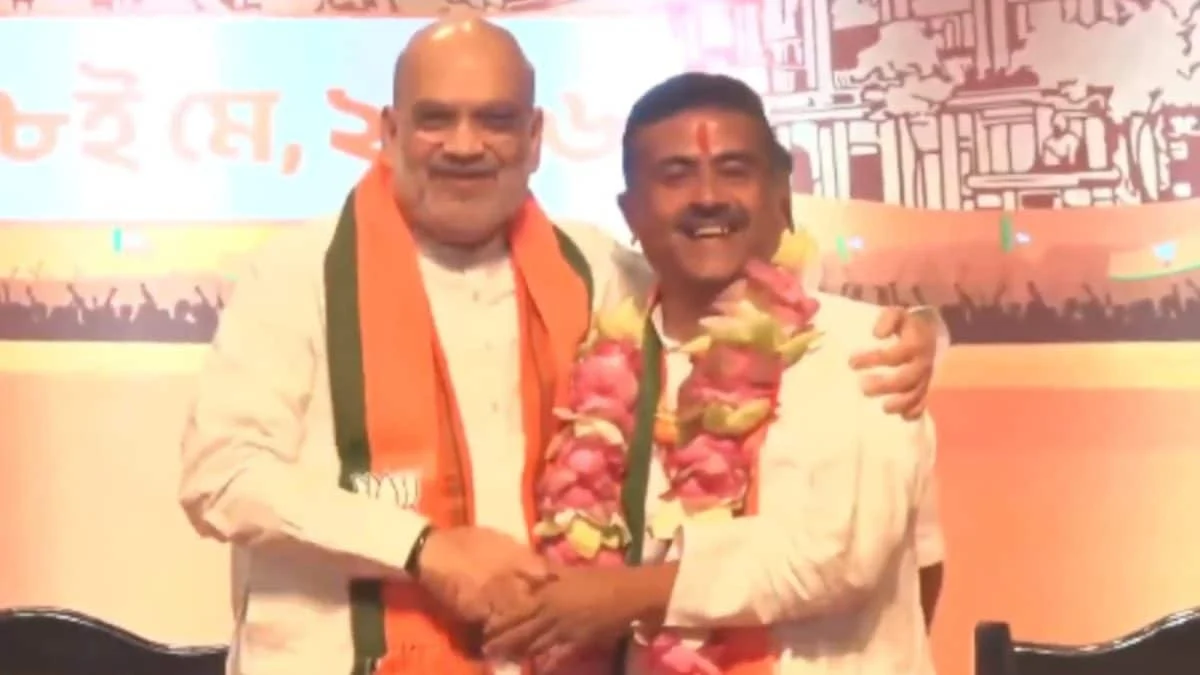
Kolkata, India – In a seismic shift that has redrawn the political map of West Bengal, Suvendu Adhikari was officially sworn in as the state’s first Chief Minister from the Bharatiya Janata Party (BJP) on Friday, May 8, 2026. This monumental achievement caps a political journey of remarkable transformation, from a formidable pillar of the Trinamool Congress (TMC) to the architect of its downfall and the fiercest rival of his former mentor, Mamata Banerjee. The announcement, made by Union Home Minister Amit Shah, signals a new era for a state long dominated by the Left Front and then the TMC, marking a definitive end to three decades of non-BJP rule.
Adhikari’s elevation to the top executive post is not merely a personal triumph but a watershed moment in Indian politics, signifying the BJP’s successful penetration into a culturally distinct and politically complex eastern state. His victory is particularly poignant, having twice defeated Mamata Banerjee herself – first in the high-stakes Nandigram constituency in 2021, and most decisively, in 2026, by a substantial margin of 15,000 votes in her traditional stronghold of Bhabanipur. This dual defeat of a formidable leader underscores Adhikari’s "giant-killer" reputation and his strategic acumen in navigating West Bengal’s turbulent political currents.
A Legacy Forged in Medinipur: Early Life and Political Roots
Suvendu Adhikari hails from the influential Adhikari family, a political dynasty deeply entrenched in the Medinipur region of West Bengal. The family’s sway over Purba Medinipur and surrounding districts has been a consistent factor in state politics for decades. His father, Sisir Adhikari, a veteran politician, served as a Member of Parliament for the TMC, while his brothers, Dibyendu and Soumendu, have also held significant political positions. This familial background provided Suvendu with an early immersion into the intricacies of grassroots politics and a robust support base.
Adhikari began his political odyssey as a student activist, aligning himself with the Congress party, then a significant force in Bengal. However, his political ambitions and ideological leanings soon led him to a nascent political outfit that promised to challenge the entrenched Left Front regime. Around 2000, two years after its formation by Mamata Banerjee, Suvendu Adhikari joined the Trinamool Congress. This move proved pivotal, as he quickly distinguished himself through exceptional organizational skills and an innate ability to connect with the masses. His tireless efforts in the Medinipur belt were instrumental in laying a solid foundation for the TMC, transforming it from a fledgling party into a credible alternative to the Communist Party of India (Marxist)-led Left Front, which had held power for an unprecedented 34 years.
His early electoral success came in 2006 when he was elected to the West Bengal Legislative Assembly from the Kanthi Dakshin seat, signaling his growing influence within the party and the region. This victory was a harbinger of the greater roles he was destined to play in the state’s political landscape.
The Architect of Change: Rise within the Trinamool Congress
Suvendu Adhikari’s most prominent and defining role within the TMC came during the tumultuous Nandigram anti-land acquisition movement of 2007-2008. The Left Front government’s contentious plans to acquire 10,000 acres of fertile agricultural land in Nandigram, Purba Medinipur, for a Special Economic Zone (SEZ) ignited widespread protests. While Mamata Banerjee provided the overarching leadership, it was Adhikari who meticulously organized the resistance on the ground. He mobilized local farmers, fishermen, and villagers, orchestrating a sustained agitation that captivated national attention and ultimately forced the government to abandon its plans.
The Nandigram movement proved to be a watershed moment for West Bengal politics. It not only catapulted Mamata Banerjee into national prominence as a fierce defender of farmers’ rights but also cemented Suvendu Adhikari’s position as her most trusted lieutenant and a formidable mass leader in his own right. His success in Nandigram demonstrated his unparalleled ability to galvanize popular support and challenge the state machinery effectively. This victory was a crucial stepping stone that allowed the TMC to build momentum, leading to the eventual dethroning of the Left Front in 2011.
Following Nandigram, Adhikari’s influence expanded rapidly. He was instrumental in extending the TMC’s footprint beyond its traditional strongholds in Kolkata and the Medinipur region, making significant inroads into Paschim Medinipur, Purulia, and Bankura districts. His grassroots strength, coupled with his visible on-ground presence and "street fighter" capabilities—qualities that mirrored Mamata Banerjee’s own political persona—helped the TMC to solidify its base and prepare for the final assault on the Left Front’s citadel. He later won the Tamluk Lok Sabha seat in 2009 and retained it in 2014, showcasing his electoral prowess even on a national stage. In 2016, he resigned as an MP to contest the assembly elections from Nandigram, defeating Abdul Kadir Sheikh and subsequently becoming a key minister in Mamata Banerjee’s second government, holding portfolios such as Transport and Irrigation.
The Bitter Fallout: A Shift That Reshaped Bengal Politics
The political landscape of West Bengal, however, is notoriously dynamic, and even the strongest alliances can fracture under the weight of ambition and power struggles. The first signs of a looming discord between Mamata Banerjee and Suvendu Adhikari began to surface around 2019-2020. A significant point of contention was the perceived rise of Mamata Banerjee’s nephew, Abhishek Banerjee, within the TMC hierarchy. As Abhishek was increasingly projected as the party’s second-in-command and a potential heir apparent, it reportedly irked senior leaders like Adhikari, who had dedicated decades to building the party from the ground up.
Sources close to the party at the time suggested a growing sense of marginalization among veteran leaders, who felt their contributions were being overshadowed by the younger generation. Differences over party organization, decision-making processes, and possibly even policy directions exacerbated the internal tensions. Adhikari, known for his independent streak and strong organizational base, found it increasingly difficult to reconcile with the evolving power dynamics within the TMC.
In December 2020, after months of speculation and a visible distancing from the party’s activities, Suvendu Adhikari made the momentous decision to resign as West Bengal’s Transport Minister. This was swiftly followed by his departure from the Trinamool Congress and his dramatic switch to the Bharatiya Janata Party. His defection sent shockwaves across the state and national political spectrum, marking a consequential shift that immediately altered the electoral calculus for the upcoming 2021 assembly elections. For the BJP, Adhikari’s entry was a massive coup, bringing with him not only his personal charisma and organizational skills but also a significant chunk of his dedicated support base in the Medinipur region and beyond, along with an intimate understanding of the TMC’s inner workings.
The Fiercest Rival: Leading the Charge Against the TMC
Upon joining the BJP, Suvendu Adhikari wasted no time in transforming himself from a loyal lieutenant to Mamata Banerjee’s most formidable adversary. He launched a relentless and aggressive campaign against the TMC-led government, leveraging his deep understanding of the state’s administration and the ruling party’s vulnerabilities. Adhikari meticulously targeted the TMC on issues of alleged corruption, extortion, economic decline, and the deteriorating law and order situation, particularly highlighting instances of political violence. His criticisms were sharp, personal, and resonated with segments of the electorate disillusioned with the incumbent regime.
The 2021 assembly elections became a high-stakes battle, and the Nandigram constituency emerged as its epicenter. Mamata Banerjee, in a daring move, decided to contest from Nandigram, directly challenging her former protégé. The contest was intensely personal, turning into a symbol of the larger ideological and political struggle unfolding in West Bengal. In a nail-biting finish, Suvendu Adhikari emerged victorious, defeating Mamata Banerjee by a narrow margin of 1,956 votes. This unexpected triumph, despite the BJP’s overall defeat in the state, catapulted Adhikari to national prominence and established him as a leader capable of challenging the most powerful figures in Indian politics.
Recognizing his strategic importance and combative spirit, the BJP appointed Adhikari as the Leader of the Opposition in the West Bengal Assembly. In this role, he continued his relentless assault on the third TMC government. His tenure was marked by fierce debates, persistent questioning of government policies, and a steadfast refusal to compromise. Adhikari’s unwavering stance, including his notable boycotts of key Nabanna (state secretariat) meetings, underscored the BJP’s determination to destabilize and eventually unseat the Banerjee government. He became the undisputed face of the BJP’s campaign, maintaining constant pressure on the ruling party and keeping issues of governance and alleged misrule at the forefront of public discourse.
The Final Ascent: Conquering Bhabanipur and Beyond
The culmination of Suvendu Adhikari’s political journey arrived in 2026. After a spirited and often acrimonious campaign leading up to the state assembly elections, the political landscape of West Bengal witnessed yet another tectonic shift. The BJP, under Adhikari’s aggressive leadership and bolstered by significant gains in various regions, secured a historic mandate, ending the TMC’s decade-long rule.
The most defining moment of the 2026 elections, however, was Adhikari’s second direct confrontation with Mamata Banerjee. This time, the battleground was Bhabanipur, a constituency in South Kolkata that had long been considered Mamata Banerjee’s impregnable fortress. Following her 2021 defeat in Nandigram, Banerjee had returned to the assembly via a by-election from Bhabanipur, reinforcing its symbolic importance as her political home. Adhikari’s decision to challenge her again in this bastion was a testament to his confidence and strategic audacity.
In a result that sent shockwaves through the political establishment, Suvendu Adhikari not only defeated Mamata Banerjee in Bhabanipur but did so with a massive margin of 15,000 votes. This decisive victory was not merely an electoral win; it was a psychological blow that dismantled the aura of invincibility surrounding the TMC supremo and signaled a complete reversal of fortunes. The victory in Bhabanipur, combined with the BJP’s overall majority, paved the way for Adhikari’s appointment as West Bengal’s first BJP Chief Minister.
Implications for West Bengal and National Politics
Suvendu Adhikari’s ascension to the Chief Minister’s office carries profound implications for West Bengal, the BJP, and the national political narrative.
For West Bengal: This marks the beginning of a new era of governance. The state, known for its rich cultural heritage but also grappling with challenges like industrial stagnation, unemployment, and political violence, now faces a change in leadership and potentially in policy direction. The BJP government is expected to prioritize economic development, law and order, and potentially bring a new approach to state-center relations, which were often strained under the previous TMC regime. The challenge for Adhikari will be to unite a diverse state, address its pressing issues, and deliver on the high expectations generated by this historic victory.
For the BJP: Adhikari’s victory is a monumental achievement for the party, solidifying its eastward expansion strategy. It demonstrates the BJP’s ability to overcome regional strongholds and establish a footprint in states where its ideology was once considered alien. This success will undoubtedly embolden the party for future electoral contests, particularly in other eastern and southern states. It also validates the party’s strategy of nurturing strong regional leaders and leveraging internal dissent within rival parties. The victory in West Bengal will significantly strengthen the BJP’s position in the national political landscape, especially as the country gears up for the 2029 Lok Sabha elections.
For the Trinamool Congress: The defeat is a devastating blow, forcing the party into a period of introspection and potentially a major leadership realignment. Mamata Banerjee, a towering figure in West Bengal politics for decades, now faces the daunting task of rebuilding her party from the opposition benches. Questions about succession, organizational restructuring, and the party’s future relevance will undoubtedly dominate internal discussions. The TMC’s ability to reinvent itself and challenge the new ruling dispensation will be a critical factor in determining West Bengal’s political trajectory in the coming years.
For the National Political Landscape: Adhikari’s victory underscores the shifting dynamics of Indian federalism and the increasing consolidation of the BJP’s power across various states. It highlights the challenges faced by regional parties in countering the BJP’s well-oiled electoral machinery and national appeal. The outcome in West Bengal will be closely watched by political analysts and other regional parties, offering lessons on adapting to a rapidly evolving political environment.
Suvendu Adhikari’s journey from a rising star within the TMC to the first BJP Chief Minister of West Bengal is a testament to his resilience, strategic acumen, and formidable political will. It is a story of ambition, rivalry, and a historic triumph that has forever altered the course of West Bengal’s political destiny. The state now looks forward to a new chapter, led by a leader who has consistently stood at the center of its most significant political transformations.
