

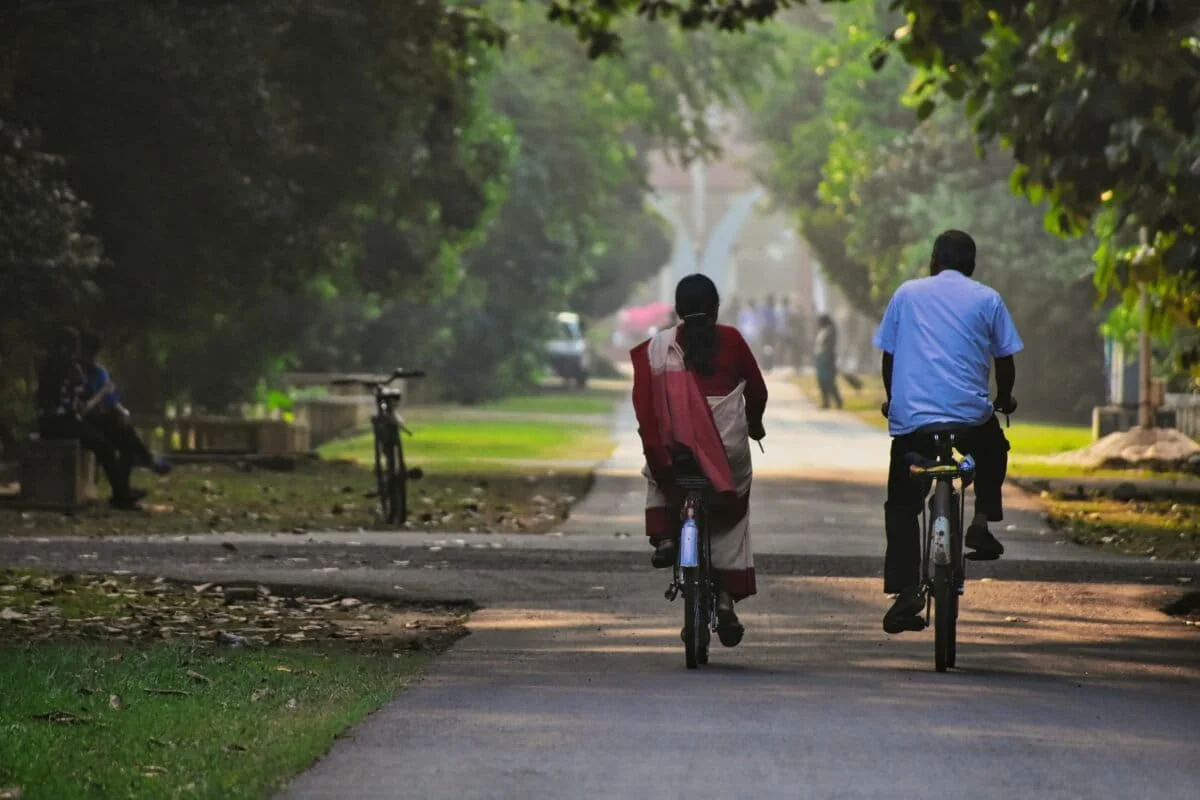
In the pursuit of a net-zero future, the bicycle has been recast from a humble mode of transport for the masses into a sophisticated tool for climate mitigation. Throughout 2025, Indian policymakers and advocacy groups converged on a singular narrative: cycling is the antidote to the choking smog of the nation’s urban centers. However, as political rhetoric reaches a fever pitch, a growing body of research and expert testimony suggests that India’s cycling "revolution" is stalling against a wall of inadequate infrastructure, gender inequality, and a systemic bias toward motorized transport.
Main Facts: The Disconnect Between Policy and Pavement
The year 2025 has seen an unprecedented push for non-motorized transport (NMT) in India. From the capital of Delhi to the districts of Andhra Pradesh, officials have framed cycling as a dual-purpose remedy for personal health and environmental degradation. Yet, a landmark study published in Nature Cities—examining bicycling culture in Delhi, Chennai, Dhaka, and Accra—reveals a starkly different reality.
The study highlights that while cycling is often promoted as a "lifestyle choice" for the environmentally conscious elite, it remains a "necessity of the poor" who are frequently invisible to urban planners. In India, where more than half of the working population commutes by walking or cycling, the vast majority of infrastructure investment continues to favor private automobiles. This disconnect has resulted in a "pedaling paradox": the government advocates for cycling to reduce emissions while simultaneously building roads that make cycling life-threatening.
India currently stands as the sixth most-polluted country globally, with Delhi ranking as the fourth most polluted city worldwide, according to the 2025 World Air Quality Report by IQAir. Despite this, the motor vehicle fleet in India has surged by 600% over the last two decades. In major metropolitan areas, the transport sector now accounts for nearly 30% of total greenhouse gas emissions, making the shift to low-carbon transport not just an ideal, but a survival imperative.

Chronology: A Year of Advocacy Amidst Rising Smog
The 2025 calendar was marked by a series of high-profile endorsements for cycling, each attempting to frame the activity as a pillar of urban development.
- January 2025: The year began with the BYCS India Foundation, a prominent cycling advocacy group, urging major political parties to include bicycle-friendly infrastructure in their manifestos for the Delhi elections. Their demands focused on safety and air quality, arguing that Delhi cannot solve its pollution crisis without a radical shift in how its citizens move.
- February 2025: In Gurgaon, residents took to the streets on foot and by cycle. This grassroots protest was a direct response to hazardous pollution levels. Participants took a public pledge to prioritize sustainable transport, signaling a growing public demand for "dust-free" and breathable urban spaces.
- August 2025: Union Minister for Youth Affairs and Sports, Mansukh Mandaviya, echoed these sentiments at a national level. He framed cycling as a "solution to pollution," linking the activity to the country’s broader climate goals and the Intergovernmental Panel on Climate Change (IPCC) recommendations for low-carbon urban mobility.
- December 2025: The year closed with NTR District Collector G. Lakshmisha in Andhra Pradesh emphasizing that cycling is essential for building a "healthy, pollution-free future." His remarks underscored the role of local administration in promoting cycling as a routine activity rather than a niche hobby.
Despite these milestones, the implementation of actual infrastructure has remained sluggish, often relegated to "special projects" rather than being integrated into the foundational design of Indian roads.
Supporting Data: The High Cost of the Motor-First Model
The data surrounding India’s transport landscape paints a sobering picture of the challenges facing cyclists. According to the Nature Cities study and the Ministry of Road Transport and Highways (MoRTH), the push for cycling is occurring against a backdrop of increasing danger and environmental hostility.
1. The Fatality Crisis
In 2023, 4,560 cyclists lost their lives on Indian roads. This high mortality rate is a direct consequence of a "motor-first" design philosophy. While flyovers and underpasses for cars receive quick budgetary approvals and fast-track construction, cycling tracks are often treated as aesthetic "beautification" projects. These tracks are frequently disconnected, poorly maintained, or encroached upon by parked vehicles and street vendors.

2. The Infrastructure Gap
The Nature Cities researchers found that in cities like Delhi and Chennai, bicycle infrastructure is often added as an afterthought. "Bicycle infrastructure isn’t treated as routine practice in road engineering," explains Rahul Goel, an assistant professor at IIT Delhi. When major highways or urban arteries are upgraded, cycling lanes are rarely included in the primary blueprints.
3. Environmental Hostility
Cyclists in India face a "double burden" of pollution. As non-enclosed vehicle users, they are the "first line of impact" for PM10 dust pollution and vehicular fumes. Because cycling takes longer than driving for the same distance, cyclists experience extended exposure to toxins. Furthermore, construction debris, sand piles, and fallen branches are routinely pushed to the edges of the road—the very space where cyclists are forced to ride.
Official Responses and Expert Analysis
The government’s role has shifted into what experts call an "ironic advocacy." While officials promote cycling in speeches, the mechanical and legal machinery of the state continues to prioritize the motorist.
Sharif Qamar, Associate Director at The Energy and Resources Institute (TERI), notes that transport decision-making remains skewed. "The big-ticket infrastructure projects that favor motorists are given preference over solutions that are economical or impactful in reducing pollution," Qamar says. He points out that even when initiatives like the ‘Cycles4Change Challenge’ (launched in 2020) are introduced, they often fail to meet expectations because they lack the "enforcement" necessary to keep cycle tracks free from motorized encroachment.

Sonal Shah, founder of The Urban Catalysts, argues that the lack of political will stems from a perception that cyclists are a minority. "The main argument provided is that we have a very low share of cyclists," Shah explains. However, this is a circular logic: people do not cycle because the roads are unsafe, and the roads remain unsafe because the government believes not enough people cycle to justify the investment.
Furthermore, there is a social dimension to the neglect. Qamar highlights a "behavioral and social issue" where cyclists are looked down upon by motorists. On Indian highways and city roads, the bicycle is often viewed as a sign of lower socioeconomic status, leading to a lack of respect for the cyclist’s right of way, which directly threatens their safety.
The Gendered Dimension: A Lane of One’s Own?
One of the most significant findings of the Nature Cities study is the deep-seated gender inequality within India’s cycling culture. While infrastructure and policy are gender-neutral on paper, the experience of the road is anything but.
Smruthi Bala Kannan, the study’s lead author, observed that while women are often seen as pillion riders, very few are active cyclists on major arterial roads. This is attributed to several factors:

- Household Hierarchy: In resource-poor households with limited vehicles, men are typically given priority for use.
- Trip Patterns: Women’s trips are often "trip-chained"—involving multiple short stops for errands, school drops, and work—which requires a different type of neighborhood-level infrastructure that currently does not exist.
- Safety and Harassment: Zeenath M.A., co-founder of SheCycling, points out that "eve-teasing" and inappropriate behavior on the road act as a major deterrent for women.
Initiatives like SheCycling, which started in Kochi and has expanded to cities like Srinagar and Pune, are attempting to bridge this gap. By teaching women from self-help groups (like Kerala’s Kudumbashree) and ASHA workers how to ride, they are empowering a new demographic of cyclists. However, these grassroots efforts require state-level support to ensure that once these women learn to ride, they have safe spaces to do so.
Implications: Can Cycling Be a Climate Solution?
The central question for 2026 and beyond is whether cycling can truly function as a climate solution in its current state. Experts are skeptical of the "cycling as a cure-all" narrative if it is not accompanied by a radical restructuring of urban life.
1. The Survival vs. Choice Debate
For a significant portion of India’s population, cycling is not a "green choice" but a financial necessity. Promoting cycling as a climate solution while failing to provide basic safety for these "necessity cyclists" is seen as a policy failure. If cycling is to be a viable climate tool, it must be made safe for those who are already doing it, not just marketed to those the government hopes to "convert" from cars.
2. The Pollution Paradox
There is a cruel irony in asking citizens to cycle to reduce pollution when the air is already too toxic to breathe safely. Sonal Shah questions the ethics of this push: "How do you ask people to cycle when the environment makes it harmful?" Without simultaneous efforts to restrict private vehicle use and manage industrial emissions, cycling advocacy may inadvertently expose more people to health risks.

3. The Need for Local Context
Experts warn against simply replicating "high-income country" solutions. Bicycling infrastructure in India must account for local demographics, extreme heat, and the high density of mixed traffic. The "flyover culture" must be replaced by a "complete streets" approach where pedestrians, cyclists, and public transit are the primary considerations, not an afterthought.
As India moves toward its 2070 net-zero goals, the bicycle remains one of the most efficient tools available. However, 2025 has shown that pedaling toward a cleaner future requires more than just ministerial speeches; it requires a fundamental shift in who the Indian city is built for. Until the "invisible" cyclist is made central to urban planning, the bicycle will remain a solution on paper, but a hazard on the road.
