

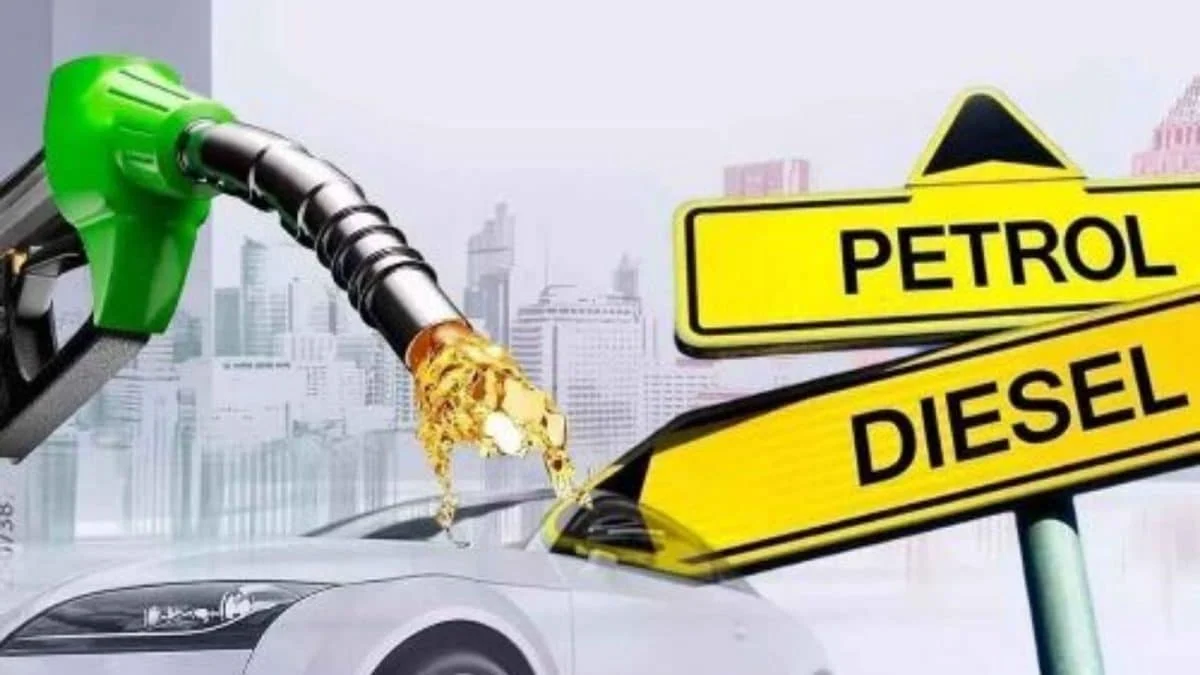
New Delhi, India – May 9, 2026: India is poised on the brink of a significant increase in retail petrol and diesel prices, as the government and state-owned oil marketing companies (OMCs) grapple with an unprecedented fiscal burden stemming from persistently high global crude oil prices and the ongoing West Asia conflict. For over 70 days, with crude oil stubbornly above the $100 per barrel mark, the government has been absorbing a staggering daily hit of approximately Rs 1,000 crore, translating into immense pressure on the national exchequer. With recent elections concluded, the administration is reportedly confronting "hard economic decisions" that are expected to culminate in a fuel price revision, potentially before May 15.
India stands as a solitary anomaly among major global economies, having steadfastly shielded its consumers from the escalating international petroleum costs. Nations like China, the UK, Norway, Germany, and the Netherlands have already implemented petrol price hikes of up to 27 percent, while Japan, South Korea, Spain, and Italy have seen increases exceeding 30 percent. This prolonged freeze on retail prices in India, maintained despite surging input costs, has pushed OMCs to the brink of financial distress, incurring losses that are rapidly escalating into tens of thousands of crores.
Mounting Fiscal Strain Signals Imminent Fuel Price Hike
The current predicament highlights a critical juncture for India’s energy policy and its broader economic stability. The fiscal strain on the government is multi-faceted and severe. Beyond the daily absorption of Rs 1,000 crore, the Centre had previously undertaken a substantial cut in excise duties on petrol and diesel, which alone cost the government exchequer a colossal Rs 1,70,000 crore. This measure, while providing temporary relief to consumers, significantly dented government revenues, limiting its fiscal maneuverability.
For the three major state-owned oil marketing companies – Indian Oil Corporation (IOC), Bharat Petroleum Corporation Ltd (BPCL), and Hindustan Petroleum Corporation Ltd (HPCL) – the financial haemorrhage is even more immediate and acute. By April-end, their cumulative losses on account of selling petrol and diesel below cost had reportedly reached Rs 30,000 crore. Projections indicate that these losses could surge to an alarming Rs 50,000 crore by the end of June if retail prices remain unchanged. Furthermore, these companies are also incurring losses of around Rs 20,000 crore on the sale of natural gas, exacerbating their financial woes.
This precarious financial situation is unsustainable in the long run. The Economic Times report underscores the gravity of the situation, suggesting that the government is now "staring at some hard economic decisions." The expectation, as per an India Today TV report citing informed sources, is that petrol and diesel prices will be hiked before May 15. This impending adjustment, while economically necessary, carries significant political and social ramifications, particularly coming on the heels of a major election cycle. The government’s challenge lies in balancing the imperative of fiscal prudence and the financial health of its OMCs with the need to manage inflation and public sentiment.
The Geopolitical Crucible: A Chronology of Rising Costs
The roots of the current crisis are deeply embedded in the turbulent global geopolitical landscape, particularly the ongoing West Asia conflict.
The West Asia Conflict’s Genesis and Impact
The original article refers to the conflict as the "US-Israel-Iran war," highlighting the specific geopolitical tensions that have profoundly impacted global crude oil markets. The escalation of hostilities in the West Asia region, which is a major global oil producer and transit hub, invariably triggers anxieties about supply disruptions. When the conflict intensified, driving crude oil prices above the critical $100 per barrel threshold, it signaled a prolonged period of volatility and elevated costs. Global benchmark Brent crude, which serves as a significant reference for India’s oil imports, surged, reflecting the increased risk premium associated with supply uncertainty and potential shipping disruptions through vital maritime routes. The conflict has not only pushed crude prices higher but also led to a significant increase in operational costs for oil-importing companies, including a 20-30 percent hike in maritime insurance premiums, further burdening the OMCs.
Government Intervention and Initial Absorptions
In the early days of the West Asia conflict, when crude oil prices briefly soared to $126 per barrel, the Indian government made a strategic decision to absorb a substantial portion of the rising costs. This involved taking a hit of approximately Rs 24 per litre on petrol and Rs 30 per litre on diesel. The rationale behind this move was multifaceted: a hope that the conflict would be short-lived and crude prices would soon stabilize, and crucially, a desire to insulate domestic consumers from immediate price shocks, especially given the impending election cycle.
Beyond absorbing direct costs, the Centre further alleviated the pressure on consumers by cutting excise duties on petrol and diesel. While providing immediate relief, this policy decision resulted in a massive revenue loss of Rs 1,70,000 crore to the government exchequer. These interventions, though fiscally burdensome, were aimed at stabilizing the domestic market and preventing a surge in inflation at a politically sensitive time. However, as the conflict protracted and crude prices remained stubbornly high, the sustainability of such measures became increasingly questionable.
The Prolonged Freeze and Mounting Losses
For over four years, India’s state-owned OMCs have maintained a remarkable freeze on retail petrol and diesel prices, a period marked by considerable volatility in international crude markets. This freeze was extended even as global crude prices shot up following the commencement of the West Asia conflict over two months ago. This prolonged absorption of higher input costs, without commensurate retail price adjustments, has created a severe financial strain on IOC, BPCL, and HPCL.
The "under-recoveries" – the difference between the cost of crude and refining, and the retail price at which fuel is sold – have mounted significantly. While the OMCs have been reporting substantial losses on petrol and diesel, they have, for the first time in over two decades, also started posting losses on aviation turbine fuel (ATF) since last month. This indicates the broad-based impact of high crude prices across the petroleum product spectrum. The initial hope that the geopolitical situation would quickly resolve and crude prices would recede proved to be overly optimistic, forcing the government and OMCs into a difficult corner where the financial viability of continued price suppression is no longer tenable.
Supporting Data: India’s Fuel Economy in Context
Understanding India’s current predicament requires a look at its unique position in the global energy landscape and comparative data from other major economies.
Global Comparison of Fuel Price Adjustments
India’s decision to maintain a retail fuel price freeze stands in stark contrast to the actions taken by almost every other major economy worldwide. As crude oil prices surged globally, countries like China, the United Kingdom, Norway, Germany, and the Netherlands did not hesitate to pass on a significant portion of these increased costs to their consumers, resulting in petrol price hikes of up to 27 percent. Even more substantial increases were observed in Japan, South Korea, Spain, and Italy, where rates climbed by 30 percent or more.
The rationale for these countries was clear: to reflect the true cost of petroleum products, manage national fiscal health, and potentially encourage energy conservation. India, however, has consistently prioritized insulating its consumers from such price shocks, primarily to control inflation and mitigate the direct burden on households. This policy, while consumer-friendly in the short term, has now created an unsustainable financial burden for both the government and the OMCs, highlighting the inherent trade-off between price stability and market economics.
Strategic Petroleum Reserves and Import Dependency
India’s energy security is heavily reliant on crude oil imports, making it highly vulnerable to global price fluctuations and supply disruptions. Currently, India maintains strategic petroleum reserves amounting to 5.33 million tonnes, which are sufficient to cover approximately 15 days of the nation’s requirement. While a vital buffer, this reserve capacity is relatively modest compared to other major oil-importing nations.
Recognizing this vulnerability, the government has ambitious plans to increase its strategic petroleum reserves to cover 30 days of requirement, mirroring the capacities held by countries like Japan and South Korea. This move aims to enhance India’s energy security and provide a greater cushion against geopolitical shocks. However, the sheer scale of India’s daily consumption – requiring around 20,000 tonnes of imports per day – means that even a 30-day reserve provides only a limited window in the face of prolonged global instability. The imperative to diversify crude sources and build robust reserves remains a critical long-term goal.
The Economic Multiplier Effect of Fuel Costs
Any increase in retail petrol and diesel prices in India has a profound and far-reaching "cascading effect" on the entire economy. Fuel is a fundamental input cost for almost every sector. Higher fuel costs directly translate into increased transportation expenses for goods and services across the country. This impacts logistics, manufacturing, agriculture, and ultimately, the prices of essential commodities.
For instance, the cost of transporting food grains from farms to urban markets, raw materials to factories, and finished goods to retail outlets will all rise. This inflationary spiral means that even if a household does not directly own a vehicle, they will still feel the pinch through higher prices for daily necessities like food, vegetables, and manufactured goods. This broad-based inflationary pressure poses a significant challenge for the Reserve Bank of India (RBI) in managing monetary policy and maintaining price stability, potentially necessitating interest rate hikes to cool the economy, which in turn could impact economic growth. The government’s historical reluctance to hike fuel prices has been largely driven by this understanding of its pervasive inflationary impact.
Official Responses and Policy Dilemmas
The government’s strategy for managing the fuel price crisis involves a delicate balancing act, as reflected in recent official statements and policy actions.
Ministry’s Stance: No Direct Support for OMCs
On May 4, Sujata Sharma, Joint Secretary in the Ministry of Petroleum and Natural Gas, clarified the government’s position on financial support for state-owned fuel retailers. She explicitly stated that "there is no proposal before the government to support oil marketing companies (for their losses)." This declaration effectively signals that the OMCs – IOC, BPCL, and HPCL – cannot rely on direct budgetary assistance to offset their mounting under-recoveries.
This stance places the onus firmly on the OMCs to manage their financial health, implicitly suggesting that they will eventually need to pass on the increased costs to consumers. While the government has historically provided subsidies for certain petroleum products, particularly domestic LPG, the current policy indicates a shift towards market-driven pricing for petrol and diesel. This decision underscores the severe fiscal constraints facing the government and its determination to avoid further burdening the national exchequer with direct financial bailouts for the OMCs.
Selective Price Adjustments and Consumer Protection
Despite the overall freeze on retail petrol and diesel prices, the government and OMCs have implemented selective price adjustments in specific segments, demonstrating an attempt to manage losses while still protecting the common consumer. Notably, prices for bulk or industrial diesel, commercial LPG (used by hotels and restaurants), and aviation turbine fuel (ATF) for international airlines have seen increases.
For instance, ATF prices for international airlines were hiked by USD 76.55 per kilolitre, or 5.33 percent, on May 1, building on an earlier doubling of prices on April 1. Similarly, commercial LPG rates surged by Rs 993 to a record high of Rs 3,071.50 per 19-kg cylinder. Bulk diesel, utilized by industrial users like telecom signal towers, also saw an increase from approximately Rs 137 per litre to over Rs 149 a litre, a significant jump compared to the Rs 87.62 a litre price at retail pumps.
Sharma emphasized that these selective increases account for only about 10 percent of total fuel consumption. She reiterated that "Every effort has been made to protect the consumers (by not raising retail prices). Consumer interest has been kept in mind when deciding on the revision." This strategy aims to ring-fence the average household from immediate price shocks, even as the government allows market forces to operate in industrial and commercial segments. Domestic LPG prices did see a hike of Rs 60 per 14.2-kg cylinder on March 7, but even this was insufficient to cover the full increase in costs, leading to continued under-recoveries for OMCs, though the government has historically provided budgetary subsidy support for domestic LPG.
The Inflationary Tightrope Walk
The government’s primary motivation for delaying retail fuel price hikes has been to keep inflation in check. Sharma explicitly stated that the actions of oil marketing companies have been to "check inflation." High inflation can erode purchasing power, destabilize the economy, and lead to social unrest. However, the current strategy of absorbing costs indefinitely is proving fiscally untenable.
The dilemma facing the government is profound: allow retail fuel prices to rise, risking a surge in overall inflation and public discontent, or continue absorbing costs, further straining government finances and threatening the financial health of state-owned enterprises. This tightrope walk requires a delicate balance between economic realities and political sensitivities. The post-election timing for a potential price hike suggests that the government may now feel it has a clearer mandate to undertake economically necessary, albeit unpopular, decisions. The challenge will be to manage the inflationary fallout and communicate the necessity of the decision effectively to the public.
Far-Reaching Implications of a Retail Price Hike
A retail price hike for petrol and diesel, whenever it materializes, will send ripples across the Indian economy and society.
Impact on Households and Consumer Spending
The most immediate and tangible impact will be felt by individual households. Commuters and private vehicle owners will face higher direct costs for fuel, affecting their monthly budgets. Beyond this direct impact, the "cascading effect" mentioned earlier will mean higher prices for a vast array of goods and services, from food and vegetables to manufactured products. This widespread inflationary pressure will erode the purchasing power of consumers, potentially leading to a reduction in discretionary spending. For low and middle-income households, who spend a larger proportion of their income on essential goods and transportation, the impact will be particularly severe, exacerbating cost-of-living challenges.
Macroeconomic Consequences
At a macroeconomic level, a significant fuel price hike can trigger a broader inflationary spiral. The Consumer Price Index (CPI), a key measure of inflation, is highly sensitive to fuel prices. An upward movement in the CPI could prompt the Reserve Bank of India (RBI) to adopt a more hawkish monetary policy stance, potentially leading to further interest rate hikes. While necessary to curb inflation, higher interest rates can dampen economic growth by making borrowing more expensive for businesses and individuals, affecting investments and consumption.
Furthermore, sectors heavily reliant on transportation and logistics, such as manufacturing, e-commerce, and agriculture, will face increased operational costs, potentially impacting their profitability and competitiveness. This could lead to a slowdown in economic activity in these vital sectors, posing challenges to India’s overall GDP growth trajectory.
Political Ramifications
Implementing a fuel price hike, especially after a general election, carries significant political risks. The public, having been shielded from rising global costs for an extended period, might react with discontent and criticism. Opposition parties are likely to seize upon the issue, portraying it as a failure of government policy and an additional burden on the common man. Managing public perception and communicating the unavoidable nature of such a decision will be crucial for the government to mitigate political backlash. The timing and magnitude of the hike will therefore be carefully calibrated to minimize political fallout while addressing the urgent economic realities.
Looking Ahead: The Road to Energy Security and Price Stability
The impending fuel price hike, while a difficult decision, underscores the persistent challenges India faces as a major oil-importing nation. It also highlights the critical need for long-term strategies to enhance energy security and achieve greater price stability.
Diversifying crude oil sources, increasing domestic exploration and production, and investing in renewable energy technologies are all vital components of a sustainable energy future for India. Promoting electric vehicles (EVs) and alternative fuels can reduce reliance on fossil fuels and mitigate the impact of global price volatility. Strengthening strategic petroleum reserves, as planned, will also provide a more robust buffer against external shocks.
Ultimately, the government faces the challenge of establishing a transparent and sustainable pricing mechanism for petroleum products that balances the interests of consumers, the financial health of OMCs, and the nation’s fiscal stability. The immediate decision on retail fuel prices is a test of the government’s resolve to make tough economic choices in the national interest, setting the stage for how India navigates its energy future in an increasingly volatile world. The coming days will reveal the precise nature of these "hard economic decisions" and their immediate impact on millions of Indian citizens.
