

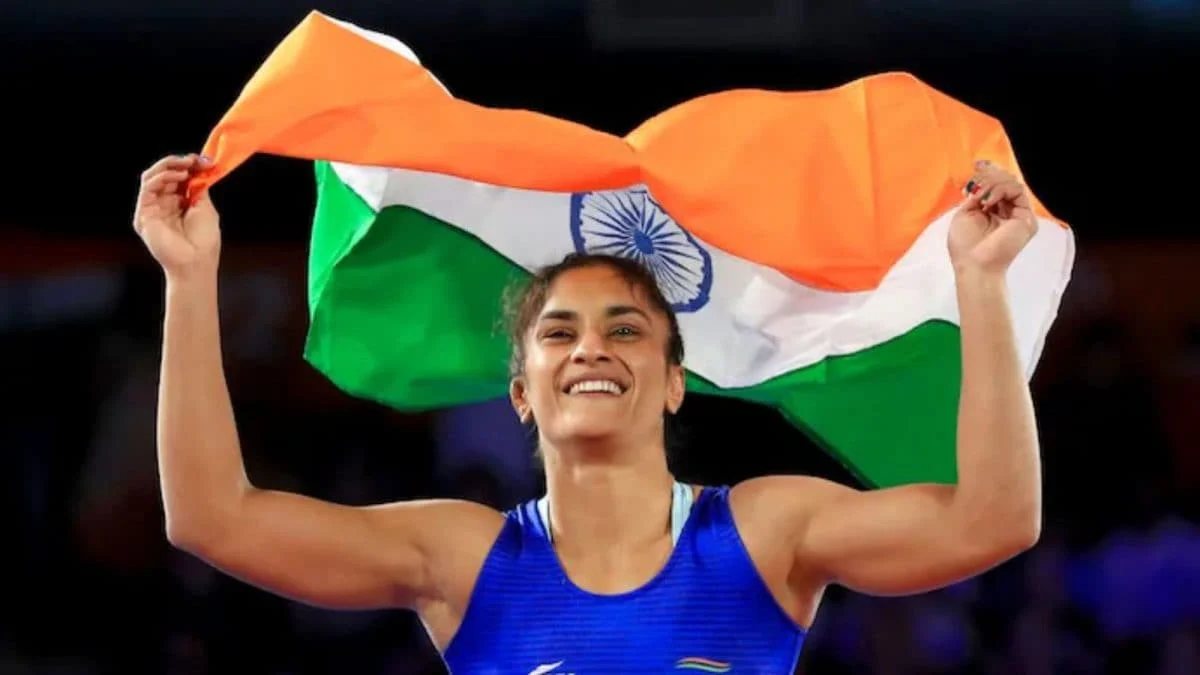
New Delhi, India – May 9, 2026 – In a dramatic turn of events that has sent ripples through the Indian sporting fraternity, celebrated wrestler Vinesh Phogat, a gold medallist at the 2018 Asian Games, finds her much-anticipated comeback to the mat jeopardized. The Wrestling Federation of India (WFI) has imposed a one-month ban on her participation in tournaments and issued a stringent show-cause notice, citing allegations of indiscipline and anti-doping rule violations. Phogat’s immediate response – a poignant and defiant post on X (formerly Twitter) – has rapidly gone viral, signaling her intent to fight back against what appears to be a fresh wave of challenges in her tumultuous career.
The ban, effective until June 26, effectively halts Phogat’s plans to return to competition at the National Open Ranking event in Gonda, scheduled to commence on May 10. This latest setback casts a long shadow over the future of one of India’s most decorated wrestlers, who had stepped away from the sport in 2024 following her disqualification from the Paris Olympics. The unfolding saga reignites debates about athlete welfare, federation oversight, and the persistent tensions within Indian wrestling.
The Immediate Crisis: Ban, Allegations, and a Viral Post
The news of the WFI’s punitive action broke on Saturday, May 9, leaving fans and observers stunned. The federation’s directive bars Vinesh Phogat from competing in any domestic events until the end of June, citing a breach of regulations. This decision directly impacts her immediate competitive calendar, forcing a delay in her meticulously planned return to the wrestling arena.
Hours after the ban was announced, Phogat took to social media platform X to express her state of mind, without directly addressing the WFI’s allegations. Her post, written in Hindi, quickly resonated with her followers and the wider public, accumulating thousands of likes, shares, and comments. The translated text reads:
"ज़िंदगी फँसी है किसी मझधार में
अंधेरी दुनिया है किसी जाल में..
इंसानो की फँसी है किसी दलदल में..!!!"
"Life is stuck in some deep current,
The world is dark, caught in some net..
Humanity is stuck in some quagmire..!!!"
This cryptic yet deeply emotional message has been widely interpreted as Phogat’s defiant, albeit indirect, response to the WFI’s actions. It reflects a profound sense of entrapment and struggle, hinting at the immense mental and emotional toll the recent developments are taking on the athlete. The post underscores not just a personal battle but perhaps a broader critique of the circumstances she and, by extension, other athletes might face. It has become a symbol of resilience for many, even as the specifics of her legal and athletic battles remain unresolved.
A Deeper Dive into WFI’s Accusations
The WFI’s allegations against Vinesh Phogat are multifaceted and severe, outlined in a comprehensive 15-page show-cause notice. The federation has accused her of "indiscipline" and "anti-doping rule violations," asserting that her conduct has caused "lasting damage to the reputation of Indian wrestling." These charges extend beyond mere administrative oversight, delving into the realm of ethical conduct and adherence to established sporting protocols.
One of the primary contentions raised by the WFI is Phogat’s alleged failure to comply with the mandatory six-month notice period required for athletes making a comeback from retirement under United World Wrestling (UWW) Anti-Doping Rules. This rule is a critical component of global anti-doping frameworks, designed to ensure that athletes returning to competition are subjected to a rigorous testing regime to maintain fair play and protect the integrity of the sport. By requiring a six-month window, anti-doping agencies can monitor athletes’ biological passports and conduct out-of-competition testing, reducing the potential for illicit substance use. The WFI’s stance implies that Phogat’s attempt to enter the Gonda event without fulfilling this crucial requirement constitutes a direct violation of these international standards, which the national federation is bound to uphold.
Furthermore, the WFI’s notice reportedly details specific instances of "indiscipline" during Phogat’s last international outing at the Paris Olympics, where she was disqualified. While the exact nature of these disciplinary breaches has not been publicly elaborated upon by the WFI beyond the general statement of "lasting damage to the reputation," it suggests a pattern of conduct that the federation deems unacceptable. This could range from behavioral issues, non-compliance with team management directives, or other actions perceived as detrimental to the team’s image and performance. Such allegations, especially when tied to a high-profile event like the Olympics, carry significant weight and can have profound implications for an athlete’s career and public perception.
The WFI’s constitution and UWW International Wrestling Rules also form the basis of the charges. Adherence to these rules is paramount for any national federation and its athletes, ensuring a standardized approach to competition, conduct, and anti-doping measures worldwide. The federation’s comprehensive notice suggests a thorough, albeit controversial, legal and administrative process is underway against Phogat.
Chronology of a Tumultuous Journey
Vinesh Phogat’s journey in wrestling has been marked by extraordinary highs and challenging lows, punctuated by periods of intense scrutiny and public support.
2018 Asian Games Gold: Phogat cemented her status as a wrestling icon, securing a historic gold medal at the Asian Games. This achievement, alongside numerous other international medals, established her as one of India’s top Olympic prospects.
2024 Paris Olympics Disqualification: The nadir of her recent competitive career came with her disqualification from the Paris Olympics. While the exact reasons for this disqualification were not widely publicized, it led to a period of introspection and, ultimately, her decision to step away from the sport. This temporary retirement was seen by many as a necessary break for an athlete who had dedicated years to high-level competition and endured immense pressure.
Post-Retirement Plans: After a period away from the mat, Phogat announced her intention to make a comeback. This decision was met with enthusiasm by her fans, who eagerly awaited her return to competition. The National Open Ranking event in Gonda was earmarked as her comeback stage, a stepping stone to reclaim her form and pursue future international aspirations.
May 9, 2026 – The Ban: The WFI’s announcement of the one-month ban and the accompanying show-cause notice blindsided many. The timing, just hours before her intended comeback, added another layer of drama to the situation.
The X Post: Phogat’s immediate, emotionally charged X post served as her first public reaction to the ban, capturing the raw frustration and determination of an athlete pushed to the brink.
Crucially, this latest confrontation with the WFI cannot be viewed in isolation. Vinesh Phogat has been at the forefront of significant protests against the WFI in recent years. She was one of the six prominent complainants against former WFI chief Brij Bhushan Sharan Singh, who faced serious allegations of sexual harassment. These protests, which saw top Indian wrestlers stage sit-ins and public demonstrations, brought unprecedented attention to governance issues within Indian sports federations and the challenges faced by athletes in voicing their grievances. Phogat’s active role in these protests established her as a vocal advocate for athlete rights and reform within the WFI, potentially creating a contentious relationship with the federation’s establishment. This historical context suggests that the current allegations and ban might be perceived by some as a continuation of deeper-seated conflicts between the athlete and the wrestling governing body.
Supporting Data and Context: UWW Anti-Doping Rules
The UWW Anti-Doping Rules, aligned with the World Anti-Doping Agency (WADA) Code, are stringent and designed to maintain a level playing field. The specific rule regarding a mandatory six-month notice period for retired athletes returning to competition is a crucial safeguard. This rule typically states that an athlete who has formally retired from competition must provide at least six months’ notice to their National Anti-Doping Organization (NADO) or International Federation (IF) before they can return to competitive sport. During this notice period, the athlete is placed back into the testing pool and is subject to out-of-competition testing.
The rationale behind this rule is multifold:
- Preventing Doping: It prevents athletes from retiring, using prohibited substances during their "off-period" to recover or enhance performance, and then making an immediate comeback without sufficient testing.
- Maintaining Integrity: It ensures that all athletes competing are subject to the same rigorous anti-doping protocols, thereby protecting the integrity of the sport and the fairness of competition.
- Athlete Health: It allows time for athletes to transition back into high-performance training safely and transparently.
If Vinesh Phogat indeed failed to complete this mandatory notice period, it constitutes a clear violation of these rules, irrespective of intent. However, the application and interpretation of such rules often become contentious, especially when intertwined with other alleged disciplinary issues and a history of friction between the athlete and the federation. The WFI’s explicit mention of this rule underscores its commitment, or at least its public stance, on upholding international anti-doping standards.
Implications for Vinesh Phogat’s Career and Indian Wrestling
The immediate implications for Vinesh Phogat are severe. The ban means she cannot compete in the Gonda event, which was critical for her to assess her form and begin her ascent back to international contention. More broadly, the allegations of indiscipline and anti-doping rule violations could lead to longer bans or more severe penalties if proven. Such charges can tarnish an athlete’s reputation, affect sponsorship deals, and, most importantly, impact their mental well-being and motivation.
For an athlete of Phogat’s caliber, who has consistently performed at the highest level, any prolonged absence from competition can be detrimental. Wrestling demands continuous training, match practice, and exposure to maintain peak physical and mental conditioning. A ban, coupled with the stress of defending against serious allegations, could significantly impede her path to future Olympic qualifications and medal aspirations.
Beyond Phogat herself, this incident has broader implications for Indian wrestling:
- Athlete-Federation Relations: It highlights the ongoing strained relationship between elite Indian wrestlers and the WFI. The past protests against the former WFI chief had brought these tensions to the forefront, and this current situation suggests that deep-seated issues remain unresolved.
- Governance and Transparency: The incident raises questions about the WFI’s governance, its communication protocols, and the transparency of its disciplinary processes. How the WFI handles such a high-profile case will be closely watched by the international wrestling community and sports integrity bodies.
- Public Perception: The continuous cycle of controversy, bans, and allegations can damage the public image of Indian wrestling, potentially deterring young talent and eroding public trust in the sport’s administration.
- Legal Battles: It is plausible that Phogat and her legal team might challenge the WFI’s decision, leading to protracted legal battles that could further complicate the situation and distract from the core mission of promoting wrestling.
The Road Ahead: Uncertainty and Resilience
The path forward for Vinesh Phogat is fraught with uncertainty. She will need to respond to the WFI’s show-cause notice, presenting her defense against the allegations. This will likely involve a detailed explanation regarding the anti-doping notice period and clarification on the alleged instances of indiscipline. Depending on the outcome of this process, she may pursue appeals through sporting arbitration bodies if she believes the WFI’s decision is unjust or procedurally flawed.
Her X post, while not a direct legal or official statement, is a powerful declaration of her emotional state and, implicitly, her resilience. It suggests that despite the formidable challenges, she is not ready to surrender. The support she garners from fans and fellow athletes could play a significant role in her ability to navigate this turbulent period.
The wrestling world, both in India and internationally, will be keenly observing how this situation unfolds. Vinesh Phogat’s career has been a testament to her talent, grit, and determination. Whether she can overcome this latest hurdle and once again shine on the global stage remains to be seen, but her defiant message hints at a fight that is far from over. The episode serves as a stark reminder of the complex interplay between athletic performance, administrative rules, and the human spirit in the highly competitive world of professional sports.
