

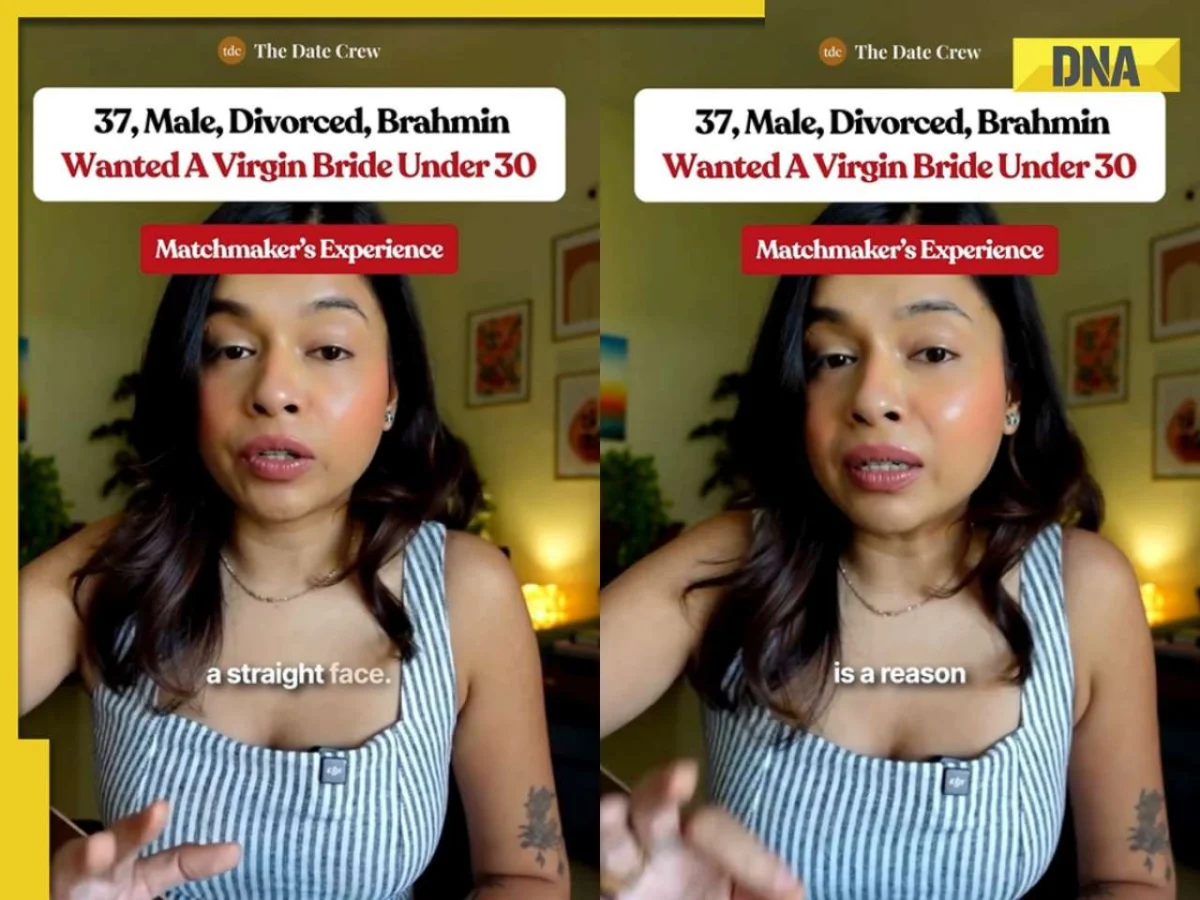
New Delhi, India – A recent viral post by prominent matchmaker and dating coach Oendrila Kapoor has plunged the complexities of modern relationships and societal expectations into the spotlight. The catalyst for this widespread debate is the astonishingly rigid and, many argue, hypocritical set of demands articulated by a 37-year-old divorced IIT graduate seeking a bride. His specific criteria – a woman under 30, from the Brahmin community, with no prior romantic or sexual history – has not only drawn sharp criticism but has also underscored persistent gender-based double standards prevalent in marriage market discussions.
The incident, which unfolded through Kapoor’s social media channels, has resonated deeply, sparking conversations across platforms about fairness, evolving relationship dynamics, and the often-unspoken biases that influence matrimonial aspirations.
The Genesis of the Controversy: A Divorced Man’s Unyielding Demands
The narrative began when Oendrila Kapoor, known for her insights into relationship dynamics and matchmaking, shared a post detailing a peculiar encounter with a prospective client. The individual in question, a successful 37-year-old man, boasted an impressive academic pedigree, having graduated from the prestigious Indian Institute of Technology (IIT), a hallmark of intellectual prowess in India. His professional life mirrored his academic achievements, with him reportedly holding a senior directorial position at a multi-billion dollar corporation.
However, beneath this veneer of success and stability lay a set of expectations for a life partner that many found deeply problematic. Despite his own marital history – he was divorced – the man stipulated that he desired a bride who was not only under the age of 30 but also belonged to the Brahmin community. Crucially, his demands extended to the woman having no prior romantic entanglements and, more controversially, no past sexual experience.
)
Kapoor, a seasoned professional in the field of relationship guidance, found these demands to be not only unusually stringent but also fundamentally contradictory, given the client’s own circumstances. She observed that the man’s expectations appeared non-negotiable, highlighting a stark disconnect between his own lived experience and the ideal partner he sought.
The Flawed Rationale: "Research" and the Man’s "Privilege"
When questioned about the basis for his stringent criteria, the IIT graduate reportedly offered a justification rooted in what he termed "research." He claimed to have encountered information suggesting that women with multiple past relationships were statistically more prone to infidelity. This assertion, presented as a factual basis for his demands, was met with skepticism by Kapoor, who questioned both its validity and its ethical application.

The matchmaker, exercising professional due diligence and probing the client’s mindset, then posed a critical follow-up question: should the same logic, based on past relationship history, not also apply to him as a divorced individual? The man’s response was telling and further inflamed the online discourse. He reportedly dismissed the comparison, stating that his situation was not equivalent.
When pressed further to articulate the distinction, his reply was a stark and revealing admission: "Because I am a man." This statement, more than any other, exposed the deeply ingrained patriarchal mindset that underpinned his expectations, revealing a clear acceptance of a double standard where male experience is deemed acceptable while female experience is scrutinized and penalized.
)
Kapoor, an advocate for equitable relationships, found this line of reasoning unacceptable. The implication was clear: his past divorce was a mark of experience or perhaps even a sign of his discerning nature, while a woman’s past relationships, regardless of their nature or context, were seen as disqualifying.
The Matchmaker’s Stance: Upholding Principles Over Pragmatism
Faced with the client’s rigid mindset and his defense of what appeared to be biased and discriminatory criteria, Oendrila Kapoor made a decisive professional choice. She ultimately declined to take him on as a client. Her rationale was not merely based on the difficulty of finding such a niche candidate, but on a deeper assessment of the client’s underlying philosophy.
)
Kapoor articulated that the man’s mindset reflected a desire for control rather than a genuine pursuit of compatibility and partnership. She argued that his expectations were not only unrealistic in the contemporary social landscape but were also deeply rooted in bias and a skewed perception of relationships.
Furthermore, she astutely pointed out the potential paradox in his demands. A woman who met his stringent criteria of having no past relationships and belonging to a traditional community might also, by extension, be less likely to accept a partner with such rigid and potentially judgmental expectations, especially one who is divorced. This created a Catch-22 situation, highlighting the impracticality of his demands.
)
The Digital Echo Chamber: Public Outcry and Shared Experiences
The moment Oendrila Kapoor’s post went live, it became an instant catalyst for widespread discussion and debate across social media platforms. The narrative of the divorced IIT graduate’s demands struck a chord with a significant portion of the online community, igniting a wave of critical responses.
Users overwhelmingly condemned the man’s expectations, labeling them as "outdated," "hypocritical," and indicative of a "double standard." The irony of a divorced man insisting on a partner with no past relationships was not lost on many, who pointed out the inherent unfairness and the patriarchal undertones of his demands.
)
The comment sections of various platforms became a melting pot of opinions. Many expressed outrage at the blatant sexism, with users highlighting how societal norms often hold women to a far stricter moral and behavioral code than men, particularly concerning their romantic and sexual histories.
"It’s the classic ‘boys will be boys’ mentality applied to marriage," one user commented, echoing a sentiment shared by many. Another user remarked, "He wants a ‘virgin’ bride while he himself has been married before. This is peak hypocrisy."
)
Beyond expressions of anger and disbelief, the post also served as a platform for individuals to share their own experiences with similar expectations within the context of arranged marriages and matrimonial searches. Numerous commenters recounted instances where potential partners or their families had similar, often rigid, demands regarding virginity, age, and community, underscoring that this IIT graduate’s viewpoint, while extreme, was not entirely an anomaly in certain matchmaking circles.
"This is exactly what my aunt told me when I was looking for a match. ‘You need to be pure for a good family,’ she said. Meanwhile, the boy was divorced with kids!" shared one user, illustrating the pervasive nature of these expectations.
)
The discourse also extended to broader societal issues. Discussions delved into the impact of traditional values clashing with modern realities, the role of education in shaping perspectives (or failing to do so, in this case), and the need for a more equitable and understanding approach to relationships. The conversation underscored the evolving nature of relationships and the disconnect between these evolving norms and the lingering traditional expectations that continue to influence marriage prospects for many.
Broader Implications: Rethinking Marriageability and Fairness
The incident involving the divorced IIT graduate and his controversial demands has far-reaching implications that extend beyond a single social media post. It serves as a stark reminder of the enduring influence of patriarchal structures and the societal biases that often dictate the terms of marriageability, particularly for women.
)
Gendered Expectations: The core of the controversy lies in the deeply ingrained gendered expectations that often define how men and women are perceived in the context of relationships and marriage. The man’s rationale, "Because I am a man," encapsulates a societal acceptance of a double standard where male indiscretions or past experiences are often overlooked or excused, while women are held to an often unattainable standard of purity and inexperience. This perpetuates a system where women’s worth is frequently tied to their perceived chastity, regardless of their education, career, or personal achievements.
The Paradox of the "Ideal" Partner: The pursuit of an "ideal" partner, when driven by rigid, often arbitrary criteria, can become a futile exercise. In this case, the man’s desire for a young, inexperienced bride, coupled with his own divorced status, highlights the inherent paradox in his approach. It suggests a lack of self-awareness and an unrealistic expectation of finding someone who perfectly aligns with a preconceived notion, disregarding the complexities and nuances of human relationships.
)
The Role of Education and Privilege: The fact that the individual in question is an IIT graduate and holds a senior corporate position raises pertinent questions about the influence of education and privilege. While education is often seen as a tool for progress and enlightenment, this incident suggests that it does not automatically dismantle deeply ingrained societal biases. Privilege, in this context, may even contribute to a sense of entitlement and an unquestioned belief in one’s own standards, regardless of their fairness to others.
The Evolving Landscape of Matchmaking: Oendrila Kapoor’s professional decision to refuse the client underscores a growing movement within the matchmaking industry to promote healthier and more equitable relationship paradigms. As societal views on relationships evolve, so too must the practices and principles guiding matchmaking. Professionals like Kapoor are increasingly prioritizing compatibility, mutual respect, and shared values over superficial or discriminatory criteria.
)
The Future of Marriage Discussions: This viral incident has undoubtedly contributed to a broader societal dialogue about what constitutes a fair and respectful approach to marriage. It encourages introspection on the part of individuals, families, and society at large regarding the expectations we place on potential partners. The hope is that such discussions will lead to a more enlightened and less judgmental approach to relationships, where individuals are valued for their character, compatibility, and shared aspirations, rather than being measured against outdated and unfair yardsticks.
In conclusion, the controversy sparked by the divorced IIT graduate’s demands is more than just a fleeting social media sensation. It is a potent illustration of the persistent challenges in achieving gender equality in relationship expectations and a call to action for a more progressive and understanding approach to marriage and partnership in contemporary India.
