

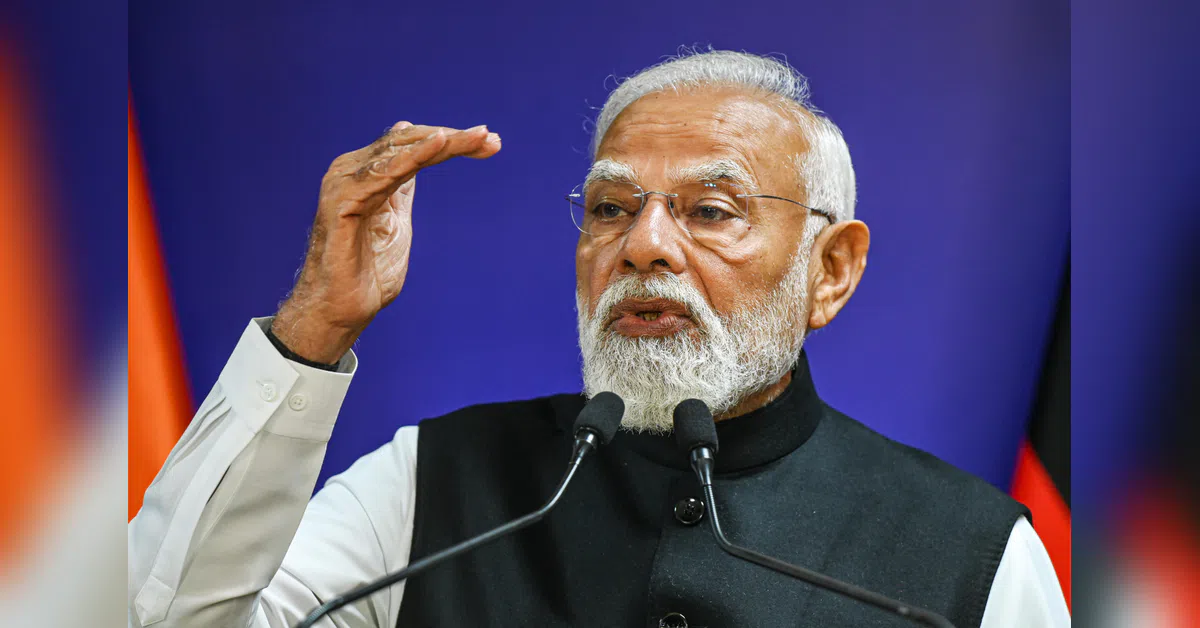
New Delhi, India – Prime Minister Narendra Modi is set to embark on a pivotal diplomatic tour, commencing with a crucial stopover in the United Arab Emirates (UAE) on Friday, followed by a comprehensive four-nation European engagement spanning the Netherlands, Sweden, Norway, and Italy from May 15 to May 20. This extensive itinerary underscores India’s proactive foreign policy, strategically designed to bolster energy security amidst evolving global challenges and to deepen economic, technological, and strategic partnerships with key European nations.
The Ministry of External Affairs (MEA) has highlighted that the Prime Minister’s discussions with UAE President Sheikh Mohamed bin Zayed Al Nahyan will primarily concentrate on fortifying bilateral energy cooperation. This engagement is particularly timely, coming against the backdrop of recent disruptions in India’s energy supply chains from the West Asia region, largely attributed to ongoing geopolitical conflicts. Beyond energy, the visit aims to further promote the already significant trade and investment linkages that form the bedrock of the robust India-UAE relationship.
The European leg of the tour, a strategic outreach to some of India’s most important partners in the continent, seeks to leverage existing strong ties and explore new avenues for collaboration in areas ranging from green technology and innovation to defence, trade, and resilient supply chains. This multi-faceted approach reflects India’s ambition to navigate a complex global landscape by building diverse and resilient partnerships.
The Critical UAE Stopover: A Geopolitical Imperative
Prime Minister Modi’s visit to the UAE, scheduled for Friday, May 15, to meet President Sheikh Mohamed bin Zayed Al Nahyan, carries profound strategic weight. This high-level interaction follows a brief but significant visit by the UAE President to India on January 19, where he was personally received by PM Modi, underscoring the deep personal rapport and mutual respect between the leaders. The upcoming talks are not merely ceremonial; they are a vital component of India’s strategy to ensure its burgeoning energy demands are met, particularly in a period marked by heightened geopolitical volatility in West Asia.
Focus on Energy Security Amidst Regional Tensions
The MEA’s specific mention of "disruptions in India’s sourcing of its energy supplies from the Gulf country because of the conflict in West Asia" points to the urgency underpinning this visit. The ongoing conflict, primarily referring to the Israel-Hamas conflict and its broader regional ramifications, has introduced an element of uncertainty into global energy markets and supply routes. For a major energy importer like India, which relies heavily on the Gulf region for its crude oil, natural gas, and LPG requirements, stability and predictability of supply are paramount. This visit offers a direct channel to address these concerns, reaffirm existing commitments, and potentially explore new mechanisms for resilient energy sourcing.
India’s reliance on the Gulf is substantial, making strategic dialogues with key partners like the UAE indispensable. The discussions are expected to delve into long-term supply contracts, joint ventures in energy infrastructure, and collaborative strategies to mitigate future supply risks, thereby safeguarding India’s economic growth and developmental trajectory.
Deepening Economic & Strategic Ties
Beyond the immediate energy imperatives, the visit will underscore the multifaceted nature of the India-UAE relationship. The UAE holds the distinction of being India’s third-largest trade partner, a testament to the vibrant commercial exchanges between the two nations. Cumulatively over the past 25 years, it has also emerged as India’s seventh-largest source of investment, reflecting sustained confidence in the Indian growth story. This robust economic relationship is further cemented by the presence of over 4.5 million Indians who live and work in the UAE, forming a vital human bridge that contributes significantly to both economies through remittances, cultural exchange, and professional expertise.
The Comprehensive Economic Partnership Agreement (CEPA), signed in February 2022, has already propelled bilateral trade to unprecedented levels, aiming for $100 billion in non-oil trade by 2030. The discussions during PM Modi’s visit are expected to review the progress of CEPA and identify new sectors for enhanced collaboration, including digital trade, logistics, and food security.
Pillars of India-UAE Energy Partnership
The depth of the India-UAE energy partnership is evident across various segments:
- Crude Oil: The UAE was India’s fourth-largest source of crude oil last year, fulfilling nearly 11% of India’s total requirement. This figure highlights the UAE’s consistent role as a reliable supplier in a volatile market. India’s energy diversification strategy involves maintaining strong relationships with traditional suppliers while exploring new sources, and the UAE remains a cornerstone of this strategy.
- Liquefied Natural Gas (LNG): As the third-largest source of LNG for India, the UAE plays a crucial role in India’s transition towards cleaner energy. Indian companies, in collaboration with the UAE’s Abu Dhabi National Oil Company (ADNOC) Gas, have entered into significant long-term supply contracts for a cumulative supply of 4.5 Million Metric Tonnes Per Annum (MMTPA) of LNG. This makes India the largest buyer of UAE’s LNG, a strategic move that aligns with India’s increasing gas consumption for power generation, industrial use, and city gas distribution networks.
- Liquefied Petroleum Gas (LPG): The UAE is India’s largest source of LPG, meeting nearly 40% of India’s total demand. This is particularly significant for India’s social welfare programs, such as the Pradhan Mantri Ujjwala Yojana, which aims to provide clean cooking fuel to rural households, thereby improving health outcomes and empowering women.
- Petroleum, Oil and Lubricants (POL) Exports: The relationship is not unidirectional. India’s sophisticated refining capabilities enable it to export refined petroleum products. The UAE is the second-largest destination for POL exports from Indian refiners, with India exporting over $6 billion worth of POL to the UAE last year. This demonstrates India’s growing stature as a regional refining hub and its contribution to the UAE’s energy security through value-added products.
- Upstream Investments: A pioneering aspect of the partnership is India’s upstream investments in the UAE. Indian companies have invested over $1.2 billion in the upstream sector. Notably, in 2018, a consortium of Indian companies (OVL, BPRL, IOCL) acquired a 10% stake in the Lower Zakum block. This was followed by a stake in Abu Dhabi Onshore Block-1 by Urja Bharat Private Limited (a JV between BPRL and IOCL) in 2019. The confirmation of an oil discovery in Abu Dhabi’s Onshore Block 1 by BPRL in January 2026 marks a significant milestone. These investments represent the first of their kind by Indian companies in the upstream sector of the West Asia region, granting India a direct stake in energy production and enhancing its long-term energy security.
- Strategic Petroleum Reserves (SPR): The UAE was the first country to partner with India in its Strategic Petroleum Reserves program. In 2018, the Indian Strategic Petroleum Reserves Limited (ISPRL) and ADNOC signed an agreement for the UAE to store over 5 million barrels of crude oil in ISPRL’s underground facility in Mangalore. This unique arrangement provides India with an emergency buffer and strengthens the operational linkages between the two nations’ energy infrastructures.
Forging a Green Energy Future
The partnership extends beyond traditional hydrocarbons to embrace the future of energy. India and the UAE are actively expanding cooperation in renewable energy, reflecting their shared commitment to climate action and sustainable development. An agreement signed between MASDAR, a leading UAE clean energy company, and the Rajasthan government in October 2024 for setting up 60 GW of renewable energy capacity is a landmark initiative. This ambitious project underscores the scale of their collaboration and its potential to significantly boost India’s clean energy portfolio. Furthermore, both sides have embarked on a feasibility study for grid interconnection, envisioning a future where clean energy can be shared across borders.
The UAE has also been an active founding member of the Global Biofuels Alliance (GBA), launched in September 2023 during India’s G20 Presidency. This alliance, championed by India, aims to promote the adoption of biofuels, reduce carbon emissions, and foster a sustainable energy ecosystem globally. The UAE’s involvement reinforces its commitment to green technologies and its alignment with India’s vision for a cleaner, more sustainable future.
PM Modi’s European Diplomatic Offensive
Following the crucial UAE stop, Prime Minister Modi will pivot to Europe, embarking on a diplomatic offensive that covers four strategically important nations: the Netherlands, Sweden, Norway, and Italy. This extensive tour, from May 15 to May 20, is designed to reinforce India’s engagement with Europe across a broad spectrum of areas, from trade and investment to innovation, green transition, and multilateral cooperation.
A Strategic Quadri-Nation Tour
This European tour is a testament to India’s "multi-alignment" foreign policy, seeking to deepen ties with diverse partners without being constrained by traditional blocs. In a global environment shaped by geopolitical shifts, economic uncertainties, and the imperative of climate action, India sees Europe as a crucial partner. The tour aims to not only enhance bilateral relations but also to collectively address global challenges, strengthen supply chains, and foster innovation ecosystems. The timing also allows India to reinforce its commitment to a rules-based international order, engaging with democracies that share similar values.
Netherlands: A Gateway to Europe
The Prime Minister’s first European stop will be the Netherlands, from May 15-17. His last visit to the country was in 2017. The Netherlands stands as one of India’s largest trade destinations in Europe, with bilateral trade reaching a robust $27.8 billion in 2024-25. Furthermore, it is India’s fourth-largest investor globally, with cumulative foreign direct investment (FDI) soaring to $55.6 billion.
Cooperation with the Netherlands extends across various sectors, including agriculture, water management, port development, high-tech manufacturing, and digital technology. The discussions are expected to focus on further enhancing these economic ties, leveraging the Netherlands’ expertise in innovation and sustainability, and exploring partnerships in areas like smart cities, circular economy, and advanced manufacturing. The substantial Indian diaspora in the Netherlands also acts as a vibrant bridge, facilitating cultural and economic exchanges.
Sweden: Innovation and Nordic Partnership
From May 17-18, PM Modi will be in Sweden. His previous visit in 2018 marked the occasion of the first-ever India-Nordic Summit, highlighting the growing importance of this northern European region. Discussions with the Swedish leadership, including Prime Minister Ulf Kristersson, will aim to further increase bilateral trade, which reached $7.75 billion in 2025, and attract more Swedish FDI into India, currently at $2.825 billion (2000 – 2025).
Sweden is a global leader in innovation, green technology, and defence manufacturing. Areas of potential collaboration include sustainable urban development, electric vehicles, healthcare technology, and artificial intelligence. A significant highlight of this stop will be Modi and Swedish PM Ulf Kristersson’s joint address to the European Round Table for Industry (ERT), a prominent pan-European business leaders’ forum, alongside European Commission President Ursula von der Leyen. This platform offers a unique opportunity to engage directly with influential European business leaders, showcasing India’s economic potential and promoting investment opportunities under initiatives like "Make in India" and "Atmanirbhar Bharat" (Self-Reliant India).
Norway & The Third India-Nordic Summit: A New Era of Collaboration
The tour continues to Norway from May 18-19, marking the first prime ministerial visit from India to Norway in 43 years – a significant historical moment underscoring renewed diplomatic focus.
Bilateral Engagements: Discussions with Norwegian counterparts will focus on boosting bilateral trade, currently around $2.73 billion (2024), and capitalizing on the India – European Free Trade Association (EFTA) Trade and Economic Partnership Agreement (TEPA). EFTA comprises Iceland, Liechtenstein, Norway, and Switzerland. This agreement is expected to unlock significant trade and investment opportunities, particularly in sectors where EFTA countries have advanced expertise, such as maritime, fisheries, clean energy, and high-tech manufacturing. The MEA also noted the visit would be an opportunity to induce momentum in investments by Norway’s Government Pension Fund Global (GPFG), which has close to $28 billion invested in the Indian capital market, reflecting strong confidence in India’s economic trajectory.
The India-Nordic Summit: The cornerstone of the Norway visit will be the third India-Nordic Summit, taking place in Oslo on May 19. Prime Minister Modi will be joined by Norwegian PM Jonas Gahr Støre, PM of Denmark Mette Frederiksen, PM of Finland Petteri Orpo, PM of Iceland Kristrún Frostadóttir, and PM of Sweden Ulf Kristersson. The two previous summits were held in Stockholm in April 2018 and in Copenhagen in May 2022, laying the groundwork for deeper cooperation.
The MEA stated that this summit aims to impart a more strategic dimension to India’s relationship with the Nordic countries. Key areas of focus include:
- Technology and Innovation: Leveraging Nordic leadership in cutting-edge research and development.
- Green Transition and Renewable Energy: Collaborating on sustainable energy solutions, hydrogen, and carbon capture technologies.
- Sustainability: Sharing best practices in environmental governance and resource management.
- Blue Economy: Partnerships in marine resources, shipping, and sustainable ocean management.
- Defence and Space: Exploring cooperation in strategic technologies and space exploration.
- The Arctic: Engaging on issues related to climate change, research, and sustainable development in the Arctic region, where Nordic countries play a crucial role.
The summit is expected to provide a significant impetus to India’s bilateral trade with Nordic countries, which collectively stood at $19 billion in 2024, and investment ties. It will also help build resilient supply chains, crucial in the post-pandemic world, further bolstered by the ongoing India-EU FTA negotiations and the recently concluded India-EFTA TEPA.
Italy: Reinforcing Mediterranean Ties
In the final leg of his European visit, Prime Minister Modi will be in Italy from May 19-20, at the invitation of his Italian counterpart, Giorgia Meloni. This visit follows his attendance at the G7 Summit in Italy in June 2024, indicating a sustained high-level engagement.
India-Italy bilateral trade reached $16.77 billion in 2025, with cumulative FDI from Italy standing at $3.66 billion (April 2000-September 2025). The discussions are expected to build upon existing cooperation in traditional sectors such as manufacturing, infrastructure, and design, while also exploring new avenues in defence technology, green energy, and digital transformation. Italy, a significant member of the European Union, plays a critical role in India’s broader engagement with the EU. The Prime Minister’s visit aims to further deepen India’s partnership with Europe across sectors, particularly trade and investment ties, especially in light of the recently concluded India-EU FTA. This agreement is anticipated to reduce trade barriers, facilitate easier movement of goods and services, and enhance investment flows between India and the entire European bloc.
Broader Implications and Future Outlook
Prime Minister Modi’s dual-front diplomatic mission to the UAE and Europe is a clear articulation of India’s strategic foreign policy objectives.
India’s Multi-Alignment Strategy
The tour exemplifies India’s evolving multi-alignment strategy, where it seeks to forge strong, independent partnerships with diverse global players without being constrained by traditional blocs. This approach allows India to pursue its national interests effectively, balancing geopolitical realities with economic aspirations. The emphasis on both energy security from the Gulf and technological partnerships with Europe highlights India’s pragmatic and flexible diplomacy.
Economic Diplomacy at its Core
Economic diplomacy lies at the heart of this tour. The focus on trade, investment, technology transfer, and energy security is aimed at sustaining India’s rapid economic growth and achieving its developmental goals. By securing reliable energy supplies, attracting foreign investment, and collaborating on advanced technologies, India is building a more resilient and competitive economy. The push for green energy partnerships also aligns with India’s ambitious climate targets and its vision for a sustainable future.
Geopolitical Balancing Act
Navigating the complexities of West Asian conflicts while simultaneously strengthening ties with European democracies demonstrates India’s adept geopolitical balancing act. The visit to the UAE is crucial for de-risking energy supplies, while engagements with Europe are vital for accessing cutting-edge technology, capital, and markets. This dual approach helps India maintain strategic autonomy and enhance its influence on the global stage.
Vision for a Resilient Future
The emphasis on sustainable energy, diversified supply chains, and innovation across the tour reflects India’s vision for a resilient and future-ready nation. From large-scale renewable energy projects with the UAE to collaborations on green technologies with Nordic countries, India is positioning itself as a leader in the global energy transition. The focus on resilient supply chains through FTAs with Europe underscores India’s commitment to ensuring economic stability and mitigating future disruptions.
In conclusion, Prime Minister Modi’s comprehensive diplomatic tour is more than a series of bilateral meetings; it is a strategic maneuver designed to reinforce India’s energy security, expand its economic footprint, and solidify its position as a responsible and influential global power in an increasingly interconnected and complex world. The outcomes of these engagements will undoubtedly shape India’s foreign policy and economic trajectory for years to come.
