

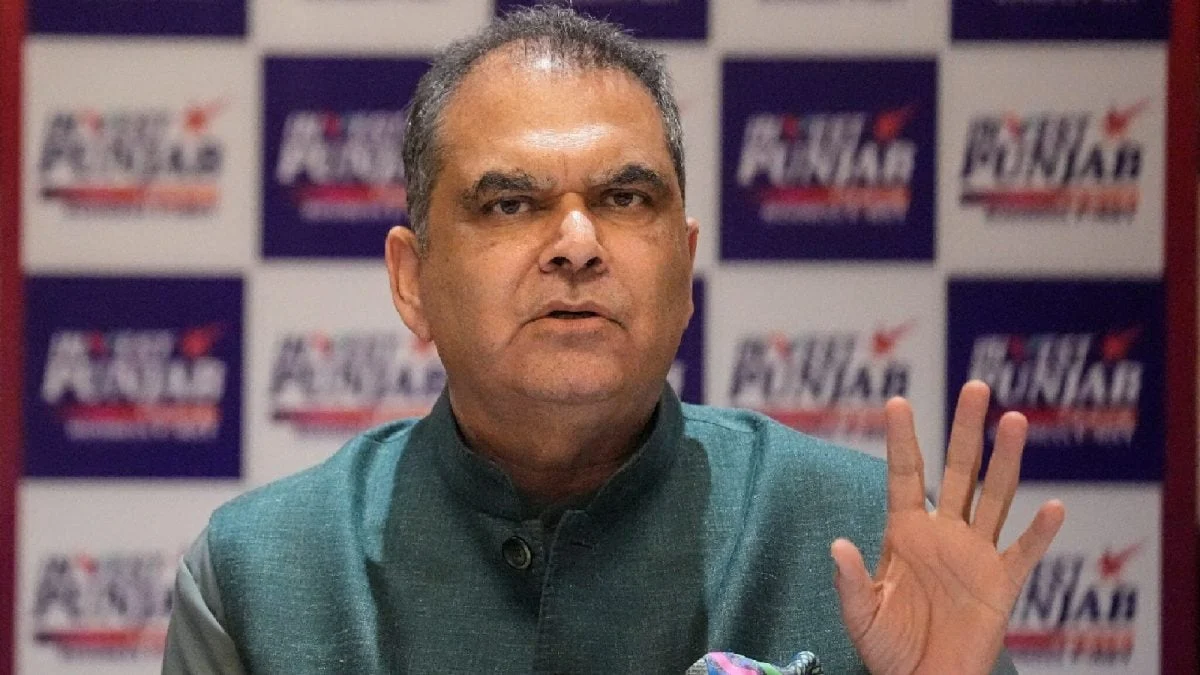
Chandigarh, India – May 12, 2026 – The Enforcement Directorate (ED) has unveiled a sophisticated alleged network of fake exports and money laundering, placing Punjab minister and Aam Aadmi Party (AAP) leader Sanjeev Arora at its epicentre. The federal agency claims Arora played a central and instrumental role in orchestrating a scheme involving bogus transactions and shell companies to facilitate fake exports worth an estimated Rs 157.12 crore and a GST fraud amounting to over Rs 100 crore. The revelations come in the wake of Arora’s arrest on May 9, underscoring India’s intensified efforts against financial crimes.
Investigators assert that Hampton Sky Realty Limited (HSRL), a company where Arora served as director, controller, and beneficial owner, was the primary vehicle for these illicit activities. The alleged modus operandi involved projecting large-scale exports of mobile phones, predominantly to the UAE, while simultaneously engaging in the "round-tripping" of black money from Dubai back into India, disguised as legitimate business income. This elaborate financial engineering, the ED alleges, not only siphoned off public funds through fraudulent GST refunds but also created a conduit for illicit wealth.
The case has sent ripples through political circles in Punjab and beyond, raising serious questions about the integrity of financial systems and the accountability of public figures. As the ED continues its rigorous investigation, the details emerging from the accessed documents paint a picture of a meticulously planned operation designed to exploit regulatory loopholes and generate substantial unlawful gains.
The Alleged Modus Operandi: A Web of Deceit and Financial Manipulation
At the heart of the ED’s allegations lies a complex web of financial transactions meticulously designed to simulate legitimate trade while in reality serving as a conduit for money laundering and tax evasion. The agency’s investigation has meticulously traced the flow of funds and identified the various mechanisms employed to perpetuate the alleged fraud.
Fake Exports and the Illusion of Trade
According to the ED documents accessed by CNN-News18, the central pillar of the alleged scam was the creation of an illusion of robust international trade. Hampton Sky Realty Limited (HSRL), under the alleged direct control and beneficial ownership of Sanjeev Arora, is accused of overseeing fake sales and exports of mobile phones amounting to a staggering Rs 157.12 crore during the financial year 2023-24. These transactions, investigators contend, were not backed by genuine movement of goods but rather by an intricate tapestry of bogus documentation.
The alleged scheme involved generating fraudulent invoices, shipping bills, and other export-related paperwork to create a paper trail that mimicked legitimate international trade. The primary destination for these purported exports was the United Arab Emirates (UAE). By fabricating export data, the perpetrators allegedly aimed to achieve multiple illicit objectives, including claiming wrongful GST refunds and facilitating the layering of illicit funds.
Round-Tripping Black Money: A Sophisticated Laundering Technique
A critical component of the alleged fraud, as detailed by the ED, was the sophisticated practice of "round-tripping" black money. This technique involves illegally transferring funds out of a country, often to offshore havens, and then re-injecting them back into the domestic economy through seemingly legitimate channels. In this case, the ED alleges that black money originating from Dubai was channelled back into India under the guise of legitimate business income, effectively sanitizing illicit wealth.
The fake exports to the UAE provided a plausible cover for these financial manoeuvres. By creating a narrative of successful international trade, the alleged perpetrators could then justify the inflow of funds from overseas as payments for these "exports." This allowed them to convert untaxed or illegally acquired wealth into seemingly legitimate assets within India, thereby completing the money laundering cycle. The ED has highlighted Arora’s alleged direct link to these operations, asserting that his position as director and beneficial owner of HSRL made him central to this complex scheme.
HSRL at the Nexus of Illicit Transactions
The Enforcement Directorate posits that Hampton Sky Realty Limited (HSRL) was not merely a participant but the central pivot around which the entire alleged scam revolved. Arora, in his capacities within HSRL, is accused of not only overseeing but also directly benefiting from these large-scale fake transactions. The agency’s findings suggest that HSRL engaged in a pattern of creating fictitious business activities, with its financial records allegedly manipulated to reflect transactions that never genuinely occurred.
The probe agency’s analysis of HSRL’s financial flows revealed suspicious remittances to various entities, notably a substantial amount of approximately Rs 27.73 crore to SK Enterprises. This particular firm, registered in the name of a daily-wage labourer identified as Kamal Ahamad, has become a focal point of the investigation. The ED’s scrutiny revealed that Ahamad allegedly possessed neither the necessary infrastructure nor the financial wherewithal to conduct business transactions of such magnitude. This stark disparity between the registered proprietor’s capacity and the volume of transactions is a classic indicator, according to investigators, of the use of ‘benami’ (proxy) and shell entities for the layering and concealment of illicit funds.
The Intricate Web of Shell Firms
Beyond SK Enterprises, the ED has identified a network of multiple interconnected shell firms that allegedly played a crucial role in routing and laundering funds. One such entity, Global Traders, purportedly managed by Azhar Haider, is also alleged to have received funds from HSRL as part of this suspected laundering network. These shell companies, the ED claims, existed solely on paper, lacking any genuine business operations, physical premises, or employees.
Statements recorded by investigators from proprietors linked to several of these firms allegedly corroborated this assessment, with individuals denying any actual business activity. This further solidified the ED’s belief that these entities were purposefully created and maintained to obfuscate the origin and movement of illicit funds, adding layers of complexity to the money trail and making it challenging to trace the ultimate beneficiaries. The elaborate nature of this network underscores the sophisticated planning and execution involved in the alleged fraud.
The GST Fraud Dimension: Draining Public Coffers
Beyond the direct implications of money laundering, the alleged scheme orchestrated by Arora and his associated entities had a significant impact on public finances through a meticulously executed GST fraud. This aspect of the investigation highlights the direct financial losses incurred by the exchequer due to the manipulation of tax systems.
Bogus GST Invoices and Fraudulent Input Tax Credit
The ED’s findings indicate that the payments made by HSRL were intrinsically linked to purported purchases of mobile phones and other goods through fake GST invoices, collectively amounting to more than Rs 100 crore. These invoices, investigators allege, were entirely fictitious, representing no genuine supply of goods or services. The primary objective behind generating these bogus invoices was to fraudulently claim Input Tax Credit (ITC).
Input Tax Credit is a mechanism under the Goods and Services Tax (GST) regime that allows businesses to reduce the tax they pay on their output by the tax they have already paid on their inputs. By creating fake purchase invoices, HSRL allegedly generated false ITC claims, effectively reducing its tax liability without having incurred any actual input costs. This not only constituted a direct loss to the government but also formed the basis for securing wrongful GST refunds.
Securing Wrongful GST Refunds through Fake Export Documentation
The fraudulent ITC claims were further leveraged to secure wrongful GST refunds, particularly through the use of fake export documentation. Under GST laws, exporters are often allowed to claim refunds of the GST paid on inputs used for export goods, as exports are typically zero-rated. By presenting fabricated export documents and bogus invoices, the alleged perpetrators sought to claim substantial refunds from the government, further compounding the financial damage.
The ED maintains that the entire cycle—from the generation of fake GST invoices for non-existent purchases to the creation of fictitious export documents—was a deliberate and systematic effort to defraud the exchequer. This intricate financial engineering, according to the agency, resulted in significant losses to public funds, diverting resources that could have been utilized for public welfare. The ED’s investigation into the money trail ultimately points back to Arora and entities allegedly controlled by him, accusing him of being the primary recipient of wrongful gains from this elaborate operation.
Chronology of Events Leading to the Arrest
The investigation into the alleged financial irregularities linked to Sanjeev Arora and HSRL has been an ongoing process, culminating in the recent high-profile arrest. The sequence of events provides a clear timeline of the ED’s actions and the legal proceedings that have followed.
May 8, 2026 (Saturday Morning): Prior to the formal arrest, teams from the Enforcement Directorate reportedly conducted extensive searches at Sanjeev Arora’s official residence in Chandigarh’s Sector 2. Such searches are typically undertaken to gather crucial evidence, including financial documents, digital records, and other relevant materials that can substantiate the allegations. The precise findings from these searches have not been publicly detailed but are understood to have strengthened the ED’s case.
May 9, 2026 (Monday): Following the collection of evidence and further investigation, the Enforcement Directorate formally arrested Sanjeev Arora. The arrest was made under the provisions of the Prevention of Money Laundering Act (PMLA), 2002, which grants the ED broad powers to investigate and prosecute individuals involved in money laundering activities. The arrest of a sitting minister under such serious charges immediately garnered significant media attention and political scrutiny.
May 10, 2026 (Sunday): Arora, aged 62, was produced before a special PMLA court located in Gurugram. After reviewing the evidence presented by the ED and hearing arguments, the court remanded Arora to the ED’s custody for seven days. This remand period is crucial for the investigative agency to conduct further interrogation, confront the accused with evidence, and gather additional information pertinent to the ongoing probe. Custodial interrogation is often deemed essential in complex financial crime cases to unravel intricate networks and identify other potential conspirators.
The ED’s swift action, from searches to arrest and securing remand, underscores the agency’s resolve in pursuing high-profile cases of alleged financial fraud and money laundering, irrespective of the political standing of the individuals involved.
Official Responses and Legal Stance
The unfolding of this high-stakes investigation has naturally elicited responses from the implicated parties and the investigating agency, each presenting their respective positions.
The Enforcement Directorate’s Stance
The Enforcement Directorate has maintained a resolute and unequivocal stance throughout the investigation. The agency’s public statements and submissions to the court highlight its confidence in the evidence collected, asserting Sanjeev Arora’s alleged central role in orchestrating and benefiting from the fraudulent activities. ED investigators have meticulously detailed how Arora, as the director and beneficial owner of HSRL, allegedly oversaw the entire operation, from the generation of fake invoices to the round-tripping of funds.
The ED emphasizes that its findings are based on a thorough analysis of financial documents, bank transactions, and statements recorded from various individuals involved in the alleged network. The agency views the remittances to firms like SK Enterprises, registered under individuals with no apparent capacity to conduct large-scale business, as critical indicators of illicit layering and the use of ‘benami’ entities. The ED has consistently framed this case as a significant blow against economic offenders who attempt to defraud the national exchequer and launder black money through sophisticated means. The ongoing custodial interrogation of Arora is expected to yield further crucial details and potentially lead to the identification of more individuals or entities involved.
Hampton Sky Realty Limited’s Position
In response to the serious allegations and the arrest of its director, Hampton Sky Realty Limited (HSRL) has issued a statement. The company has publicly affirmed its "faith in the legal process" and declared its commitment to "fully cooperating with statutory authorities." This standard corporate response in such circumstances aims to project an image of compliance and willingness to assist the investigation, while implicitly awaiting the judicial outcome.
However, the ED’s allegations directly implicate HSRL as the primary vehicle for the alleged fraud, placing its operations and governance under intense scrutiny. While the company’s statement expresses faith in the legal system, the nature and scale of the alleged irregularities mean that HSRL itself will be subject to rigorous examination, and its future operations could be significantly impacted by the outcome of the ongoing probe. The ED’s claims that HSRL engaged in large-scale fake transactions and that Arora oversaw and benefited from them directly challenge the company’s assertion of normalcy and cooperation.
The Aam Aadmi Party’s (AAP) Position
As of the latest reports, the Aam Aadmi Party (AAP), to which Sanjeev Arora belongs as a Punjab minister, has not yet issued a detailed official statement specifically addressing the grave allegations of a Rs 157 crore fake export network and money laundering against its leader. Typically, political parties often adopt a cautious approach in such high-profile cases, awaiting further clarity from legal proceedings before issuing definitive statements.
However, the arrest of a sitting minister on charges of such magnitude is bound to create significant political pressure and scrutiny for the party. Opposition parties are likely to seize upon these developments to question the AAP’s commitment to transparency and its anti-corruption stance. The incident poses a significant challenge for the party’s image and may necessitate a carefully considered response as the investigation progresses. The political implications for the AAP in Punjab, where it holds power, are considerable, and the party will likely face demands for accountability and clarity regarding Arora’s position and the party’s knowledge of his alleged activities.
Broader Implications and Context
The alleged Rs 157 crore fake export network and associated money laundering scheme linked to Sanjeev Arora carries profound implications, extending beyond the immediate legal ramifications for the individuals involved. This case highlights critical issues within India’s financial ecosystem, regulatory framework, and political landscape.
Impact on the Political Landscape
The arrest of Sanjeev Arora, a sitting minister in the Punjab government and a prominent leader of the Aam Aadmi Party, inevitably casts a long shadow over the state’s political arena. For the AAP, which came to power on an anti-corruption plank, such allegations against one of its ministers are particularly damaging. It provides potent ammunition for opposition parties, who will likely intensify their criticism and demand accountability from the government. The incident could lead to calls for Arora’s resignation or dismissal, creating internal pressure within the party and potentially impacting its public image and electoral prospects in future elections. It also raises questions about the due diligence processes for candidate selection and the oversight mechanisms within political parties.
India’s Fight Against Financial Crime
This case underscores the Indian government’s heightened resolve and the Enforcement Directorate’s aggressive stance in combating complex financial crimes. Money laundering, GST fraud, and the use of shell companies for illicit gains pose significant threats to the nation’s economic integrity and revenue collection. The ED’s meticulous investigation into HSRL and its associated entities signals a clear message that no individual, regardless of their political stature, is above the law when it comes to economic offenses.
The PMLA has emerged as a formidable tool in this fight, allowing the ED to not only arrest but also attach properties linked to proceeds of crime. Such high-profile arrests serve as a deterrent to others contemplating similar schemes, reinforcing the government’s commitment to creating a transparent and compliant financial environment.
Regulatory Scrutiny and Corporate Governance
The revelations from this case are likely to trigger increased scrutiny of corporate governance standards, particularly in companies involved in export-import activities. The alleged use of bogus invoices, fake export documentation, and shell entities highlights vulnerabilities within existing regulatory frameworks that can be exploited for fraudulent purposes. Financial institutions, customs authorities, and GST enforcement agencies may review their processes and intelligence-sharing mechanisms to identify and prevent similar frauds in the future.
Furthermore, the alleged involvement of a daily-wage labourer as the proprietor of a firm handling multi-crore transactions underscores the need for more stringent checks and balances during company registration and ongoing financial monitoring. This case will undoubtedly contribute to the ongoing discourse on strengthening India’s anti-money laundering and counter-financing of terrorism (AML/CFT) regimes, pushing for greater transparency in corporate ownership and financial transactions.
Future of the Investigation and Legal Battle
With Arora currently in ED custody, the immediate future will involve intensive interrogation to uncover further details, identify other potential conspirators, and trace the entire money trail. The ED will likely seek to gather more evidence, including digital data, bank statements, and property documents, to strengthen its case.
Following the custodial remand, Arora will either be granted judicial custody or the ED may seek further remand depending on the progress of the investigation. The legal battle is expected to be protracted, involving complex financial forensics, expert testimonies, and a thorough examination of voluminous documentation. Should the allegations be proven in court, the consequences for Arora could include lengthy imprisonment and the attachment of assets acquired through illicit means. The case serves as a stark reminder of the challenges and complexities inherent in prosecuting white-collar crime, but also of the determined efforts by investigative agencies to uphold the rule of law.
