

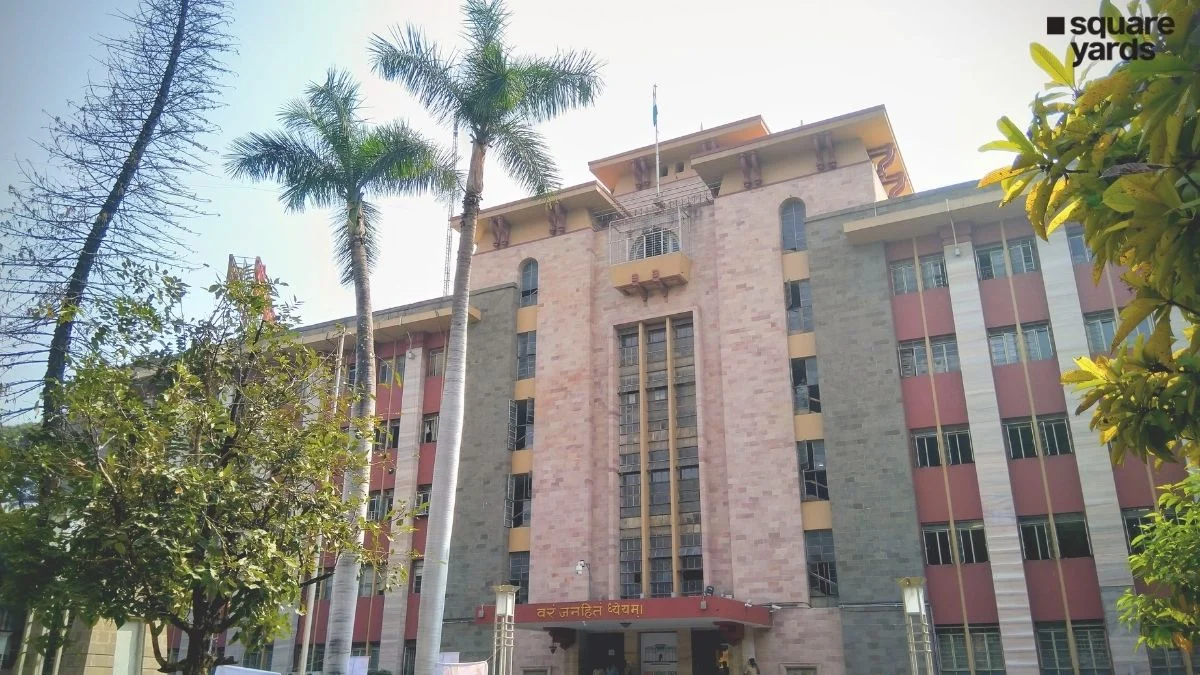
PUNE – Once known as the "Pensioner’s Paradise" and later as the "Oxford of the East," Pune is currently undergoing a radical metamorphosis. As the Pune Municipal Corporation (PMC) unveils its comprehensive infrastructure and housing plan for the 2026-27 fiscal year, the city’s real estate market is bracing for a transformative era. The multi-billion rupee roadmap, which integrates high-tech mobility solutions, ecological restoration, and aggressive housing schemes, is set to redefine the city’s skyline and its socio-economic fabric.
The 2026-27 plan is not merely a budgetary exercise; it is a strategic pivot toward making Pune a "Global Livable City." With 54 km of proposed underground roads, an ambitious 17.8 km riverfront development, and the rollout of Pradhan Mantri Awas Yojana (PMAY) 2.0, the PMC is addressing the long-standing challenges of congestion and housing shortages while unlocking the latent value of peripheral and core micro-markets.
I. The Chronology of Transformation: From Congestion to Connectivity
The evolution of Pune’s infrastructure has historically struggled to keep pace with its rapid industrial and IT expansion. The 2010s were defined by the emergence of IT hubs in Hinjewadi and Kharadi, which led to lopsided development and severe traffic bottlenecks. Recognizing these systemic gaps, the PMC’s 2026-27 plan represents the culmination of a decade-long shift toward decentralized urban planning.
- Phase 1 (2020-2024): Focused on the initial phases of the Pune Metro and the completion of the Ring Road surveys.
- Phase 2 (2025-2026): The formalization of PMAY 2.0 and the commencement of the Mula-Mutha Riverfront Development project.
- The Current Phase (2026-27): The rollout of "Subterranean Mobility" and "Ecological Urbanism." This phase prioritizes underground tunnels to bypass the dense heritage cores and links the eastern and western corridors via high-speed arterial roads.
According to urban planners, this timeline reflects a move away from "reactive" planning toward "proactive" infrastructure, where transit-oriented development (TOD) becomes the primary driver for residential and commercial growth.
II. PMAY 2.0: Anchoring the Affordable and Mid-Segment Demand
One of the most significant pillars of the PMC’s new plan is the proposed development of six major housing projects under the Pradhan Mantri Awas Yojana (PMAY) 2.0. By targeting areas like Dhanori, Kondhwa, Wadgaon, Hadapsar, and Balewadi, the PMC is aiming to inject approximately 4,725 organized housing units into the market.
This initiative is expected to act as a market stabilizer. In recent years, Pune’s central areas have seen prices skyrocket, pushing the middle class toward unorganized peripheral pockets. The introduction of PMAY 2.0 projects provides a "quality seal" that transitions these areas from speculative investor zones to stable, end-user residential hubs.
Supporting Data: Average Property Prices in Emerging Zones (2026 Estimates)
Based on data from Square Yards, the pricing spectrum in these PMAY-influenced zones reflects a healthy mix of affordability and growth potential:
| Area | Avg. Price Range 2026 (₹/sq. ft.) | Market Sentiment |
|---|---|---|
| Dhanori | ₹7,536 – ₹9,700 | High (End-user driven) |
| Kondhwa | ₹7,500 – ₹10,500 | Moderate (Value-seeking) |
| Wadgaon | ₹9,500 – ₹17,500 | Emerging (Premium-Affordable) |
Analysts suggest that Wadgaon, in particular, is witnessing a "gentrification effect," where the proximity to IT hubs combined with new civic infrastructure is narrowing the price gap with more established neighborhoods.
III. Regional Deep-Dive: The East-West Divide and the Core Rebirth
1. The Eastern Corridor: The IT-Real Estate Synergy
The eastern belt, comprising Kharadi, Mundhwa, and Hadapsar, continues to be the city’s economic engine. The PMC’s 2026-27 plan seeks to fortify this region with the Mundhwa-Kharadi road link and expanded flyover networks. The goal is to reduce the "last-mile" friction for IT professionals commuting to EON IT Park and Magarpatta City.
Square Yards Price Data (East Pune – 2026):
- Kharadi: ₹10,500 – ₹17,500 per sq. ft.
- Mundhwa: ₹8,450 – ₹11,900 per sq. ft.
- Hadapsar: ₹8,000 – ₹13,800 per sq. ft.
2. The Western Corridor: Decongestion as a Value Driver
In West Pune, the narrative is shifting from "expansion" to "optimization." Established areas like Kothrud and Pashan have long suffered from topographical constraints. The proposed Kothrud-Pashan underground tunnel and the Chandni Chowk-Bhugaon connectivity upgrades are expected to slash travel times by 30-40%.
Square Yards Price Data (West Pune – 2026):
- Kothrud: ₹17,200 – ₹17,900 per sq. ft.
- Pashan: ₹13,000 – ₹18,000 per sq. ft.
- Bhugaon: ₹7,500 – ₹11,000 per sq. ft.
3. The Core City: Unlocking Redevelopment Potential
The most ambitious aspect of the 2026-27 plan is the "Subterranean Push" in the core city. The Yerawada-Katraj twin tunnel and the Shaniwarwada-Swargate underground route are designed to take the pressure off Pune’s historic and densest streets. This is expected to trigger a massive wave of redevelopment, as older wadas and low-rise buildings gain better accessibility.
Square Yards Price Data (Core City – 2026):
- Yerawada: ₹10,000 – ₹15,000 per sq. ft.
- Swargate: ₹8,000 – ₹21,500 per sq. ft.
- Shaniwarwada: ₹9,150 – ₹12,000 per sq. ft.
IV. The Riverfront Development: Creating a New "Premium" Asset Class
The Mula-Mutha riverfront development is perhaps the most visually and ecologically ambitious project in the PMC’s portfolio. Spanning 17.8 km, the project aims to turn a neglected waterway into a vibrant urban spine featuring walkways, cycling tracks, and recreational parks.
This project is expected to emulate the success of the Sabarmati Riverfront in Ahmedabad, where waterfront proximity led to a 20-30% premium on property prices. Areas like Sangamvadi and Bund Garden are already seeing a spike in interest from luxury developers.
Data Insight: Riverfront Belt Pricing (2026)
| Area | Avg. Price Range 2026 (₹/sq. ft.) | Growth Trigger |
|---|---|---|
| Sangamvadi | ₹21,000 – ₹21,500 | Luxury/Lifestyle |
| Bund Garden | ₹11,600 – ₹18,200 | Centrality/Prestige |
| Mundhwa | ₹8,450 – ₹11,900 | Accessibility/Recreation |
V. Official Responses and Urban Planning Perspectives
While the PMC has remained optimistic about the timelines, officials emphasize that the 2026-27 plan is part of a broader "Zero Waste" and "Sustainable Infrastructure" vision. A senior PMC official, speaking on condition of anonymity, noted: "Our focus is not just on pouring concrete, but on creating a ’15-minute city’ where residents can access work, housing, and leisure within a short radius. The underground roads are a necessity to preserve our heritage while accommodating 21st-century traffic."
Industry experts and property consultants view these moves as a "de-risking" of Pune’s real estate market. By diversifying infrastructure across all four cardinal directions, the PMC is preventing the formation of real estate bubbles in single micro-markets.
However, some urban activists have raised concerns regarding the environmental impact of the riverfront project and the displacement of local communities. The PMC has countered these concerns by highlighting the integrated sewage treatment plants (STPs) that are part of the 2026-27 push, aimed at cleaning the river before the beautification begins.
VI. Long-Term Implications: The "Bullet Train" Factor
While the immediate focus remains on the PMC’s internal plan, the looming shadow of the Mumbai-Pune-Hyderabad High-Speed Rail (Bullet Train) and other regional corridors cannot be ignored. While these remain long-term triggers, developers are already land-banking near proposed stations and regional hubs.
The convergence of local infrastructure (PMC’s 2026-27 plan) with regional connectivity (Bullet Train/Ring Road) is expected to position Pune as a viable alternative to Mumbai for corporate headquarters, not just back-office operations.
VII. Conclusion: A Roadmap for Investors and End-Users
The PMC’s 2026-27 infrastructure plan marks the end of Pune’s era as a "secondary" city. The sheer scale of the 54 km underground road network, combined with the lifestyle-centric riverfront development and the inclusivity of PMAY 2.0, creates a robust ecosystem for real estate growth.
For investors, the core city and the eastern corridor offer the highest potential for capital appreciation through redevelopment and commercial synergy. For end-users, the western suburbs and the PMAY-supported zones in the north-east (Dhanori/Wadgaon) provide a window of opportunity to enter a market that is rapidly maturing.
As the city moves toward a more connected and distributed urban model, the real estate map of Pune is being redrawn. The 2026-27 plan is the ink with which this new map is being written, promising a future that balances high-speed mobility with enhanced urban livability.
